Quantum Information Theory in Chemistry: Unveiling Electron Correlation and Enabling Computational Breakthroughs
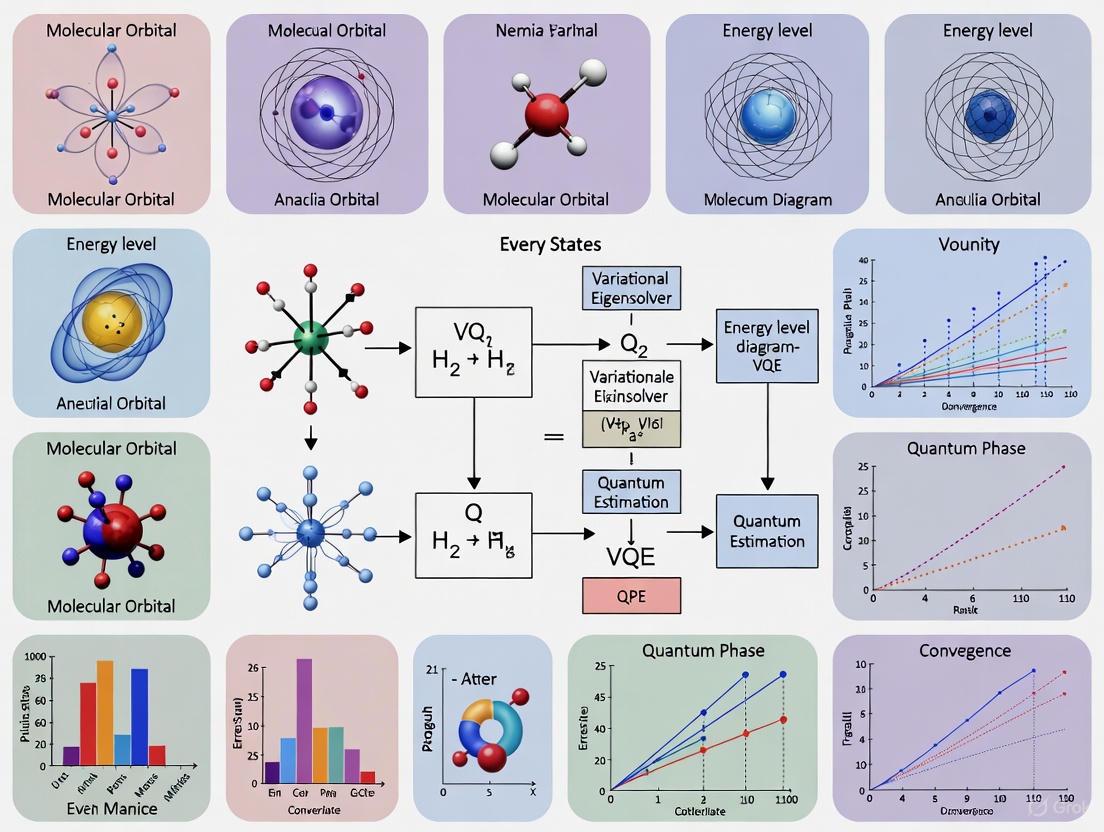
This article explores the rapidly evolving synergy between quantum information theory (QIT) and quantum chemistry, a frontier promising to redefine our understanding and computation of molecular systems.
Quantum Information Theory in Chemistry: Unveiling Electron Correlation and Enabling Computational Breakthroughs
Abstract
This article explores the rapidly evolving synergy between quantum information theory (QIT) and quantum chemistry, a frontier promising to redefine our understanding and computation of molecular systems. We dissect how foundational QIT concepts like entanglement and correlation are being translated to analyze electron interactions, providing an intrinsic measure of complexity in chemical systems. The review covers emerging methodologies that leverage these insights to develop more efficient classical and quantum algorithms for tackling strong correlation problems. We further examine the practical challenges in simulating quantum chemical systems and the optimization strategies being pioneered through international research collaborations and hybrid computing architectures. Finally, the discussion assesses the validation of quantum advantage and benchmarks the performance of QIT-inspired approaches against established computational chemistry methods. This synthesis is tailored for researchers, scientists, and drug development professionals seeking to understand how quantum information science is poised to overcome long-standing barriers in predicting chemical properties and reactions.
Bridging the Realms: Foundational Concepts of Quantum Information in Chemical Systems
The fields of quantum information theory (QIT) and quantum chemistry are experiencing a transformative convergence, creating powerful synergies that address fundamental challenges in both domains. Quantum chemistry, with its remarkable ability to predict molecular and material properties, has become indispensable across modern quantum sciences [1]. Simultaneously, QIT has developed mathematically rigorous frameworks for quantifying quantum correlations and entanglement—resources that are operationally meaningful for distinct information-processing tasks [1] [2]. This fusion of expertise is particularly valuable for tackling the long-standing challenge of strongly correlated electrons in quantum chemistry, where traditional computational methods often struggle [1] [2]. As we progress through the second quantum revolution, this cross-disciplinary dialogue is opening new pathways for developing more efficient approaches to the electron correlation problem while also advancing the development of novel quantum registers based on molecular systems [1].
The interplay between these fields creates a complementary relationship: QIT offers precise characterization of electron correlation that can simplify descriptions of correlated many-electron wave functions, while quantum chemistry provides essential expertise for physically realizing qubits in atomic and molecular systems [1] [2]. This primer explores the key QIT concepts that are revolutionizing quantum chemical research, with particular emphasis on their applications in drug discovery and materials science—domains where accurate molecular simulations can dramatically accelerate innovation timelines [3] [4].
Theoretical Foundations: QIT Concepts for Quantum Chemistry
Orbital versus Particle Correlation
A fundamental contribution of QIT to quantum chemistry is the establishment of two conceptually distinct perspectives on electron correlation, leading to the notions of orbital correlation and particle correlation [1] [2]. Orbital correlation quantifies the complexity of many-electron wave functions relative to a specific orbital basis, representing an extrinsic measure of correlation that depends on the chosen reference frame. In contrast, particle correlation represents the minimal, intrinsic complexity of the wave function, obtained by minimizing total orbital correlation across all possible orbital bases [1] [2].
This distinction is mathematically expressed through the relationship where particle correlation equals the total orbital correlation minimized over all orbital bases [1]. This framework provides theoretical justification for the long-favored use of natural orbitals in simplifying electronic structures, as these orbitals effectively minimize the correlation complexity that must be captured in calculations [1] [2]. The conceptual separation of intrinsic and extrinsic correlation complexity offers researchers powerful tools for analyzing and compressing electronic structure problems.
Entanglement and Quantum Information Measures
In quantum information theory, entanglement serves as a quantitatively rigorous measure of quantum correlations between distinguishable subsystems [1]. When adapted to quantum chemical systems, these concepts require careful consideration of fermionic antisymmetry and superselection rules, but they provide operationally meaningful quantification of electron correlation [1] [2].
The geometric picture of quantum states in QIT enables elegant unification of different correlation types under a single theoretical framework [1]. For quantum chemistry, this means electron correlation can be analyzed using well-established information-theoretic measures such as von Neumann entropy and quantum mutual information [5]. These tools facilitate a more nuanced understanding of static and dynamic correlation effects in molecular systems, moving beyond heuristic descriptions to mathematically precise characterizations [1] [5].
Table: Key Quantum Information Theory Concepts and Their Chemical Interpretations
| QIT Concept | Mathematical Definition | Quantum Chemical Interpretation | Application Domain |
|---|---|---|---|
| Orbital Correlation | Correlation relative to specific basis | Extrinsic complexity of wave function | Basis set selection, Computational efficiency |
| Particle Correlation | Minimal correlation across all bases | Intrinsic complexity of wave function | Strong correlation problem, Wave function analysis |
| Von Neumann Entropy | S(ρ) = -Tr(ρ ln ρ) | Entanglement between subsystems | Bond breaking, Multi-reference character |
| Quantum Mutual Information | I(A;B) = S(ρA) + S(ρB) - S(ρ_AB) | Total correlation between subsystems | Analysis of electron correlation patterns |
Current Landscape: Quantitative Benchmarks and Hardware Progress
The quantum computing industry has reached an inflection point in 2025, transitioning from theoretical promise to tangible commercial reality [3]. This transformation is supported by unprecedented investment growth, with the global quantum computing market reaching $1.8 billion to $3.5 billion in 2025, and projections indicating growth to $5.3 billion by 2029 at a compound annual growth rate of 32.7 percent [3]. More aggressive forecasts suggest the market could reach $20.2 billion by 2030, representing a 41.8 percent CAGR, positioning quantum computing as one of the fastest-growing technology sectors [3].
Hardware advancements have been particularly dramatic in 2025, with error correction representing the most significant breakthrough area [3]. Google's Willow quantum chip, featuring 105 superconducting qubits, achieved a critical milestone by demonstrating exponential error reduction as qubit counts increased—a phenomenon known as going "below threshold" [3]. The Willow chip completed a benchmark calculation in approximately five minutes that would require a classical supercomputer 10^25 years to perform, providing strong evidence that large, error-corrected quantum computers can be constructed [3]. Recent breakthroughs have pushed error rates to record lows of 0.000015% per operation, while researchers at QuEra published algorithmic fault tolerance techniques that reduce quantum error correction overhead by up to 100 times [3].
Table: Quantum Hardware Performance Benchmarks (2025)
| Hardware Platform | Qubit Count | Qubit Type | Key Error Rate | Notable Achievements |
|---|---|---|---|---|
| Google Willow | 105 physical qubits | Superconducting | Exponential reduction with scale | "Below threshold" operation, Quantum Echoes algorithm |
| IBM Quantum Starling | 200 logical (planned) | Superconducting | ~90% overhead reduction | Fault-tolerant roadmap, Quantum-centric supercomputers |
| Microsoft Majorana 1 | N/A | Topological | 1,000-fold error reduction | Novel superconducting materials, Geometric codes |
| Atom Computing | 112 atoms | Neutral atom | Significant error suppression | 28 logical qubits demonstrated, Utility-scale operations |
For quantum chemistry applications, early fault-tolerant quantum computers with approximately 25-100 logical qubits are expected to enable qualitatively distinct strategies that remain challenging for classical solvers [6]. These include polynomial-scaling phase estimation, direct simulation of quantum dynamics, and active-space embedding—particularly valuable for multireference charge-transfer and conical-intersection states central to photochemistry and materials design [6].
Experimental Protocols: Implementing QIT in Chemical Research
The Quantum Echoes Algorithm for Molecular Structure
Google's Quantum Echoes algorithm represents a breakthrough in verifiable quantum advantage for chemical applications, demonstrating a 13,000-fold speedup over classical supercomputers for specific calculations [7]. This protocol enables precise determination of molecular structure through an advanced echo measurement technique.
Experimental Workflow:
System Initialization: Prepare the 105-qubit Willow processor in a known ground state [7]. For molecular simulations, this involves mapping molecular orbitals to qubit states using appropriate encoding schemes (Jordan-Wigner or Bravyi-Kitaev transformations).
Forward Evolution: Apply a carefully crafted sequence of quantum gates (U) to the qubit array, evolving the system forward in time to simulate molecular dynamics [7].
Qubit Perturbation: Introduce a controlled perturbation (P) to a specific qubit, analogous to disturbing a particular atomic site in the target molecule [7].
Reverse Evolution: Apply the inverse quantum operation (U†) to reverse the system's temporal evolution [7].
Echo Measurement: Measure the resulting quantum state, particularly focusing on the "echo" signal amplified by constructive interference effects [7].
This methodology functions as a "molecular ruler," capable of measuring longer distances than traditional methods by leveraging nuclear spin echo principles [7]. The technique has been successfully validated on molecules containing 15 and 28 atoms, matching results from traditional nuclear magnetic resonance (NMR) while revealing additional information not typically accessible through conventional NMR [7].
Variational Quantum Eigensolver (VQE) for Molecular Energy Calculations
The Variational Quantum Eigensolver (VQE) has emerged as a leading hybrid quantum-classical algorithm for determining molecular ground-state energies, particularly valuable for near-term quantum devices without full error correction [8].
Protocol Implementation:
Qubit Mapping: Represent the molecular Hamiltonian in qubit space using fermion-to-qubit transformation techniques. For a hydrogen molecule, this typically requires 2-4 qubits depending on the mapping approach.
Ansatz Preparation: Initialize a parameterized quantum circuit (ansatz) that can represent the target molecular wave function. Common approaches include unitary coupled cluster (UCC) ansatzes or hardware-efficient designs.
Quantum Execution: Run the parameterized circuit on quantum hardware (or simulator) to prepare the trial wavefunction |ψ(θ)⟩.
Measurement: Determine the expectation value ⟨ψ(θ)|H|ψ(θ)⟩ through repeated measurements in different bases to reconstruct the Hamiltonian components.
Classical Optimization: Use classical optimizers (e.g., gradient descent, SPSA) to adjust parameters θ to minimize the energy expectation value.
This hybrid approach has been successfully demonstrated for small molecules including helium hydride ion, hydrogen molecule, lithium hydride, and beryllium hydride [8]. More advanced implementations have tackled larger systems such as iron-sulfur clusters, demonstrating potential for scaling to industrially relevant molecular systems [8].
Table: Essential Research Reagents and Computational Resources for Quantum Chemistry Applications
| Resource Category | Specific Solutions | Function/Purpose | Representative Providers |
|---|---|---|---|
| Quantum Hardware Platforms | Superconducting qubits, Trapped ions, Neutral atoms | Physical implementation of quantum processing units | Google Willow, IBM, IonQ, Atom Computing |
| Quantum Software Ecosystems | Qiskit, Cirq, Pennylane | Quantum algorithm development and simulation | IBM, Google, Xanadu |
| Error Mitigation Tools | Zero-noise extrapolation, Probabilistic error cancellation | Improving results from noisy quantum devices | Q-CTRL, Riverlane, Zurich Instruments |
| Chemical Datasets | AQCat25, PubChemQC | Training and validation data for quantum chemistry | SandboxAQ, National Institutes of Health |
| Hybrid HPC-QC Systems | Quantum-classical integration platforms | Combining quantum and classical computational resources | IBM, Fujitsu, Nvidia DGX Cloud |
The AQCat25 dataset exemplifies specialized resources emerging for quantum chemistry applications, containing 11 million high-fidelity quantum chemistry calculations on 40,000 intermediate-catalyst systems [4]. This dataset, developed using Nvidia DGX Cloud with over 400,000 GPU-hours of computation, enables machine learning models to deliver predictions up to 20,000 times faster than traditional physics-based methods [4]. Such resources are particularly valuable for sustainable chemistry applications including aviation fuel production, green hydrogen creation, and industrial waste conversion [4].
Signaling Pathways and Quantum Information Flow
Understanding information flow in quantum algorithms is crucial for optimizing their application to chemical problems. The following diagram illustrates the conceptual pathway for applying quantum information theory to solve quantum chemical problems, highlighting the synergistic relationship between these domains.
The pathway begins with fundamental concepts from quantum information theory, particularly entanglement measures and correlation quantification [1] [2]. These concepts are adapted to fermionic systems through appropriate mapping procedures that account for antisymmetry and superselection rules [1]. The translated concepts then target specific chemical problems, particularly those involving strong electron correlation that challenge conventional computational methods [1] [8]. This approach ultimately generates solutions including compressed wavefunction representations, more efficient computational schemes, and novel approaches to the electron correlation problem [1] [2].
The integration of quantum information theory with quantum chemistry represents a paradigm shift in computational molecular sciences, offering mathematically rigorous frameworks for addressing the persistent challenge of strong electron correlation. As quantum hardware continues to advance—with error-corrected processors moving from theoretical concepts to operational reality—the applications for drug discovery, materials design, and catalyst development are expected to expand dramatically [3] [9].
The emerging toolkit of quantum algorithms, including the Quantum Echoes protocol and variational methods, provides researchers with practical pathways for leveraging quantum advantage in chemical problems [8] [7]. These developments are particularly timely given the growing investment in quantum technologies, which surpassed $2 billion in venture funding alone during 2024 [3] [9]. With over 250,000 new quantum professionals needed globally by 2030, the intersection of QIT and quantum chemistry represents not only a scientific frontier but a significant workforce development opportunity [3].
As the United Nations designation of 2025 as the International Year of Quantum Science and Technology suggests, we are at the beginning of a transformative period where quantum concepts will increasingly impact chemical research and development [3] [9]. The synergy between quantum information theory and quantum chemistry promises to accelerate discoveries across pharmaceuticals, energy storage, materials science, and fundamental chemistry, ultimately enabling the design of molecular systems with precision that was previously impossible.
The application of quantum information theory to chemical systems is revolutionizing our understanding of molecular structure and bonding. Orbital entanglement quantifies the quantum correlations between molecular orbitals, moving beyond classical correlation concepts to reveal the genuinely quantum nature of chemical bonds and reactions. [5] This framework provides powerful tools for analyzing strongly correlated systems where traditional electronic structure methods often struggle, such as in transition states, bond dissociation processes, and systems with near-degenerate orbitals. [10] [11]
The von Neumann entropy serves as a fundamental quantity in this analysis, measuring the entanglement between subsystems and offering insights into electron correlation patterns that are difficult to capture through conventional quantum chemical approaches. [10] [11] [5] When applied to molecular orbitals, these information-theoretic measures can elucidate reaction mechanisms, identify key correlated orbitals in active spaces, and potentially guide the development of more efficient computational methods for quantum chemistry. [5]
Theoretical Framework: From Classical Correlation to Quantum Entanglement
Fundamental Information-Theoretic Measures
Table: Key Information-Theoretic Measures in Quantum Chemistry
| Measure | Mathematical Expression | Chemical Interpretation |
|---|---|---|
| Shannon Entropy | ( H(X) = -\sum_{x \in \mathcal{X}} p(x)\log p(x) ) | Uncertainty in electron distribution [5] |
| Von Neumann Entropy | ( S(\rho) = -\text{Tr}(\rho \log \rho) ) | Quantum entanglement of orbitals [10] [11] |
| Orbital Mutual Information | ( I(A;B) = S(\rhoA) + S(\rhoB) - S(\rho_{AB}) ) | Total correlation between orbital pairs [5] |
| Kullback-Leibler Divergence | ( D{KL}(P|Q) = \sumx p(x)\log\frac{p(x)}{q(x)} ) | Distinguishability of electron distributions [5] |
The Critical Role of Superselection Rules
A crucial consideration in quantifying orbital entanglement involves fermionic superselection rules (SSRs), which arise from fundamental symmetries of electronic systems. [10] [11] These rules restrict physically allowable operations and states, preventing the overestimation of entanglement that can occur when ignoring these fundamental constraints. Recent experimental implementations have demonstrated that incorporating SSRs not only provides a more physically meaningful quantification of orbital entanglement but also significantly reduces the measurement overhead required for constructing orbital reduced density matrices (ORDMs) on quantum hardware. [10] [11] This reduction occurs because SSRs limit the number of measurable Pauli operators that need to be considered when evaluating ORDM elements.
Experimental Protocols: Measuring Orbital Entanglement on Quantum Hardware
Protocol 1: Molecular System Preparation and Active Space Selection
Objective: Prepare the molecular system and identify strongly correlated orbitals for entanglement analysis.
Reaction Path Optimization:
Active Space Selection via AVAS:
- Apply Atomic Valence Active Space (AVAS) projection to target specific atomic orbitals (e.g., oxygen p orbitals in O₂ reactions). [10] [11]
- Project canonical molecular orbitals onto chosen atomic orbitals to generate an intrinsically localized orbital basis.
- Select a subset of energetically relevant molecular orbitals for subsequent calculations (e.g., 4 orbitals with 6 electrons).
Wavefunction Optimization:
Protocol 2: Quantum State Preparation and Measurement
Objective: Prepare chemical wavefunctions on quantum hardware and measure orbital reduced density matrices.
Qubit Encoding and State Preparation:
Orbital Reduced Density Matrix Construction:
- Partition measurable Pauli operators into commuting sets, leveraging superselection rules to minimize measurement requirements. [10] [11]
- Execute measurement circuits on trapped-ion quantum computer (e.g., Quantinuum H1-1).
- Reconstruct orbital reduced density matrices (1-ORDM and 2-ORDM) from measurement outcomes.
Noise Mitigation:
Protocol 3: Entanglement Quantification and Analysis
Objective: Calculate orbital entropies and mutual information to quantify correlation and entanglement.
Orbital Entropy Calculation:
Mutual Information Calculation:
- Construct 2-orbital reduced density matrices (2-ORDM) for orbital pairs.
- Calculate orbital mutual information: ( I(i;j) = S(\rhoi) + S(\rhoj) - S(\rho_{ij}) ). [5]
Interpretation and Validation:
- Analyze entropy profiles along reaction coordinates to identify strongly correlated regions.
- Compare quantum hardware results with noiseless classical benchmarks.
- Interpret vanishing one-orbital entanglement in closed-shell configurations through the lens of superselection rules.
Case Study: Orbital Entanglement in Lithium-Ion Battery Chemistry
Application to Vinylene Carbonate + Singlet Oxygen Reaction
Table: Orbital Entropy Analysis of VC + ¹O₂ → Dioxetane Reaction
| Reaction Stage | Orbital Entropy Profile | Key Entanglement Findings |
|---|---|---|
| Reactants (Image 1) | Moderate entropy values | Initial correlation in O₂ π and π* orbitals [10] [11] |
| Transition State (Images 7-10) | High entropy peaks | Strong orbital entanglement during bond stretching and realignment [10] [11] |
| Intermediate (Image 12) | Local entropy minimum | Partial correlation relaxation at local energy minimum [10] [11] |
| Product (Image 16) | Low entropy values | Weak orbital entanglement in closed-shell dioxetane product [10] [11] |
The reaction between vinylene carbonate (VC) and singlet oxygen to form dioxetane represents an exemplary system for studying orbital entanglement in strongly correlated chemical processes. This transformation is particularly relevant to degradation processes in lithium-ion batteries, where singlet oxygen attacks carbonate solvent molecules. [10] [11] The application of orbital entanglement measures along this reaction path has revealed characteristic signatures of the transition state, manifested as peaks in orbital von Neumann entropies that correspond to regions of maximum electronic correlation as oxygen bonds stretch and align with the C-C bond of the carbonate. [10] [11]
Key Theoretical Insight: One-Orbital Entanglement and Spin Configurations
A fundamental theoretical result emerging from these studies demonstrates that one-orbital entanglement vanishes unless opposite-spin open shell configurations are present in the wavefunction when superselection rules are properly accounted for. [10] [11] This finding highlights the critical importance of considering fundamental fermionic symmetries when quantifying entanglement in chemical systems and provides a rigorous foundation for interpreting orbital correlation patterns in molecular processes.
Table: Essential Resources for Orbital Entanglement Studies
| Resource Category | Specific Tools/Methods | Function/Purpose |
|---|---|---|
| Quantum Hardware | Quantinuum H1-1 trapped-ion quantum computer | Execution of quantum circuits for ORDM measurement [10] [11] |
| Classical Computational Chemistry | PySCF, ASH package | NEB calculations, AVAS, CASSCF wavefunction optimization [10] [11] |
| Entanglement Quantification | Von Neumann entropy, Orbital mutual information | Quantifying orbital correlation and entanglement [10] [5] |
| Noise Mitigation | Thresholding methods, Maximum likelihood estimation | Post-measurement noise reduction in ORDMs [10] [11] |
| Symmetry Handling | Fermionic superselection rules (SSR) | Physically correct entanglement quantification and measurement reduction [10] [11] |
Future Directions and Research Opportunities
The integration of quantum information concepts with quantum chemistry represents a rapidly evolving frontier with several promising research directions. The NSF-UKRI/EPSRC Lead Agency Opportunity on "Understanding and Exploiting Quantum Information in Chemical Systems" specifically encourages collaborative U.S.-U.K. research proposals that advance fundamental understanding of QIS concepts in chemical systems or leverage QIS concepts to advance chemistry research. [12] Priority research areas include developing new ways of creating, observing, and quantifying QIS phenomena in molecular systems, studying the role of quantum correlations in chemical reactions, developing quantum sensors for monitoring chemical systems, and exploiting quantum phenomena to visualize chemical systems at very short length and time scales. [12]
The successful demonstration of orbital entanglement quantification on quantum hardware, combined with ongoing theoretical developments in information-theoretic approaches to electronic structure, suggests that the "new language of electron interactions" based on orbital entanglement and correlation measures will continue to provide valuable insights into chemical phenomena and potentially guide the design of novel materials and chemical processes with tailored quantum properties.
In the realms of quantum information theory and quantum chemistry, the reduced density matrix (RDM) serves as a foundational tool for analyzing subsystems of larger, entangled quantum systems. It provides the necessary formalism to describe the state of a subsystem when the complete state of the total system is known, enabling practical computation and theoretical understanding where the full quantum description is intractable. Within quantum chemistry, RDMs are central to the development of efficient computational methods, particularly on emerging quantum hardware, where managing computational load is critical for tackling problems like predicting molecular properties and simulating material behavior [13] [14].
Mathematical and Theoretical Foundation
Definition and Formalism
In quantum mechanics, the density matrix, or density operator, offers a unified description of quantum states, capable of representing both pure states and mixed statistical ensembles. For a pure state ( |\psi\rangle ), the density matrix is defined as ( \rho = |\psi\rangle\langle\psi| ) [15].
The reduced density matrix is obtained by performing a partial trace over the degrees of freedom of the subsystems one is not interested in. For a composite system ( A \otimes B ) with a total density matrix ( \rho{AB} ), the reduced density matrix for subsystem ( A ) is defined as: [ \rhoA = \operatorname{Tr}B [\rho{AB}] ] where ( \operatorname{Tr}B ) denotes the partial trace over subsystem ( B ). In finite-dimensional Hilbert spaces, this is accomplished by summing over an orthonormal basis ( {|nB\rangle} ) of ( B ): [ \langle a | \rhoA | b \rangle = \sumn \langle a | \langle nB | \rho{AB} | n_B \rangle | b \rangle ] for all vectors ( |a\rangle, |b\rangle ) in the Hilbert space of ( A ) [16].
Pure States vs. Mixed States
A pure state satisfies ( \operatorname{Tr}(\rho^2) = 1 ) and represents maximal knowledge of the quantum system. A mixed state, described by a density matrix ( \rho = \sumj pj |\psij\rangle\langle\psij| ) with ( 0 < pj < 1 ) and ( \sumj p_j = 1 ), satisfies ( \operatorname{Tr}(\rho^2) < 1 ) and represents a statistical ensemble of pure states [15].
The RDM of a pure, entangled state is often a mixed state. For example, the Bell state ( |\Psi\rangle = \frac{1}{\sqrt{2}}(|00\rangle + |11\rangle) ) has a pure state density matrix ( \rho = |\Psi\rangle\langle\Psi| ). The reduced density matrix for either single qubit is ( \rho_{\text{reduced}} = \frac{1}{2}(|0\rangle\langle 0| + |1\rangle\langle 1|) = \frac{\mathrm{Id}}{2} ), which is maximally mixed [16].
Table 1: Key Properties of Density Matrices
| Property | Pure State | Mixed State | Reduced Density Matrix (from entangled pure state) |
|---|---|---|---|
| Definition | (\rho = \ket{\psi}\bra{\psi}) | (\rho = \sumj pj \ket{\psij}\bra{\psij}) | (\rhoA = \operatorname{Tr}B(\rho_{AB})) |
| Trace Condition | (\operatorname{Tr}(\rho) = 1) | (\operatorname{Tr}(\rho) = 1) | (\operatorname{Tr}(\rho_A) = 1) |
| Purity | (\operatorname{Tr}(\rho^2) = 1) | (\operatorname{Tr}(\rho^2) < 1) | (\operatorname{Tr}(\rhoA^2) < 1) (for entangled (\rho{AB})) |
| Knowledge | Maximal | Incomplete | Incomplete (describes a subsystem) |
Applications in Quantum Chemistry
The Active Space Approximation
A pivotal application of RDMs in quantum chemistry is the active space approximation, used in methods like the Complete Active Space Self-Consistent Field (CASSCF). This approach partitions the molecular orbital space into three distinct regions, allowing for a computationally feasible focus on the most chemically relevant electrons and orbitals [13].
Quantum Linear Response (qLR) and Molecular Properties
The quantum Linear Response (qLR) framework leverages RDMs to compute crucial molecular response properties, such as excitation energies and oscillator strengths, which are vital for interpreting spectroscopic data [13]. The expectation value of an operator ( \hat{O} ) within the active space approximation is expressed as: [ \braket{0(\bm{\theta})|\hat{O}|0(\bm{\theta})} = \braket{I|\hat{O}I|I}\braket{A(\bm{\theta})|\hat{O}A|A(\bm{\theta})}\braket{V|\hat{O}V|V} ] where ( |I\rangle ), ( |A(\bm{\theta})\rangle ), and ( |V\rangle ) represent the inactive, active, and virtual parts of the wave function, respectively [13]. The active space component ( \braket{A(\bm{\theta})|\hat{O}A|A(\bm{\theta})} ), which is evaluated using RDMs on a quantum computer, is often the most computationally demanding part.
Table 2: Quantum Linear Response (qLR) Applications and Challenges
| Application Area | Target Molecular Properties | Key Challenge | RDM-Related Approximation |
|---|---|---|---|
| Photochemistry | Excitation Energies, Oscillator Strengths | High computational cost of 4-body RDMs | Reduced Density Cumulant (RDC) approximations [13] |
| Spectroscopy | Rotational Strengths | Noise and decoherence on NISQ devices | Direct RDM approximation [13] |
| Material Design | Electronic Properties of Heavy Elements | Balancing computational load and accuracy [14] | Active space selection ((Ne, NA)) [13] |
Experimental and Computational Protocols
Protocol: Calculating the Reduced Density Matrix on a Quantum Computer
This protocol details the steps for computing a reduced density matrix for an active space on a quantum computer, a routine procedure in variational quantum algorithms like VQE.
1. System Preparation and Active Space Selection
- Input: Molecular geometry, basis set.
- Procedure: Perform a classical electronic structure calculation (e.g., Hartree-Fock). Select an active space denoted by ((Ne, NA)), where (Ne) is the number of active electrons and (NA) is the number of active spatial orbitals [13].
- Output: Molecular Hamiltonian transformed into the active space, ( \hat{H}_A ).
2. Wavefunction Preparation
- Input: Hamiltonian ( \hat{H}_A ).
- Procedure: Prepare the ground state ( |\psi(\bm{\theta}^*)\rangle ) using a parameterized quantum circuit, such as the Unitary Coupled Cluster (UCC) ansatz. Parameters ( \bm{\theta} ) are optimized, typically via the Variational Quantum Eigensolver (VQE), to minimize the energy ( \langle \psi(\bm{\theta}) | \hat{H}_A | \psi(\bm{\theta}) \rangle ) [13].
- Output: Prepared quantum state ( |\psi(\bm{\theta}^*)\rangle ) representing the active space wavefunction.
3. Quantum Measurement and RDM Reconstruction
- Input: Prepared state ( |\psi(\bm{\theta}^*)\rangle ).
- Procedure: To construct the k-body RDM, measure the expectation values of all corresponding k-body operators. For example, the 2-RDM element ( \Gamma{pqrs} = \langle \psi | \hat{a}p^\dagger \hat{a}q^\dagger \hat{a}s \hat{a}r | \psi \rangle ) requires measuring a Hermitian operator ( \hat{a}p^\dagger \hat{a}q^\dagger \hat{a}s \hat{a}_r + \text{h.c.} ) on the quantum computer. This involves translating these fermionic operators into a sum of Pauli strings via a Jordan-Wigner or Bravyi-Kitaev transformation [13].
- Output: Experimentally estimated expectation values for all required matrix elements.
4. Post-Processing and Analysis
- Input: Raw RDM element estimates.
- Procedure: The collected measurements are used to build the RDMs. These matrices can then be analyzed to compute molecular properties. For strongly correlated systems, the accuracy of the result can be probed by examining the purity of the RDMs or by using the RDMs to compute energy contributions from the inactive and virtual spaces [13].
- Output: Verified k-body RDMs for the active space.
The Scientist's Toolkit: Essential Reagents and Computational Materials
Table 3: Key Computational Tools and Methods
| Item / Reagent | Function / Role | Specifications / Notes |
|---|---|---|
| Active Space ((Ne, NA)) | Reduces computational cost by focusing on correlated electrons/orbitals. | Critical choice; directly controls problem size on quantum hardware [13]. |
| Unitary Coupled Cluster (UCC) Ansatz | Parameterized quantum circuit to prepare correlated wavefunctions. | Often truncated to singles and doubles (UCCSD) for feasibility [13]. |
| Jordan-Wigner / Bravyi-Kitaev Transform | Maps fermionic operators to qubit (Pauli) operators. | Enables measurement on quantum processor [13]. |
| Reduced Density Cumulant (RDC) | Functional used to approximate high-rank RDMs from lower-rank ones. | Aims to reduce quantum measurement load, but fails under strong correlation [13]. |
| Orbital-Optimized oo-UCC | Variant of UCC that optimizes orbital coefficients alongside cluster amplitudes. | Improves description with a more compact circuit [13]. |
Data Presentation and Analysis
The computational burden of quantum chemistry methods based on RDMs scales severely with the size of the active space. This scaling is a primary motivation for exploring approximations like cumulant expansions.
Table 4: Scaling of Reduced Density Matrix (RDM) Computation
| RDM Type | Scaling with Active Space Size (N_A) | Key Applications | Approximation Viability |
|---|---|---|---|
| 1-RDM | (N_A^4) | Population analysis, one-electron properties | High fidelity |
| 2-RDM | (N_A^6) | Total energy evaluation, two-electron properties | Standard for many methods |
| 3-RDM | (N_A^8) | Higher-order properties | Approximations severely affect results [13] |
| 4-RDM | (N_A^{10}) | Quantum Linear Response (qLR-SD) | Approximations can work for equilibrium geometries [13] |
Distinguishing Intrinsic vs. Extrinsic Correlation Complexity in Molecular Wavefunctions
The accurate description of electron correlation presents a central challenge in quantum chemistry, critically impacting the prediction of chemical properties and reaction dynamics. Traditional approaches often conflate the inherent complexity of many-electron wavefunctions with the complexity arising from the choice of mathematical representation. Recent advances, powered by quantum information theory (QIT), provide a rigorous framework to disentangle these effects, formally distinguishing between intrinsic correlation (an inherent property of the system) and extrinsic correlation (a basis-dependent quantity) [17] [2]. This distinction is not merely philosophical; it offers a principled pathway to simplify electronic structure problems and develop more efficient computational strategies, both for classical simulation and emerging quantum algorithms [10].
This Application Note delineates the theoretical foundations of intrinsic and extrinsic correlation complexity and provides detailed protocols for their quantification in molecular systems. By framing electron correlation through the lens of quantum information theory, we equip researchers with methodologies to precisely diagnose the correlation structure of molecular wavefunctions, thereby informing the selection of active spaces, guiding the development of compact wavefunction ansatzes, and potentially illuminating quantum advantage in chemical simulations.
Theoretical Foundations
The Orbital and Particle Pictures of Correlation
Quantum information theory introduces two complementary perspectives for analyzing correlation in fermionic systems:
The Orbital Picture (Extrinsic Correlation): This view treats individual spin-orbitals as subsystems. The total orbital correlation quantifies the complexity of the many-body wavefunction relative to a specific orbital basis, such as the canonical molecular orbitals [17] [1] [2]. This value is extrinsic; it depends on the chosen basis and can be altered by a unitary transformation of the orbitals.
The Particle Picture (Intrinsic Correlation): This view considers the fundamental, indistinguishable electrons as the subsystems. The resulting particle correlation is an intrinsic property of the physical system, independent of any specific orbital representation [17] [2].
The crucial link between these two perspectives is established by a fundamental result: the particle correlation is equal to the total orbital correlation minimized over all possible orbital bases [17] [2]. The orbital basis that achieves this minimum is the set of Natural Orbitals. [I{\text{total}}(\text{Particle}) = \min{\text{Orbital Bases}} I_{\text{total}}(\text{Orbital})] Consequently, the intrinsic correlation represents the minimal, and thus unavoidable, complexity of the wavefunction, while the extrinsic component represents additional complexity introduced by a suboptimal orbital choice [17].
The Role of Quantum Entanglement and Superselection Rules
In the orbital picture, quantum entanglement serves as a key quantifier of correlation. The von Neumann entropy of a reduced density matrix of one or more orbitals is a direct measure of their quantum correlation with the rest of the system [10] [18]. It is critical, however, to account for fundamental fermionic symmetries, known as superselection rules (SSRs). These rules forbid coherent superpositions of states with different fermion parity, and ignoring them can lead to a significant overestimation of the useful quantum entanglement in the system [10] [18]. Adherence to SSRs is therefore essential for a physically meaningful quantification of orbital entanglement.
Table 1: Core Concepts in Intrinsic vs. Extrinsic Correlation
| Concept | Definition | Theoretical Significance | Practical Implication |
|---|---|---|---|
| Intrinsic Correlation | Minimal correlation complexity over all orbital bases; inherent to the electron system [17] [2]. | Represents the fundamental, irreducible complexity of the many-body wavefunction. | Determines the ultimate compactness of a wavefunction representation and the resource requirements for quantum simulation. |
| Extrinsic Correlation | Correlation complexity relative to a specific orbital basis [17] [2]. | Quantifies the additional complexity imposed by the researcher's choice of representation. | Can be minimized by optimizing the orbital basis (e.g., using Natural Orbitals), simplifying classical and quantum computations. |
| Natural Orbitals | The orbital basis that diagonalizes the one-electron reduced density matrix and minimizes total orbital correlation [17]. | Provides the most efficient single-particle basis for expanding the wavefunction. | Using Natural Orbitals leads to the most compact representation and fastest convergence in configuration interaction calculations. |
| Superselection Rules (SSRs) | Fundamental symmetries restricting physically allowed superpositions in fermionic systems [10] [18]. | Prevents overestimation of physically accessible quantum resources like entanglement. | Reduces the number of measurements required on quantum hardware to reconstruct orbital correlation [10]. |
Protocols for Quantifying Correlation Complexity
Protocol 1: Calculating Orbital Entropies and Mutual Information
This protocol details the procedure for quantifying extrinsic correlation in a chosen molecular orbital basis using a quantum computer, as demonstrated for a vinylene carbonate + O(_2) reaction system [10] [18].
Principle: Orbital-wise von Neumann entropies (S(i)) are computed from the eigenvalues of the one-orbital reduced density matrix (1-ORDM). The quantum mutual information (I(i,j)) between orbitals (i) and (j) is then derived from these entropies and the two-orbital entropy (S(i,j)), providing a measure of their total correlation [10].
Diagram 1: Orbital Correlation Measurement Workflow
Materials & Reagents:
- Classical Computational Chemistry Suite (e.g., PySCF): For initial geometry optimization and electronic structure calculation to generate reference data.
- Quantum Computing Framework: Includes fermion-to-qubit mapping (e.g., Jordan-Wigner transformation), ansatz circuit design, and measurement routines.
- Trapped-Ion Quantum Computer (e.g., Quantinuum H1-1) or equivalent: For state preparation and measurement.
- Active Space Molecular Orbitals: Typically generated via methods like CASSCF or AVAS to define the relevant orbital subspace [10].
Step-by-Step Procedure:
System Preparation & Active Space Selection:
- Use classical methods (e.g., Nudged Elastic Band) to determine molecular geometries of interest along a reaction path [10].
- Perform an AVAS projection or CASSCF calculation to obtain a chemically relevant, localized set of active molecular orbitals. This mitigates overestimation of correlation from disperse orbitals [10].
State Preparation on Quantum Hardware:
Measurement & Reconstruction of ORDMs:
- For each set of orbitals, determine the expectation values of Pauli operators required to construct the 1- and 2-ORDMs.
- Crucially, respect fermionic SSRs. This not only provides a physically correct result but also significantly reduces the number of unique measurements by allowing Pauli operators to be grouped into commuting sets [10] [18].
Noise Mitigation:
- Apply a post-measurement noise reduction scheme to the raw ORDMs. This involves:
- A thresholding technique to filter out small, unphysical singular values.
- A maximum likelihood estimation (MLE) to reconstruct a physical density matrix [10].
- Apply a post-measurement noise reduction scheme to the raw ORDMs. This involves:
Data Analysis:
- Diagonalize the noise-mitigated 1-ORDM for orbital (i) to obtain its eigenvalues ({\lambda_k^{(i)}}).
- Calculate the orbital entropy: (S(i) = -\sumk \lambdak^{(i)} \log \lambda_k^{(i)}).
- Similarly, obtain the two-orbital entropy (S(i,j)) from the 2-ORDM.
- Calculate the mutual information: (I(i,j) = \frac{1}{2} [S(i) + S(j) - S(i,j)] (1-\delta_{ij})) [10].
Protocol 2: Determining Intrinsic Correlation via Natural Orbitals
This protocol describes a classically oriented method to approximate the intrinsic correlation of a system by identifying the orbital basis that minimizes the total orbital correlation—the Natural Orbitals.
Principle: The intrinsic correlation is defined by the particle picture, which is equivalent to the minimum total orbital correlation achievable by any orbital basis. This minimum is attained by the Natural Orbitals [17] [2].
Materials & Reagents:
- High-Performance Computing Cluster: For executing quantum chemistry calculations.
- Quantum Chemistry Software: Capable of multi-reference methods like CASSCF and density matrix analysis.
- Wavefunction Analysis Tool: To compute orbital entropies and mutual information from a given wavefunction.
Step-by-Step Procedure:
Initial Wavefunction Calculation:
- Perform a high-level wavefunction calculation for the molecular system of interest, such as a CASSCF or Full Configuration Interaction (FCI) calculation within a chosen active space.
Compute the One-Electron Reduced Density Matrix (1-RDM):
- From the converged wavefunction, extract the 1-RDM.
Diagonalize the 1-RDM:
- The eigenvectors of the 1-RDM are the Natural Orbitals. The eigenvalues are the corresponding natural occupancies.
Transform the Hamiltonian and Wavefunction:
- Rotate the active space orbitals from the initial basis (e.g., canonical) into the basis of Natural Orbitals.
Quantify Correlation in the Natural Orbital Basis:
- Recompute the total orbital correlation (e.g., the sum of all single-orbital entropies, (\sum_i S(i))) in this new basis.
- This minimized value is the closest numerical approximation to the system's intrinsic correlation for the given active space.
Table 2: Comparison of Correlation Quantification Protocols
| Aspect | Protocol 1: Orbital Correlation (Quantum Computer) | Protocol 2: Intrinsic Correlation (Classical) |
|---|---|---|
| Primary Objective | Measure basis-dependent (extrinsic) correlation and entanglement between specific molecular orbitals [10]. | Find the minimal, intrinsic correlation by identifying the optimal orbital basis (Natural Orbitals) [17] [2]. |
| Key Measurement | Orbital von Neumann entropy and mutual information from ORDMs. | Natural orbital occupancies from the 1-RDM; total correlation in the Natural Orbital basis. |
| Critical Consideration | Account for superselection rules to avoid overestimating entanglement and to reduce measurement overhead [10] [18]. | Requires an initial, accurate multi-reference wavefunction as a starting point. |
| Main Application | Probing quantum effects in specific reactions (e.g., transition states) and benchmarking quantum hardware [10]. | Providing theoretical justification for orbital choices and guiding the development of efficient computational methods [17]. |
The Scientist's Toolkit
Table 3: Essential Research Reagent Solutions
| Item Name | Function/Definition | Relevance to Correlation Analysis |
|---|---|---|
| Natural Orbitals | The single-particle basis that diagonalizes the one-electron reduced density matrix (1-RDM). | The fundamental "reagent" for isolating intrinsic correlation, as it provides the most compact representation of the wavefunction [17]. |
| Active Space | A selected set of molecular orbitals and electrons treated with high-level quantum chemistry methods. | Defines the subsystem for correlation analysis; its selection (e.g., via AVAS) is critical for focusing on chemically relevant correlations [10]. |
| Orbital Entropy ((S(i))) | Von Neumann entropy of the reduced density matrix of orbital (i). | A direct quantifier of an orbital's total correlation with the rest of the system in a given basis [10] [18]. |
| Quantum Mutual Information ((I(i,j))) | A measure of the total correlation (classical and quantum) between a pair of orbitals (i) and (j). | Identifies strongly correlated orbital pairs that are critical for accurate active space selection and understanding bonding [10]. |
| Superselection Rules (SSRs) | Physical constraints forbidding quantum superpositions of states with different global particle number parity. | A necessary "filter" for obtaining physically meaningful entanglement values and reducing quantum measurement costs [10] [18]. |
Discussion
The formal separation of intrinsic and extrinsic correlation complexity has profound implications for quantum chemistry research and development. For researchers investigating complex reaction mechanisms, such as the vinylene carbonate + O(_2) reaction, applying Protocol 1 allows for the precise identification of which molecular orbitals become highly correlated at transition states, providing a quantifiable picture of the quantum mechanical interactions driving the chemistry [10].
For scientists developing new computational methodologies, the intrinsic correlation concept (Protocol 2) provides a rigorous metric and a clear target: any efficient model for strong correlation should aim to capture the intrinsic correlation while avoiding the overhead of extrinsic complexity. This principle justifies the decades-long use of Natural Orbitals and opens pathways for designing new, more efficient orbital optimization protocols and wavefunction ansatzes [17] [2].
Finally, for the field of quantum computing for chemistry, these protocols establish a precise framework for assessing the performance of quantum algorithms. The correlation measures obtained from a quantum computer (Protocol 1) can be directly compared to classical benchmarks to verify accuracy. Furthermore, the distinction between intrinsic and extrinsic complexity helps delineate which aspects of a chemical problem are fundamentally challenging and which can be mitigated through algorithmic choices, thereby clarifying the potential path toward a practical quantum advantage [10].
The Theoretical Basis for Natural Orbitals in Simplifying Electronic Structures
Natural Orbitals (NOs) represent a fundamental concept in quantum chemistry, providing the optimal one-electron basis for describing many-electron wavefunctions. They are defined as the unique set of orbitals that diagonalize the one-particle reduced density matrix (1-RDM) of an N-electron system [19]. Mathematically, this is expressed as:
ΓΘk = pkΘk* (k = 1,2,...)
where Γ represents the first-order reduced density operator, Θk are the natural orbitals, and pk* represents the population (occupancy) of each eigenfunction Θk [19]. This definition reveals that NOs are intrinsic to the wavefunction itself rather than dependent on any particular basis set choice, making them a "natural" representation of electron density [19].
Within the framework of quantum information theory, recent research has revealed a remarkable property of natural orbitals: they effectively transform the nature of electron correlation from quantum to predominantly classical. Studies utilizing Shannon and von Neumann entropies have demonstrated that the difference between classical and quantum mutual information in molecular systems decreases by approximately 100-fold when using natural orbitals compared to canonical Hartree-Fock orbitals [20]. This profound insight suggests that computational tasks in quantum chemistry could be significantly simplified by employing natural orbitals, as they provide a representation where wavefunction correlations become essentially classical [20].
Theoretical Foundation and Orbital Hierarchies
The Natural Orbital Concept
Natural orbitals achieve their optimal description through a variational principle—they are the set of orthonormal orbitals that maximize electron occupancy [19]. For any normalized trial orbital φ, the occupancy pφ can be evaluated as the expectation value of the density operator:
pφ = <φ|Γ|φ>
The variational maximization of pφ for successive orthonormal trial orbitals leads to optimal populations pk* and orbitals Θk that satisfy the original eigenvalue equation [19]. The Pauli exclusion principle ensures these occupancies satisfy 0 ≤ pk* ≤ 2, with bonding natural bond orbitals (NBOs) typically exhibiting occupancies close to 2.000, and antibonding NBOs having occupancies near 0 [21].
Hierarchies of Localized Orbitals
The natural orbital approach generates a sequence of natural localized orbital sets that form a bridge between atomic orbitals and molecular orbitals [21]:
Atomic orbital → Natural Atomic Orbital (NAO) → Natural Hybrid Orbital (NHO) → Natural Bond Orbital (NBO) → Natural Localized Molecular Orbital (NLMO) → Molecular orbital
Each level in this hierarchy provides increasingly sophisticated descriptions of molecular electronic structure while maintaining chemical interpretability. Natural Atomic Orbitals incorporate two important physical effects that distinguish them from isolated-atom natural orbitals: (1) spatial diffuseness optimized for effective atomic charge in the molecular environment, and (2) nodal features due to steric confinement in the molecular environment [19].
Table 1: Hierarchy of Natural Localized Orbitals and Their Characteristics
| Orbital Type | Description | Key Features | Primary Applications |
|---|---|---|---|
| Natural Atomic Orbitals (NAOs) | Localized 1-center orbitals representing effective "natural orbitals of atom A" in molecules | Incorporate breathing responses to charge shifts; maintain strict orthogonality | Natural population analysis; basis for constructing higher-level orbitals |
| Natural Hybrid Orbitals (NHOs) | Directed hybrids formed from NAOs on individual atoms | Optimized for directional bonding; maximum electron density along bonding directions | Describing atomic hybridization in molecular environments |
| Natural Bond Orbitals (NBOs) | Localized 1-center or 2-center orbitals with maximum electron density | Occupancies ideally close to 2.000; provide most accurate "natural Lewis structure" | Chemical bonding analysis; resonance structure evaluation |
| Natural Localized Molecular Orbitals (NLMOs) | Semi-localized orbitals intermediate between NBOs and canonical MOs | Retain chemical interpretability while incorporating delocalization effects | Analysis of delocalization corrections to Lewis structure |
Computational Advantages and Applications
Accelerating Configuration Interaction Calculations
Natural orbitals significantly enhance the efficiency of correlated electronic structure calculations. Recent advances in neural-network-assisted configuration interaction (NNCI) methods demonstrate that using approximate natural orbitals—eigenfunctions of the one-particle density matrix computed from intermediate many-body eigenstates—consistently reduces the number of determinants required to achieve a given accuracy level [22].
Across benchmarks for H₂O, NH₃, CO, and C₃H₈, natural orbitals provide a more compact representation of electron correlation compared to canonical Hartree-Fock orbitals [22]. This efficiency gain stems from the fact that natural orbitals concentrate electron occupation into fewer orbitals, with only core and valence-shell NAOs having significant occupancies compared to extra-valence Rydberg-type NAOs [19]. This condensation of occupancy effectively reduces the dimensionality of the problem to a "natural minimal basis" (NMB), spanning core and valence-shell NAOs only, while the residual "natural Rydberg basis" (NRB) can be largely ignored [19].
Active Space Selection for Multiconfigurational Problems
For systems with strong static correlation—such as larger conjugated systems, transition states involving bond breaking/formation, and transition metal complexes—natural orbitals provide a robust approach for active space selection in multiconfigurational calculations [23]. The Unrestricted Natural Orbital (UNO) criterion uses the fractionally occupied UHF natural orbitals to define the active space, with fractional occupancy generally meaning electron population between 0.02-1.98 or 0.01-1.99 [23].
This approach yields the same active space as much more expensive approximate full CI methods for typical strongly correlated systems including polyenes, polyacenes, and transition metal complexes such as Hieber's anion [(CO)₃FeNO]⁻ and ferrocene [23]. The UHF natural orbitals approximate the optimized CAS-SCF orbitals exceptionally well, with energy errors typically below 1 mEh/active orbital [23].
Table 2: Performance Comparison of Orbital Bases in Electronic Structure Calculations
| Method | Orbital Basis | Determinants Required | Correlation Energy Recovery | Computational Scaling |
|---|---|---|---|---|
| Neural Network CI | Canonical HF orbitals | Baseline | Baseline | O(N⁴-N⁷) depending on method |
| Neural Network CI | Natural orbitals | Reduced by ~30-50% [22] | Equivalent accuracy with fewer determinants [22] | Same scaling but with smaller prefactor |
| CASSCF | Canonical orbitals | Large number for convergence | Often overestimates static correlation [23] | Factorial with active space size |
| CASSCF | UNOs | Minimal active space [23] | Balanced static/dynamic correlation [23] | Factorial but with smaller active space |
| DLPNO-CCSD | Pair Natural Orbitals | Highly compressed [24] | ~99.9% of canonical CCSD energy [24] | Near-linear with system size |
Specialized Natural Orbital Types and Methodologies
Pair Natural Orbitals for Local Correlation
Pair Natural Orbitals (PNOs) represent a specialized category designed specifically for efficient treatment of electron correlation in large systems. PNOs are defined as eigenvectors of the "pair density matrix" for each pair of localized occupied orbitals [24]. Unlike standard localization schemes (Ruedenberg, Pipek-Mezey) that only localize occupied orbitals, PNOs provide a compact virtual orbital basis that dramatically reduces the number of cluster amplitudes in coupled-cluster theory [24].
The compression is achieved by diagonalizing the pair density matrix for each occupied orbital pair (i,j), then discarding PNOs with occupation numbers below a threshold (TcutPNO) [24]. This approach enables coupled-cluster calculations on systems with thousands of atoms by achieving near-linear scaling of both memory and computational costs with system size [24].
Natural Bond Orbital Analysis
Natural Bond Orbital (NBO) analysis represents one of the most widely applied implementations of natural orbital theory, providing a mathematical foundation for qualitative Lewis structure concepts [21]. In NBO theory, each bonding NBO σₐ₈ can be expressed in terms of two directed valence hybrids (NHOs) hₐ, h₈ on atoms A and B:
σₐ₈ = cₐhₐ + c₈h₈
The polarization coefficients cₐ, c₈ determine the bond character, varying smoothly from covalent (cₐ = c₈) to ionic (cₐ >> c₈) limits [21]. The optimal Lewis structure in NBO analysis is defined as that with the maximum amount of electronic charge in Lewis orbitals (Lewis charge), with minor contributions from non-Lewis orbitals signaling delocalization effects [21].
Experimental Protocols and Implementation
Protocol 1: Natural Orbital Implementation in Neural Network CI
Purpose: To enhance the efficiency of neural-network-assisted configuration interaction calculations by implementing natural orbitals as the single-particle basis.
Workflow:
- Initial Calculation: Perform Hartree-Fock calculation in an appropriate basis set (plane-wave with 1000 eV cutoff or numerical atomic orbitals) [22].
- Integral Transformation: Compute single- and two-particle integrals for the many-body Hamiltonian using canonical Hartree-Fock orbitals [22].
- Initial NNCI Iteration: Perform preliminary NNCI calculation to obtain an intermediate many-body wavefunction [22].
- Density Matrix Construction: Compute the one-particle reduced density matrix (1-RDM) from the intermediate NNCI solution [22].
- Natural Orbital Generation: Diagonalize the 1-RDM to obtain approximate natural orbitals [22].
- Final NNCI Iteration: Continue the neural-network-assisted selection in the rotated natural orbital basis [22].
- Validation: Compare the convergence rate and number of determinants required versus canonical orbital basis [22].
Key Parameters:
- Plane-wave cutoff: 1000 eV [22]
- Convergence threshold: squared residual < 10⁻¹¹ eV² per valence electron [22]
- Active space size: Typically 100-500 orbitals depending on system [22]
Protocol 2: UNO-CASSCF for Strongly Correlated Systems
Purpose: To determine the optimal active space for multiconfigurational wavefunctions using the Unrestricted Natural Orbital criterion for systems with strong static correlation.
Workflow:
- UHF Calculation: Perform unrestricted Hartree-Fock calculation using an analytical method accurate to fourth order in orbital rotation angles to ensure proper convergence [23].
- Natural Orbital Analysis: Compute natural orbitals from the UHF density matrix and identify fractionally occupied orbitals (occupancies between 0.02-1.98) [23].
- Active Space Definition: Define the active space as comprising all fractionally occupied natural orbitals [23].
- CASSCF Calculation: Perform complete active space self-consistent field calculation using the UNO-defined active space [23].
- Dynamical Correlation: Add dynamical correlation using perturbation theory or coupled-cluster methods [23].
- Validation: Compare with approximate full CI methods to verify active space completeness [23].
Applications: Polyenes, polyacenes, Bergman cyclization reaction pathway, transition metal complexes [23].
Troubleshooting:
- For systems with multiple strongly correlated partners, use multiple independent UHF solutions and average their natural orbitals [23]
- For excited states, employ state-averaged natural orbitals from multiple UHF solutions [23]
Protocol 3: DLPNO-CCSD with Pair Natural Orbitals
Purpose: To perform accurate coupled-cluster calculations on large molecular systems using Domain-based Local Pair Natural Orbitals to reduce computational cost.
Workflow:
- Hartree-Fock Calculation: Obtain converged HF molecular orbitals [24].
- Occupied Orbital Localization: Localize occupied orbitals using Pipek-Mezey or Foster-Boys scheme [24].
- MP2 Initial Guess: Obtain MP2 guess for cluster amplitudes using localized occupied orbitals and canonical virtual orbitals [24].
- Pair Density Construction: Construct pair density matrix for each pair of localized occupied orbitals (i,j) in the virtual space [24].
- PNO Generation: Diagonalize each pair density matrix to obtain pair-natural orbitals and their occupation numbers [24].
- PNO Truncation: Discard PNOs with occupation numbers below threshold (TcutPNO, typically 10⁻⁷-10⁻⁵) [24].
- DLPNO-CCSD: Perform coupled-cluster calculation defining cluster amplitudes only for significant PNOs for each pair [24].
Key Parameters:
- TcutPNO: 10⁻⁷ (tight) to 10⁻⁵ (normal) [24]
- TCutPairs: Threshold for neglecting distant orbital pairs [24]
- TCutMKN: Threshold for natural orbital occupation number [24]
The Scientist's Toolkit: Essential Research Reagents
Table 3: Essential Computational Tools for Natural Orbital Calculations
| Tool/Software | Function | Application Context | Key Features |
|---|---|---|---|
| NBO Program | Natural Bond Orbital analysis | Chemical bonding analysis in molecules | NAO, NHO, NBO generation; Lewis structure analysis [19] [21] |
| MOLPRO/MOLCAS | Multireference quantum chemistry | CASSCF with UNO active spaces | Advanced CI methods; UNO-CASSCF implementation [23] |
| GPAW | DFT/HF calculator with PAW | Orbital basis generation for NNCI | Plane-wave basis; projector-augmented wave method [22] |
| DLPNO-CCSD Codes | Local coupled-cluster methods | Large-system correlation calculations | Linear scaling; PNO generation and truncation [24] |
| JANPA Package | Open-source NPA implementation | Natural population analysis | Free alternative for NAO transformation [21] |
Quantum Information Perspective and Future Directions
The intersection of quantum information theory and natural orbital analysis reveals profound insights about the nature of electron correlation. The dramatic reduction in quantum mutual information when using natural orbitals suggests that the computational complexity of the quantum many-body problem may be less severe than previously assumed [20]. This has significant implications for the development of quantum computing algorithms in quantum chemistry, as it indicates that classical preprocessing with natural orbitals could substantially reduce the quantum resources required for accurate electronic structure calculations.
Future research directions include developing improved methods for generating accurate natural orbitals with low computational cost, extending natural orbital approaches to time-dependent and excited-state problems, and further exploring the connections between quantum information measures and chemical bonding patterns. The integration of machine learning methods with natural orbital analysis, as demonstrated in neural-network CI approaches, represents a particularly promising avenue for enabling accurate calculations on increasingly complex molecular systems [22].
From Theory to Practice: QIT-Driven Methods for Chemical Discovery
The accurate quantification of electron correlation represents one of the most fundamental challenges in quantum chemistry, directly impacting the predictive capability of electronic structure methods across chemical, materials, and pharmaceutical research. Traditional quantum chemistry approaches have quantified correlation energy operationally as the difference between the exact non-relativistic energy and the Hartree-Fock energy [25]. While this definition has served the field for decades, it provides limited insight into the intrinsic complexity of many-electron wave functions or pathways toward more efficient computational strategies.
Quantum Information Theory (QIT) offers a transformative perspective by reframing electron correlation through rigorously defined concepts of entanglement and information [1] [2]. This framework enables the decomposition of correlation into mathematically rigorous, operationally meaningful components that can guide the development of both classical and quantum computational approaches. For drug development professionals, these advanced correlation measures provide deeper insight into electronic structure phenomena that underlie molecular reactivity, binding interactions, and spectroscopic properties—ultimately enhancing predictive modeling in complex biomolecular systems.
The synergy between QIT and quantum chemistry creates a powerful paradigm: QIT offers precise characterization of various aspects of electron correlation, potentially simplifying descriptions of correlated many-electron wave functions and inspiring new approaches to the electron correlation problem, while quantum chemistry provides essential expertise for developing novel quantum registers based on molecular systems [1]. This application note establishes the operational protocols for implementing these advanced correlation measures in practical research settings.
Theoretical Foundation: Orbital Versus Particle Correlation
Distinct Perspectives on Electron Correlation
QIT introduces two conceptually distinct perspectives on electron correlation that provide complementary insights into electronic structure:
Orbital Correlation: Quantifies wave function complexity relative to a specific orbital basis. This basis-dependent measure reflects the extrinsic complexity of the electronic system and varies with different orbital transformations [1] [2] [25].
Particle Correlation: Represents the minimal, intrinsic complexity of many-electron wave functions, independent of orbital choice. Mathematically, particle correlation equals the total orbital correlation minimized over all possible orbital bases [1] [2].
The theoretical relationship between these perspectives provides rigorous justification for the long-favored use of natural orbitals in quantum chemistry, as these orbitals specifically minimize the orbital correlation to reveal the intrinsic particle correlation [1] [2]. This distinction is particularly valuable for diagnosing strong correlation in transition metal complexes, open-shell systems, and bond-breaking processes—all computationally challenging scenarios relevant to pharmaceutical research.
Mathematical Framework and Quantification
Within the QIT framework, correlation and entanglement are quantified through the geometry of quantum states and their subsystems [1] [2]. For a bipartite quantum system, the total correlation between subsystems A and B can be quantified through the quantum mutual information:
[I(A:B) = S(\rhoA) + S(\rhoB) - S(\rho_{AB})]
where (S(\rho) = -\text{Tr}(\rho \ln \rho)) is the von Neumann entropy, and (\rhoA), (\rhoB) are reduced density matrices obtained by partial tracing [10]. For molecular systems, these subsystems may represent individual orbitals, spatial regions, or specific particles, with appropriate modifications to account for fermionic antisymmetry and superselection rules [10].
Table 1: Key Quantum Information Theoretic Measures of Electron Correlation
| Measure | Mathematical Definition | Physical Interpretation | Application Context |
|---|---|---|---|
| Orbital Entropy | (Si = -\sum{\alpha} \lambda{\alpha} \ln \lambda{\alpha}) [10] | Complexity of orbital i when rest of system is traced out | Basis-dependent correlation assessment |
| Mutual Information | (I{ij} = Si + Sj - S{ij}) [10] | Total correlation between orbitals i and j | Identifying strongly correlated orbital pairs |
| Particle Correlation | (\min{U} \sumi S_i(U\rho U^\dagger)) [1] | Intrinsic correlation independent of orbital basis | Fundamental correlation complexity |
| Cumulant Order Parameter | (\lambda2 = \gamma2 - \gamma1 \wedge \gamma1 + \text{exchange}) [25] | Factorizable part of 2-RDM | Separating Fermi from Coulomb correlation |
Experimental and Computational Protocols
Research Reagent Solutions for Correlation Analysis
Table 2: Essential Computational Tools for Electron Correlation Quantification
| Research Reagent | Function | Example Implementation |
|---|---|---|
| Orbital Optimization Algorithms | Generate natural orbitals that minimize orbital correlation | CASSCF orbital optimization [10] |
| Active Space Selection Methods | Identify strongly correlated orbital subspaces | AVAS projection onto atomic orbitals [10] |
| Quantum Circuit Compilation | Prepare molecular states on quantum hardware | Jordan-Wigner transformation, VQE ansätze [10] |
| Reduced Density Matrix Solvers | Compute orbital entropies and mutual information | Classical diagonalization or quantum measurement [10] |
| Information-Theoretic Descriptors | Predict correlation energies from electron density | Shannon entropy, Fisher information [26] |
Protocol 1: Orbital Correlation Measurement via Classical Computation
Purpose: To quantify orbital-wise correlation and entanglement in molecular systems using classical computational resources.
Step-by-Step Workflow:
System Preparation
- Select molecular geometry and atomic basis set (e.g., def2-SVP [10])
- Perform Hartree-Fock calculation to obtain mean-field reference
Active Space Selection
- Identify chemically relevant orbitals using automated methods (e.g., AVAS [10])
- Project canonical orbitals onto targeted atomic orbitals (e.g., oxygen p orbitals for transition metal complexes)
- Determine active space size (e.g., 6 electrons in 9 orbitals)
Wavefunction Optimization
- Perform CASSCF calculation to optimize both CI coefficients and orbital shapes [10]
- Apply symmetry constraints (e.g., (\langle S^2 \rangle = 0) for singlet states)
- Converge wavefunction to stable solution
Orbital Reduced Density Matrix (ORDM) Construction
- Compute 1- and 2-orbital reduced density matrices from full wavefunction
- Apply fermionic superselection rules to ensure physically meaningful results [10]
Entropy and Correlation Calculation
- Diagonalize each ORDM to obtain eigenvalues (\lambda_\alpha)
- Compute orbital entropies: (Si = -\sum{\alpha} \lambda{\alpha} \ln \lambda{\alpha}) [10]
- Compute orbital-orbital mutual information: (I{ij} = Si + Sj - S{ij})
Data Analysis
- Identify strongly correlated orbital pairs (high (I_{ij}))
- Map correlation networks to chemical intuition
- Compare different orbital bases (canonical vs. localized)
Figure 1: Classical protocol for orbital correlation measurement
Protocol 2: Quantum Computation of Orbital Entropies
Purpose: To measure orbital correlation and entanglement directly on quantum hardware, bypassing classical wavefunction storage limitations.
Step-by-Step Workflow:
State Preparation
- Encode fermionic problem into qubits using Jordan-Wigner transformation [10]
- Prepare molecular ground state using variational quantum eigensolver (VQE) with optimized ansatz
Measurement Strategy Optimization
- Account for fermionic superselection rules to reduce measurement overhead [10]
- Group Pauli operators into commuting sets to minimize quantum circuit executions
- Construct measurement circuits for ORDM elements
Quantum Execution
- Execute measurement circuits on quantum hardware (e.g., trapped-ion quantum computer [10])
- Collect statistical samples for ORDM matrix elements
Noise Mitigation
- Apply post-measurement noise reduction schemes
- Use thresholding method to filter small singular values from noisy ORDMs [10]
- Apply maximum likelihood estimation to reconstruct physical ORDMs
Entropy Computation
- Diagonalize noise-corrected ORDMs to obtain eigenvalues
- Compute von Neumann entropies for individual orbitals and orbital pairs
- Validate results against noiseless benchmarks where available
Technical Notes: For the Quantinuum H1-1 trapped-ion quantum computer, superselection rules significantly reduce the number of circuits required for ORDM construction [10]. One-orbital entanglement vanishes unless opposite-spin open shell configurations are present in the wavefunction when superselection rules are properly accounted for [10].
Figure 2: Quantum computing protocol for orbital entropy measurement
Applications and Case Studies
Correlation Analysis in Chemical Reactions
The VC + O(_2) → dioxetane reaction, relevant to lithium-ion battery degradation, provides an illustrative case study for applying orbital correlation measures [10]. This reaction involves a strongly correlated transition state with stretched oxygen bonds aligning to the C-C bond of vinylene carbonate.
Protocol Application:
- System: 4 energetically shallowest molecular orbitals from AVAS projection (6 electrons in 4 orbitals) [10]
- Method: CASSCF with spin constraints followed by orbital entropy calculation
- Key Finding: 2p oxygen orbitals show intensified correlation at the transition state (images 7-10), settling to weaker correlation in the product state [10]
- Chemical Insight: Orbital correlation measures directly identify the electronic origins of reaction barriers in this chemically relevant system
Predicting Correlation Energies via Information-Theoretic Approach
Beyond wavefunction-based measures, density-based information-theoretic quantities provide an alternative pathway for correlation energy prediction [26]. This approach establishes linear relationships between ITA descriptors computed at the Hartree-Fock level and post-Hartree-Fock correlation energies.
Table 3: Performance of ITA Quantities for Correlation Energy Prediction
| System Class | Best-Performing ITA Descriptors | Prediction RMSD | Linear Correlation (R²) |
|---|---|---|---|
| Octane Isomers | Fisher Information ((I_F)) [26] | <2.0 mH | ~0.99 |
| Polymeric Chains | Shannon Entropy ((SS)), Fisher Information ((IF)) [26] | 1.5-4.0 mH | ~1.000 |
| Molecular Clusters | Multiple descriptors [26] | 17-42 mH | >0.990 |
| Protonated Water Clusters | Onicescu Energy ((E2), (E3)) [26] | 2.1 mH | 1.000 |
Protocol for LR(ITA) Correlation Energy Prediction:
- Compute electron density (\rho(\mathbf{r})) at Hartree-Fock level
- Calculate ITA quantities:
- Shannon entropy: (SS = -\int \rho(\mathbf{r}) \ln \rho(\mathbf{r}) d\mathbf{r})
- Fisher information: (IF = \int \frac{|\nabla \rho(\mathbf{r})|^2}{\rho(\mathbf{r})} d\mathbf{r})
- Onicescu information energy: (E_2 = \int \rho^2(\mathbf{r}) d\mathbf{r})
- Establish linear regression between ITA quantities and reference correlation energies (MP2, CCSD, or CCSD(T))
- Predict correlation energies for similar systems using regression model
This protocol achieves chemical accuracy (<1 kcal/mol) for many system classes while avoiding expensive post-Hartree-Fock computations [26], making it particularly valuable for high-throughput screening in drug discovery applications.
The operational measures of electron correlation provided by quantum information theory represent a significant advancement beyond traditional correlation energy definitions. The distinction between orbital and particle correlation offers profound theoretical insights, while practical protocols for measuring orbital entropies—whether through classical computation or quantum hardware—provide researchers with actionable tools for analyzing complex electronic structures.
For pharmaceutical researchers, these approaches enable deeper understanding of electronic phenomena in drug-target interactions, metalloenzyme activity, and excited state processes. The ability to identify intrinsically correlated orbital networks within complex molecular systems guides the development of more efficient computational strategies and active space selections for accurate property prediction.
As quantum computing platforms mature, the direct measurement of orbital correlation on quantum hardware will become increasingly accessible for drug development applications, particularly for strongly correlated systems that challenge classical computational methods. The integration of QIT perspectives with traditional quantum chemistry methodologies creates a powerful symbiotic relationship that advances both fields while providing practical solutions to challenging electronic structure problems across chemical and pharmaceutical research.
Strongly correlated electron systems represent a paramount challenge in quantum chemistry, as their accurate simulation exceeds the capabilities of classical computational methods. These systems, central to understanding high-temperature superconductivity, catalytic processes, and complex molecular magnetism, are characterized by electron interactions that lead to highly entangled quantum states. Quantum computing offers a transformative pathway for modeling these systems by leveraging inherent quantum phenomena. This document details the application of specialized quantum algorithms and error-mitigated hardware protocols to efficiently simulate strong correlation, framing these advancements within the broader context of applying quantum information theory to quantum chemistry research. The convergence of algorithmic innovation, such as variational methods and error-corrected logical qubits, with improved hardware fidelity is poised to deliver quantum advantage for specific scientific workloads within a 5-10 year horizon [3] [27].
The Quantum Computing Landscape for Chemical Simulation
The field is transitioning from the Noisy Intermediate-Scale Quantum (NISQ) era toward early fault-tolerant systems. This evolution is critical for quantum chemistry, as complex molecular simulations require sustained computation with low error rates.
Table 1: Key Hardware Performance Metrics and Roadmaps (2025)
| Vendor/Platform | Key Achievement/Feature | Relevance to Strong Correlation |
|---|---|---|
| Google (Willow Chip) | 105 superconducting qubits; demonstrated exponential error reduction; 5-minute calculation that would take a classical supercomputer 10^25 years [3]. | Enables complex Hamiltonian simulation beyond classical reach. |
| IBM (Quantum Starling Roadmap) | Target of 200 logical qubits by 2029, scaling to 1,000+ logical qubits in the 2030s [3]. | Provides the scale for large, accurate molecular active space simulations. |
| Microsoft/Quantinuum | Topological qubit architectures; demonstrated entanglement of 24 logical qubits with significantly reduced error rates (e.g., from 0.024% to 0.0011%) [3] [28]. | Offers inherent qubit stability, reducing error correction overhead for long calculations. |
| IonQ | 36-qubit computer demonstrated a 12% performance advantage over classical HPC in a medical device simulation [3]. | Early validation of quantum utility for real-world chemical and material science problems. |
A pivotal study from the National Energy Research Scientific Computing Center indicates that quantum systems could address Department of Energy scientific workloads—including materials science and quantum chemistry—within five to ten years [3]. Materials science problems involving strongly interacting electrons and lattice models are identified as being closest to achieving a demonstrable quantum advantage [3].
Core Quantum Algorithms for Strong Correlation
The Variational Quantum Eigensolver (VQE)
The VQE algorithm is a hybrid quantum-classical workhorse for finding ground-state energies of molecular systems, a fundamental task in studying strong correlation.
- Protocol: VQE for Ground-State Energy
- Objective: Find the ground-state energy ( E0 ) of a molecular Hamiltonian ( \hat{H} ).
- Step 1 — Hamiltonian Formulation: Map the electronic structure Hamiltonian (e.g., via Jordan-Wigner or Bravyi-Kitaev transformation) to a qubit operator: ( \hat{H} = \sumi hi \hat{P}i ), where ( \hat{P}i ) are Pauli strings [29].
- Step 2 — Ansatz Preparation: Prepare a parameterized trial wavefunction (ansatz) ( |\psi(\vec{\theta})\rangle ) on the quantum processor. For strongly correlated systems, the k-UpCCGSD ansatz is often preferred over unitary coupled-cluster due to its better representation of multi-reference character.
- Step 3 — Expectation Value Measurement: For each term ( hi \hat{P}i ), measure its expectation value ( \langle \psi(\vec{\theta}) | \hat{P}i | \psi(\vec{\theta}) \rangle ) on the quantum computer. This involves running the circuit multiple times to gather statistics.
- Step 4 — Energy Calculation: Classically compute the total energy: ( E(\vec{\theta}) = \sumi hi \langle \hat{P}_i \rangle ).
- Step 5 — Classical Optimization: Use a classical optimizer (e.g., BFGS, SPSA) to minimize ( E(\vec{\theta}) ) by updating the parameters ( \vec{\theta} ). Steps 2-5 are repeated until convergence is reached.
The following diagram illustrates the hybrid feedback loop of the VQE protocol:
Quantum Phase Estimation (QPE)
QPE is a cornerstone algorithm for fault-tolerant quantum computing, providing a theoretically exact route to ground and excited states. While computationally more expensive than VQE, it offers superior accuracy and is not reliant on classical optimization. Its execution requires deep, coherent quantum circuits and is thus dependent on high-fidelity, error-corrected logical qubits. Recent advances in error correction, such as the color code, are directly aimed at making algorithms like QPE feasible by enabling long computation times with low logical error rates [30] [31].
The Scientist's Toolkit: Essential Research Reagents
This section catalogues the critical computational tools and platforms required for conducting research in quantum algorithms for strong correlation.
Table 2: Key Research Reagent Solutions
| Reagent / Platform | Type | Primary Function | Example Vendor/Provider |
|---|---|---|---|
| Quantum Processing Unit (QPU) | Hardware | Executes the core quantum circuit operations; different qubit technologies (superconducting, trapped ion, neutral atom) offer varied trade-offs in coherence, connectivity, and gate speed [3] [28]. | Google, IBM, IonQ, Quantinuum |
| Quantum Error Correction Stack | Software/Hardware | Detects and corrects errors in real-time using codes like the surface or color code, enabling fault-tolerant computation [30] [28]. | Riverlane, Google, Microsoft |
| Quantum Cloud Service (QaaS) | Platform | Provides remote, cloud-based access to quantum hardware and simulators, democratizing experimental capabilities [3]. | IBM Quantum, Amazon Braket, Microsoft Azure Quantum |
| Quantum Algorithm Library | Software | Provides pre-built, optimized implementations of core subroutines (e.g., Trotterization, state preparation) for algorithm development [29]. | Qiskit, Cirq, PennyLane |
| Post-Quantum Cryptography (PQC) | Security Protocol | Secures classical data transmission against future quantum attacks, a critical consideration for proprietary research data [32] [27]. | NIST-standardized algorithms (ML-KEM, ML-DSA) |
Advanced Protocols: Implementing Error-Corrected Simulation
The path to scalable, accurate simulation of strongly correlated systems runs through quantum error correction (QEC). The recent experimental demonstration of the color code as a viable alternative to the surface code marks a significant advancement.
- Protocol: Logical Qubit Operation with the Color Code
- Objective: Perform a fault-tolerant logical operation on a color-code-encoded logical qubit.
- Step 1 — Qubit Encoding: Encode a single logical qubit into a triangular patch of physical qubits arranged in a hexagonal tiling. A distance-5 code uses more physical qubits than a distance-3 code but provides higher error suppression (demonstrated with a 1.56-fold reduction in logical error rates) [30] [31].
- Step 2 — Stabilizer Measurement: Continuously measure the stabilizer operators of the color code lattice. These multi-qubit parity checks identify errors without collapsing the logical quantum state. This step requires sophisticated, real-time decoding algorithms.
- Step 3 — Logical Gate Execution: Perform a logical gate (e.g., a Hadamard). A key advantage of the color code is the ability to perform certain gates, like the transversal Clifford gates, in a single step with minimal additional error (as low as 0.0027 per operation), unlike the surface code which requires many cycles [31].
- Step 4 — Magic State Injection (for universality): Prepare a high-fidelity "magic state" (e.g., a T-state) on a single physical qubit and inject it into the logical qubit space. Recent experiments have achieved fidelities exceeding 99% for this critical step [30] [31].
The workflow for implementing a fault-tolerant quantum algorithm using these logical qubits is shown below:
The application of quantum algorithms to the problem of strong correlation is rapidly moving from theoretical proposal to experimental reality. Protocols like VQE provide a near-term, albeit approximate, pathway, while the maturation of QEC, exemplified by the color code, paves the way for exact algorithms like QPE on fault-tolerant hardware. For researchers in quantum chemistry and drug development, engagement with cloud-based quantum platforms, mastery of hybrid algorithms, and a strategic focus on building quantum-ready workforce skills are imperative. The ongoing convergence of algorithmic theory and hardware practice, supported by global initiatives like the International Year of Quantum Science and Technology (IYQ 2025) [33], signals a new era of computational capability for tackling one of the most complex problems in modern science.
Wavefunction Compression and Analysis Using Entanglement Metrics
The accurate simulation of molecular systems requires the manipulation of quantum wavefunctions, mathematical objects that describe the behavior of electrons. However, the computational resources required to store and process these wavefunctions scale exponentially with system size, presenting a fundamental barrier to progress in quantum chemistry. This application note details protocols that leverage principles from quantum information theory, particularly entanglement metrics, to compress and analyze wavefunction data. By treating entanglement not merely as a physical curiosity but as a quantifiable resource [34], these methods enable more efficient computations while providing deeper insight into electronic structure. Framed within a broader thesis on quantum information science applications, these techniques allow researchers to overcome traditional computational bottlenecks, facilitating the study of larger and more complex molecular systems relevant to drug development and materials design.
Theoretical Foundation
Quantum Entanglement as a Physical Resource
In quantum information theory, entanglement is recognized as a fundamental physical resource, analogous to energy, that can be measured, transformed, and purified [34]. It describes non-classical correlations between quantum subsystems, such that the quantum state of each particle cannot be described independently of the state of the others [35]. For quantum chemistry, this phenomenon is significant because the electronic wavefunction of a molecule embodies a complex web of entanglements among its constituent electrons. The presence of entanglement is what enforces the entire departure of quantum mechanics from classical lines of thought [34].
The mathematical definition of entanglement for a composite system can be paraphrased as follows: maximal knowledge about the whole system does not imply maximal knowledge about its individual parts [35]. When entanglement is present, one constituent cannot be fully described without considering the other(s). Formally, a system is entangled if its quantum state cannot be factored as a simple product of states of its local constituents [35].
Information-Theoretic Interpretation
A unified information-theoretic description clarifies the relationship between classical correlation and quantum entanglement: the latter can be viewed as a "super-correlation" that can induce classical correlation in tripartite or larger systems [36] [37]. This perspective is formalized in a quantum information theory based entirely on density matrices, which parallels classical Shannon information theory but reveals uniquely quantum features [36] [37].
A remarkable discovery in this framework is that quantum conditional entropies can be negative for entangled systems [36] [37]. This negativity indicates that learning about one subsystem can reduce uncertainty about another to such an extent that the overall conditional entropy becomes negative—a situation impossible in classical information theory. This violation of entropic Bell inequalities provides both a quantitative measure of entanglement and an information-theoretic foundation for analyzing quantum systems [37].
Wavefunction Compression Methodologies
Matrix Factorization and Singular Value Decomposition
A foundational approach to wavefunction compression uses the singular value decomposition (SVD) to decrease storage requirements without significant loss of accuracy [38]. This technique, applicable to full configuration interaction (FCI), truncated configuration interaction, and coupled-cluster calculations, exploits the fact that considerable information in the FCI wavefunction is redundant [38].
The SVD approach represents a reformulation of approximate methods already in use but eliminates their approximations, resulting in lossless compression of wavefunction information [38]. Numerical examples demonstrate that this method can achieve substantial compression ratios while maintaining accuracy in quantum chemical calculations [38].
Corner Hierarchical Matrices (CH-matrix)
For strongly correlated systems, a more advanced compression strategy uses corner hierarchical matrices (CH-matrices) in the Corner Hierarchically Approximated CI (CHACI) approach [39]. This method addresses the limitation of standard hierarchical matrices, which rely on diagonal dominance—a property not present in CASCI wavefunctions.
Table 1: Key Features of Wavefunction Compression Methods
| Method | Key Mechanism | Advantages | Best Applications |
|---|---|---|---|
| Matrix Factorization/SVD [38] | Global low-rank approximation via singular value decomposition | Lossless compression; mathematically rigorous; eliminates approximations | Full CI, truncated CI, coupled-cluster calculations |
| CHACI [39] | Block-wise low-rank decomposition emphasizing upper-left corner of CI vector | Superior compression for large active spaces; improving compression ratio with system size | Strongly correlated systems; large active space calculations |
| Wavefunction Interpolation [40] | Linear combination of training states in symmetrically orthonormalized atomic orbital basis | Near-exact potential energy surfaces; valid many-body wavefunction at mean-field scaling | Molecular dynamics simulations; thermalized trajectory calculations |
The CH-matrix technique leverages the observation that the CASCI wavefunction is dominated by the upper-left corner of the configuration interaction vector [39]. The compression efficacy is enhanced through three optimizations:
- Using a blocking approach that emphasizes the upper-left corner of the CI vector
- Sorting the CI vector prior to compression
- Optimizing the rank of each block to maximize information density [39]
Application to dodecacene, a strongly correlated molecule, demonstrates that CH-matrix compression provides superior compression compared to truncated global singular value decomposition, with improving compression ratios as active space size increases [39].
Wavefunction Interpolation
A different paradigm for accelerating quantum chemical computations involves interpolating numerically exact many-body wavefunctions across atomic configurations [40]. Rather than interpolating observables like potential energy, this approach interpolates the many-electron wavefunction itself through the space of molecular conformations.
The method uses a small number of accurate correlated wavefunctions as a training set to achieve provable convergence to near-exact potential energy surfaces [40]. Despite the exponential complexity of the underlying electronic states, property inference from the model achieves scaling comparable to hybrid density functional theory, making it practical for molecular dynamics simulations [40].
Table 2: Performance Comparison of Compression Techniques
| Metric | SVD-Based Compression [38] | CHACI Approach [39] | Wavefunction Interpolation [40] |
|---|---|---|---|
| Theoretical Scaling | Polynomial with rank truncation | Quasi-linear (O(N log N)) | Mean-field computational scaling |
| Compression Type | Lossless | Data-sparse representation | Functional representation |
| Wavefunction Quality | No significant accuracy loss | High-fidelity for strongly correlated systems | Near-exact with systematic improvability |
| Dynamics Compatibility | Limited | Limited | Excellent for molecular dynamics |
Entanglement Metrics for Wavefunction Analysis
Geometric Measures of Entanglement
The geometry of entanglement provides powerful analytical tools through metrics, connections, and the geometric phase [41]. In this framework, the measure of entanglement can be related to the length of the shortest geodesic with respect to the Mannoury-Fubini-Study metric on the quaternionic projective space between an arbitrary entangled state and the separable state nearest to it [41].
This geometric interpretation allows for a novel understanding of standard quantum mechanical constructs. For instance, Schmidt decomposition states can be interpreted geometrically as the nearest and furthest separable states lying on, or obtained by parallel transport along, the geodesic passing through the entangled state [41]. The relationship between base and fiber in the quaternionic Hopf fibration corresponds directly to the entanglement of qubits, with the twisting of the bundle representing the degree of entanglement [41].
Von Neumann Entropy and Conditional Entropies
In quantum information theory, the von Neumann entropy serves as a fundamental metric for quantifying entanglement. For a bipartite system, the entropy of entanglement is defined as the von Neumann entropy of either reduced density matrix. The quantum conditional entropy ( S(A|B) = S(A,B) - S(B) ), where ( S ) denotes von Neumann entropy, can become negative for entangled systems [36] [37].
This negativity of conditional entropy leads to a violation of well-known bounds in Shannon information theory and provides an information-theoretic signature of quantum entanglement [36]. The appearance of "unclassical" eigenvalues in the spectrum of the conditional "amplitude" matrix underlying the quantum conditional entropy directly relates to quantum inseparability [37].
Experimental Protocols
Protocol: CHACI Wavefunction Compression
This protocol details the procedure for compressing configuration interaction wavefunctions using the Corner Hierarchically Approximated CI approach [39].
Research Reagent Solutions:
- Computational Environment: High-performance computing cluster with parallel processing capabilities
- Electronic Structure Code: Software capable of CASSCF/CASCI calculations (e.g., PySCF, Molpro)
- CHACI Implementation: Custom code for corner hierarchical matrix operations
- Molecular System: Chemical system with strong electron correlation (e.g., polyacenes, transition metal complexes)
Procedure:
- Compute Reference Wavefunction:
- Perform CASCI calculation for target system to obtain full configuration interaction vector
- Define Slater determinants in terms of their composite α and β strings [39]
Prepare CI Vector for Compression:
- Sort the CI vector to emphasize dominant configurations
- Apply a blocking approach that highlights the upper-left corner structure [39]
Construct CH-matrix Representation:
- Subdivide the CI vector into blocks according to corner hierarchical structure
- Apply low-rank approximation to off-corner blocks
- Maintain full resolution for corner blocks to preserve dominant configurations [39]
Optimize Compression Parameters:
- Systematically vary block sizes and rank approximations
- Evaluate accuracy using wavefunction fidelity and energy error metrics
- Select parameters that maximize compression ratio while maintaining chemical accuracy [39]
Validate Compressed Wavefunction:
- Decompress CHACI representation and compare to original wavefunction
- Calculate key molecular properties (energy, dipole moment, correlation functions)
- Verify that errors remain below predetermined thresholds for application needs [39]
Protocol: Entanglement Analysis of Compressed Wavefunctions
This protocol describes how to quantify entanglement in molecular wavefunctions, particularly those in compressed formats, to guide computational strategies and understand electronic structure.
Research Reagent Solutions:
- Quantum Information Toolkit: Libraries for density matrix analysis (e.g., QuTiP, OpenFermion)
- Visualization Software: Tools for geometric representation of quantum states
- Metric Calculation Code: Implementation of von Neumann entropy and correlation measures
Procedure:
- Extract Reduced Density Matrices:
- For target wavefunction (compressed or uncompressed), compute two-party reduced density matrices
- Partition system into subsystems based on chemical intuition (e.g., functional groups, metal vs. ligand) [35]
Calculate Entanglement Metrics:
Geometric Analysis:
Correlation with Chemical Properties:
- Compare entanglement metrics with chemical properties (bond orders, reaction barriers)
- Identify regions of strong electron correlation that require high-fidelity treatment
- Use entanglement measures to guide active space selection for multireference calculations
Compression Quality Assessment:
- Evaluate how well compressed wavefunctions preserve entanglement features
- Compare entanglement spectra before and after compression
- Optimize compression parameters to preserve essential quantum correlations
Workflow for wavefunction compression and entanglement analysis
Applications in Quantum Chemistry
Molecular Dynamics on Near-Exact Potential Energy Surfaces
The interpolation of wavefunctions enables molecular dynamics simulations on potential energy surfaces that approach near-exact quality [40]. This represents a profoundly different paradigm from traditional machine-learned force fields that interpolate potential energies directly.
By combining wavefunction interpolation with modern density matrix renormalization group methods, researchers can converge strongly correlated potential energy surfaces to near exactness [40]. This approach provides a fully correlated electronic description of reactive molecular dynamics beyond traditional parameterized or machine-learned force fields [40]. Applications include ensembles of thermalized trajectories for equilibrated quantities over timescales inaccessible without this acceleration.
Strongly Correlated Systems
Wavefunction compression techniques are particularly valuable for studying strongly correlated molecular systems, where traditional electronic structure methods face significant challenges [39]. These include systems with multi-reference character, dissociated molecules, transition states, conical intersections involving the electronic ground state, and excited electronic states with multiple excited characters [39].
The CHACI approach has demonstrated particular efficacy for polyacene molecules like dodecacene, where strong electron correlations present computational challenges [39]. By providing superior compression ratios for large active spaces, these methods enable the study of molecular systems that were previously computationally prohibitive.
Chemical applications of compressed wavefunction methods
Implications for Drug Development
For drug development professionals, these advanced wavefunction compression and analysis techniques offer new opportunities to tackle challenging chemical systems relevant to pharmaceutical design:
- Reaction Mechanism Elucidation: Study complex reaction pathways with strong correlation effects, such as those involving transition metals in metalloenzymes
- Binding Affinity Prediction: Accurately model dispersion forces and charge transfer interactions in drug-receptor binding
- Excited State Properties: Compute reliable absorption spectra and photochemical properties for photopharmacology applications
The ability to perform molecular dynamics on near-exact potential energy surfaces [40] enables more reliable simulation of drug-receptor interactions over biologically relevant timescales, potentially reducing the empirical component in drug design.
The Scientist's Toolkit
Table 3: Essential Research Reagent Solutions for Wavefunction Compression Studies
| Reagent/Tool | Function | Example Implementations |
|---|---|---|
| Electronic Structure Codes | Compute reference wavefunctions for compression | PySCF, Molpro, Q-Chem, ORCA |
| Hierarchical Matrix Libraries | Implement CH-matrix operations | HLIB, H2Lib, custom implementations |
| Quantum Information Toolkit | Calculate entanglement metrics | QuTiP, OpenFermion, Qiskit |
| High-Performance Computing Resources | Handle exponential scaling of wavefunctions | CPU/GPU clusters, cloud computing |
| Visualization Software | Geometric representation of entanglement | Matplotlib, VESTA, custom geometric tools |
| Wavefunction Interpolation Framework | Implement interpolation between molecular geometries | Custom implementations based on [40] |
| Configuration Interaction Solvers | Generate full or selected CI wavefunctions | Dice, Block, NECI |
Wavefunction compression and analysis using entanglement metrics represents a powerful synergy of quantum information theory and quantum chemistry. By treating entanglement as a quantifiable resource rather than merely a conceptual puzzle, these methods provide both practical computational advantages and deeper theoretical insights into molecular electronic structure.
The protocols detailed in this application note—from CHACI compression to entanglement metric analysis—provide researchers with a comprehensive toolkit for tackling quantum chemical problems that were previously computationally intractable. As international research initiatives continue to invest in quantum information science for chemical applications [42], these techniques will play an increasingly important role in pushing the boundaries of computational chemistry and molecular design.
For drug development professionals, these advances offer the potential for more reliable prediction of molecular properties and reactivities, potentially accelerating the discovery process and reducing empirical optimization in pharmaceutical design. The integration of quantum information perspectives with computational chemistry continues to open new frontiers in our understanding and utilization of molecular quantum phenomena.
Information-Theoretic Approaches to the Electron Correlation Problem
The integration of information theory with quantum chemistry provides a powerful framework for quantifying and understanding the complex electron correlation problem in molecular systems. Information theory, pioneered by Claude Shannon, offers a mathematical foundation for quantifying uncertainty and information content [5]. In quantum chemistry, this translates to measuring the complexity of many-electron wave functions, moving beyond traditional energy-based analyses to an information-centric perspective [1]. This approach has gained significant traction since the 1970s and continues to offer valuable insights into electronic structure theory [5].
The electron correlation problem represents one of the most significant challenges in accurately predicting molecular properties and behaviors. Conventional quantum chemical methods often struggle with strongly correlated systems, where electron-electron interactions dominate the electronic structure [1]. Information-theoretic approaches (ITA) provide fresh perspectives on this problem by recasting it in terms of entropy, mutual information, and other information measures [5]. This paradigm shift enables researchers to quantify correlation complexity in a mathematically rigorous and operationally meaningful way, potentially opening new pathways for developing more efficient computational approaches [1].
Theoretical Foundations
Core Concepts of Classical Information Theory
The information-theoretic framework in quantum chemistry builds upon several fundamental concepts from Shannon's information theory. The central quantity is the Shannon entropy, which for a discrete random variable X with probability distribution p(x) is defined as:
This quantifies the uncertainty or information content associated with the random variable [5]. In the context of quantum chemistry, properly normalized electron density distributions and eigenvalues of reduced density matrices can be interpreted as probability distributions, allowing direct application of Shannon entropy [5].
The Kullback-Leibler (KL) divergence measures the distinguishability between two probability distributions p(x) and q(x):
Although not a true metric due to its asymmetry and violation of the triangle inequality, the KL divergence provides a crucial measure of how different two distributions are from one another [5].
For multivariate systems, key concepts include:
- Joint entropy H(X,Y): The total uncertainty when considering a pair of variables together
- Conditional entropy H(Y|X): The remaining uncertainty about Y when X is known
- Mutual information I(X;Y): The amount of information shared between variables X and Y [5]
These bivariate measures form the foundation for analyzing electron correlation in multi-electron systems.
Quantum Information Concepts
Transitioning from classical to quantum information theory introduces uniquely quantum phenomena, particularly entanglement. The von Neumann entropy extends Shannon entropy to quantum systems:
where ρ is the density matrix of the quantum system [1]. This quantity plays a fundamental role in quantifying entanglement in quantum many-body systems.
In quantum chemistry, two distinct perspectives on electron correlation emerge:
- Orbital correlation: Quantifies correlation complexity relative to a specific orbital basis
- Particle correlation: Represents the intrinsic, minimal correlation complexity of many-electron wave functions [1]
A crucial theoretical result demonstrates that particle correlation equals the total orbital correlation minimized over all possible orbital bases. This provides rigorous justification for the use of natural orbitals, which achieve this minimization and thus provide the most compact representation of electronic structure [1].
Table 1: Key Information-Theoretic Quantities in Electron Correlation
| Quantity | Mathematical Definition | Physical Interpretation in Quantum Chemistry |
|---|---|---|
| Shannon Entropy | H(X) = -Σ p(x) log p(x) | Uncertainty in electron distribution |
| Kullback-Leibler Divergence | D_KL(P||Q) = Σ p(x) log(p(x)/q(x)) | Distinguishability between electron configurations |
| Mutual Information | I(X;Y) = H(X) + H(Y) - H(X,Y) | Total correlation between subsystems |
| Von Neumann Entropy | S(ρ) = -Tr(ρ log ρ) | Entanglement in quantum many-body systems |
| Orbital Correlation | Correlation relative to basis | Extrinsic complexity of wave function |
| Particle Correlation | Minimal orbital correlation | Intrinsic complexity of wave function |
Computational Protocols
Protocol 1: Calculating Orbital and Particle Correlation
Purpose: To quantify both orbital and particle correlation in molecular systems using information-theoretic measures.
Required Inputs:
- Molecular geometry and basis set
- Many-electron wave function from high-level calculation (e.g., Full CI, CASSCF)
- Orbital basis for analysis
Procedure:
Wave Function Preparation:
- Perform high-level quantum chemical calculation to obtain accurate many-electron wave function
- For N-electron system, compute N-electron density matrix
Reduced Density Matrix Construction:
- Construct one- and two-electron reduced density matrices (1-RDM and 2-RDM)
- Verify N-representability conditions for physical consistency [1]
Orbital Basis Selection:
- Select orbital basis for analysis (e.g., canonical Hartree-Fock, natural orbitals)
- Transform RDMs to selected orbital basis
Orbital Correlation Calculation:
- Compute mutual information between orbitals: I(i;j) = S(ρi) + S(ρj) - S(ρ_ij)
- Calculate total orbital correlation as sum over orbital pairs
- Generate orbital correlation matrix for visualization
Particle Correlation Determination:
- Minimize total orbital correlation over all possible orbital bases
- Identify natural orbitals that achieve this minimization
- Compute particle correlation as minimal value
Analysis:
- Compare correlation measures across different molecular systems
- Identify strongly correlated orbital pairs
- Relate correlation measures to chemical bonding
Validation:
- Verify that particle correlation ≤ orbital correlation in any basis
- Confirm that natural orbitals diagonalize 1-RDM
- Check consistency with traditional correlation energy measures
Protocol 2: Information-Theoretic Analysis of Electron Density
Purpose: To apply classical information theory measures to electron density distributions.
Required Inputs:
- Electron density distribution ρ(r)
- Pair density Π(r₁,r₂)
- Molecular geometry and atomic coordinates
Procedure:
Electron Density Preparation:
- Obtain electron density from quantum chemical calculation
- Ensure proper normalization: ∫ρ(r)dr = N
Shannon Entropy Calculation:
- Discretize space into appropriate grid
- Compute probability distribution: p(r) = ρ(r)/N
- Calculate Shannon entropy: S = -Σ p(r) log p(r)
Relative Entropy Analysis:
- Define reference density (e.g., promolecular density)
- Compute KL divergence between actual and reference densities
- Analyze spatial distribution of density differences
Mutual Information Calculation:
- From pair density, compute mutual information between spatial regions
- Identify regions with strong electron correlation
- Map mutual information distribution throughout molecule
Local Information Measures:
- Calculate Fisher information density
- Compute Rényi entropies for different α parameters
- Analyze spatial localization of information content
Applications:
- Compare information measures along reaction coordinates
- Analyze changes during bond formation/breaking
- Correlate information measures with reactivity indices
Research Reagent Solutions
Table 2: Essential Computational Tools for Information-Theoretic Quantum Chemistry
| Tool/Category | Specific Examples/Implementations | Primary Function | Application Context |
|---|---|---|---|
| Electronic Structure Codes | PySCF, Molpro, Q-Chem, ORCA | Generate many-electron wave functions and density matrices | Provide fundamental quantum chemical data for information analysis |
| RDMTools | libtrame, DMNRG, QCManyBody | Calculate and manipulate reduced density matrices | Essential for correlation measures and entanglement analysis |
| Information Theory Libraries | ITQC, QuTiP, custom Python/R scripts | Compute entropy, mutual information, other information measures | Quantitative analysis of electron correlation |
| Visualization Software | VMD, Jmol, Matplotlib, VESTA | Visualize orbital correlations, density maps, entanglement networks | Interpret and communicate complex correlation patterns |
| Quantum Information Packages | Qiskit, OpenFermion, Fermionic | Implement quantum information concepts for fermionic systems | Bridge quantum chemistry and quantum information theory |
| High-Performance Computing | SLURM, OpenMPI, CUDA | Manage computational resources for large-scale calculations | Enable study of large molecular systems |
Visualization Framework
Electron Correlation Analysis Workflow
Information Theory Concepts Relationship
Quantum-Classical Information Theory Bridge
Applications and Perspectives
Current Applications in Molecular Systems
Information-theoretic approaches have demonstrated significant utility across various domains of quantum chemistry. The distinction between orbital and particle correlation provides profound insights into the nature of electron correlation. Orbital correlation represents the extrinsic complexity of wave functions, dependent on the chosen basis, while particle correlation quantifies the intrinsic complexity that is invariant to basis transformations [1]. This framework theoretically justifies the long-standing use of natural orbitals in quantum chemistry, as they minimize orbital correlation and thus provide the most compact representation of electronic structure [1].
In molecular systems, these concepts illuminate fundamental chemical phenomena. Strong correlation patterns detected through mutual information analysis often correspond to traditional chemical bonds, but also reveal more subtle electron correlation effects that transcend simple bonding pictures. The information-theoretic framework naturally captures both static (strong) and dynamic (weak) correlation contributions, providing a unified perspective on this important dichotomy in electronic structure theory [1].
Future Directions and Synergies
The synergy between quantum information theory and quantum chemistry presents exciting future research directions. As quantum computing advances, information-theoretic measures will play crucial roles in developing more efficient quantum algorithms for electronic structure problems. The precise quantification of entanglement and correlation complexity can guide the design of quantum circuits and error mitigation strategies tailored to chemical systems [1] [43].
From a theoretical perspective, several promising avenues emerge:
- Development of information-theoretic density functionals that go beyond traditional energy-based functionals
- Application of quantum information concepts to molecular quantum sensing and quantum resource theory
- Integration of information measures with machine learning approaches for accelerated chemical discovery
- Exploration of quantum information scrambling and complexity growth in chemical reactions
The International Year of Quantum Science and Technology in 2025 provides additional momentum for cross-disciplinary research at the interface of quantum information and quantum chemistry [33]. As both fields continue to evolve, their synergy promises deeper understanding of electron correlation and more powerful computational tools for tackling challenging chemical problems.
Probing Quantum Phenomena in Chemical Reactions and Reaction Pathways
The integration of quantum information theory (QIT) with quantum chemistry represents a transformative approach for probing and understanding chemical reactions. This synergy offers powerful new conceptual frameworks and quantitative tools for dissecting the role of quantum phenomena—such as entanglement, coherence, and quantum correlations—in driving reaction dynamics and determining pathways. Where traditional quantum chemistry often struggles with strongly correlated systems, QIT provides rigorous mathematical frameworks for quantifying correlation and complexity in many-electron wavefunctions [2]. This theoretical foundation enables researchers to move beyond conventional approximations, offering the potential to unravel previously inaccessible aspects of reaction mechanisms, from transition state dynamics to quantum interference effects [12].
The burgeoning interest in this interdisciplinary field is evidenced by major funding initiatives, such as the joint NSF-UKRI/EPSRC program on "Understanding and Exploiting Quantum Information in Chemical Systems," which specifically promotes research on "studying the role of QIS phenomena (e.g., quantum correlations, coherence, entanglement) in chemical reactions or exploiting those phenomena in the exploration of new reaction pathways" [12]. Simultaneously, advances in computational datasets and experimental techniques are providing unprecedented opportunities to observe and manipulate quantum phenomena in reactive systems, creating a fertile ground for breakthroughs in fundamental chemistry and applied fields such as pharmaceutical design [44] [45].
Theoretical Foundations: Quantum Information Perspectives on Electron Correlation
Orbital versus Particle Correlation
Quantum information theory introduces a crucial distinction between two complementary perspectives on electron correlation in chemical systems:
- Orbital Correlation: Quantifies the complexity of many-electron wavefunctions relative to a specific orbital basis, representing an extrinsic measure of correlation that depends on the chosen representation [2].
- Particle Correlation: Represents the minimal, intrinsic complexity of many-electron wavefunctions, defined as the total orbital correlation minimized over all possible orbital bases [2].
This distinction is mathematically captured by the fundamental relationship: particle correlation equals total orbital correlation minimized over all orbital bases [2]. This formulation provides theoretical justification for the long-favored use of natural orbitals in quantum chemistry, as these orbitals specifically minimize the correlation complexity that must be captured in computational treatments.
Quantum Information Concepts in Chemical Contexts
The transfer of QIT concepts to quantum chemistry requires careful adaptation to account for the unique features of fermionic systems:
- Entanglement and Correlation: In distinguishable systems, QIT provides well-established characterizations of various correlation types, with entanglement being the most prominent. These concepts can be adapted to fermionic systems, though this requires addressing challenges related to fermionic antisymmetry, superselection rules, and the N-representability problem [2].
- Operational Meaning: QIT offers operationally meaningful quantification of correlation and entanglement, defining them as exact resources available for specific quantum information processing tasks, such as quantum teleportation and superdense coding [2]. This resource-based perspective provides new insights into the fundamental nature of electron correlation in chemical processes.
- Geometric Picture: The geometric picture of quantum states unifies different correlation types within a single theoretical framework, enabling mathematically rigorous assessment of fermionic correlation in molecular systems [2].
These theoretical advances establish a foundation for re-examining chemical reactivity and reaction pathways through the lens of quantum information science, potentially leading to more efficient approaches for tackling the strong correlation problem in quantum chemistry.
Computational Approaches and Datasets
Advanced Datasets for Halogen-Containing Systems
Recent advances in computational dataset creation have addressed critical gaps in quantum chemical data, particularly for halogen-containing systems relevant to pharmaceutical and materials chemistry:
Table 1: Halo8 Dataset Composition and Characteristics [44]
| Aspect | Specification |
|---|---|
| Total Structures | ~20 million |
| Reaction Pathways | ~19,000 unique pathways |
| Halogen Coverage | Fluorine, Chlorine, Bromine |
| Halogen-Containing Structures | ~10.7 million (3.8M F, 3.7M Cl, 3.1M Br) |
| Heavy Atom Range | 3 to 8 atoms |
| Level of Theory | ωB97X-3c composite method |
| Computational Speedup | 110-fold acceleration over pure DFT |
The Halo8 dataset systematically incorporates halogen chemistry into reaction pathway sampling, addressing a significant limitation in existing quantum chemical datasets that predominantly focus on equilibrium structures with limited halogen coverage [44]. This is particularly valuable for pharmaceutical research, given that approximately 25% of small-molecule drugs contain fluorine and halogenated compounds play crucial roles in materials science [44].
The dataset combines recalculated Transition1x reactions with new halogen-containing molecules from GDB-13, employing systematic halogen substitution to maximize chemical diversity. All calculations provide accurate energies, forces, dipole moments, and partial charges, capturing diverse structural distortions and chemical environments essential for reactive systems [44].
Reaction Pathway Sampling Methodology
The computational workflow for reaction pathway sampling employs a sophisticated multi-level approach:
Diagram 1: Computational workflow for reaction pathway sampling in Halo8 dataset creation [44]
This workflow employs the Dandelion computational pipeline, which processes each molecule through systematic reaction discovery and characterization [44]. The methodology includes:
- Reactant Preparation: Molecules undergo comprehensive structure preparation using RDKit for stereoisomer enumeration and canonical SMILES generation, followed by 3D coordinate generation using the MMFF94 force field and OpenBabel with conformer searching [44].
- Product Search: The single-ended growing string method (SE-GSM) explores possible bond rearrangements from reactants, with driving coordinates generated automatically [44].
- Landscape Exploration: Identified reaction pathways proceed to landscape exploration using nudged elastic band (NEB) calculations with climbing image for improved transition state location [44].
- Pathway Filtering: Chemical validity filters exclude trivial pathways with strictly uphill energy trajectories, negligible energy variations, or repetitive structures. Pathways must exhibit proper transition state characteristics, including a single imaginary frequency [44].
This multi-level approach, utilizing xTB for initial sampling followed by DFT refinement, dramatically reduces computational cost while maintaining chemical accuracy, achieving a 110-fold speedup over pure DFT-based workflows [44].
Method Selection and Validation
The selection of appropriate computational methods is crucial for accurate description of quantum phenomena in chemical reactions:
Table 2: Benchmarking of DFT Methods for Halogen-Containing Systems [44]
| Method | Basis Set | Weighted MAE (DIET) | Computational Time | Halogen Compatibility |
|---|---|---|---|---|
| ωB97X-3c | Special optimized | 5.2 kcal/mol | 115 min | Excellent (F, Cl, Br) |
| ωB97X-D4 | def2-QZVPPD | 4.5 kcal/mol | 571 min | Excellent |
| ωB97X | 6-31G(d) | 15.2 kcal/mol | N/A | Limited (no Br) |
The ωB97X-3c composite method emerged as the optimal compromise, achieving accuracy comparable to quadruple-zeta quality while requiring only 115 minutes per calculation—a five-fold speedup compared to the quadruple-zeta level [44]. This method incorporates D4 dispersion corrections and utilizes a specially optimized basis set, providing accurate treatment of molecular interactions, including the complex non-covalent interactions characteristic of halogen-containing systems, at a manageable computational cost [44].
Experimental Protocols: Probing State-Correlated Reaction Dynamics
Velocity-Map Imaging with VUV Photoionization
Recent experimental advances have enabled unprecedented resolution of quantum state-correlated reaction dynamics:
Diagram 2: Experimental setup for state-correlated reaction dynamics measurements [45]
This protocol enables complete quantum-state-resolved interrogation of reaction dynamics through:
- Universal Detection with State-Resolving Capability: A variant of universal detection incorporates state-resolving capability by leveraging a three-dimensional velocity-map imaging detector with vacuum-ultraviolet photoionization probe [45].
- Pair-Correlated Product Analysis: As demonstrated by the crossed-beam reaction of F + CH₄ → CH₃(vᵢ) + HF(v), both product vibrational branching and state-resolved angular distributions are simultaneously unveiled in a (vᵢ, v) pair-correlated manner from a single product-image measurement [45].
- Quantum Dynamics Validation: Comparisons with six-dimensional quantum dynamics calculations show excellent agreements, validating the approach and providing unprecedented insights into reactive resonances and quantum interference effects [45].
Protocol: State-Correlated Reaction Dynamics Measurement
Objective: To simultaneously determine vibrational branching ratios and quantum state-resolved angular distributions for reaction products in a pair-correlated manner.
Materials and Equipment:
- Crossed molecular beams apparatus with precise collision energy control
- Pulsed fluorine atom source (typically via laser photolysis of F₂ or NF₃)
- Methane (CH₄) molecular beam, preferably seeded in inert gas
- Tunable vacuum ultraviolet (VUV) laser system (118.2 nm, 10.5 eV)
- Three-dimensional velocity-map imaging (VMI) spectrometer
- Time-of-flight mass spectrometer
- Multichannel plate detector with phosphor screen
- CCD camera for ion imaging
Procedure:
Beam Preparation:
- Generate a pulsed beam of fluorine atoms via laser photolysis of F₂ or NF₃ at 355 nm
- Prepare a synchronized pulsed beam of CH₄, seeded in helium or argon (typical concentration 5-10%)
- Cross the two beams at 90° with precise timing control to define collision energy
Reaction Initiation:
- Allow reactions to proceed at well-defined collision energies (typically 3-14 kcal/mol for F + CH₄)
- Maintain ultra-high vacuum conditions (≤10⁻⁷ Torr) to minimize secondary collisions
Product Detection:
- After precisely timed delay (typically 10-100 μs), irradiate reaction products with VUV probe laser
- Photoionize both CH₃ and HF products simultaneously (VUV photon energy 10.5 eV)
- Extract resulting ions into VMI spectrometer with appropriate electrostatic lenses
Velocity Mapping:
- Apply velocity-mapping conditions to focus ions with same velocity vectors to same points on detector
- Record ion positions using multichannel plate detector and CCD camera
- Collect data for multiple laser shots (typically 10⁴-10⁶ shots) to accumulate sufficient statistics
Data Reconstruction:
- Use inverse Abel transformation to reconstruct 3D velocity distributions from 2D projections
- Analyze velocity distributions for each mass-selected product channel
- Extract speed and angular distributions for each quantum state pair
Quantum State Correlation:
- Correlate vibrational states of CH₃ (v₂ mode) with vibrational states of HF (v)
- Determine pair-correlated differential cross sections for each (vᵢ, v) combination
- Extract vibrational branching ratios as function of scattering angle
Validation:
- Compare results with high-level quantum dynamics calculations
- Verify detection sensitivity across all quantum states
- Confirm mass and state selectivity through time-of-flight mass spectrometry
This protocol enables "previously inaccessible insights" into reaction dynamics by providing complete quantum state pair correlation information from a single experimental measurement [45].
Research Reagent Solutions
Table 3: Essential Research Reagents and Computational Tools [44] [45]
| Reagent/Software | Function | Application Context |
|---|---|---|
| GDB-13 Database | Source of hypothetical molecules for reaction discovery | Provides chemical diversity for computational reaction screening |
| RDKit | Stereoisomer enumeration and canonical SMILES generation | Cheminformatics preparation of reactant molecules |
| GFN2-xTB | Semi-empirical quantum mechanical geometry optimization | Initial structure optimization in multi-level workflows |
| ORCA 6.0.1 | DFT software for ωB97X-3c calculations | High-level quantum chemical calculations with dispersion correction |
| VUV Laser System | 118.2 nm photoionization source | Universal soft ionization for reaction product detection |
| Velocity-Map Imaging Spectrometer | 3D product velocity measurement | Quantum state-resolved product correlation measurements |
| Dandelion Pipeline | Automated reaction pathway discovery | High-throughput reaction sampling and transition state location |
Applications in Pharmaceutical and Materials Chemistry
The integration of quantum information perspectives with advanced computational and experimental techniques for probing quantum phenomena in chemical reactions has significant implications for applied research:
- Pharmaceutical Design: The improved description of halogen interactions enabled by datasets like Halo8 directly benefits drug discovery, where approximately 25% of pharmaceuticals contain fluorine and many others incorporate chlorine or bromine [44]. Understanding quantum correlation effects in these systems can improve predictions of binding affinity, metabolic stability, and selectivity.
- Catalysis Development: The ability to probe state-correlated reaction dynamics provides unprecedented insights into catalytic mechanisms, potentially enabling the design of catalysts that specifically exploit quantum phenomena to enhance selectivity or reduce energy barriers [45].
- Materials Science: Quantum information concepts applied to chemical reactions can inform the design of molecular materials with tailored electronic properties, including organic semiconductors, superconductors, and quantum information processing platforms [12].
Future Directions and Concluding Remarks
The integration of quantum information theory with quantum chemistry is rapidly evolving, with several promising directions emerging:
- Experimental-Theoretical Synergy: The combination of state-correlated experimental measurements with high-level quantum dynamics calculations creates a powerful feedback loop for validating and refining theoretical approaches [45].
- Machine Learning Enhancements: The development of comprehensive datasets like Halo8 enables training of machine learning interatomic potentials that can accurately describe reactive processes involving halogenated compounds at dramatically reduced computational cost [44].
- Quantum Computing Applications: As quantum hardware advances, the theoretical frameworks developed through the quantum information-chemistry nexus may enable more efficient quantum algorithms for simulating chemical reactions [2] [12].
This interdisciplinary approach to probing quantum phenomena in chemical reactions represents a paradigm shift in how we understand, predict, and control chemical transformations. By leveraging concepts from quantum information theory, employing sophisticated computational datasets and workflows, and utilizing advanced experimental techniques with quantum-state resolution, researchers are gaining unprecedented insights into the fundamental quantum nature of chemical reactivity. These advances promise to accelerate discovery across numerous fields, from fundamental chemistry to applied pharmaceutical and materials research.
Navigating Challenges: Optimization and Co-Design in Quantum Chemical Simulations
Addressing the Strong Correlation Problem with QIT Frameworks
The accurate computational description of strongly correlated electrons remains one of the most significant challenges in quantum chemistry today. These systems, where electron-electron interactions dominate, lead to the failure of conventional quantum chemistry methods such as density functional theory (DFT) and single-reference wave function approaches [1] [2]. In parallel, quantum information theory (QIT) has developed a rigorous mathematical framework for quantifying and characterizing quantum correlations and entanglement in composite quantum systems [1]. This protocol outlines how concepts from QIT can be translated to quantum chemical systems, providing researchers with novel tools to quantify, analyze, and address the strong correlation problem through two complementary perspectives: orbital correlation and particle correlation [1] [2].
The core insight bridging these fields is the recognition that the "electron correlation" discussed in quantum chemistry can be formally separated into two conceptually distinct pictures: orbital correlation and particle correlation. Orbital correlation quantifies the complexity of many-electron wave functions relative to a specific orbital basis, while particle correlation represents the minimal, intrinsic complexity of the wave function across all possible orbital bases [1]. This distinction provides a rigorous theoretical justification for the long-favored use of natural orbitals in quantum chemistry and opens new pathways for developing more efficient approaches to the electron correlation problem [2].
Theoretical Foundation: Orbital vs. Particle Correlation
Quantum Information Concepts for Quantum Chemistry
In quantum information theory, correlation and entanglement are quantified using mathematically rigorous frameworks that are operationally meaningful for specific quantum tasks [1]. For quantum chemistry applications, these concepts must be adapted from their original context of distinguishable subsystems to systems of indistinguishable fermions, accounting for theoretical considerations including fermionic antisymmetry, superselection rules, and the N-representability problem [1] [2].
The foundational concept is the reduced density matrix (RDM), first proposed by Paul Dirac in 1930, which serves as a powerful tool to simplify the complexity of quantum states while retaining essential information about subsystems [5]. The RDM enables the application of information-theoretic measures to electronic structure problems through both classical and quantum formalisms [5].
The Two Correlation Pictures
Orbital Correlation represents the extrinsic complexity of a many-electron wave function, measured relative to a specific single-particle orbital basis. It quantifies the difficulty of describing the system while being dependent on the chosen basis [1] [2].
Particle Correlation captures the intrinsic complexity of the wave function, defined as the minimal total orbital correlation across all possible orbital bases. This represents the fundamental, basis-independent correlation inherent to the system [1].
The mathematical relationship between these concepts has been established: particle correlation equals the total orbital correlation minimized over all orbital bases [1] [2]. This fundamental connection demonstrates that particle correlation represents the minimal, thus intrinsic, complexity of many-electron wave functions.
Table 1: Key Quantum Information Theory Concepts for Strong Correlation
| QIT Concept | Quantum Chemistry Translation | Mathematical Expression | Interpretation in Electronic Structure |
|---|---|---|---|
| Von Neumann Entropy | Orbital Entanglement | ( S(\rhoA) = -\text{Tr}(\rhoA \log \rho_A) ) | Measures correlation between orbital subspaces A and B |
| Quantum Mutual Information | Total Orbital Correlation | ( I(A:B) = S(\rhoA) + S(\rhoB) - S(\rho_{AB}) ) | Quantifies total correlations between orbital subspaces |
| KL Divergence | Correlation Distance | ( D_{KL}(P||Q) = \sum p(x)\log\frac{p(x)}{q(x)} ) | Distinguishability between probability distributions |
| Particle Correlation | Intrinsic Correlation | ( C{\text{part}}(\Psi) = \min{\text{bases}} C_{\text{orb}}(\Psi) ) | Basis-independent minimal correlation complexity |
Research Reagent Solutions: Theoretical and Computational Tools
Table 2: Essential Research Tools for QIT-QChem Applications
| Tool Category | Specific Implementation | Function in Research | Key Features |
|---|---|---|---|
| Correlation Measures | Orbital Correlation | Quantifies basis-dependent complexity | Basis-relative, accessible to computation |
| Particle Correlation | Measures intrinsic correlation | Basis-independent, fundamental property | |
| Entanglement Quantifiers | Von Neumann Entropy | Measures bipartite orbital entanglement | Standard QIT measure, requires density matrix |
| Quantum Mutual Information | Quantifies total orbital correlations | Captures all correlations (quantum + classical) | |
| Basis Optimization | Natural Orbitals | Minimizes orbital correlation | Diagonalize one-body reduced density matrix |
| Optimal Orbital Bases | Minimizes configuration complexity | Achieves particle correlation limit | |
| Computational Frameworks | Reduced Density Matrices | Information carriers for QIT analysis | N-representability constraints apply |
| Quantum State Tomography | Full reconstruction of quantum state | Possible in selected molecular systems |
Experimental Protocol: Quantifying and Analyzing Correlation in Molecular Systems
Protocol 1: Orbital Correlation Analysis
Purpose: To quantify the orbital correlation and entanglement in a molecular system relative to a specified orbital basis.
Materials and Software Requirements:
- Quantum chemistry software (e.g., PySCF, Molpro, ORCA)
- Wave function calculation capabilities (CASSCF, FCI, DMRG)
- Custom scripts for quantum information analysis
- High-performance computing resources
Procedure:
- System Preparation:
- Select molecular system and geometry
- Choose active space and orbital basis (e.g., atomic orbitals, localized orbitals, canonical orbitals)
Wave Function Calculation:
- Perform high-level wave function calculation (CASSCF, FCI, or DMRG)
- Obtain full wave function or reduced density matrices
- Ensure convergence of electronic energy
Orbital Partitioning:
- Divide orbitals into subsystems A and B
- Ensure proper treatment of fermionic antisymmetry
- Account for superselection rules
Correlation Quantification:
- Compute reduced density matrices for subsystems
- Calculate von Neumann entropies: ( S(\rhoA) ), ( S(\rhoB) )
- Compute quantum mutual information: ( I(A:B) = S(\rhoA) + S(\rhoB) - S(\rho_{AB}) )
- Record orbital correlation values
Basis Variation:
- Repeat calculation in different orbital bases
- Compare correlation patterns across bases
- Identify correlation hot spots
Troubleshooting Tips:
- For large active spaces, use DMRG for efficient computation
- Ensure proper convergence of orbital optimization
- Verify N-representability of reduced density matrices
Protocol 2: Particle Correlation Determination
Purpose: To determine the intrinsic particle correlation of a molecular system through orbital basis optimization.
Materials and Software Requirements:
- All materials from Protocol 1
- Orbital optimization capabilities
- Natural orbital decomposition tools
- Numerical optimization libraries
Procedure:
- Initial Calculation:
- Perform high-level wave function calculation as in Protocol 1
- Obtain one-body reduced density matrix
Natural Orbital Transformation:
- Diagonalize one-body reduced density matrix: ( \gamma = U^\dagger n U )
- Transform to natural orbital basis
- Analyze natural occupation numbers
Correlation Minimization:
- Compute orbital correlation in natural orbital basis
- Iteratively optimize orbital basis to minimize total orbital correlation
- Verify convergence to global minimum
Particle Correlation Extraction:
- Identify minimal orbital correlation value: ( C{\text{part}}(\Psi) = \min{\text{bases}} C_{\text{orb}}(\Psi) )
- Record as particle correlation
- Compare with initial orbital correlation values
Complexity Analysis:
- Analyze relationship between natural occupation numbers and correlation measures
- Identify strongly correlated orbital pairs
- Determine optimal truncated active space
Validation Steps:
- Verify that particle correlation is lower than any orbital-based measure
- Ensure numerical stability of optimization procedure
- Compare results across different computational methods
Figure 1: Workflow for QIT-Based Correlation Analysis in Molecular Systems
Data Analysis and Interpretation Framework
Quantitative Correlation Metrics
Table 3: Correlation Metrics for Representative Molecular Systems
| Molecular System | Correlation Type | Orbital Basis | Correlation Value | Chemical Interpretation |
|---|---|---|---|---|
| N₂ / Equilibrium | Orbital Correlation | Canonical MOs | 0.85 | Moderate static correlation |
| Particle Correlation | Natural Orbitals | 0.42 | Minimal intrinsic correlation | |
| N₂ / Dissociation | Orbital Correlation | Canonical MOs | 3.25 | Strong static correlation |
| Particle Correlation | Natural Orbitals | 1.68 | Significant intrinsic correlation | |
| Cr₂ / Equilibrium | Orbital Correlation | Atomic Orbitals | 4.52 | Strong multi-reference character |
| Particle Correlation | Natural Orbitals | 2.15 | High intrinsic correlation | |
| Benzene | Orbital Correlation | Localized MOs | 1.25 | Delocalization effects |
| Particle Correlation | Natural Orbitals | 0.78 | Moderate intrinsic correlation |
Interpretation Guidelines
Low Particle Correlation (< 1.0): System can be accurately described with single-reference methods or small active spaces. Weak correlation effects dominate.
Medium Particle Correlation (1.0-2.0): System exhibits moderate strong correlation, requiring multi-reference methods but remaining computationally tractable.
High Particle Correlation (> 2.0): System displays strong correlation effects, presenting challenges for conventional computational methods and potentially requiring quantum computing approaches.
The natural orbital basis consistently provides the minimal orbital correlation, confirming its optimality for simplifying electronic structure descriptions [1] [2]. The difference between orbital correlation in standard bases and particle correlation indicates the potential for computational savings through appropriate orbital choice.
Advanced Application: Active Space Selection and Method Development
The QIT framework for quantifying correlation provides powerful tools for method development in quantum chemistry, particularly for selecting optimal active spaces in multi-reference calculations and developing more efficient approaches to the electron correlation problem.
Active Space Selection Protocol:
- Compute particle correlation for complete orbital space
- Identify orbitals with highest contribution to particle correlation
- Select active space that captures majority of particle correlation
- Validate through energy convergence and property calculation
Method Development Applications:
- Design of efficient wave function ansatze based on correlation patterns
- Development of quantum algorithms targeting high-correlation subspaces
- Construction of effective Hamiltonians through correlation-informed embedding
- Optimization of tensor network structures for molecular systems
The distinction between orbital and particle correlation provides theoretical justification for the empirical success of natural orbitals in quantum chemistry and offers a principled approach to simplifying the electronic structure problem [1] [2]. By focusing computational resources on the intrinsically correlated components of the wave function, researchers can develop more efficient and accurate methods for treating strongly correlated systems.
The challenge of simulating quantum mechanical systems, particularly for quantum chemistry applications, transcends mere qubit counts. Achieving practical utility requires a sophisticated integration of algorithmic design, hardware capabilities, and deep domain knowledge from chemistry—a paradigm known as co-design. This approach moves beyond treating hardware as a black-box executor and instead tailors the entire computational stack to the specific structure of chemical problems. The ultimate goal is to forge a powerful synergy between quantum information theory and quantum chemistry [17] [2]. This synergy allows for the application of quantum information concepts, such as entanglement and correlation, to refine our understanding of electronic structure, while simultaneously leveraging chemical insight to design more efficient quantum algorithms and resource-efficient hardware architectures. This integrated methodology is essential for overcoming the limitations of noisy intermediate-scale quantum (NISQ) devices and for paving a scalable path toward fault-tolerant quantum computation in chemistry.
Theoretical Foundations: Quantum Information and Chemical Correlation
At the heart of the co-design philosophy is a unified conceptual framework that bridges quantum information theory (QIT) and quantum chemistry (QChem). A pivotal advancement in this area is the precise information-theoretic reformulation of the electron correlation problem, a central challenge in quantum chemistry.
Quantum information theory distinguishes between two fundamental perspectives on correlation in many-electron systems:
- Orbital Correlation: This quantifies the complexity of a many-electron wave function relative to a specific one-electron basis (e.g., atomic orbitals). It is an extrinsic measure that depends on the chosen representation [17] [2].
- Particle Correlation: This measures the minimal, intrinsic complexity of the wave function, independent of any specific orbital basis. It is defined as the total orbital correlation minimized over all possible orbital bases [17] [2].
This distinction is operationally profound. Particle correlation represents the inherent complexity that quantum algorithms must ultimately capture. In contrast, orbital correlation can be minimized by a shrewd choice of basis, such as the Natural Orbitals long favored in quantum chemistry, for which this theory now provides a rigorous justification [2]. By identifying the intrinsic correlation, researchers can focus quantum resources on the computationally hard part of the problem, while leveraging classical methods for the rest. This precise quantification of correlation, grounded in the geometry of quantum states and the theory of entanglement, provides a powerful tool for analyzing and simplifying the structure of molecular ground states [2] [5].
Co-Design in Practice: Architectures, Algorithms, and Applications
Hardware-Software Co-Design for Scalable Architectures
Scaling quantum computers requires moving beyond monolithic quantum processing units (QPUs). Distributed Quantum Computing (DQC) is a leading co-design architecture that interconnects smaller, more manageable QPUs. A key co-design innovation in DQC is the specialization of qubit roles to overcome the bottleneck of probabilistic remote entanglement generation [46].
Table 1: Qubit Specialization in a Co-Designed DQC Architecture
| Qubit Type | Function | Role in Co-Design |
|---|---|---|
| Data Qubits | Execute the core quantum circuit operations. | Isolated from communication noise to preserve computation fidelity. |
| Communication Qubits | Generate remote entanglement with other QPUs. | Specialized for optical interface performance; sacrificed to communication errors. |
| Buffer Qubits | Store successfully generated entangled states (Bell pairs). | Decouple entanglement generation from consumption, enabling asynchronous operation and more efficient scheduling [46]. |
This architectural approach is complemented by co-design principles at the software level, including the division of quantum circuits into segments and the identification of equivalent circuit variants. This allows for adaptive scheduling of remote gates based on the real-time success pattern of entanglement generation, thereby improving both runtime and output fidelity under a realistic model of DQC [46].
Application-Oriented Algorithmic Co-Design
On the algorithmic front, co-design manifests through strategies that explicitly account for hardware constraints and chemical problem structure.
Multiscale Quantum Computing is a co-design framework that partitions a complex chemical system into smaller, more tractable sub-problems, which are then solved using a combination of classical and quantum computational methods [47]. This approach is crucial for simulating large, realistic systems like proteins or solvated molecules on NISQ devices. The workflow involves:
- System Fragmentation: The large quantum mechanical (QM) region of a system (e.g., a protein active site) is divided into smaller fragments using a many-body expansion (MBE) fragmentation approach [47].
- Multiscale Modeling: Different computational methods are applied to different parts of the problem. Molecular mechanics (MM) or density functional theory (DFT) handle the chemical environment, while high-accuracy wavefunction methods are reserved for critical fragments [47].
- Quantum-Centric Calculation: Within each key fragment, the orbital space is further divided. Quantum computers are tasked with solving the static correlation within a selected active space (a Complete Active Space - CAS - problem), which is often the most challenging part classically. Dynamic correlation can be recovered classically using perturbation theory (e.g., MP2) [47].
Another powerful co-design technique is the Hybrid Quantum-Classical Machine Learning approach. Here, a quantum computer is used to generate data—such as "classical shadows," which are succinct classical representations of quantum states—that are intractable for classical emulation. This data is then processed by classical machine learning algorithms to predict ground-state properties or classify quantum phases of matter [48]. This method was demonstrated successfully for systems of up to 44 qubits by employing advanced error mitigation to refine the quantum data [48].
Table 2: Key Experimental Results from Co-Designed Approaches
| Co-Design Approach | System / Application | Key Performance Result |
|---|---|---|
| Multiscale Quantum Computing [47] | Systems with hundreds of orbitals. | Achieved decent accuracy for large systems, demonstrating scalability and efficient resource use on classical simulators. |
| Hybrid ML on Quantum Data [48] | 1D random hopping model (12 qubits). | Predicted correlation matrices with reasonable similarity to exact diagonalization results. |
| Solvent-Ready Algorithm (SQD-IEF-PCM) [49] | Solvated molecules (water, methanol, etc.) on IBM hardware. | Calculated solvation free energies within 0.2 kcal/mol of classical benchmarks, achieving chemical accuracy. |
| Color Code on Superconducting Processor [50] | Quantum Error Correction. | Suppressed logical errors by a factor of 1.56(4) by scaling the code distance from 3 to 5. |
The Scientist's Toolkit: Essential Research Reagents
Table 3: Key Research Reagents and Computational Tools
| Item / Concept | Function in Co-Designed Research |
|---|---|
| Classical Shadows [48] | A succinct classical representation of a quantum state, built from randomized measurements. Serves as the data source for training classical ML models to predict quantum properties. |
| Kernel Ridge Regression (KRR) [48] | A classical machine learning algorithm used to learn the mapping from a system parameter (e.g., hopping rate) to a quantum property (e.g., correlation matrix) using data from a quantum computer. |
| Integral Equation Formalism Polarizable Continuum Model (IEF-PCM) [49] | A classical implicit solvent model integrated into quantum algorithms (e.g., SQD) to simulate molecules in a solution environment, a critical step for biologically relevant chemistry. |
| Sample-based Quantum Diagonalization (SQD) [49] | A hybrid algorithm that uses quantum hardware to generate electronic configuration samples, which are then corrected and used to construct a smaller Hamiltonian that is diagonalized classically. |
| Hardware-Aware Compiler [51] | Software that translates a high-level quantum algorithm into hardware-specific instructions, optimizing for connectivity, native gate sets, and noise characteristics. |
Detailed Experimental Protocols
Protocol 1: Predicting Ground State Properties via Hybrid ML
Objective: To train a classical machine learning model to predict the properties of a quantum ground state (e.g., correlation matrix ( \langle ai^\dagger aj \rangle )) for a given Hamiltonian parameter ( x ), using training data acquired from a quantum computer [48].
Materials and Methods:
- Quantum Hardware: Superconducting quantum processor with 127 qubits (IBM).
- Model System: 1D nearest-neighbor random hopping model, 12 sites (qubits) [48].
- Software: Classical shadow estimation protocol; Kernel Ridge Regression (KRR) with a kernel function ( k(x, x') ) [48].
Procedure:
- Data Acquisition (Quantum): a. Prepare the ground state ( \rho(x) ) of the Hamiltonian ( H(x) ) on the quantum computer for 200 different parameters ( x ), uniformly sampled from ( [0, 2]^{n-1} ) [48]. b. For each state, perform T randomized measurements to construct its classical shadow ( ST(\rho) = { (b^{(t)}, U^{(t)}) }{t=1}^{T} ) [48]. c. Use the classical shadows to compute the target observables (e.g., correlation matrix elements) for the training set. Employ comprehensive error mitigation (Dynamical Decoupling, Pauli twirling, etc.) [48].
- Model Training (Classical): a. Assemble the training set ( { (xi, f(xi)) }{i=1}^{200} ) where ( f(xi) ) is the vector of correlation matrix elements for parameter ( xi ) [48]. b. Train the KRR model using the closed-form solution: ( \hat{f}(x{\text{new}}) = \sum{i, j} k(x{\text{new}}, xi) (K + \lambda I){ij}^{-1} f(x_j) ), where ( K ) is the kernel matrix and ( \lambda ) is a hyperparameter [48].
- Validation: a. Test the trained model on 10,000 new parameter values using exact diagonalization as a benchmark [48]. b. Evaluate performance using the root-mean-square error (RMSE) between predicted and exact values [48].
Protocol 2: Multiscale Quantum Simulation of a Solvated Molecule
Objective: To compute the solvation free energy of a molecule (e.g., methanol) in aqueous solution using a hybrid quantum-classical workflow that incorporates solvent effects [49] [47].
Materials and Methods:
- Quantum Hardware: IBM quantum computer with 27-52 qubits.
- Software: SQD-IEF-PCM workflow; Classical electronic structure software (for reference calculations).
- Chemical System: Target molecule (solute) and water (solvent, treated implicitly).
Procedure:
- System Setup and Hamiltonian Preparation: a. Define the molecular geometry of the solute. b. Set up the IEF-PCM model to define the solvent cavity and its dielectric properties [49]. c. Generate the molecular Hamiltonian for the solute, incorporating the solvent reaction field from IEF-PCM as a perturbation. This creates an effective Hamiltonian for the solvated system [49].
- Quantum Sampling and Self-Consistent Correction: a. Use the quantum computer to generate samples from the wavefunction of the solvated system's Hamiltonian. b. Apply the S-CORE (Self-Consistent Orbital Response Evaluation) procedure to correct hardware-noise-affected samples, restoring key physical properties like electron number and spin [49].
- Classical Diagonalization and Energy Calculation: a. Use the corrected samples to construct a smaller, effective Hamiltonian subspace that is manageable for classical diagonalization [49]. b. Diagonalize this subspace classically to obtain the ground-state energy.
- Iteration and Convergence: a. The process is iterative: the updated wavefunction from step 3 changes the solute's charge distribution, which in turn changes the solvent reaction field in the Hamiltonian. b. Repeat steps 1c through 4a until the wavefunction and solvent reaction field are mutually consistent [49]. c. The final converged energy is the solvation energy. Compare to classical benchmarks (e.g., CASCI-IEF-PCM) and experimental databases (e.g., MNSol) for validation [49].
Visualizing Co-Design Workflows
Diagram 1: The Integrated Co-Design Process for Quantum Chemistry
Diagram 2: Multiscale Quantum Computing Protocol Workflow
Application Notes
The integration of artificial intelligence (AI), high-performance computing (HPC), and quantum computing is creating powerful hybrid workflows with profound implications for quantum chemistry and drug discovery. These workflows leverage the complementary strengths of each computing paradigm: HPC provides massive-scale classical simulation, AI offers advanced pattern recognition and data analysis, and quantum computing enables the simulation of molecular systems with quantum mechanical accuracy. This synergy is accelerating the pace of scientific discovery in domains where traditional computational methods have faced fundamental limitations [52] [53].
In the context of quantum chemistry, these hybrid workflows facilitate a shift from empirical, data-intensive research to a more predictive, first-principles approach. For instance, quantum computers can perform highly accurate electronic structure calculations, the results of which can train AI models or validate HPC-based simulations. This creates a closed-loop discovery system that can significantly reduce the time and cost associated with traditional laboratory and animal testing [52] [53]. A recent award-winning project demonstrated this by creating a quantum-enhanced AI system that built a high-resolution digital twin of a biomanufacturing plant, enabling the detection of minute defects in raw materials that would otherwise have gone unnoticed [54].
The value creation potential is substantial, with estimates suggesting quantum computing alone could generate $200 billion to $500 billion for the life sciences industry by 2035 [52]. This value is driven by applications across the R&D lifecycle, from initial target identification and lead optimization to predicting off-target effects and optimizing clinical trials.
Quantitative Performance Data
The following tables summarize key quantitative data and performance metrics for hybrid workflows in scientific computing and drug discovery.
Table 1: Performance Metrics of Hybrid Computing Workflows
| Application Area | Metric | Classical/HPC Performance | Hybrid/AI-Quantum Performance | Source/Context |
|---|---|---|---|---|
| Crystal Structure Prediction (CSP) | Computation Time | Up to 4 months [55] | "Matter of days" [55] | Pfizer & XtalPi collaboration |
| Computational Resource Scale | Equivalent Computing Power | N/A | "One million laptops" per calculation [55] | Pfizer & XtalPi collaboration |
| Anomaly Detection | Algorithm Performance Improvement | Baseline (Classical) | "Significant improvement" with Fire Opal [56] | Accenture Federal Services on Amazon Braket |
| Virtual Screening | Compound Library Size | Limited by empirical data | Libraries of "over 11 billion compounds" [53] | AI-enabled virtual screening |
Table 2: Projected Economic Impact of Quantum Computing in Life Sciences
| Impact Category | Projected Value or Outcome | Timeline | Notes |
|---|---|---|---|
| Industry Value Creation | $200 - $500 billion [52] | By 2035 | For life sciences industry from quantum computing |
| R&D Productivity | "Double the productivity" of American science [57] | Within a decade | Goal of DOE's Genesis Mission |
| Drug Discovery Cost | Reduce "cost and time" of development [53] | Near-term | Via computational models replacing some lab/animal tests |
| Lead Optimization | "Faster simulation and refinement" of drug candidates [58] | Current | Via high-performance quantum chemical simulations |
Experimental Protocols
Protocol 1: Quantum-Enhanced AI for Anomaly Detection in Biomanufacturing
This protocol details the methodology behind the award-winning research that combined AI and quantum computing to detect manufacturing faults, providing a template for creating quantum-enhanced digital twins [54].
- Objective: To build a high-resolution digital twin of a biomanufacturing process capable of identifying minute, previously undetectable defects in raw materials using unsupervised AI enhanced by quantum methods.
- Experimental Workflow:
- System Modeling and Data Acquisition: Create a foundational digital model of the normal biomanufacturing process. This involves integrating data from various sensors and control systems on the manufacturing floor to establish a baseline of regular operations.
- Quantum-Enhanced Data Generation: Employ a Quantum-Enhanced Ensemble Generative Adversarial Network (GAN). The quantum computer's ability to sample from complex probability distributions is used to generate high-quality synthetic data that reflects the intricate correlations within the normal operational data, overcoming the scarcity of real-world fault examples [54].
- AI Model Training: Train an unsupervised AI model using the hybrid dataset comprising both real normal operational data and the quantum-generated synthetic data. The model learns the high-dimensional feature space of "normal" process parameters without requiring prior examples of faults.
- Anomaly Detection and Validation: Deploy the trained model to monitor real-time manufacturing data. The system flags any significant deviations from the learned normal pattern as potential anomalies. These detected faults are then validated against physical quality control checks to confirm the model's predictions and iteratively refine its accuracy.
Protocol 2: Hybrid Quantum-Classical Workflow for Molecular Property Prediction
This protocol outlines a hybrid workflow for predicting drug-receptor interactions and electronic properties with quantum mechanical precision, leveraging integrated HPC and quantum resources [52] [58] [59].
- Objective: To accurately predict the electronic structure, binding affinity, and spectral properties of a drug candidate interacting with its target protein, using a hybrid of HPC-based simulation and quantum computational methods.
- Experimental Workflow:
- System Preparation and Classical Pre-processing: Use classical HPC resources to prepare the molecular system. This includes tasks such as geometry optimization of the ligand and protein, determining the solvent environment, and defining the quantum region of interest within a larger biomolecular system [58].
- Hybrid Algorithm Execution: Execute a hybrid quantum-classical algorithm. The parameterized quantum circuit (PQC) is sent to a quantum processing unit (QPU) or a high-performance quantum simulator. The classical computer (often GPU-accelerated) calculates the energy or other properties from the quantum circuit's output and uses an optimization algorithm to update the parameters for the next iteration [60] [59].
- Result Analysis and Validation: Analyze the results from the hybrid computation. Key outputs may include the binding affinity (docking score), the electronic charge distribution, or simulated spectroscopic fingerprints. These results are validated against existing experimental data or high-level, computationally expensive classical simulations to assess their accuracy [58].
- AI Model Integration and Multi-scale Modeling: Use the results from multiple hybrid computations to generate high-quality data for training specialized AI models, such as Quantitative Structure-Activity Relationship (QSAR) models. Furthermore, integrate the quantum-level results into larger-scale classical molecular dynamics simulations to study the drug's behavior in a realistic biological environment [52] [58].
The Scientist's Toolkit: Research Reagent Solutions
This table details the essential hardware, software, and service components required to implement the hybrid workflows described in the protocols.
Table 3: Essential Resources for Hybrid AI-HPC-Quantum Workflows
| Resource Name | Type | Primary Function | Example Use Case/Provider |
|---|---|---|---|
| Quantum Processing Units (QPUs) | Hardware | Execute parameterized quantum circuits for chemistry problems. | D-Wave annealing QPUs; IonQ gate-based QPUs accessed via cloud [61] [59]. |
| HPC & GPU Clusters | Hardware | Provide classical co-processing, pre/post-processing, and run quantum simulations. | NVIDIA GB200 systems; AMD Instinct MI250X GPUs in LUMI supercomputer [60] [58]. |
| Hybrid Quantum-Classical Orchestration | Software Framework | Manage workflow distribution between classical and quantum resources. | NVIDIA CUDA-Q; The Quantum Framework (QFw) for backend-agnostic execution [60] [59]. |
| Quantum Cloud Services | Service/Platform | Provide managed access to diverse QPUs, simulators, and hybrid job management. | Amazon Braket; used by JPMorganChase and Merck for quantum experiments [56]. |
| Quantum Chemistry Software | Software | Perform high-performance quantum chemical simulations on HPC clusters. | VeloxChem for molecular simulation; scaled on LUMI supercomputer [58]. |
| Performance Enhancement Software | Software | Improve algorithm performance on noisy quantum hardware via error suppression. | Q-CTRL Fire Opal on Amazon Braket for improved quantum network anomaly detection [56]. |
The integration of quantum information theory (QIT) and quantum chemistry (QChem) represents a paradigm shift in addressing the fermionic challenges that have long complicated the accurate simulation of quantum many-body systems. Quantum chemistry faces fundamental hurdles in representing and manipulating correlated many-electron wave functions, particularly in strongly correlated systems where conventional methods struggle. These challenges stem from two fundamental quantum principles: antisymmetry, which governs the behavior of identical fermions under exchange, and superselection rules (SSRs), which restrict possible quantum operations and states based on fundamental physical conservation laws [1].
Superselection rules, originally introduced by Wick, Wightman, and Wigner, represent postulated rules that forbid the preparation of quantum states that exhibit coherence between eigenstates of certain observables, such as charge or particle number [62]. In the context of quantum chemistry, these rules profoundly impact how we conceptualize and quantify electron correlation. The quantum information perspective offers mathematically rigorous and operationally meaningful characterization of various correlation types, most notably entanglement, providing fresh insights into the complex electronic structure problems that quantum chemistry aims to solve [1].
This application note examines how concepts from quantum information theory are revolutionizing our approach to fermionic systems in quantum chemistry, with particular focus on advanced measurement protocols, correlation quantification methods, and theoretical frameworks that account for the constraints imposed by both antisymmetry and superselection rules.
Table: Core Fermionic Challenges in Quantum Chemistry
| Challenge | Description | Impact on Quantum Simulations |
|---|---|---|
| Antisymmetry Principle | Wavefunction sign change under particle exchange | Complicates wavefunction representation and manipulation |
| Superselection Rules | Restrictions on coherent superpositions of distinct particle number states | Limits available quantum operations and states |
| Strong Correlation | Complex electron-electron interactions in many-body systems | Challenges classical computational methods |
| Basis Dependence | Correlation measures dependent on orbital choice | Complicates comparison across different chemical systems |
Theoretical Framework: Quantum Information Perspectives on Fermionic Systems
Orbital Versus Particle Correlation
Quantum information theory introduces two conceptually distinct perspectives on electron correlation that provide critical insights for quantum chemistry:
Orbital Correlation: This approach quantifies correlation complexity relative to a specific orbital basis, essentially measuring entanglement between modes in a second-quantized framework [1]. The amount of correlation detected depends significantly on the chosen single-particle basis, making it an extrinsic measure of electronic complexity.
Particle Correlation: In contrast, particle correlation represents the minimal, intrinsic complexity of many-electron wave functions, corresponding to total orbital correlation minimized over all possible orbital bases [1]. This perspective aligns with the quantum information paradigm of regarding individual electrons as distinguishable subsystems, despite their inherent indistinguishability as fermions.
The mathematical relationship between these perspectives reveals a profound insight: particle correlation equals the minimal orbital correlation across all possible single-particle bases [1]. This minimization principle provides theoretical justification for the long-favored use of natural orbitals in quantum chemistry, as these orbitals specifically minimize the correlation complexity that must be captured in computational approaches.
Superselection Rules and Their Implications
Superselection rules impose fundamental restrictions on possible quantum operations by forbidding the preparation of coherent superpositions between states belonging to different superselection sectors [62]. In the context of quantum chemistry and fermionic systems, the most relevant SSR is the particle number superselection rule, which prohibits superpositions of states with different total particle numbers.
The impact of superselection rules on quantum protocols is significant. Research has demonstrated that superselection rules do not enhance the information-theoretic security of quantum cryptographic protocols [63]. For quantum chemistry applications, this means that the constraints imposed by SSRs do not provide additional inherent protection for quantum simulations of chemical systems, though they do substantially restrict the types of quantum operations available for manipulating fermionic states.
Table: Quantum Information Concepts Adapted to Fermionic Systems
| QIT Concept | Standard Definition | Fermionic Adaptation |
|---|---|---|
| Entanglement | Non-local correlations between distinguishable subsystems | Correlation accounting for antisymmetry and SSRs |
| Correlation | Total non-classical correlations between subsystems | Distinguished as orbital vs. particle correlation |
| Local Operations | Transformations on individual subsystems | Operations respecting fermionic anticommutation relations |
| Superselection Sectors | Distinct coherent subspaces forbidden from superposition | Sectors labeled by particle number or other conserved quantities |
Experimental Protocols and Methodologies
Protocol for Randomized Measurement of Fermionic Correlations
Recent advances in programmable atomic quantum devices have enabled novel approaches for estimating fermionic correlation functions. The following protocol, adapted from Naldesi et al., provides a methodology for measuring 2- and 4-point fermionic correlations using randomized measurements [64]:
Materials and Equipment:
- Ultra-cold atom setup with programmable optical landscapes
- High-resolution quantum gas microscope
- Optical systems for implementing random atomic beam splitter operations
- Single-atom resolved fluorescence detection setup
Procedure:
- State Preparation: Prepare the fermionic quantum state of interest using established cooling and trapping techniques for ultra-cold atoms. Ensure the system is in a pure enough state for correlation measurements.
Random Beam Splitter Operations: Apply a series of random unitary transformations to the system using programmable optical landscapes. These operations effectively randomize the measurement basis across multiple experimental runs.
Site-Resolved Measurements: Perform quantum gas microscopy to obtain snapshots of the atomic occupations in the randomized basis. Repeat this process multiple times to gather sufficient statistics.
Correlation Function Extraction: Process the measurement statistics using classical post-processing algorithms to reconstruct the 2-point and 4-point fermionic correlation functions. The randomized measurements enable estimation of these correlations without the need for full state tomography.
Verification and Error Analysis: Implement cross-validation techniques to verify the accuracy of the extracted correlation functions and quantify measurement uncertainties.
This protocol is particularly valuable in the context of the variational quantum eigensolver (VQE) algorithm for solving quantum chemistry problems, as it provides efficient methods for measuring crucial fermionic correlation functions that characterize molecular systems [64].
Protocol for Quantifying Orbital and Particle Correlation
Building on the theoretical framework distinguishing orbital and particle correlation, the following protocol enables systematic quantification of both correlation types in molecular systems:
Computational Resources:
- Quantum chemistry software package (e.g., PySCF, Q-Chem, or similar)
- High-performance computing cluster for wavefunction calculations
- Custom scripts for correlation analysis (Python with quantum chemistry libraries)
Procedure:
- Wavefunction Calculation: Compute the many-electron wavefunction for the molecular system of interest using an appropriate quantum chemistry method (e.g., full configuration interaction, coupled cluster, or selected CI).
Orbital Correlation Analysis:
- Select an initial single-particle basis (e.g., Hartree-Fock molecular orbitals)
- Compute the orbital correlation for this basis using entanglement measures adapted for fermionic modes
- Repeat for multiple orbital bases to explore basis dependence
Particle Correlation Determination:
- Implement an optimization procedure to find the orbital basis that minimizes total orbital correlation
- The minimal value obtained represents the particle correlation
- Verify that the minimizing basis corresponds to natural orbitals
Complexity Classification: Use the quantified particle correlation to classify the system as weakly or strongly correlated, informing subsequent methodological choices for more detailed simulations.
This protocol enables researchers to precisely characterize the intrinsic correlation complexity of molecular systems, providing valuable insights for developing more efficient computational approaches to the electron correlation problem.
Correlation Quantification Workflow: This diagram illustrates the protocol for quantifying orbital and particle correlation in molecular systems.
Table: Research Reagent Solutions for Fermionic System Studies
| Reagent/Resource | Function/Purpose | Key Characteristics |
|---|---|---|
| Programmable Optical Lattices | Create tunable potentials for ultra-cold fermionic atoms | High spatial resolution, dynamic reconfigurability |
| Quantum Gas Microscopes | Single-site-resolved imaging of atomic occupations | Nanoscale resolution, single-atom detection capability |
| Random Unitary Operations | Implement randomized measurements for correlation extraction | Haar-random or approximate unitary designs |
| Natural Orbitals | Orbital basis that minimizes particle correlation | Eigenfunctions of one-body reduced density matrix |
| Fermionic Entanglement Measures | Quantify correlation in indistinguishable particle systems | Account for antisymmetry and superselection rules |
| Variational Quantum Eigensolvers | Hybrid quantum-classical algorithms for molecular systems | Combines quantum measurements with classical optimization |
Data Presentation and Analysis Framework
Quantitative Correlation Metrics
The application of quantum information concepts to quantum chemistry enables precise quantification of electron correlation through various metrics:
Table: Correlation Metrics for Molecular Systems
| Metric | Theoretical Definition | Chemical Interpretation | Computational Cost |
|---|---|---|---|
| Orbital Entanglement Entropy | S = -Tr[ρA log ρA] where ρ_A is reduced density matrix of orbital subset | Correlation between specific molecular orbitals | Moderate (scales with active space size) |
| Particle Correlation | min_{bases} Total Orbital Correlation | Intrinsic complexity of many-electron wavefunction | High (requires orbital optimization) |
| Single-Orbital Entanglement | Entanglement between one orbital and remainder of system | Importance of specific orbitals to correlation | Low to moderate |
| Correlation Distance | Difference between actual and mean-field wavefunctions | Total electron correlation energy | System size dependent |
These metrics provide complementary insights into the correlation structure of molecular systems, enabling researchers to classify systems according to their correlation complexity and select appropriate computational methods for accurate simulation.
Impact of Superselection Rules on Quantum Protocols
The constraints imposed by superselection rules have measurable effects on the performance and security of quantum protocols for chemical simulations:
Table: Superselection Rule Impacts on Quantum Protocols
| Protocol Type | Impact of SSRs | Security Implications | Practical Consequences |
|---|---|---|---|
| Quantum Bit Commitment | Restricts available operations | No enhanced security [63] | Impossible with arbitrarily small bias |
| Quantum Coin Flipping | Limits coherent superpositions | No security advantage [63] | Impossible with arbitrarily small bias |
| Quantum Error Correction | Affects encoded logical operations | May complicate fault-tolerant schemes | Requires SSR-compliant gates |
| Variational Quantum Eigensolvers | Constrains ansatz design | None for chemical accuracy | More circuit depth may be required |
Research has demonstrated that for a limited class of superselection rules—specifically those where superselection sectors are labeled by unitary irreducible representations of a compact symmetry group—protocol security is maintained even when the superselection rule is relaxed [63]. However, this security analysis has only been comprehensively established for two-party protocols, leaving multi-party quantum chemical simulations potentially affected by different constraints.
Visualization of Key Conceptual Relationships
QIT-QChem Synergy Diagram: This visualization shows how quantum information theory and quantum chemistry intersect through key fermionic concepts.
The integration of quantum information theory with quantum chemistry provides powerful conceptual frameworks and practical methodologies for overcoming the fundamental challenges posed by fermionic antisymmetry and superselection rules. By distinguishing between orbital correlation (extrinsic, basis-dependent complexity) and particle correlation (intrinsic, minimal complexity), researchers can now more precisely characterize and address the electron correlation problem that lies at the heart of quantum chemistry.
The protocols and methodologies outlined in this application note—from randomized measurements in atomic quantum devices to systematic correlation quantification in molecular systems—provide researchers with concrete approaches for advancing quantum chemistry simulations. These developments are particularly crucial for addressing strongly correlated systems that remain beyond the reach of conventional computational methods.
As quantum computing technologies continue to mature, the synergy between quantum information theory and quantum chemistry will undoubtedly yield additional insights and methodologies for tackling the fermionic challenges that have long constrained our understanding of complex molecular systems. The precise characterization of correlation complexity offered by QIT concepts provides not only theoretical justification for established quantum chemical approaches like natural orbitals, but also opens new pathways for developing more efficient classical and quantum algorithms for the electron correlation problem.
International Research Initiatives and Funding Landscape for QIS in Chemistry
The application of quantum information science (QIS) to chemical systems represents a frontier in scientific research, promising to revolutionize our understanding of molecular interactions, reaction dynamics, and materials properties. By leveraging quantum phenomena such as entanglement, superposition, and coherence, researchers are developing novel approaches to tackle problems that remain intractable for classical computational methods. This application note examines the current international research initiatives and funding landscape supporting this interdisciplinary field, providing researchers with a practical guide to navigating available resources and collaborative opportunities. The year 2025 has been designated the International Year of Quantum Science and Technology (IYQ) by the United Nations, marking a century of quantum mechanics and accelerating global investment in QIS research [33]. Within this broader context, specific funding mechanisms have emerged to support the unique challenges at the intersection of QIS and chemistry, fostering international partnerships that leverage complementary expertise across borders.
Global Funding Initiatives
Substantial public and private investment is driving research at the intersection of QIS and chemistry worldwide. The following table summarizes key international funding initiatives relevant to QIS in chemistry research:
Table 1: International Funding Initiatives for QIS Research (including chemistry applications)
| Country/Region | Initiative Name | Funding Amount | Relevant Research Focus |
|---|---|---|---|
| United States & United Kingdom | NSF-EPSRC Lead Agency Opportunity [12] [65] | ~$1.25M (USD) per project (est.) | QIS phenomena in molecular systems; quantum sensors for monitoring chemical systems [12] [65]. |
| United States | DOE National QIS Research Centers [66] [67] | $625 million (total for 5 centers) | Materials & chemistry for QIS systems; quantum computing & simulation for scientific challenges [66] [67]. |
| European Union | Quantum Flagship [68] | €1 billion (over 10 years) | Broad QIS technologies, including quantum simulation & computation with relevance to chemistry [68]. |
| France | National Quantum Plan [68] | €1.8 billion (5-year plan) | Positioning France among world leaders in quantum technologies, enabling chemistry-relevant research [68]. |
| China | National Venture Fund [68] [3] | ~$138 billion (RMB 1 trillion) | Cutting-edge fields including quantum technology, with portions expected for chemistry applications [68] [3]. |
| Canada | National Quantum Strategy [68] | CA$360 million (initial investment) | Supporting quantum technology development, creating an ecosystem where QIS chemistry research can thrive [68]. |
| Australia | National Quantum Strategy [68] | AU$893 million (total public investment est.) | Building quantum capabilities, including potential for materials design and chemical simulation [68]. |
The private sector is also a major contributor, with quantum computing companies generating an estimated $650-750 million in revenue in 2024, a figure expected to surpass $1 billion in 2025 [9]. This includes investments from large technology companies and venture capital flowing into startups focused on quantum algorithms and software for chemical applications.
Detailed Profile: NSF-EPSRC Lead Agency Opportunity
A prime example of a targeted international initiative is the lead agency opportunity between the U.S. National Science Foundation (NSF) and the United Kingdom's Engineering and Physical Sciences Research Council (EPSRC).
Funding and Scope
- Total Award Value: The U.K. economic cost for a project is capped at £625,000 (with EPSRC funding 80%), while U.S. costs must adhere to NSF guidelines, suggesting a balanced, collaborative effort with a total value of approximately $1.25-$1.5 million per project [65].
- Research Scope: The program specifically funds projects that advance the fundamental understanding or exploitation of QIS concepts within chemical systems. This includes, but is not limited to [12]:
- Creating, observing, and quantifying QIS phenomena (e.g., entanglement, coherence) in electronic, vibrational, or rotational states of molecules.
- Studying the role of QIS phenomena in chemical reactions or exploiting them to discover new reaction pathways.
- Developing novel quantum sensors to monitor chemical systems and understand mechanisms.
- Visualizing chemical systems at very short length or fast time scales using quantum phenomena.
Application and Review Protocol
The application process for this initiative is a critical protocol for researchers to master.
- Expression of Interest (EOI): Submission of a brief EOI form is mandatory before a full proposal can be submitted. The EOI is assessed for fit-to-opportunity by both agencies [12] [65].
- Lead Agency Review: For the FY 2026 submission cycle, NSF serves as the lead agency. A single, joint proposal from the U.S. and U.K. teams is submitted to NSF and undergoes a single merit review process based on NSF's review criteria [12].
- Full Proposal Submission: Only applicants with an accepted EOI are invited to submit a full proposal. The U.K. project lead submits the application to EPSRC via the UKRI Funding Service, detailing the entire collaborative project but requesting only U.K.-based costs [65].
Diagram 1: NSF-EPSRC joint application workflow.
Experimental Protocols in QIS Chemistry
Research in this domain requires sophisticated protocols for preparing, manipulating, and measuring quantum states in chemical systems. Below are detailed methodologies for key experiment types cited in the initiatives.
Protocol: Quantifying Entanglement in Molecular Systems
This protocol outlines a procedure for creating and observing quantum entanglement in molecular systems, a key research focus of the NSF-EPSRC initiative [12].
- Objective: To generate and quantitatively measure entanglement between vibrational states in a synthesized molecular dimer.
Primary Research Reagents:
- Table 2: Research Reagent Solutions for Entanglement Quantification
Reagent/Material Function Synthesized Molecular Dimer (e.g., linked chromophores) Primary quantum system under study; designed to exhibit coupled quantum states. Ultrafast Laser System (Titanium:Sapphire) Creates coherent superposition of vibrational states via pulsed excitation. Cryostat (Helium-flow) Cools sample to cryogenic temperatures (4K) to minimize environmental decoherence. Two-Dimensional Electronic Spectroscopy (2DES) Setup Correlates excitation and detection frequencies to map quantum coherences and interactions. Quantum State Tomography Software Reconstructs the density matrix of the quantum state from spectroscopic measurements.
- Table 2: Research Reagent Solutions for Entanglement Quantification
Step-by-Step Methodology:
- Sample Preparation: Synthesize the target molecular dimer via covalent linking of two chromophore units. Dissolve the compound in a glass-forming solvent (e.g., 2-methyltetrahydrofuran) to create a homogeneous optical sample at millimolar concentrations.
- System Initialization: Load the sample into the cryostat and cool to 4K. This step is critical for reducing thermal noise and prolonging quantum coherence times.
- State Preparation: Use the ultrafast laser system to deliver a sequence of phase-locked pulses to the sample. The first pulse prepares a coherent superposition of the ground and first excited vibrational states.
- Evolution and Interrogation: The system evolves freely, allowing entanglement to develop between the dimer units. A subsequent laser pulse then interrogates the system, and a heterodyne-detected signal is collected as a function of multiple time delays.
- Data Acquisition & Analysis: Perform 2DES by scanning the time delays between pulses. Use the quantum state tomography algorithm on the collected 2D spectra to reconstruct the system's density matrix. Calculate the entanglement entropy or concurrence from the density matrix to provide a quantitative measure of entanglement.
Protocol: Quantum-Enhanced Sensing for Reaction Monitoring
This protocol describes the use of a quantum sensor, such as a nitrogen-vacancy (NV) center in diamond, to monitor a chemical reaction with high spatial and temporal resolution [12].
- Objective: To utilize the magnetic field sensitivity of an NV center sensor to detect radical intermediates and monitor the kinetics of a catalytic reaction in situ.
Primary Research Reagents:
- Table 3: Research Reagent Solutions for Quantum Sensing
Reagent/Material Function Diamond Chip with engineered NV Centers Solid-state quantum sensor with atomic-scale sensitivity to magnetic fields. Microwave Radiation Source Manipulates the spin state of the NV center for quantum control and readout. Green Laser (532 nm) Initializes and reads out the spin state of the NV center via fluorescence. Microfluidic Reaction Chamber Confines the chemical reaction solution in proximity to the diamond sensor. Catalytic Reaction Mixture The chemical system under study, e.g., a transition metal catalyst and substrates.
- Table 3: Research Reagent Solutions for Quantum Sensing
Step-by-Step Methodology:
- Sensor Preparation: Mount the NV-doped diamond chip and integrate it with a microfluidic delivery system and confocal microscope setup. Characterize the NV center's coherence time (T₂) using a Ramsey or Hahn echo sequence.
- Experimental Setup: Flow the reaction mixture into the microfluidic chamber, ensuring close contact with the diamond surface. Position the laser focus and microwave delivery antenna on the target NV center.
- Quantum Control Sequence: Employ a pulsed sensing protocol (e.g., XY8 dynamical decoupling) to filter out noise and become sensitive to the specific AC magnetic field fluctuations caused by the paramagnetic reaction intermediates.
- Real-time Data Collection: Continuously monitor the spin-dependent photoluminescence of the NV center throughout the reaction. The presence of radical species will alter the NV center's spin coherence, manifesting as a change in the measured fluorescence signal.
- Kinetic Analysis: Correlate the changes in the NV center's signal intensity with reaction time. Fit the resulting time-traces to kinetic models to extract reaction rates and identify short-lived intermediate species that are difficult to observe with conventional techniques.
Diagram 2: General workflow for QIS chemistry experiments.
The Scientist's Toolkit
Successful research in QIS chemistry relies on a suite of specialized tools, from physical hardware to computational software.
Table 4: Essential Research Tools for QIS Chemistry
| Tool Category | Specific Example | Function in QIS Chemistry Research |
|---|---|---|
| Quantum Hardware | Superconducting Qubits (e.g., IBM, Google) [3] | Provides a platform for running quantum algorithms to simulate molecular structure and dynamics. |
| Quantum Hardware | Neutral Atom Arrays (e.g., Atom Computing, QuEra) [3] | Used for analog quantum simulation of chemical lattices and for running error-corrected algorithms. |
| Quantum Control | Quantum Control Solutions (e.g., Q-CTRL, Quantum Machines) [9] | Hardware/software to suppress errors, calibrate qubits, and perform high-fidelity quantum operations. |
| Classical HPC | Hybrid Quantum-Classical Algorithms (e.g., VQE) [3] | Leverages classical supercomputers to work in tandem with quantum processors for complex chemistry simulations. |
| Software & Cloud | Quantum Cloud Services (e.g., IBM Quantum, AWS Braket) [3] | Democratizes access to quantum hardware, allowing chemistry researchers to run experiments remotely. |
| Software & Algorithms | Post-Quantum Cryptography Libraries (e.g., ML-KEM) [3] | Secures sensitive chemical research data, such as proprietary molecular designs, against future quantum attacks. |
| Enabling Hardware | Dilution Refrigerators (e.g., Maybell) [69] | Cools superconducting quantum processors to milli-Kelvin temperatures, essential for maintaining qubit coherence. |
The international landscape for QIS in chemistry research is characterized by significant financial commitment and a strong emphasis on global collaboration. Targeted initiatives, such as the NSF-EPSRC partnership, provide essential frameworks and funding for tackling the profound scientific challenges at this intersection. The provided protocols and toolkit summary offer a practical starting point for research teams aiming to contribute to this rapidly advancing field. As hardware performance continues to improve and error correction technologies mature, the coming years are poised to see the first widespread instances of practical quantum advantage in solving critical problems in chemistry, from drug discovery to the design of novel materials.
Benchmarking Progress: Validating Quantum Advantage and Comparative Performance
Establishing Benchmarks for Quantum Utility in Chemical Simulations
The intersection of quantum information theory and quantum chemistry is forging a new paradigm for computational science, with the potential to revolutionize material design and drug discovery. The central challenge in this interdisciplinary field is transitioning from theoretical potential to demonstrated quantum utility—the point where quantum computers reliably perform scientifically meaningful chemical simulations beyond the reach of classical brute-force methods [70]. Establishing standardized benchmarks is critical for quantifying progress toward this goal, particularly as hardware advances toward the early fault-tolerant regime of 25–100 logical qubits [70].
Quantum information theory provides the foundational framework for this endeavor, offering precise methods to quantify electron correlation and entanglement in molecular systems [1] [5]. These information-theoretic metrics are becoming essential tools for evaluating quantum algorithm performance and understanding the intrinsic complexity of chemical problems. This article outlines application notes and experimental protocols for benchmarking quantum utility in chemical simulations, providing researchers with standardized methodologies to assess progress across hardware platforms and algorithmic approaches.
Defining the Benchmarking Landscape
From Quantum Advantage to Quantum Utility
In benchmarking terminology, quantum utility represents a more pragmatic and chemically relevant milestone than the broader concept of quantum advantage. Specifically, quantum utility refers to "reliable, validated quantum computations on domain-relevant tasks at scales beyond brute-force classical methods, reported with stated error bars and resource annotations" [70]. This contrasts with quantum advantage, which may refer to worst-case separations on specially constructed tasks, and emphasizes practical performance on scientifically meaningful problems.
The 25–100 logical qubit regime represents a pivotal transitional window where quantum devices can employ qualitatively distinct strategies like polynomial-scaling phase estimation, direct simulation of quantum dynamics, and active-space embedding that remain challenging for classical solvers [70]. This regime enables the treatment of scientifically significant challenges including strongly correlated electronic systems, complex excited states crucial for photochemistry, conical intersections, and transition-state energetics where stretched bonds induce strong correlation [70].
Information-Theoretic Foundations
Quantum information theory provides essential conceptual tools for benchmarking through its quantification of correlation and entanglement in molecular systems. Two conceptually distinct perspectives on "electron correlation" have been established, leading to notions of orbital correlation and particle correlation [1]. Particle correlation represents the minimal, intrinsic complexity of many-electron wave functions, while orbital correlation quantifies their complexity relative to a specific basis [1]. This theoretical framework provides mathematical rigor for analyzing electron correlation and justifies the long-favored use of natural orbitals to simplify electronic structures [1].
Table 1: Key Quantum Information Theory Metrics for Chemical Benchmarking
| Metric Category | Specific Metric | Chemical Interpretation | Utility in Benchmarking |
|---|---|---|---|
| Entanglement Measures | Orbital Correlation | Complexity relative to orbital basis | Identifies challenging active spaces |
| Particle Correlation | Intrinsic wavefunction complexity | Measures minimal computational resource requirements | |
| Entropy Quantities | Von Neumann Entropy | Quantum subsystem entanglement | Quantifies correlation strength in molecular fragments |
| Mutual Information | Correlation between orbital pairs | Guides active space selection and ansatz design | |
| Wavefunction Analysis | Sparsity Metrics | Distribution of wavefunction coefficients | Evaluates approximation quality and compression potential |
Tools like SparQ (Sparse Quantum state analysis) demonstrate how quantum information theory can be applied to analyze mutual information matrices of wavefunctions for systems as complex as benzene, enabling the handling of large-scale quantum systems limited mainly by the capabilities of the quantum chemical methods used to retrieve the wavefunctions [71].
Benchmarking Methodologies and Protocols
Standardized Chemical Benchmark Sets
Well-characterized molecular systems with established classical references form the foundation of reproducible quantum benchmarking. For near-term devices, alkali metal hydrides (NaH, KH, RbH) have served as early benchmarks, with simulations reduced to two valence electrons in minimal basis sets to accommodate hardware limitations [72]. These systems allow researchers to parameterize benchmarks by trial circuit type, symmetry reduction, and error mitigation strategies.
For more advanced hardware, aluminum clusters (Al-, Al₂, Al₃-) offer intermediate complexity with significant relevance to materials science applications like catalysis [73]. These systems enable systematic variation of key parameters including classical optimizers, circuit types, basis sets, and noise models while providing reliable classical benchmarks from sources like the Computational Chemistry Comparison and Benchmark DataBase (CCCBDB) [73].
Core Experimental Protocol: VQE Energy Calculation
The following protocol outlines a standardized approach for benchmarking variational quantum eigensolver (VQE) performance on chemical systems, adaptable to both simulators and hardware.
Pre-processing and Active Space Selection
- Step 1: Molecular Structure Generation – Obtain pre-optimized structures from standardized databases (CCCBDB, JARVIS-DFT) or generate structures using classical computational chemistry packages [73].
- Step 2: Initial Electronic Structure Calculation – Perform single-point energy calculations using PySCF integrated within quantum software development kits (e.g., Qiskit) to generate molecular orbitals and Hamiltonian data [73]. Use density functional theory (DFT) with local density approximation (LDA) or other standard functionals.
- Step 3: Active Space Selection – Employ Active Space Transformers (e.g., in Qiskit Nature) to identify chemically relevant orbital active spaces. For aluminum clusters, a validated approach uses 2 electrons in 3 orbitals, though this should be adjusted based on molecular complexity [73]. Systems with odd electrons may require charge adjustment to accommodate workflow requirements [73].
- Step 4: Hamiltonian Encoding – Transform the second-quantized Hamiltonian to qubit representation using fermion-to-qubit mappings (Jordan-Wigner or Bravyi-Kitaev) [73] [72].
Quantum Computation and Optimization
- Step 5: Ansatz Selection and Parameter Initialization – Choose appropriate variational ansätze:
- Step 6: Classical Optimizer Selection – Based on benchmark studies, Sequential Least Squares Programming (SLSQP) often achieves efficient convergence, but multiple optimizers (COBYLA, L-BFGS-B, SPSA) should be compared for specific problems [73].
- Step 7: Iterative Energy Minimization – Run the hybrid quantum-classical loop:
- Prepare parameterized trial state on quantum processor/simulator
- Measure energy expectation value
- Update parameters using classical optimizer
- Repeat until convergence criteria met (energy change < threshold or maximum iterations reached)
Post-processing and Error Mitigation
- Step 8: Error Mitigation – Apply specialized techniques to reduce noise effects:
- Density Matrix Purification: McWeeny purification of noisy density matrices dramatically improves accuracy [72]
- Zero-Noise Extrapolation: Extrapolate results from multiple noise levels to estimate zero-noise value
- Measurement Error Mitigation: Use calibration matrices to correct readout errors
- Step 9: Validation and Benchmarking – Compare computed ground state energy against classical references:
Diagram 1: VQE benchmarking workflow for chemical simulations
Advanced Protocol: Quantum Phase Estimation with Error Correction
For quantum computers with emerging error correction capabilities, quantum phase estimation (QPE) provides an alternative benchmarking pathway that moves beyond variational approaches.
Scalable, Error-Corrected Chemistry Workflow
Recent demonstrations have showcased the first practical combination of QPE with logical qubits for molecular energy calculations [74]. The protocol involves:
- Logical Qubit Encoding: Implementation of the chemical Hamiltonian on error-corrected logical qubits using codes such as the surface code or concatenated symplectic double codes designed for high-rate encoding with SWAP-transversal gates [74].
- Phase Estimation Circuitry: Deployment of QPE circuits that leverage the polynomial scaling advantages of phase estimation algorithms while incorporating error detection and correction.
- Real-Time Decoding: Integration of real-time quantum error correction decoding capabilities, potentially enhanced by GPU-accelerated classical co-processors [74].
- Algorithmic Optimizations: Application of advanced approaches like tensor-based quantum phase difference estimation (QPDE) to reduce gate complexity by up to 90% compared to traditional QPE methods [75].
Key Research Reagents and Computational Tools
Table 2: Essential Research Reagent Solutions for Quantum Chemistry Benchmarks
| Tool Category | Specific Solutions | Function/Purpose | Application Context |
|---|---|---|---|
| Quantum Software Frameworks | Qiskit (with Nature module) | End-to-end quantum chemistry workflow management | VQE implementation, active space selection, fermion-to-qubit mapping [73] |
| InQuanto (Quantinuum) | Quantum computational chemistry platform | Error-corrected chemistry simulations, QPE implementations [74] | |
| Classical Electronic Structure | PySCF | Molecular integral generation, Hartree-Fock reference | Hamiltonian preparation, orbital generation [73] |
| Error Mitigation Tools | Fire Opal (Q-CTRL) | Performance management, noise suppression | Circuit optimization, error mitigation in QPE [75] |
| Benchmark Databases | CCCBDB | Classical computational chemistry reference data | Validation and accuracy assessment [73] [72] |
| JARVIS-DFT | Materials property database | Structure generation, benchmark references [73] | |
| Quantum Information Analysis | SparQ | Quantum information theory observables on wavefunctions | Mutual information analysis, entanglement characterization [71] |
Multiscale and Embedded Methods
For complex chemical systems exceeding near-term quantum resources, multiscale quantum computing provides a practical framework by integrating multiple computational methods at different resolution scales [47]. This approach divides the system into fragments, with high-level wave function theory (like CASCI solved on quantum computers) applied only where needed for strong correlation, while using more efficient methods (HF, DFT, MM) for other regions [47].
The many-body expansion (MBE) fragmentation approach partitions the quantum mechanical region into small fragments, with accuracy systematically improved by including high-order many-body corrections [47]. In each fragment, quantum algorithms solve complete active space problems for static correlation, while perturbation theory (e.g., MP2) recovers dynamic correlation [47]. This approach has been applied to systems with hundreds of orbitals, making it particularly applicable to near-term quantum devices [47].
Diagram 2: Multiscale quantum computing workflow for complex systems
Metrics and Reporting Standards
Standardized reporting of quantum resource requirements is essential for meaningful benchmark comparisons across platforms and algorithms. Key metrics include:
Accuracy and Precision Metrics
- Energy Accuracy: Deviation from classical reference (e.g., FCI, CCSD(T)) in kcal/mol or Hartree
- Chemical Accuracy: Achievement of ±1.6 mHa (∼1 kcal/mol) error threshold
- Precision: Statistical uncertainty estimates from repeated measurements
- Forces and Gradients: Accuracy in nuclear force calculations for molecular dynamics [76]
Quantum Resource Requirements
Comprehensive resource annotations should accompany all benchmark results [70]:
- Logical Qubit Counts: For error-corrected implementations
- Circuit Depths: Total and two-qubit gate counts
- Coherence Time Requirements: Relative to algorithm runtime
- Sampling Complexity: Number of measurements (shots) needed
Recent industry demonstrations highlight rapid progress: quantum-classical auxiliary-field quantum Monte Carlo (QC-AFQMC) has shown accurate computation of atomic-level forces beyond classical methods [76], while tensor-based QPDE has achieved 90% reduction in gate overhead for QPE [75].
The establishment of standardized benchmarks for quantum utility in chemical simulations provides essential milestones for tracking progress toward practically useful quantum chemistry. As hardware advances into the 25–100 logical qubit regime, benchmarking efforts must evolve to address more complex chemical phenomena including excited states, reaction dynamics, and strongly correlated materials. The integration of quantum information theory concepts with traditional quantum chemistry approaches creates a powerful framework for quantifying progress and directing algorithmic development.
Future benchmarking suites will need to expand beyond ground state energy calculations to include properties such as reaction barrier heights, spectroscopic observables, and non-equilibrium dynamics. Through collaborative development of rigorous, standardized benchmarking protocols, the quantum chemistry community can accelerate progress toward practical quantum utility in chemical simulation.
The simulation of quantum mechanical systems is a fundamental challenge in chemistry, material science, and drug discovery. Traditional quantum chemistry approaches, while highly successful, face inherent limitations in accurately modeling complex molecular systems, particularly those exhibiting strong electron correlation. Concurrently, the emergence of quantum information theory (QIT) has provided a new conceptual framework and computational paradigm for tackling these problems. This analysis examines the comparative strengths, methodologies, and applications of QIT-inspired methods against traditional quantum chemistry approaches, providing a detailed framework for researchers navigating this evolving landscape.
QIT-inspired methods leverage concepts such as entanglement, superposition, and quantum information processing to simulate and analyze chemical systems. These approaches include both algorithms designed for fault-tolerant quantum computers and novel classical computational techniques inspired by quantum information principles. In contrast, traditional quantum chemistry methods, such as Density Functional Theory (DFT) and coupled cluster (CC) theory, operate entirely within the classical computational framework, relying on various approximations to make the many-body problem tractable [8] [77].
The core distinction between these paradigms lies in their treatment of electron correlation. Traditional methods often struggle with strongly correlated systems found in transition metal catalysts, open-shell molecules, and conjugated polymers, where single-reference approximations break down. QIT-inspired approaches, particularly those utilizing quantum computers, inherently account for such correlations by directly representing the quantum state of the system, potentially offering more accurate solutions for these challenging problems [77].
Theoretical Foundations and Comparative Framework
Fundamental Methodological Differences
The divergence between traditional quantum chemistry and QIT-inspired methods originates from their underlying representations of electronic structure and their approach to managing computational complexity.
Traditional Quantum Chemistry Approaches rely on parametrized wave functions or electron densities to approximate solutions to the electronic Schrödinger equation. The computational cost of these methods scales polynomially with system size for mean-field methods like Hartree-Fock, but can scale factorially or exponentially for high-accuracy methods like full configuration interaction (FCI). This exponential scaling presents a fundamental barrier for simulating large, strongly correlated systems on classical computers [77].
QIT-Inspired Methods reformulate the electronic structure problem in the language of quantum information. Molecular systems are represented using qubits, with electronic states encoded in quantum registers. This allows for a more natural representation of quantum phenomena like entanglement and superposition. The resource requirements for quantum algorithms are typically quantified in terms of qubit counts, circuit depths, and measurement repetitions rather than floating-point operations [77].
Table 1: Fundamental Methodological Comparison
| Aspect | Traditional Quantum Chemistry | QIT-Inspired Methods |
|---|---|---|
| Fundamental Representation | Wave function Ψ(r₁,...,rₙ) or electron density ρ(r) | Quantum state |ψ⟩ of qubit register |
| Central Computational Objects | Molecular integrals, density matrices | Quantum circuits, gate operations |
| Treatment of Correlation | Approximate (DFT) or combinatorially complex (FCI) | In principle exact, limited by qubit coherence |
| Key Scalability Limitation | Exponential scaling of Hilbert space | Qubit count, gate fidelity, coherence times |
| Dominant Computational Cost | Floating-point operations | Quantum gate operations and measurements |
| Primary Accuracy Metrics | Energy error vs. full CI/basis set limit | Fidelity with target state, energy variance |
Information-Theoretic Perspectives
Quantum information theory provides powerful tools for analyzing electronic structure, offering insights beyond what is accessible through traditional methods. The reduced density matrix (RDM), a fundamental concept in QIT, enables the quantification of electron correlation and entanglement through information-theoretic measures [5] [78].
Shannon entropy and its quantum analog, von Neumann entropy, serve as quantitative measures of electron correlation and localization. In traditional quantum chemistry, these concepts have been applied to analyze chemical bonding, electron delocalization, and molecular similarity. The Kullback-Leibler divergence provides a mechanism for comparing electron distributions and quantifying the information loss incurred by various approximations [5].
For multi-component systems, concepts like mutual information quantify the correlation between different molecular fragments or orbitals. This information-theoretic framework offers a unified perspective on electron correlation that transcends the specific computational method employed, whether traditional or quantum-computational [5].
Application-Specific Methodologies and Protocols
Ground State Energy Calculations
The calculation of ground state energies represents a fundamental task in quantum chemistry with critical implications for predicting molecular structure, reactivity, and properties.
Traditional Protocol (Density Functional Theory):
- Molecular Structure Input: Provide Cartesian coordinates of all atoms and basis set specification
- Hamiltonian Construction: Compute one-electron integrals (kinetic energy, nuclear attraction) and two-electron repulsion integrals in the selected basis set
- Self-Consistent Field Iteration: Solve Kohn-Sham equations iteratively until electron density convergence (typically 1×10⁻⁶ Eh change in energy between cycles)
- Exchange-Correlation Functional Application: Evaluate approximate exchange-correlation energy and potential (e.g., B3LYP, PBE, ωB97X-D)
- Property Calculation: Extract total energy, molecular orbitals, and related properties from converged density
QIT-Inspired Protocol (Variational Quantum Eigensolver):
- Qubit Hamiltonian Mapping: Transform electronic Hamiltonian to qubit representation using Jordan-Wigner or Bravyi-Kitaev transformation
- Ansatz Preparation: Initialize parameterized quantum circuit (e.g., unitary coupled cluster, hardware-efficient ansatz) with initial parameter guess
- Quantum Circuit Execution: Prepare trial state |ψ(θ)⟩ = U(θ)|0⟩ on quantum processor or simulator
- Measurement and Expectation Value Estimation: Measure qubit register in appropriate bases to determine ⟨ψ(θ)|H|ψ(θ)⟩, requiring O(n⁴/nₜ) measurements for n qubits and target precision nₜ
- Classical Optimization: Update parameters θ using classical optimizer (e.g., L-BFGS, SPSA) to minimize energy; repeat steps 3-5 until convergence (ΔE < 1×10⁻⁴ Eh)
Table 2: Ground State Energy Calculation Comparison
| Parameter | Traditional DFT | VQE Approach |
|---|---|---|
| Computational Scaling | O(n³) to O(n⁴) with system size n | Circuit depth: O(n⁴) for UCCSD |
| Typical Accuracy | 3-5 kcal/mol for thermochemistry | Potentially exact in principle, limited by ansatz |
| Key Limitations | Exchange-correlation functional approximation | Ansatz expressibility, measurement statistics, noise |
| Qubit Requirements | Not applicable | 2n for n spatial orbitals (Jordan-Wigner) |
| Measurement Overhead | Not applicable | O(n⁴/ε²) for precision ε in energy |
| Strong Correlation Performance | Often poor with standard functionals | Naturally captures entanglement with sufficient ansatz |
Quantum Dynamics Simulation
Simulating the time evolution of quantum systems is essential for understanding photochemical processes, reaction mechanisms, and spectroscopic properties.
Traditional Protocol (Time-Dependent DFT):
- Ground State Calculation: Perform DFT calculation to obtain Kohn-Sham orbitals and energies
- Response Function Formulation: Construct linear response functions using occupied-virtual orbital transitions
- Propagator Implementation: Integrate time-dependent Kohn-Sham equations using approximate exchange-correlation functional
- Spectrum Calculation: Compute absorption spectra from Fourier transform of time-dependent dipole moment
QIT-Inspired Protocol (Quantum Dynamics Simulation):
- Time Discretization: Divide evolution time into small steps Δt satisfying ‖H‖Δt ≪ 1
- Trotter-Suzuki Decomposition: Approximate e⁻ⁱᴴᵗ as product of simpler exponentials (e⁻ⁱᴴ¹Δᵗe⁻ⁱᴴ²Δᵗ...)
- Quantum Circuit Implementation: Compile each exponential into native gate operations
- State Propagation: Apply circuit to initial state |ψ(0)⟩ to obtain |ψ(t)⟩
- Observable Measurement: Measure desired properties at each time step
The practical implementation of both traditional and QIT-inspired quantum chemistry methods requires specialized software tools and computational resources. This section details essential "research reagents" for computational experiments in this domain.
Table 3: Essential Research Reagents for Quantum Chemistry Computation
| Resource Category | Specific Tools | Primary Function | Application Context |
|---|---|---|---|
| Traditional Quantum Chemistry Software | Gaussian, GAMESS, PySCF, ORCA | Electronic structure calculations using DFT, CC, and other traditional methods | Benchmarking, reference calculations, system preparation |
| Quantum Algorithm Frameworks | Qiskit, PennyLane, Cirq | Design, simulation, and execution of quantum algorithms | QIT-inspired method development and testing |
| Hybrid Algorithm Packages | Qiskit Nature, PennyLane Quantum Chemistry | Specialized implementations of VQE, QPE, and other chemistry-specific quantum algorithms | Application of QIT methods to molecular systems |
| Hamiltonian Transformation Tools | OpenFermion, Tequila | Mapping electronic structure to qubit representations | Problem encoding for quantum computation |
| Classical Simulators | Qiskit Aer, PennyLane Default qubit | Classical simulation of quantum circuits with <30 qubits | Algorithm validation and small-scale testing |
| Quantum Hardware Access | IBM Quantum, IonQ, Rigetti | Execution on real quantum processors | Noisy intermediate-scale quantum experiments |
Comparative Performance Analysis
Quantitative Performance Metrics
Assessing the relative performance of traditional and QIT-inspired methods requires consideration of multiple dimensions beyond simple accuracy comparisons.
Table 4: Performance Comparison for Representative Molecular Systems
| System and Method | Qubit Requirements | Accuracy (kcal/mol) | Computational Cost | Strong Correlation Handling |
|---|---|---|---|---|
| H₂ / STO-3G DFT/B3LYP | N/A | 3.2 | O(10¹) CPU-seconds | Adequate |
| H₂ / STO-3G VQE | 4 | 0.1 | O(10³) shots + classical optimization | Excellent |
| N₂ / 6-31G DFT/B3LYP | N/A | 5.8 | O(10²) CPU-seconds | Poor |
| N₂ / 6-31G VQE/UCCSD | 20 | 1.5 (estimated) | O(10⁶) shots + optimization | Good |
| FeMoco DFT | N/A | >10 | O(10⁴) CPU-seconds | Inadequate |
| FeMoco Projected QC | ~2.7×10⁶ physical qubits | Potential for chemical accuracy | Not yet feasible | Potentially excellent |
Resource Requirements and Scalability
The resource requirements for QIT-inspired methods follow dramatically different scaling patterns compared to traditional computational chemistry approaches.
For early fault-tolerant quantum computers, the 25-100 logical qubit regime represents a pivotal threshold for addressing chemically meaningful problems. Quantum computers in this range could tackle active spaces of 12-50 orbitals, enabling simulation of complex electronic phenomena such as charge-transfer states, conical intersections in photochemistry, and strongly correlated materials [77].
The implementation of quantum error correction dramatically increases physical resource requirements. Current estimates suggest that simulating complex molecular systems like the FeMoco cofactor of nitrogenase would require millions of physical qubits, though recent innovations in qubit design have reduced these estimates to approximately 100,000 physical qubits for some architectures [8].
Implementation Protocols for Key Experiments
Protocol: Quantum Machine Learning for Molecular Property Prediction
Objective: Predict molecular properties (e.g., solubility, toxicity, activity) using quantum-enhanced machine learning models.
Materials and Software:
- PennyLane or Qiskit with machine learning extensions
- Classical molecular dataset (e.g., QM9, PubChem)
- Classical neural network framework (PyTorch or TensorFlow)
- Quantum simulator or hardware access
Procedure:
- Data Preparation:
- Curate molecular dataset with target properties
- Encode molecular structures into classical features (e.g., fingerprints, descriptors) or quantum states (e.g., using Hartree-Fock orbitals)
- Split data into training (70%), validation (15%), and test (15%) sets
Quantum Model Construction:
- Design quantum circuit architecture with parameterized gates (e.g., rotational gates with trainable angles)
- Select qubit encoding strategy: basis encoding, amplitude encoding, or Hamiltonian evolution encoding
- Define measurement strategy converting quantum states to classical outputs
Hybrid Model Integration:
- Integrate quantum circuit as a layer in classical neural network
- Implement gradient computation using parameter-shift rule or finite differences
- Establish classical-quantum data interchange interface
Training and Validation:
- Initialize model parameters using appropriate strategy (random, pre-trained classical model)
- Execute training loop with forward pass (quantum circuit execution), loss calculation, and backward pass (gradient computation)
- Monitor validation loss for early stopping with patience of 10 epochs
- Employ error mitigation techniques if using noisy quantum hardware
Evaluation:
- Calculate performance metrics (MAE, RMSE, R²) on test set
- Compare against classical baselines (random forests, neural networks)
- Perform statistical significance testing of performance differences
Troubleshooting:
- For barren plateaus: employ layer-wise training or identity-block initialization
- For excessive runtime: utilize circuit cutting or recursive sampling strategies
- For poor performance: experiment with different feature encodings or circuit architectures
Protocol: Hamiltonian Learning for Molecular System Validation
Objective: Determine the effective Hamiltonian of a molecular system from experimental or computational data.
Materials and Software:
- Quantum processor or high-fidelity simulator
- Pulse-level control capabilities
- Classical optimization toolkit
- System characterization data (e.g., spectroscopy, scattering)
Procedure:
- Hamiltonian Parameterization:
- Define ansatz for system Hamiltonian: H(θ) = ΣᵢθᵢHᵢ where Hᵢ are Pauli operators
- Identify relevant interaction terms based on molecular symmetry and composition
- Set parameter bounds based on physical constraints and prior knowledge
Experimental Design:
- Prepare a set of initial states {|ψᵢ⟩} that span the Hilbert space of interest
- Design evolution times {tⱼ} to capture system dynamics at multiple time scales
- Select observables {Oₖ} for measurement that provide maximal information about parameters
Data Collection:
- For each initial state |ψᵢ⟩ and evolution time tⱼ:
- Prepare |ψᵢ⟩ on quantum processor
- Evolve under system dynamics for time tⱼ
- Measure each observable Oₖ with sufficient repetitions for statistical precision
- Record measurement averages and variances
- For each initial state |ψᵢ⟩ and evolution time tⱼ:
Parameter Estimation:
- Construct cost function C(θ) = Σᵢⱼₖ|⟨Oₖ⟩ᵢⱼᵐᵉᵃˢ - ⟨Oₖ⟩ᵢⱼᵐᵒᵈᵉˡ(θ)|²
- Execute gradient-based optimization (L-BFGS, Adam) or Bayesian inference
- Implement regularization to prevent overfitting to noisy data
Model Validation:
- Perform cross-validation using held-out time points or initial states
- Calculate confidence intervals for parameters using bootstrapping or Fisher information
- Compare predictions against additional experimental data not used in fitting
Troubleshooting:
- For unidentifiable parameters: redesign experiment to break degeneracies
- For excessive measurement overhead: implement importance sampling for observables
- For coherent errors: incorporate gate error characterization and correction
The comparative analysis reveals that QIT-inspired methods and traditional quantum chemistry approaches offer complementary strengths for tackling the electronic structure problem. Traditional methods provide well-established, computationally efficient solutions for weakly correlated systems, while QIT-inspired approaches show particular promise for strongly correlated systems that challenge conventional approximations.
The pathway to quantum utility in chemistry will likely involve sophisticated hybrid quantum-classical approaches, where quantum processors handle specifically challenging subproblems (such as active space correlation or dynamics simulation) while classical computers manage the overall computational framework. The 25-100 logical qubit regime represents a critical threshold where early fault-tolerant quantum computers could begin addressing chemically meaningful problems beyond the reach of classical methods alone [77].
Future development should focus on co-design approaches integrating algorithm development, hardware capabilities, and chemical application requirements. Key challenges include reducing quantum resource requirements through improved algorithms, developing more efficient error correction strategies, and creating seamless interfaces between traditional and quantum computational workflows. As both computational paradigms continue to evolve, their synergistic integration promises to expand the frontiers of computational chemistry, enabling accurate simulation of increasingly complex molecular systems with profound implications for materials design, drug discovery, and fundamental chemical understanding.
Validating Quantum Calculations with Experimental Data
The emergence of practical quantum computing necessitates robust validation methodologies to ensure computational results are both accurate and meaningful. For quantum chemistry, where quantum computers promise to simulate molecular systems with unparalleled precision, bridging the gap between quantum computational output and experimental data is a critical step toward scientific and commercial adoption. This document outlines application notes and protocols for validating quantum chemical calculations against experimental data, framed within the context of quantum information theory applications.
The core challenge lies in the inherent noise and error profiles of current-generation, noisy intermediate-scale quantum (NISQ) devices. Unlike classical computations, the results from quantum processors cannot be taken at face value. As highlighted in a recent study, verifying results is particularly problematic when quantum computers tackle problems that are effectively impossible for classical supercomputers to check directly [79]. The validation frameworks discussed herein are designed to address this challenge, providing researchers with methodologies to cross-verify quantum results against established experimental techniques.
Core Validation Frameworks and Quantitative Benchmarks
Established Validation Methodologies
Recent advances have demonstrated several successful frameworks for validating quantum chemical computations. These typically involve using a well-characterized experimental observable to benchmark the output of a quantum algorithm run on hardware.
Table 1: Quantum Chemistry Validation Benchmarks Against Experimental Data
| Validation Experiment | Quantum System Used | Experimental Benchmark | Key Quantitative Result | Reference |
|---|---|---|---|---|
| Molecular Geometry via Spin Echoes | Google's 105-qubit Willow Processor | Nuclear Magnetic Resonance (NMR) Spectroscopy | Quantum Echoes algorithm ran 13,000x faster than classical supercomputer; results matched traditional NMR data [7] [80]. | |
| Ground-State Energy Calculation | Quantinuum H2-2 Trapped-Ion Computer | Theoretical Exact Value (for H₂) | Calculated energy within 0.018 hartree of exact value using error-corrected Quantum Phase Estimation (QPE) [81]. | |
| Medical Device Simulation | IonQ 36-qubit Quantum Computer | Classical High-Performance Computing (HPC) | Outperformed classical HPC by 12% in a real-world application simulation [3]. |
The Scientist's Toolkit: Research Reagent Solutions
Table 2: Essential Materials and Platforms for Quantum Validation Experiments
| Item / Platform | Function in Validation | Example Use-Case |
|---|---|---|
| Google Willow Chip | Quantum hardware for running novel algorithms (e.g., Quantum Echoes) and demonstrating verifiable quantum advantage [7]. | Molecular structure calculation via out-of-order time correlator (OTOC) algorithm [80]. |
| Quantinuum H2-2 System | Trapped-ion quantum computer with high-fidelity gates and mid-circuit measurement, enabling complex error-corrected algorithms [81]. | First complete quantum chemistry simulation using quantum error correction for ground-state energy calculation [81]. |
| Quantum Phase Estimation (QPE) | A core quantum algorithm for determining the energy eigenvalues of a molecular system's Hamiltonian [81]. | Calculating the ground-state energy of molecular hydrogen as a foundational testbed [81]. |
| Seven-Qubit Color Code | A quantum error correction code used to protect logical qubits by detecting and correcting errors mid-computation [81]. | Suppressing noise in QPE circuits to improve the accuracy of molecular energy calculations [81]. |
| Gaussian Boson Sampler (GBS) | A photonic quantum computing system that generates probability distributions for validation against classical models [79]. | Testing the "quantumness" of a device's output and identifying unknown noise sources [79]. |
Detailed Experimental Protocols
Protocol 1: Validating Molecular Geometry via Quantum Echoes
This protocol is based on Google's demonstration of the Quantum Echoes algorithm, which provides a verifiable quantum advantage and is benchmarked against NMR data [7] [80].
Principle: The algorithm acts as a "molecular ruler," using a quantum processor to simulate nuclear spin interactions and measure distances within a molecule, with results directly comparable to NMR spectroscopy.
Procedure:
- Molecule Encoding: Map the nuclear spins of the target molecule (e.g., a 15- or 28-atom system) onto the qubits of the quantum processor (e.g., Willow chip).
- Forward Evolution: Apply a sequence of quantum gates to the system, simulating the natural evolution of the spin system under its internal Hamiltonian for a specific time.
- Qubit Perturbation: Introduce a controlled perturbation by flipping the state of a single, specific qubit. This simulates a local disturbance in the spin network.
- Reverse Evolution: Precisely apply the time-reversed sequence of quantum gates from Step 2.
- Signal Measurement: Measure the final state of the qubits. The constructive interference of the quantum waves creates an amplified "echo" signal. The overlap of the final state with the initial state reveals how the initial perturbation propagated, which encodes information about spin-spin couplings and, consequently, inter-atomic distances.
- Validation: Compare the distances derived from the quantum echo measurements with the known distances obtained from traditional NMR data for the same molecules. A successful validation shows a close match between the two datasets [7] [80].
Protocol 2: Error-Corrected Energy Calculation with QPE
This protocol details the use of quantum error correction (QEC) to enhance the reliability of the Quantum Phase Estimation (QPE) algorithm for calculating molecular energies, as demonstrated by Quantinuum [81].
Principle: Logical qubits are encoded using multiple physical qubits with a QEC code (e.g., a seven-qubit color code). Error detection and correction routines are performed mid-circuit to suppress noise, enabling a more accurate execution of the deep QPE circuit.
Procedure:
- Logical Qubit Initialization: For each logical qubit required by the QPE algorithm, encode it using seven physical qubits based on the chosen QEC code. Initialize the system for the target molecule (e.g., molecular hydrogen).
- Partial QPE Execution: Compile and run the initial segment of the QPE circuit on the logical qubits.
- Mid-Circuit Error Correction: Pause the QPE computation. Perform syndrome measurements on the ancillary qubits to detect errors without collapsing the logical state. Based on the syndrome results, apply the necessary correction operations to the logical qubit.
- Algorithm Continuation: Resume the QPE algorithm from where it was paused.
- Iterative Correction: Repeat steps 2-4 as necessary throughout the depth of the QPE circuit.
- Result Extraction: Upon completion, the final readout provides a phase value from which the ground-state energy of the molecule is calculated.
- Validation: Compare the computed energy value with the theoretically known exact value for the molecule (e.g., for H₂). The accuracy is measured by the deviation, with the goal of approaching "chemical accuracy" (0.0016 hartree) [81].
Discussion and Implementation Guide
Interpreting Results and Addressing Discrepancies
Successful validation is achieved when quantum computational results fall within the expected error margins of the experimental benchmark. Discrepancies are not failures but opportunities for diagnostic. A significant deviation, as seen in GBS experiments where the output distribution did not match the target, can reveal previously unknown hardware noise or calibration issues [79]. The response should be to pivot the investigation toward characterizing and modeling the source of the error.
Strategic Considerations for Adoption
For research organizations, building quantum validation capabilities requires strategic planning:
- Talent and Training: The field faces a significant talent shortage, with an estimated need for over 250,000 new quantum professionals globally by 2030 [3]. Investing in internal training and leveraging university programs is crucial.
- Hardware Access: Utilize Quantum-as-a-Service (QaaS) platforms from providers like IBM, Microsoft, and Google to conduct pilot projects without major capital investment [3].
- Hybrid Approaches: Adopt a hybrid quantum-classical mindset. The future computing stack will integrate quantum processors with classical CPUs and GPUs, each handling the tasks for which they are best suited [27] [82]. Sequential Quantum Computing (SQC), which uses multiple quantum processors in a single workflow, is an emerging paradigm that can overcome the limitations of individual devices [82].
By implementing these protocols and frameworks, researchers can rigorously validate quantum chemical calculations, building the confidence required to apply this transformative technology to critical challenges in drug discovery and materials science.
Assessing the Evidence for Exponential Quantum Advantage in Ground-State Chemistry
The calculation of ground-state energies is a fundamental task in quantum chemistry, critical for understanding molecular structure, reactivity, and properties in drug development and materials science [83]. With the advent of quantum computing, significant interest has emerged in the potential for exponential quantum advantage (EQA)—solving these problems exponentially faster on quantum computers versus classical computers for generic chemical systems [83]. This application note examines the evidence for this hypothesis within the context of quantum information theory, synthesizing recent research findings to provide a realistic assessment for researchers and scientists.
Quantum information theory offers refined concepts of electron correlation and entanglement, distinguishing between "orbital correlation" (complexity relative to a basis) and "particle correlation" (intrinsic complexity of the wave function) [1]. This theoretical framework provides the lens through which we evaluate the efficiency of both quantum and classical computational heuristics, fostering synergy between the fields of quantum information and quantum chemistry [1].
The Hypothesis of Exponential Quantum Advantage
The specific EQA hypothesis for ground-state energy estimation posits that for a large set of relevant, "generic" chemical problems, the Hamiltonians are polynomially easy for quantum algorithms (with respect to ground-state preparation) yet remain exponentially hard for classical heuristics [83]. This is often explored in the fault-tolerant quantum computing setting, using algorithms like Quantum Phase Estimation (QPE).
The overall cost of QPE to obtain an energy estimate with precision ε depends on three components [83]:
- State Preparation Cost (
C): The cost of preparing an initial stateΦwith non-negligible overlap with the true ground-stateΨ₀. - Phase Estimation Circuit Cost: Typically scales as
poly(L) * poly(1/ε), whereLis the basis size or system size. - Number of Repetitions: Scales as
poly(1/S), whereS = |〈Φ|Ψ₀〉|is the overlap.
While the poly(L) scaling of the circuit appears promising, the critical question is whether the state preparation cost and the number of repetitions (governed by the overlap S) can avoid exponential scaling, which would negate the purported advantage [83].
Evidence from Numerical and Empirical Studies
Recent comprehensive studies have investigated the core assumptions of the EQA hypothesis, particularly focusing on the scalability of quantum state preparation and the performance of classical heuristics.
Analysis of Quantum State Preparation Strategies
Two primary heuristic strategies for initial state preparation are analyzed below.
Table 1: Quantum State Preparation Strategies and Their Scalability Considerations
| Strategy | Description | Scalability Considerations for EQA |
|---|---|---|
| Ansatz State Preparation [83] | Preparing a state based on an efficient classical ansatz (e.g., Hartree-Fock state). | The overlap S between the initial product state and the true ground-state can decay exponentially with system size L (orthogonality catastrophe), making poly(1/S) exponentially large. |
| Adiabatic State Preparation (ASP) [83] | Slowly evolving from the ground-state of a simple Hamiltonian to the target Hamiltonian. | The algorithm cost depends on the inverse of the minimum spectral gap (Δ_min) along the path. The existence of a path with Δ_min ≥ 1/poly(L) ("protected gap") is not guaranteed for generic chemical problems. |
Performance of Classical Heuristics
The EQA hypothesis inherently assumes that classical heuristic algorithms require exponential cost to achieve a fixed error ϵ across generic chemical problems. Empirical complexity analysis challenges this assumption [83]. The error scaling of classical heuristics is a critical factor; for instance, a classical algorithm with poly(L) * exp(1/ϵ) scaling implies exponential cost for a fixed ϵ, but this may not be the typical behavior for chemically relevant problems [83]. The patchwork of available classical methods often covers large regions of chemical space with polynomial scaling cost in practice.
Case Study: Iron-Sulfur Clusters in Nitrogenase
Iron-sulfur clusters, such as the FeMo-cofactor in nitrogenase, are often cited as complex problems for quantum chemistry and a potential application for quantum computers [83]. Numerical studies of these systems have been used to assess the EQA hypothesis. Research has specifically analyzed state preparation in clusters containing 2, 4, and 8 transition metal atoms (including the P-cluster and FeMo-cofactor) within active spaces of up to 40 qubits [83]. The findings from these concrete systems contribute to the broader conclusion that evidence for an exponential advantage across chemical space has yet to be found.
Experimental Protocols for EQA Assessment
This section outlines detailed methodologies for key numerical experiments cited in the literature for evaluating components of the EQA hypothesis.
Protocol: Overlap Analysis for Ansatz State Preparation
Objective: To quantify the scaling of the overlap S between a simple initial state (e.g., Hartree-Fock) and the true ground-state as a function of system size L.
- System Selection: Choose a series of chemically uniform, growing systems (e.g., linear chains or increasing copies of a molecule).
- Ground-State Calculation: For each system size
L, compute a high-accuracy ground-state wavefunctionΨ₀(L)using a high-level, classically expensive method (e.g., Full CI, DMRG, or CCSD(T)) as a benchmark. - Initial State Preparation: Define the initial state
Φ(L)as the Hartree-Fock determinant or another simple, efficiently preparable ansatz. - Overlap Calculation: For each
L, compute the overlapS(L) = |〈Φ(L)|Ψ₀(L)〉|. - Scaling Analysis: Plot
S(L)versusL. Fit the data to determine if the decay is exponential (S ~ exp(-cL)) or polynomial (S ~ L^{-k}).
Protocol: Scaling of Classical Heuristic Error
Objective: To empirically determine the scaling of the computational cost of a classical heuristic with respect to system size L and energy error ϵ.
- Heuristic Selection: Select a classical heuristic (e.g., DMRG, CCSD, AFQMC).
- Benchmark Systems: Use the same series of systems from Protocol 4.1.
- Convergence Procedure: For a fixed system
L, run the heuristic algorithm, systematically increasing its resource parameter (e.g., bond dimension, number of iterations, basis set) to converge the energy estimateE_heuristictowards the benchmarkE_benchmark. - Error Calculation: Calculate the absolute error
ϵ = |E_heuristic - E_benchmark|and the corresponding computational cost (CPU time, memory) for each run. - Complexity Fitting: For fixed
L, analyze cost versusϵ. For a fixed targetϵ, analyze cost versusL. Determine the empirical scaling functions.
The following workflow diagrams the logical relationship between the core hypothesis, the key investigative protocols, and the resulting conclusions.
The Scientist's Toolkit: Research Reagent Solutions
The following table details key computational tools and concepts essential for research in this interdisciplinary field.
Table 2: Essential Research Tools and Concepts for Quantum Chemistry and EQA Assessment
| Item | Function & Application |
|---|---|
| Quantum Phase Estimation (QPE) [83] | A fault-tolerant quantum algorithm for high-precision energy estimation. Its cost analysis is central to theoretical EQA assessments. |
| Variational Quantum Eigensolver (VQE) | A near-term hybrid quantum-classical algorithm used for ground-state energy estimation on current quantum hardware. |
| Density Matrix Renormalization Group (DMRG) | A powerful classical heuristic for strongly correlated one-dimensional systems. Used as a benchmark and to study the scaling of classical methods [83]. |
| SparQ Tool [71] | A software tool designed to compute quantum information observables (like mutual information) on sparse wavefunctions, aiding in correlation analysis. |
| Orbital vs. Particle Correlation [1] | A quantum information theoretic framework distinguishing extrinsic (basis-dependent) from intrinsic (basis-invariant) correlation complexity. Guides the simplification of wavefunctions. |
| Natural Orbitals [1] | The single-particle orbital basis that minimizes the orbital correlation energy, thereby simplifying the wavefunction description. Justified by quantum information theory. |
Synthesizing the evidence from recent studies, the claim of an exponential quantum advantage for generic ground-state quantum chemistry problems appears premature [83] [84]. The challenges associated with quantum state preparation—exponentially small overlaps or non-protected adiabatic gaps—and the robust, polynomial-scaling performance of modern classical heuristics across much of chemical space, indicate that exponential speedups are not generically available [83].
This conclusion, however, does not preclude the utility of quantum computers in quantum chemistry. The pursuit of polynomial quantum speedups remains a highly relevant and valuable goal [83]. Furthermore, the infusion of quantum information concepts is refining our understanding of electron correlation and inspiring new classical compression techniques [1] [71]. For researchers in drug development and materials science, the current evidence suggests a pragmatic path: monitor the development of quantum algorithms for potential polynomial speedups on specific, classically intractable problems, while continuing to leverage the evolving power of classical computational chemistry methods.
The application of correlation analysis to molecular systems represents a frontier in quantum chemistry, enabling researchers to decode the intricate relationships between structure, dynamics, and function in complex biological assemblies. This approach is particularly transformative for studying Photosystem II (PSII), the sophisticated pigment-protein complex that catalyzes light-driven water splitting in photosynthesis. Recent advances in quantum information theory provide powerful mathematical frameworks to quantify and interpret these correlations, offering insights that traditional methods cannot capture [5] [17]. By treating molecular interactions as information networks, researchers can now analyze PSII with unprecedented resolution, tracing how energy and information flow through its chlorophyll antennae to the reaction center where charge separation occurs.
The integration of these disciplines addresses fundamental challenges in quantum chemistry. As noted in recent literature, "What we know today is that the most powerful applications of quantum are going to come from algorithms that offer an exponential advantage over classical computing" [85]. This review presents two complementary case studies applying correlation analysis to PSII: the first examines dynamics-function correlations through molecular mobility studies, while the second employs network analysis with quantum dynamics to map excitation energy transfer pathways. Together, they demonstrate how correlation analysis bridges spatial and temporal scales to reveal design principles governing PSII's remarkable efficiency and robustness.
Case Study 1: Dynamics-Function Correlation in Photosystem II
Experimental Protocol: Quasielastic Neutron Scattering (QENS)
Protocol Title: Investigating Molecular Dynamics of PSII Membrane Fragments in Solution via QENS
Principle: Quasielastic Neutron Scattering directly probes molecular mobility on picosecond to nanosecond timescales. Hydrogen atoms, uniformly distributed in biomolecules with high neutron scattering cross-sections, serve as effective probes for overall molecular dynamics [86].
Sample Preparation
- Source Material: PSII membrane fragments (PSIImf) isolated from spinach (Spinacea oleracea) using procedures adapted from Berthold et al. and Völker et al. [86]
- Buffer Composition: D₂O containing 50 mM MES (pD 6.5), 0.4 M sucrose, 15 mM NaCl, and 10 mM CaCl₂
- Sample Concentration: 80 mg/mL PSIImf in buffer
- Sample Cell: Flat cylindrical aluminum slab cell (50 mm diameter, 0.4 mm thickness) filled with 1 mL sample
Instrumentation and Data Collection
- Spectrometer: IN6 time-of-flight spectrometer at Institute Laue-Langevin (Grenoble, France)
- Incident Neutron Wavelength: 5.12 Å (corresponding to q-range of 0.2 to 2 Å⁻¹)
- Temperature Range: 50 K to 300 K
- Control Measurements: Separate buffer solution measurements at identical temperature points
- Resolution Standard: Vanadium measurement for elastic energy resolution (88 μeV)
Data Analysis Workflow
- Reduction: Large Array Manipulation Program (LAMP) for data normalization and detector efficiency correction
- Transformation: Conversion of scattering function Sexp(Q,ω) to energy and momentum transfer scales
- Buffer Subtraction: Critical step for solution samples using coherent scattering of D₂O in solvent
- Model Fitting: Two dynamical components - fast (methyl group rotation) and slow (localized conformational dynamics) with jump-diffusion model at 300 K
The following workflow diagram illustrates the complete QENS experimental procedure:
Key Findings and Data Analysis
The QENS study revealed fundamental insights into the relationship between PSII molecular dynamics and its physiological function. Researchers observed a significant activation of dynamics in PSIImf at physiological temperatures above the melting point of water, with larger atomic mean square displacement values compared to specifically hydrated membrane stacks [86]. This enhanced mobility correlates with PSII's functionality under normal conditions.
Table 1: Temperature-Dependent Dynamics Parameters from QENS Study of PSIImf
| Temperature Range | Dynamic Behavior | Functional Correlation | Atomic Mean Square Displacement |
|---|---|---|---|
| 50-240 K | Severely restricted dynamics | Electron transport from QA⁻• to QB blocked below 200 K | Minimal increase with temperature |
| 240-276 K | Dynamical transition with increasing mobility | Onset of electron transport efficiency | Moderate increase |
| 276-300 K | Significant activation of dynamics | Physiological function optimal | Larger values vs. hydrated stacks |
| >276 K | Severe restriction upon freezing | Functional inhibition | Aggregation-induced suppression |
The data analysis revealed two distinct dynamical components:
- Fast component: Attributed to methyl group rotation
- Slow component: Representing localized conformational dynamics described by a jump-diffusion model at 300 K [86]
Most notably, the study documented a severe restriction of molecular dynamics upon freezing of the solvent below approximately 276 K, which researchers associated with substantial PSIImf aggregation caused by ice formation [86]. This dynamics-function correlation demonstrates that PSII's electron transport efficiency depends critically on sufficient molecular mobility, which is only achieved above the solvent freezing point.
Computational Protocol: Quantum Dynamics and Network Theory
Protocol Title: Network Analysis of Excitation Energy Transfer in PSII Supercomplex
Principle: This multidisciplinary approach combines quantum dynamical calculations with network science to analyze holistic excitation energy transfer (EET) dynamics across the entire PSII supercomplex, treating chlorophyll domains as nodes and EET rates as links in a complex network [87].
System Preparation and Domain Identification
- Structural Data: PSII supercomplex from Pisum sativum (PDB: 5XNL) containing all chlorophyll a and b coordinates [87]
- Domain Definition: Identify groups of strongly coupled chlorophylls based on excitonic couplings
- Chlorophyll Composition: Natural system versus hypothetical models (all-Chl a or all-Chl b LHCII)
Quantum Dynamics Calculations
- Strong Coupling (Within Domains): Redfield theory for exciton relaxation processes
- Weak Coupling (Between Domains): Generalized Förster theory for long-range EET
- Parameterization: Experimentally determined rate constants for charge separation and intrinsic dissipation pathways
- Site Energies: Calculation based on chlorophyll types and local protein environment
Network Construction and Analysis
- Node Definition: Chlorophyll domains (groups of strongly coupled chlorophylls)
- Link Definition: EET rate constants connecting domains
- Network Properties: Topological analysis of connectivity and energy flow pathways
- Dynamic Simulation: Markov process modeling of EET dynamics
Validation and Interpretation
- Benchmarking: Compare simulated charge separation yield (0.81) with experimental range (0.78-0.84) for C3 plants [87]
- Lifetime Comparison: Match calculated decay lifetime (~500 ps) with experimental values (490 ps for intact spinach PSII SC)
- Pathway Analysis: Identify preferential energy flow routes and safety valve domains
The following workflow illustrates the computational pipeline for network analysis:
Key Findings and Data Analysis
The network analysis revealed why natural PSII maintains both chlorophyll a and b despite Chl b's higher excited energy level and absorption coefficient at specific wavelengths. Researchers discovered that the natural chlorophyll composition allows excited energy to preferentially flow through specific domains that act as safety valves, preventing downstream overflow under varying light intensities [87].
Table 2: Comparison of PSII Supercomplexes with Different Chlorophyll Compositions
| Parameter | Natural PSII SC | All-Chl a LHCII | All-Chl b LHCII |
|---|---|---|---|
| Domain Size | Mixed sizes | Larger domains (stronger coupling) | Smaller domains (weaker coupling) |
| Site Energy Range | Broad distribution | Lower average site energy | Higher average site energy |
| Excitation Decay | Intermediate lifetime (~500 ps) | Slower decay | Faster decay |
| Charge Separation Yield | 0.81 (matches experimental range) | Not reported | Not reported |
| Safety Valve Function | Present - prevents overflow | Impaired | Impaired |
| Evolutionary Advantage | Efficient and safe energy capture | Suboptimal for fluctuating light | Suboptimal for fluctuating light |
The analysis demonstrated that networks with natural chlorophyll composition exhibit optimal properties for both efficient light harvesting and photoprotection. Specifically, the mixed Chl a/b system enables:
- Preferential energy flow through specific safety valve domains
- Adaptation to varying light intensities without photooxidative damage
- Balanced efficiency and protection not achievable with homogeneous chlorophyll systems
Network analysis further revealed that CP43 is tightly coupled to CP26 and S-LHCII, while CP47 is weakly coupled to peripheral LHCIIs, explaining the directional energy flow toward the reaction center [87]. This comprehensive approach represents one of the most feasible methods currently available to investigate holistic EET dynamics among numerous chlorophylls in the entire PSII supercomplex.
The Scientist's Toolkit: Essential Research Reagents and Materials
Table 3: Key Research Reagents for Photosystem II Correlation Studies
| Reagent/Material | Specification | Function in Research |
|---|---|---|
| PSII Membrane Fragments | Isolated from spinach (Spinacea oleracea), 80 mg/mL in D₂O buffer | Preserves native lipid environment while enabling solution-state experiments [86] |
| D₂O Buffer | 50 mM MES (pD 6.5), 0.4 M sucrose, 15 mM NaCl, 10 mM CaCl₂ | Provides physiological solvent environment while minimizing neutron scattering background [86] |
| Trimeric LHCII | Purified from spinach via sucrose gradient centrifugation and size-exclusion chromatography | Model system for studying quenching mechanisms and LHCII-LHCII interactions [88] |
| Mica Substrates | Atomically flat, optically transparent | Platform for AFM and FLIM correlation studies of LHCII organization and function [88] |
| Thylakoid Lipids | Natural lipid mixtures from thylakoid membranes | Modulate LHCII-LHCII interactions and quenching propensity in vitro [88] |
| Aluminum Sample Cells | Cylindrical slab, 50 mm diameter, 0.4 mm thickness | Neutron-transparent containers for QENS experiments [86] |
Quantum Information Theory Concepts for Correlation Analysis
The application of quantum information theory to chemical systems provides powerful tools for quantifying correlations in molecular systems. Two particularly valuable concepts include:
Orbital vs. Particle Correlation: Recent research has established "two conceptually distinct perspectives on 'electron correlation', leading to a notion of orbital and particle correlation" [17]. This distinction is crucial for understanding many-electron wave functions:
- Orbital correlation quantifies complexity relative to a specific basis set
- Particle correlation represents the intrinsic, minimal complexity of many-electron wave functions
A key finding demonstrates that "particle correlation equals total orbital correlation minimized over all orbital bases" [17], providing theoretical justification for the long-favored natural orbitals approach to simplifying electronic structure calculations.
Information-Theoretic Measures: Shannon entropy and related quantities offer robust methods for analyzing probability distributions in electronic systems:
- Shannon Entropy: Measures uncertainty in electron density distributions
- Kullback-Leibler Divergence: Quantifies distinguishability between probability distributions
- Mutual Information: Captures correlations between variables in molecular systems
As noted in recent literature, "Integrating these strategies with classical information theory (CIT) leads to what is normally called the information-theoretic approach (ITA)" [5], which has been successfully applied to analyze electronic structures and their correlations.
Correlation analysis has emerged as a powerful paradigm for unraveling the structure-function relationships in complex molecular systems like Photosystem II. The case studies presented demonstrate how dynamics-function correlations and network analysis of energy transfer provide complementary insights into PSII's operational principles.
Looking forward, the integration of quantum computing approaches promises to accelerate this research domain. As noted by experts, "Chemical problems are suited to the technology because molecules are themselves quantum systems" [8]. While current quantum computers face scalability challenges, with estimates suggesting that "about 2.7 million physical qubits would be needed to model FeMoco" [8], rapid advances in hardware and algorithm development are steadily narrowing this gap.
The synergy between quantum information theory, quantum chemistry, and experimental biophysics creates a virtuous cycle of innovation. As these fields continue to cross-fertilize, correlation analysis will undoubtedly yield deeper insights into not only photosynthetic systems but also novel materials, catalysts, and pharmaceutical compounds designed through principles learned from nature's quantum-optimized machinery.
Conclusion
The integration of quantum information theory with quantum chemistry marks a paradigm shift, moving beyond mere computational brute force to a profound, information-centric understanding of molecular systems. The key takeaways reveal that concepts like orbital and particle correlation provide an intrinsic, quantitative framework to dissect electron interaction complexity, thereby justifying and guiding the use of tools like natural orbitals. Methodologically, QIT is inspiring a new generation of algorithms for both classical and quantum computers, specifically designed to address the long-standing challenge of strong correlation. The path forward hinges on continued co-design between chemists, quantum algorithm developers, and hardware engineers, optimizing tiered workflows that smartly integrate AI, high-performance computing, and quantum resources. For biomedical and clinical research, these advancements promise future capabilities to accurately simulate complex biological molecules and drug-target interactions that are currently beyond reach, potentially accelerating drug discovery and personalizing medicine through precise quantum-chemical predictions. As international efforts and funding, such as those highlighted by the NSF-UKRI collaboration and the 2025 International Year of Quantum Science and Technology, continue to grow, the synergy between these fields is poised to unlock transformative breakthroughs in science and technology.
References
- 1. What can quantum information theory offer ... - RSC Publishing [https://pubs.rsc.org/en/content/articlehtml/2024/fd/d4fd00059e]
- 2. What Can Quantum Information Theory Offer to ... [https://arxiv.org/html/2403.08045v1]
- 3. Quantum Computing Industry Trends 2025: A Year of ... [https://www.spinquanta.com/news-detail/quantum-computing-industry-trends-2025-breakthrough-milestones-commercial-transition]
- 4. SandboxAQ Unleashes Massive Quantum Chemistry Dataset [https://aibusiness.com/data/sandboxaq-unleashes-massive-quantum-chemistry-dataset]
- 5. Information Theory Meets Quantum Chemistry: A Review ... [https://www.mdpi.com/1099-4300/27/6/644]
- 6. [2506.19337] A Perspective on Quantum Computing ... [https://arxiv.org/abs/2506.19337]
- 7. The Quantum Echoes algorithm breakthrough [https://blog.google/technology/research/quantum-echoes-willow-verifiable-quantum-advantage/]
- 8. Will quantum computing be chemistry's next AI? - C&EN [https://cen.acs.org/business/quantum-computing-chemistrys-next-AI/103/web/2025/11]
- 9. The Year of Quantum: From concept to reality in 2025 [https://www.mckinsey.com/capabilities/tech-and-ai/our-insights/the-year-of-quantum-from-concept-to-reality-in-2025]
- 10. Measuring correlation and entanglement between ... [https://www.nature.com/articles/s41598-025-04365-x]
- 11. Measuring Correlation and Entanglement between ... [https://arxiv.org/html/2409.15908v2]
- 12. NSF-UKRI/EPSRC Lead Agency Opportunity on ... [https://www.nsf.gov/funding/opportunities/dcl-nsf-ukriepsrc-lead-agency-opportunity-understanding-0]
- 13. Reduced density matrix and cumulant approximations of ... [https://arxiv.org/html/2508.07296v1]
- 14. Development and implementation of reduced density matrix ... [https://research.vu.nl/en/projects/development-and-implementation-of-reduced-density-matrix-function/]
- 15. Density matrix [https://en.wikipedia.org/wiki/Density_matrix]
- 16. What is the Reduced Density Matrix? [https://physics.stackexchange.com/questions/104511/what-is-the-reduced-density-matrix]
- 17. What can quantum information theory offer to ... [https://pubs.rsc.org/en/content/articlelanding/2024/fd/d4fd00059e]
- 18. Measuring Correlation and Entanglement between ... [https://arxiv.org/html/2409.15908v1]
- 19. NATURAL BOND ORBITAL [https://nbo7.chem.wisc.edu/webnbo_css.htm]
- 20. Quantum Information reveals that orbital-wise correlation is ... [https://arxiv.org/abs/2404.14093]
- 21. Natural bond orbital [https://en.wikipedia.org/wiki/Natural_bond_orbital]
- 22. Natural-Orbital-Based Neural Network Configuration ... [https://arxiv.org/html/2510.27665v1]
- 23. Comparison of Methods for Active Orbital Selection in ... [https://pmc.ncbi.nlm.nih.gov/articles/PMC7726099/]
- 24. computational chemistry - What are Pair Natural Orbitals? [https://mattermodeling.stackexchange.com/questions/3953/what-are-pair-natural-orbitals]
- 25. Measuring Electron Correlation: The Impact of Symmetry ... [https://pmc.ncbi.nlm.nih.gov/articles/PMC10210250/]
- 26. Predicting the Post-Hartree-Fock Electron Correlation ... [https://www.mdpi.com/1420-3049/30/17/3500]
- 27. Quantum Computing Moves from Theoretical to Inevitable [https://www.bain.com/insights/quantum-computing-moves-from-theoretical-to-inevitable-technology-report-2025/]
- 28. Quantum computing's six most important trends for 2025 [https://www.moodys.com/web/en/us/insights/quantum/quantum-computings-six-most-important-trends-for-2025.html]
- 29. Quantum Algorithms: A Call To Action [https://quantumfrontiers.com/2025/04/20/quantum-algorithms-a-call-to-action/]
- 30. Researchers Take a 'Colorful' Approach to Error Correction ... [https://thequantuminsider.com/2024/12/22/researchers-take-a-colorful-approach-to-error-correction-to-bring-fault-tolerant-quantum-computing-a-step-closer/]
- 31. A colorful quantum future [https://research.google/blog/a-colorful-quantum-future/]
- 32. NIST Releases First 3 Finalized Post-Quantum Encryption ... [https://www.nist.gov/news-events/news/2024/08/nist-releases-first-3-finalized-post-quantum-encryption-standards]
- 33. IYQ 2025 [https://quantum2025.org/]
- 34. Quantum Entanglement and Information [https://plato.stanford.edu/archives/fall2011/entries/qt-entangle/]
- 35. Quantum entanglement [https://en.wikipedia.org/wiki/Quantum_entanglement]
- 36. Quantum Information Theory of Entanglement and ... [https://arxiv.org/abs/quant-ph/9605039]
- 37. Information theory of quantum entanglement and ... [https://www.sciencedirect.com/science/article/pii/S0167278998000451]
- 38. Lossless compression of wave information using matrix... function [https://pubmed.ncbi.nlm.nih.gov/23968078/]
- 39. Efficient and Scalable Wave Using Corner... Function Compression [https://arxiv.org/html/2407.21134v1]
- 40. Interpolating numerically exact many-body wave functions ... [https://www.nature.com/articles/s41467-025-57134-9]
- 41. The geometry of entanglement: metrics, connections and ... [https://arxiv.org/abs/quant-ph/0306115]
- 42. NSF and UKRI launch $10M quantum chemistry ... [https://www.nsf.gov/news/nsf-ukri-launch-10m-quantum-chemistry-collaborative-research]
- 43. Quantum Information Theory [https://ciqc.berkeley.edu/research/research-cores/quantum-information-theory/]
- 44. A dataset of chemical reaction pathways incorporating ... [https://www.nature.com/articles/s41597-025-05944-3]
- 45. State-correlated reaction dynamics unveiled in full from a ... [https://www.nature.com/articles/s41467-025-66587-x]
- 46. Hardware-Software Co-design for Distributed Quantum Computing [https://arxiv.org/html/2503.18329]
- 47. Multiscale quantum algorithms for quantum chemistry - PMC [https://pmc.ncbi.nlm.nih.gov/articles/PMC10034224/]
- 48. Machine learning on quantum experimental data toward ... [https://www.nature.com/articles/s41467-024-51932-3]
- 49. Quantum Chemistry Moves Closer to Practical Use with ... [https://thequantuminsider.com/2025/06/05/quantum-chemistry-moves-closer-to-practical-use-with-solvent-ready-algorithms-cleveland-clinic-researchers-report/]
- 50. Scaling and logic in the color code on a superconducting ... [https://arxiv.org/html/2412.14256v1]
- 51. Quantum Computer Architecture & Software - Challenge Institute for Quantum Computation [https://ciqc.berkeley.edu/research/research-cores/quantum-computers/]
- 52. Quantum computing in life sciences and drug discovery [https://www.mckinsey.com/industries/life-sciences/our-insights/the-quantum-revolution-in-pharma-faster-smarter-and-more-precise]
- 53. Harnessing AI and Quantum Computing for Revolutionizing ... [https://pmc.ncbi.nlm.nih.gov/articles/PMC12306909/]
- 54. AI–Quantum Research for Fault Detection Wins 2025 HPC ... [https://thequantuminsider.com/2025/11/19/ai-quantum-research-for-fault-detection-wins-2025-hpc-innovation-award/]
- 55. How Quantum Physics and AI is Disrupting Drug Discovery ... [https://www.pfizer.com/news/articles/how_quantum_physics_and_ai_is_disrupting_drug_discovery_development]
- 56. Your Complete Guide to Quantum Computing Sessions [https://aws.amazon.com/blogs/quantum-computing/aws-reinvent-2025-your-complete-guide-to-quantum-computing-sessions/]
- 57. DOE Launches HPC-AI-Quantum 'Genesis Mission' Research ... [https://insidehpc.com/2025/11/doe-launches-hpc-ai-quantum-genesis-mission-research-platform/]
- 58. Advancing Quantum Chemistry through HPC and ... [https://www.amd.com/en/blogs/2025/advancing-quantum-chemistry-through-hpc-and-veloxchem-.html]
- 59. [2509.14470] Scaling Hybrid Quantum-HPC Applications ... [https://arxiv.org/abs/2509.14470]
- 60. ORNL, NVIDIA, HPE advance quantum computing, AI and ... [https://www.olcf.ornl.gov/2025/11/03/ornl-nvidia-hpe-advance-quantum-computing-ai-and-hpc-for-science/]
- 61. D-Wave to Showcase Advanced Hybrid Quantum ... [https://www.dwavequantum.com/company/newsroom/press-release/d-wave-to-showcase-advanced-hybrid-quantum-technologies-at-sc25/]
- 62. Superselection [https://en.wikipedia.org/wiki/Superselection]
- 63. Superselection rules and quantum protocols [https://arxiv.org/abs/quant-ph/0310088]
- 64. Fermionic correlation functions from randomized ... [https://arxiv.org/abs/2205.00981]
- 65. EPSRC-NSF: Exploiting Quantum Information Science in ... [https://www.ukri.org/opportunity/epsrc-nsf-exploiting-quantum-information-science-in-chemistry/]
- 66. Energy Department Announces $625 Million to Advance ... [https://www.energy.gov/articles/energy-department-announces-625-million-advance-next-phase-national-quantum-information]
- 67. Department of Energy Announces $625 Million for National QIS ... [https://thequantuminsider.com/2025/01/16/department-of-energy-announces-625-million-for-national-qis-research-centers/]
- 68. Quantum Initiatives Worldwide 2025 [https://www.qureca.com/quantum-initiatives-worldwide/]
- 69. Celebrating the International Year of Quantum Science and... [https://sqmscenter.fnal.gov/fermilab-quantum-symposium-2025/]
- 70. A Perspective on Quantum Computing Applications in Quantum Chemistry using 25–100 Logical Qubits [https://arxiv.org/html/2506.19337]
- 71. Quantum information theory on sparse wavefunctions and ... [https://arxiv.org/abs/2408.02631]
- 72. Quantum chemistry as a benchmark for near-term ... [https://www.nature.com/articles/s41534-019-0209-0]
- 73. BenchQC: A Benchmarking Toolkit for Quantum Computation [https://arxiv.org/html/2502.09595v1]
- 74. Unlocking Scalable Chemistry Simulations for Quantum-Supercomputing [https://www.quantinuum.com/blog/unlocking-scalable-chemistry-simulations-for-quantum-supercomputing]
- 75. Unlocking new performance capability in quantum chemistry | Q-CTRL [https://q-ctrl.com/case-study/unlocking-new-performance-capability-in-quantum-chemistry]
- 76. IonQ Quantum Computing Achieves Greater Accuracy Simulating Complex Chemical Systems to Potentially Slow Climate Change [https://ionq.com/news/ionq-quantum-computing-achieves-greater-accuracy-simulating-complex-chemical]
- 77. A Perspective on Quantum Computing Applications in ... [https://arxiv.org/html/2506.19337v2]
- 78. Meets Information : A Review and... Theory Quantum Chemistry [https://pubmed.ncbi.nlm.nih.gov/40566231/]
- 79. If Quantum Computing Is Solving “Impossible” Questions ... [https://scitechdaily.com/if-quantum-computing-is-solving-impossible-questions-how-do-we-know-theyre-right/]
- 80. Our Quantum Echoes algorithm is a big step toward real-world ... [https://chemistry.berkeley.edu/news/our-quantum-echoes-algorithm-big-step-toward-real-world-applications-quantum-computing]
- 81. Quantum Chemistry Gets Error-Corrected Boost from ... [https://thequantuminsider.com/2025/05/22/quantum-chemistry-gets-error-corrected-boost-from-quantinuums-trapped-ion-computer/]
- 82. [2506.20655] Sequential Quantum Computing [https://arxiv.org/abs/2506.20655]
- 83. Evaluating the evidence for exponential quantum ... [https://www.nature.com/articles/s41467-023-37587-6]
- 84. Evaluating the Evidence for Exponential Quantum ... [https://research.google/pubs/evaluating-the-evidence-for-exponential-quantum-advantage-in-ground-state-quantum-chemistry/]
- 85. Laying the Groundwork for a Quantum Leap in Chemistry [https://www.pnnl.gov/news-media/laying-groundwork-quantum-leap-chemistry]
- 86. Dynamics–Function Correlation in Photosystem II [https://www.mdpi.com/2073-4352/13/10/1441]
- 87. Network analysis with quantum dynamics clarifies why ... [https://pmc.ncbi.nlm.nih.gov/articles/PMC12063655/]
- 88. Correlated fluorescence quenching and topographic mapping ... [https://pmc.ncbi.nlm.nih.gov/articles/PMC6135645/]