Harnessing Quantum Superposition: Revolutionizing Chemical Optimization in Drug Discovery
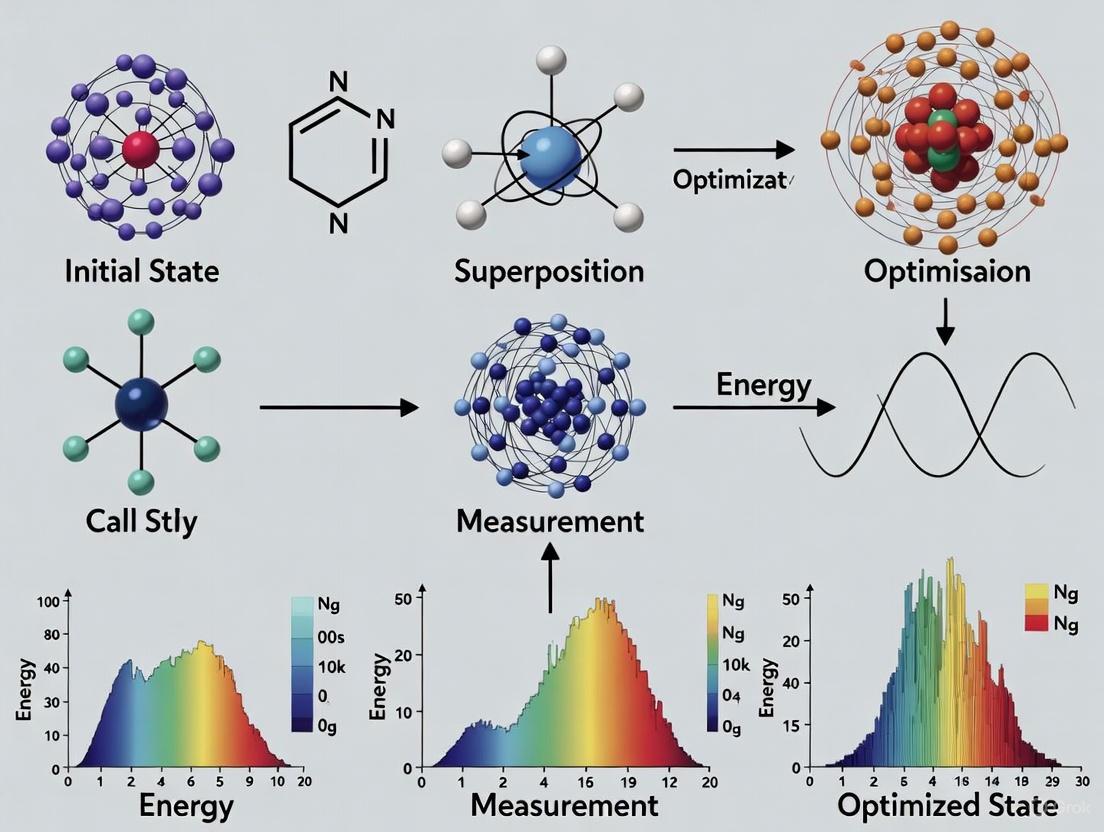
This article explores the transformative role of quantum superposition in chemical optimization for biomedical research.
Harnessing Quantum Superposition: Revolutionizing Chemical Optimization in Drug Discovery
Abstract
This article explores the transformative role of quantum superposition in chemical optimization for biomedical research. It details how the ability of qubits to exist in multiple states simultaneously enables the efficient exploration of vast chemical and material spaces, a task that is intractable for classical computers. The content covers foundational quantum principles, cutting-edge methodological applications like quantum machine learning and quantum phase estimation, strategies to overcome decoherence and error correction challenges, and comparative validation through real-world case studies in drug discovery. Aimed at researchers and drug development professionals, this review synthesizes current progress and future directions, highlighting quantum computing's potential to dramatically accelerate the design of novel therapeutics and materials.
The Quantum Leap: How Superposition Solves Chemistry's Intractable Problems
Quantum superposition, a foundational principle of quantum mechanics, describes a system's capacity to exist in multiple states simultaneously until measured. This phenomenon, which has no classical analog, is harnessed by quantum bits (qubits) to process information in ways fundamentally different from classical binary bits. Within chemical optimization research, this capability enables quantum computers to explore vast molecular configuration spaces and electronic structures concurrently, offering exponential speedups for simulating quantum mechanical systems. This whitepaper provides a technical examination of quantum superposition, detailing its mathematical formalism, physical interpretation, and transformative applications in drug discovery and materials science, supported by recent experimental validations and quantitative performance benchmarks.
In quantum mechanics, superposition states that any linear combination of valid solutions to the Schrödinger equation also constitutes a valid solution [1]. This principle enables quantum systems to exist in multiple distinct states simultaneously, in contrast to classical systems which occupy a single definite state at any given time.
The fundamental mathematical representation of a single qubit in superposition is:
|Ψ⟩ = c₀|0⟩ + c₁|1⟩
Here, |0⟩ and |1⟩ represent the computational basis states (analogous to classical 0 and 1), while c₀ and c₁ are complex probability amplitudes satisfying the normalization condition |c₀|² + |c₁|² = 1 [1]. Upon measurement, the superposition collapses to a definite state: |0⟩ with probability |c₀|² or |1⟩ with probability |c₁|².
For chemical systems, this principle enables the simultaneous representation of multiple molecular configurations, electronic states, and reaction pathways. This capability is particularly valuable for exploring complex quantum phenomena like strongly correlated electrons and transition states that challenge classical computational methods [2].
Mathematical Formalism and Visualization
Multi-Qubit Systems and State Spaces
While a single qubit's state space is two-dimensional, quantum systems grow exponentially with additional qubits. A system of n qubits can represent 2ⁿ possible states simultaneously:
|Ψ⟩ = c₀|00...0⟩ + c₁|00...1⟩ + ... + c_{2ⁿ-1}|11...1⟩
This exponential scaling underpins quantum computing's potential for chemical simulation, where a system of 100 qubits could concurrently represent more states than there are atoms in the visible universe [2].
Visualizing Quantum States
The Bloch sphere provides a geometrical representation of a single qubit's state [3]. Pure basis states |0⟩ and |1⟩ reside at the north and south poles, while superposition states occupy points along the sphere's surface, with precise locations determined by their probability amplitudes.
Table 1: Quantum vs. Classical Information Representation
| Characteristic | Classical Bit | Quantum Bit (Qubit) | ||
|---|---|---|---|---|
| Possible States | 0 or 1 | Any point on Bloch sphere: α | 0⟩ + β | 1⟩ |
| State Representation | Discrete value | Complex probability amplitudes | ||
| Simultaneous States | One state at a time | Multiple states in superposition | ||
| Measurement Outcome | Deterministic | Probabilistic (collapses superposition) | ||
| Information Scaling (n elements) | n bits | 2ⁿ simultaneous states |
For multi-qubit systems, visualization becomes increasingly challenging, often requiring higher-dimensional representations or specialized diagrams to depict entanglement and complex probability amplitude distributions [3].
Quantum Superposition in Chemical Optimization
The Electronic Structure Problem
Accurately determining molecular electronic structures represents a fundamental challenge in computational chemistry. Classical methods, including density functional theory (DFT) and coupled cluster theory, employ approximations that limit their accuracy for complex systems like transition metal catalysts or excited states [4] [2].
Quantum computers naturally model quantum mechanical systems, with superposition enabling simultaneous evaluation of multiple electronic configurations. This capability allows for exact solutions to the electronic Schrödinger equation without the approximations required by classical computational methods [2].
Superposition-Enhanced Molecular Simulation
Key applications of superposition in chemical optimization include:
Molecular Energy Calculations: Quantum algorithms like the Variational Quantum Eigensolver (VQE) leverage superposition to explore multiple electronic configurations simultaneously, efficiently locating ground-state energies [5] [2].
Reaction Pathway Exploration: Superposition enables concurrent evaluation of multiple reaction coordinates and transition states, providing comprehensive reaction landscape mapping [4].
Conformational Analysis: Quantum processors can simultaneously represent multiple molecular conformations, accelerating the identification of stable structures and binding poses [6].
Table 2: Quantum Algorithm Applications in Chemistry
| Algorithm | Chemical Application | Superposition Utilization |
|---|---|---|
| VQE | Molecular ground state energy | Simultaneous evaluation of electronic configurations |
| QAOA | Molecular conformation optimization | Parallel exploration of conformational space |
| QPE | Accurate energy eigenvalues | Quantum parallelism for phase estimation |
| Quantum Machine Learning | Molecular property prediction | Enhanced feature space representation |
Experimental Protocols: Quantum-Enhanced Drug Discovery
Case Study: Targeting KRAS in Cancer Therapy
Recent research demonstrated the first experimental validation of quantum computing for drug discovery, targeting the KRAS protein—a notoriously challenging cancer target previously considered "undruggable" [6].
Hybrid Quantum-Classical Workflow
The experimental protocol employed an integrated approach:
Quantum Machine Learning Implementation
The quantum machine learning model utilized superposition and entanglement to enhance molecular property prediction:
Feature Encoding: Molecular structures were encoded into quantum states using techniques that leverage superposition to represent multiple chemical features simultaneously [6].
Quantum Neural Networks: Parametrized quantum circuits employed superposition states to create complex, high-dimensional representations of molecular structures, enabling more accurate binding affinity predictions [6].
Interference Effects: Quantum interference patterns were manipulated to amplify probabilities of promising molecular candidates while suppressing unlikely candidates [6].
Research Reagent Solutions
Table 3: Essential Research Components for Quantum Chemical Optimization
| Component | Function | Example Implementation |
|---|---|---|
| Quantum Processing Units | Executes quantum algorithms | Superconducting qubits (Google), trapped ions (IonQ) |
| Hybrid Quantum-Classical Framework | Integrates quantum and classical resources | Variational Quantum Algorithms (VQE, QAOA) |
| Chemical Dataset | Training and validation data | Known binders, ultra-large virtual libraries |
| Quantum Machine Learning Library | Implements quantum ML models | Qiskit, PennyLane, TensorFlow Quantum |
| Classical High-Performance Computing | Pre/post-processing, traditional simulation | CPU/GPU clusters for data preparation |
| Experimental Validation Platform | Laboratory confirmation | Biochemical assays, structural biology |
Technical Implementation and Performance Metrics
Current Hardware Capabilities
Recent hardware advancements have significantly improved quantum processor performance:
Table 4: Quantum Hardware Performance Metrics (2025)
| Platform | Qubit Count | Error Rate | Coherence Time | Key Achievement |
|---|---|---|---|---|
| Google Willow | 105 qubits | ~0.000015% per operation | N/A | Exponential error reduction demonstration |
| IBM Roadmap | 1,386 qubits (2025) | Progressive improvement | N/A | Multi-chip quantum communication |
| Microsoft Majorana | Topological qubits | 1000x error reduction | N/A | Inherent stability architecture |
| Neutral Atoms | 112+ atoms | N/A | 0.6 milliseconds | 24 logical qubits entanglement |
Algorithmic Requirements for Chemical Applications
The quantum resources required for practical chemical applications have substantially declined as encoding techniques improve [7]:
Future Directions and Research Challenges
Scalability and Error Correction
Current research focuses on developing fault-tolerant quantum systems capable of maintaining coherent superposition states for extended computations. Recent breakthroughs in quantum error correction have demonstrated:
Logical Qubits: Encoding information across multiple physical qubits to achieve error rates below threshold levels [7].
Topological Protection: Developing inherently stable qubit architectures requiring less error correction overhead [7].
Algorithmic Innovations: New approaches like algorithmic fault tolerance reduce quantum error correction overhead by up to 100 times [7].
Industry Adoption Timeline
Based on current progress, the quantum computing industry projects:
2025-2027: Specialized quantum advantage for specific chemistry problems, particularly in materials science and small molecule drug design [7].
2028-2030: Fault-tolerant systems with 1,000+ logical qubits capable of simulating complex biomolecules [7].
2030+: Quantum-centric supercomputers with 100,000+ qubits for comprehensive chemical discovery pipelines [7].
Quantum superposition represents more than a theoretical curiosity—it provides a fundamental computational resource with transformative potential for chemical optimization research. By enabling simultaneous exploration of exponential state spaces, superposition-based quantum algorithms offer a pathway to overcome fundamental limitations in classical computational chemistry. As hardware capabilities advance and algorithmic innovations continue to reduce resource requirements, quantum computers are poised to become indispensable tools for drug discovery, materials design, and chemical synthesis optimization. The successful integration of quantum and classical approaches, as demonstrated in recent drug discovery initiatives, provides a practical framework for near-term quantum utility in chemical research while laying the foundation for more substantial computational transformations in the coming decade.
The Computational Bottleneck in Classical Chemistry Simulations
Classical computational chemistry faces significant bottlenecks in simulating complex quantum mechanical systems, particularly those involving strong electron correlation, catalytic processes, and biomolecular interactions. These limitations stem from the exponential scaling of computational resources required for accurate quantum mechanical calculations on classical hardware. This whitepaper examines the fundamental constraints of classical computational methods and explores how quantum superposition and other quantum phenomena provide a pathway to overcoming these barriers. By leveraging quantum computational principles, researchers can potentially achieve unprecedented accuracy in molecular simulations, enabling breakthroughs in drug discovery, materials science, and sustainable chemical processes.
Computational chemistry relies on mathematical models to simulate molecular behavior and predict chemical properties. Classical computational methods face fundamental limitations when modeling quantum mechanical systems because the computational resources required grow exponentially with system size. This exponential scaling represents the primary bottleneck in classical computational chemistry [8].
The core challenge lies in the wave function of a quantum system, which exists in a high-dimensional space that grows exponentially with the number of electrons. For a system with N electrons, the wave function requires O(4^N) variables for exact representation—a computational burden that quickly becomes intractable for biologically and industrially relevant molecules [8]. While approximate methods like Density Functional Theory (DFT) have enabled practical applications, they often lack the accuracy required for systems with strong electron correlation, such as transition metal catalysts and certain biomolecules [8] [2].
Limitations of Classical Computational Methods
Algorithmic Scaling and Accuracy Trade-offs
Classical computational chemistry employs a hierarchy of methods with different computational costs and accuracy profiles. The table below summarizes the scaling behavior and limitations of prominent classical algorithms:
Table 1: Scaling and Limitations of Classical Computational Chemistry Methods
| Method | Time Complexity | Key Limitations |
|---|---|---|
| Density Functional Theory (DFT) | O(N³) to O(N⁴) | Accuracy depends on exchange-correlation functional approximation; struggles with strongly correlated systems and van der Waals forces [8] [2] |
| Hartree-Fock (HF) | O(N⁴) | Lacks electron correlation entirely; insufficient accuracy for most chemical applications [8] |
| Møller-Plesset Perturbation Theory (MP2) | O(N⁵) | Limited to weak correlation; can diverge for systems with small band gaps [8] |
| Coupled Cluster Singles & Doubles (CCSD) | O(N⁶) | Computationally expensive; still approximate for systems requiring higher excitations [8] |
| Coupled Cluster with Perturbative Triples (CCSD(T)) | O(N⁷) | "Gold standard" but prohibitive for large systems; memory-intensive [8] |
| Full Configuration Interaction (FCI) | O*(4^N) | Exact solution but computationally feasible only for very small molecules [8] |
Specific Problem Domains with Critical Bottlenecks
Certain chemical systems present particularly severe challenges for classical computational methods:
Strongly correlated electron systems: Transition metal complexes, high-temperature superconductors, and systems with degenerate or near-degenerate states require multireference approaches that scale poorly [8] [2]. For instance, cytochrome P450 enzymes with iron centers and the iron-molybdenum cofactor (FeMoco) in nitrogen fixation exhibit strong electronic correlations that challenge classical methods [8] [2].
Reaction dynamics and barrier crossing: Simulating chemical reaction pathways requires mapping potential energy surfaces and locating transition states—computationally intensive tasks that scale poorly with system size [9].
Solvation effects and environmental influences: Incorporating solvent effects explicitly requires simulating thousands of water molecules, dramatically increasing computational cost. Implicit solvation models introduce approximations that reduce accuracy [10].
Biomolecular systems: Protein-ligand binding, allosteric regulation, and conformational dynamics involve complex energy landscapes with multiple minima that are difficult to sample comprehensively [11] [6].
Quantum Superposition as a Computational Resource
Fundamental Quantum Principles
Quantum computing harnesses three fundamental phenomena that provide potential advantages for chemical simulations:
Superposition: Unlike classical bits that are either 0 or 1, quantum bits (qubits) can exist in superposition states representing both 0 and 1 simultaneously. This enables parallel evaluation of multiple molecular configurations [6] [2].
Entanglement: Quantum entanglement creates strong correlations between qubits that enable compact representation of molecular wave functions, particularly those with strong electron correlation [5] [6].
Interference: Quantum algorithms manipulate probability amplitudes such that correct answers constructively interfere while incorrect answers destructively interfere [6].
These properties allow quantum computers to naturally represent quantum mechanical systems, potentially providing exponential advantages for certain chemical simulations [5] [2].
Quantum Computational Approaches
Several quantum algorithms have been developed specifically for chemical simulations:
Variational Quantum Eigensolver (VQE): A hybrid quantum-classical algorithm that uses a parameterized quantum circuit to prepare trial wave functions and measures the expectation value of the molecular Hamiltonian. The classical optimizer adjusts parameters to minimize energy [5].
Quantum Phase Estimation (QPE): Provides a direct method for measuring energy eigenvalues but requires deeper circuits and greater coherence times [8].
Quantum Machine Learning (QML): Combines quantum computing with machine learning approaches to enhance drug discovery and molecular property prediction [11] [6].
The following diagram illustrates how quantum superposition enables parallel evaluation of multiple molecular configurations simultaneously:
Experimental Evidence and Methodologies
Quantum-Enhanced Drug Discovery
Recent research demonstrates the potential of quantum computing to address bottlenecks in pharmaceutical development:
- KRAS Protein Targeting: Researchers at St. Jude Children's Research Hospital and the University of Toronto developed a hybrid quantum-classical machine learning approach to identify ligands for the KRAS protein, a challenging cancer target. Their methodology combined classical training with quantum-enhanced optimization, generating novel molecules that were experimentally validated [6].
Experimental Protocol:
- Trained a classical machine learning model on database of known KRAS binders
- Implemented quantum-enhanced reward function for molecular quality assessment
- Alternated between classical and quantum model training in iterative optimization
- Generated novel ligand candidates with predicted binding affinity
- Experimental validation identified two promising molecules for further development [6]
- Quantum Protein Folding: IonQ and Kipu Quantum demonstrated quantum simulation of a 12-amino-acid protein chain—the largest protein folding simulation on quantum hardware to date [2].
Quantum Chemistry Simulation Methodologies
Advanced quantum computational methods are being developed to address specific limitations of classical approaches:
Table 2: Quantum Computational Methods for Chemistry Simulations
| Method | Key Features | Application Domains |
|---|---|---|
| Quantum-Classical Auxiliary-Field QMC (QC-AFQMC) | Accurately computes atomic-level forces; enables reaction pathway tracing [9] | Carbon capture materials, molecular dynamics, reaction kinetics |
| Quantum-Selected Configuration Interaction (QSCI) | Scales to 77-qubit level; suitable for strongly correlated systems [10] | Active space calculations, transition metal complexes |
| Projection-Based Embedding (PBE) | Embeds high-accuracy quantum calculation within larger classical system [10] | Catalysis, biomolecular systems, solvent effects |
| Density Matrix Embedding Theory (DMET) | Leverages Schmidt decomposition for subsystem embedding [10] | Strongly correlated electrons, lattice models |
The following diagram illustrates a multi-scale quantum-classical simulation workflow that combines multiple embedding techniques to make efficient use of near-term quantum hardware:
Force Calculation and Reaction Pathway Mapping
IonQ demonstrated a significant advancement in calculating atomic-level forces using quantum-classical methods, achieving greater accuracy than purely classical approaches [9]. This capability is fundamental to modeling chemical reactivity and reaction pathways.
Experimental Protocol:
- Implemented Quantum-Classical Auxiliary-Field Quantum Monte Carlo (QC-AFQMC) algorithm
- Focused computation on critical points where significant changes occur in potential energy surface
- Calculated nuclear forces with quantum accuracy
- Integrated force data into classical molecular dynamics workflows
- Traced complete reaction pathways for carbon capture material design [9]
Table 3: Research Reagent Solutions for Quantum Chemical Simulations
| Resource Category | Specific Solutions | Function/Purpose |
|---|---|---|
| Quantum Algorithms | VQE (Variational Quantum Eigensolver) [5] [2] | Ground state energy calculation for molecular systems |
| QPE (Quantum Phase Estimation) [8] | High-accuracy energy eigenvalue measurement | |
| QAOA (Quantum Approximate Optimization Algorithm) [5] | Multi-objective optimization in process design | |
| Embedding Methods | Projection-Based Embedding (PBE) [10] | Embed high-accuracy quantum region in larger classical system |
| Density Matrix Embedding Theory (DMET) [10] | Subsystem embedding for strongly correlated electrons | |
| QM/MM (Quantum Mechanics/Molecular Mechanics) [10] | Hybrid approach for large biomolecular systems | |
| Error Mitigation | Quantum Error Correction [7] | Maintain quantum coherence and computation fidelity |
| Algorithmic Fault Tolerance [7] | Reduce quantum error correction overhead | |
| Qubit Tapering [10] | Exploit symmetries to reduce qubit requirements | |
| Hybrid Methods | Quantum-Selected Configuration Interaction (QSCI) [10] | Combine quantum and classical CI approaches |
| Quantum Machine Learning (QML) [11] [6] | Enhance predictive models with quantum enhancement | |
| Quantum-Classical Workflows [9] [10] | Distribute computational load across quantum and classical resources |
The computational bottleneck in classical chemistry simulations represents a fundamental limitation in our ability to model complex quantum mechanical systems with high accuracy. While classical methods like DFT and coupled cluster theory have enabled significant progress, their exponential scaling with system size prevents accurate simulation of many biologically and industrially relevant molecules.
Quantum computing, leveraging the principles of superposition and entanglement, offers a promising pathway to overcome these limitations. Experimental evidence from drug discovery, carbon capture materials development, and protein simulation demonstrates the potential of quantum approaches to provide advantages where classical methods face fundamental barriers.
As quantum hardware continues to advance with improved error correction, increased qubit counts, and enhanced coherence times, the integration of quantum and classical computational resources through hybrid algorithms and embedding techniques will likely enable increasingly accurate simulations of complex chemical systems. This progression promises to transform computational chemistry from a field constrained by approximations to one capable of predictive simulation from first principles.
The exploration of chemical compound space is fundamental to advances in drug discovery and materials science. However, this space is astronomically vast, estimated to contain over 10^60 synthetically accessible organic molecules, presenting a fundamental challenge of exponential scaling for classical computational methods [12]. The core of the problem lies in the quantum mechanical nature of molecules themselves; accurately computing molecular properties requires solving the electronic Schrödinger equation, a task whose computational cost grows exponentially with system size for exact methods such as Full Configuration Interaction (FCI) [13]. This exponential scaling creates a formidable bottleneck in the computational pipeline, limiting the accuracy and throughput of virtual screening and rational design efforts. This whitepaper examines how quantum superposition—a fundamental principle of quantum mechanics—provides a revolutionary approach to navigating this vastness, potentially transforming computational chemistry and optimization research.
The Exponential Scaling Problem in Classical Computational Chemistry
The Root Cause: Quantum Mechanics and Computational Complexity
At its heart, chemistry is a quantum problem. The behavior of electrons, which dictates molecular structure, stability, and reactivity, is governed by the Schrödinger equation. The exponential scaling of classical computational methods arises because the many-body wavefunction, which describes a system of N electrons, exists in a Hilbert space whose dimension grows exponentially with N [13]. This makes the task of finding the ground-state energy for a general chemical system with two-body interactions, such as those described by the non-relativistic Coulomb operator, provably difficult. Research suggests this problem belongs to the Quantum Merlin-Arthur (QMA)-complete complexity class, meaning it is believed that no classical algorithm can solve it in polynomial time [13].
Table 1: Classical Computational Methods and Their Scaling Challenges
| Computational Method | Theoretical Scaling | Primary Bottleneck |
|---|---|---|
| Full Configuration Interaction (FCI) | Exponential with electron number | Size of the many-body wavefunction [13] |
| Density Functional Theory (DFT) | Polynomial (e.g., N³) | Accuracy of the unknown exchange-correlation functional [13] |
| Coupled Cluster (CCSD(T)) | N⁷ | Treatment of strong electron correlation |
| Quantum Trajectory / Bohmian Dynamics | Exponential | Complexity of the quantum potential [13] |
Practical Consequences for Drug Discovery
This theoretical complexity has direct, tangible consequences for the pharmaceutical industry. The drug discovery process remains "time-consuming, expensive, and challenging," often taking over a decade and costing billions of dollars for a single drug to reach the market [12]. Classical computers struggle to accurately simulate the quantum behavior of electrons, particularly in systems with strongly correlated electrons, which are common in important drug targets like metalloenzymes [2]. While approximations like Density Functional Theory (DFT) are widely used, they are not universally accurate, forcing a trade-off between computational feasibility and predictive precision [2].
Quantum Superposition as a Computational Resource
Principles of Superposition in Quantum Computing
Quantum superposition is a foundational principle of quantum mechanics, stating that a quantum system can exist in a linear combination of all its possible states simultaneously until it is measured [1]. In quantum computing, this property is harnessed via the qubit (quantum bit). Unlike a classical bit, which is definitively 0 or 1, a qubit can be in a state described by |Ψ⟩ = α|0⟩ + β|1⟩, where α and β are complex probability amplitudes [14]. The power of superposition grows exponentially with the number of qubits: a system of N qubits can represent 2^N states concurrently [2]. This intrinsic parallelism allows quantum computers to explore a vast landscape of possibilities—such as the configurations of a molecule's electrons—in a single computational step, a capability that is fundamentally impossible for classical machines.
Overcoming Exponential Scaling with Quantum Algorithms
Quantum algorithms leverage superposition, along with entanglement and interference, to tackle problems with exponential scaling. The Quantum Phase Estimation (QPE) algorithm, a cornerstone of fault-tolerant quantum computing, can in principle calculate molecular energies with a cost that scales polynomially with system size and precision, a significant theoretical advantage [15]. In the current Noisy Intermediate-Scale Quantum (NISQ) era, hybrid algorithms like the Variational Quantum Eigensolver (VQE) are used. VQE employs a parameterized quantum circuit, prepared in a superposed state, to generate an ansatz for a molecule's wavefunction. A classical optimizer then tunes the parameters to minimize the expectation value of the molecular Hamiltonian, effectively finding the ground-state energy [2]. The ability of the quantum processor to prepare and analyze superposed states is key to its efficiency.
Experimental Protocols: Demonstrating Quantum Utility in Chemistry
Protocol 1: Quantum Machine Learning for Ligand Discovery
A landmark study provided the first experimental validation of quantum computing in a drug discovery project with experimental follow-up, targeting the oncogenic KRAS protein [6].
Table 2: Research Reagent Solutions for Quantum-Accelerated Discovery
| Reagent / Resource | Function in the Protocol |
|---|---|
| KRAS Protein Target | A clinically relevant, "undruggable" oncoprotein used to validate the approach [6]. |
| Database of Known Binders | A classical dataset of experimentally confirmed and theoretical KRAS binders used to train the initial model [6]. |
| Classical Machine Learning Model | A generative model (e.g., classical AI) that produces an initial set of candidate ligand molecules. |
| Quantum Machine Learning (QML) Model | A quantum-enhanced model that refines the candidates by exploring chemical space more efficiently [6]. |
| Hybrid Quantum-Classical Filter/Reward Function | Evaluates the quality of generated molecules, allowing only high-quality candidates to pass for further training cycles [6]. |
Methodology:
- Data Preparation and Classical Training: A database of all molecules experimentally confirmed to bind to KRAS, along with over 100,000 theoretical binders from an ultra-large virtual screen, was used to train a classical machine learning model [6].
- Hybrid Model Optimization: The results from the classical model were fed into a reward function. A quantum machine learning model was then trained and combined with the classical model in an iterative feedback loop, cycling between training the classical and quantum models to optimize them in concert [6].
- Ligand Generation and Validation: The optimized hybrid model generated novel ligand molecules predicted to bind KRAS. The most promising candidates were synthesized and their binding was experimentally validated, confirming the real-world potential of two molecules [6].
<100 chars> Hybrid Quantum-Classical Discovery Workflow
Protocol 2: Ground-State Energy Estimation of Complex Clusters
The calculation of ground-state energies for complex molecular systems is a primary target for quantum advantage. Iron-sulfur clusters, such as the FeMo-cofactor (FeMoco) in nitrogenase, serve as benchmark problems due to their complex electronic structures and importance in biology [15] [2].
Methodology:
- Active Space Selection: The electronic structure of the metal cluster (e.g., [2Fe-2S], [4Fe-4S], FeMo-cofactor) is represented in an active space comprising metal 3d and sulfur 3p orbitals constructed from Kohn-Sham orbitals [15].
- Hamiltonian Formulation: The electronic Hamiltonian is encoded into qubits using a fermion-to-qubit mapping (e.g., Jordan-Wigner or Bravyi-Kitaev).
- State Preparation and Energy Estimation:
- Ansatz State Preparation: A heuristic quantum state (e.g., Hartree-Fock or a more correlated ansatz) is prepared on the quantum processor. The overlap (S) between this initial state and the true ground state is critical, as the number of measurement repetitions scales as poly(1/S) [15].
- Adiabatic State Preparation (ASP): The system is initialized in the easily preparable ground state of a simple Hamiltonian. The Hamiltonian is then evolved adiabatically to the target Hamiltonian. This method's success depends on a protected ground-state gap throughout the evolution [15].
- Energy Calculation: For fault-tolerant systems, Quantum Phase Estimation (QPE) can be used. On NISQ devices, the Variational Quantum Eigensolver (VQE) is employed to compute the expectation value of the Hamiltonian and minimize the energy [15].
<100 chars> Quantum Ground-State Energy Estimation
Current Limitations and Future Directions
Despite its promise, the practical application of quantum computing to chemical optimization faces significant hurdles. Current quantum hardware is characterized as Noisy Intermediate-Scale Quantum (NISQ), with limited qubit counts, short coherence times, and high error rates that reduce the reliability of computations [12]. The resource estimates for simulating industrially relevant problems are daunting; modeling the FeMo-cofactor was estimated to require millions of physical qubits, far beyond the hundreds available today [2]. Furthermore, the performance of heuristic quantum algorithms, such as VQE, depends heavily on the efficiency of quantum state preparation. It has been argued that for generic chemical problems, evidence for an exponential quantum advantage over the best classical heuristics has yet to be found, and polynomial speedups may be a more prudent near-term expectation [15]. Future progress hinges on hardware advances, improved error correction, and the development of more robust quantum algorithms.
The challenge of exponential scaling in navigating chemical compound space is a central problem in modern computational chemistry and drug discovery. Quantum superposition offers a fundamentally powerful approach to overcoming this bottleneck, enabling quantum computers to evaluate a multitude of molecular states simultaneously. While current technology is not yet mature enough to realize a generic exponential advantage, pioneering experimental protocols in ligand discovery and ground-state energy estimation demonstrate the tangible potential of this paradigm. As quantum hardware continues to evolve, the integration of quantum superposition into chemical optimization workflows is poised to redefine the limits of what is computationally possible, ultimately accelerating the design of new therapeutics and materials.
Quantum computing represents a paradigm shift in computational science, and one of its most promising early applications is the native simulation of quantum mechanical systems. For researchers in chemical optimization and drug development, this offers the potential to transcend the limitations of classical computers. The core thesis is that quantum superposition and entanglement enable a natural representation of molecular systems, allowing for the efficient calculation of properties that are classically intractable. This intrinsic suitability, often termed the "native simulation" advantage, stems from the fact that quantum systems are best described by the same laws that govern qubits. Where a classical computer must exponentially increase its resources to model a growing quantum system, a quantum processor can, in principle, mimic its behavior more directly. This perspective explores the realization of this advantage, detailing the theoretical underpinnings, experimental protocols, and emerging practical applications that are beginning to impact chemical research [16].
The challenge in computational chemistry, particularly in drug discovery, lies in accurately modeling electron correlations within molecular systems. Classical computational methods, such as Full Configuration Interaction (FCI), provide high accuracy but are prohibitively expensive for all but the smallest molecules. This creates a scalability barrier for researching complex pharmaceuticals, catalysts, or novel materials. Quantum computers bypass this bottleneck by operating on the same physical principles as the molecular systems being simulated. By leveraging quantum superposition, a qubit can represent the simultaneous existence of multiple electron configurations, while entanglement can capture the complex, correlated dance of electrons within a molecule. This fundamental alignment between the computational substrate and the problem domain is the source of the quantum advantage in chemical simulation [17] [18].
Theoretical Foundations: From Quantum Principles to Chemical Accuracy
The pursuit of quantum advantage in simulation is built upon a foundation of key quantum algorithms and the critical metric of "chemical accuracy."
Core Algorithmic Approaches
- Variational Quantum Eigensolver (VQE): A hybrid quantum-classical algorithm designed for noisy intermediate-scale quantum (NISQ) devices. VQE uses a parameterized quantum circuit to prepare a trial wavefunction for a molecule, whose energy is measured on the quantum processor. A classical optimizer then varies the parameters to minimize the energy, iteratively converging towards the ground state energy. Its strength lies in its relatively low circuit depth and inherent resilience to certain types of noise [19].
- Quantum Phase Estimation (QPE): A coherent algorithm that provides exponential speedup for energy estimation but requires deep, fault-tolerant quantum circuits. QPE projects the state of a system onto the eigenbasis of the Hamiltonian, allowing for a precise determination of its energy. While not currently feasible for large-scale problems on NISQ hardware, it remains a cornerstone algorithm for the fault-tolerant era [20].
- Quantum-Inspired Techniques: As noted in research, some apparent quantum advantages can be matched by clever classical algorithms. For instance, classical importance sampling can sometimes estimate inner products between exponentially large vectors, mimicking a proposed quantum advantage. This underscores the importance of rigorous verification and the co-design of algorithms and hardware to achieve genuine, verifiable advantages [18].
The Benchmark of Chemical Accuracy
The gold standard for quantum chemistry calculations is "chemical accuracy," typically defined as an error in energy calculations of 1 kcal/mol (or approximately 1.6 millihartrees). Achieving this level of precision is critical for predicting reaction rates, binding affinities, and other thermochemical properties relevant to drug design. Recent experiments have demonstrated this benchmark on quantum hardware. For example, a collaboration between 1QBit, Dow, and IonQ achieved chemical accuracy for a 10-hydrogen atom ring system, marking the largest molecular system simulated with such accuracy on a quantum computer at the time [17].
Table 1: Key Algorithmic Approaches for Quantum Simulation in Chemistry
| Algorithm | Principle | Resource Requirements | Current Feasibility | Key Advantage |
|---|---|---|---|---|
| VQE | Hybrid variational principle | Moderate circuit depth, resilient to noise | High on NISQ devices | Noise resilience, works with current hardware |
| QPE | Coherent eigenvalue estimation | Deep circuits, fault tolerance | Low (requires FTQC) | Provable exponential speedup, high precision |
| QAOA | Hybrid optimization for combinatorial problems | Moderate circuit depth | Medium for specific problems | Applicable to classical optimization problems |
| QPE with Improved Trotter | Better product formulas for energy estimation | Reduced circuit depth for a given accuracy | Improving with new formulas | Quadratically better error bounds [20] |
Experimental Paradigms and Methodologies
Distinct experimental approaches have been developed to harness quantum advantage, each with a unique methodology for encoding and solving chemical problems.
The Trapped Molecules Protocol (Harvard)
A groundbreaking protocol demonstrated the use of ultracold polar molecules as qubits.
- Objective: To create and control a quantum logic gate between individual molecules, establishing a new platform for quantum computation and simulation.
- Experimental Workflow:
- Molecule Trapping: Sodium-cesium (NaCs) molecules are cooled to ultracold temperatures and trapped in isolation using optical tweezers (highly focused laser beams).
- State Initialization: The internal quantum states of the molecules are prepared in a well-defined initial state.
- Entangling Gate: The electric dipole-dipole interactions between two molecules are activated and carefully controlled. By manipulating how the molecules rotate relative to each other, a two-qubit iSWAP gate is executed.
- State Measurement: The final quantum state of the molecules is read out. The team measured the resulting two-qubit Bell state with 94% fidelity, a key metric for gate performance [21].
- Significance: This work is the first to demonstrate a quantum gate with molecules, unlocking the potential to use their rich internal structure for more complex quantum simulations.
The Problem Decomposition Protocol (1QBit, Dow, IonQ)
This protocol addresses the limited qubit count on current hardware by breaking down large problems.
- Objective: To simulate the electronic structure of a model chemical system (a ring of 10 hydrogen atoms) with chemical accuracy on a trapped-ion quantum computer.
- Experimental Workflow:
- Problem Decomposition: The large molecular system is broken down into smaller, more manageable subproblems. This can reduce the required number of qubits by a factor of up to 10 while preserving accuracy.
- Quantum Subproblem Solving: Each subproblem is mapped to a quantum circuit and solved on IonQ's trapped-ion quantum computer.
- Error Mitigation: Residual errors from the quantum hardware are efficiently mitigated using classical post-processing techniques, further increasing the accuracy of the result.
- Result Reconstruction: The solutions to the subproblems are recombined to produce the final, accurate energy calculation for the full molecule [17].
- Significance: This approach provides a practical framework for extending the reach of current quantum computers to larger, more industrially relevant molecules.
The Digital-Analog Quantum Computing (DAQC) Paradigm
DAQC merges the precise control of digital quantum gates with the continuous, natural dynamics of analog quantum simulators.
- Objective: To harness the natural physics of quantum processors to solve complex problems with less algorithmic runtime and reduced susceptibility to errors.
- Experimental Workflow:
- Analog Encoding: The problem, such as a molecular graph or a fermion-boson model, is natively encoded into the hardware's analog interactions (e.g., atom-atom interactions in a neutral atom processor).
- Digital Control: Precise digital gate operations are applied to the system to steer the evolution and perform specific computations.
- Evolution and Measurement: The system evolves under this hybrid digital-analog control, and the final state is measured.
- Application Example - Quantum Evolution Kernel (QEK): PASQAL uses this methodology to create a graph kernel for molecular toxicity assessment. Molecular graphs are encoded in neutral atom arrays, and their quantum evolution generates an energy histogram that serves as a unique fingerprint. The similarity between two molecules is then computed by comparing these histograms, enabling machine learning classification with performance comparable to best-in-class classical methods [22] [23].
The following diagram illustrates the logical structure and workflow of the core methodologies discussed.
Quantitative Benchmarks and Industry Applications
The theoretical potential of quantum simulation is now being validated with quantitative benchmarks and integrated into commercial platforms targeting real-world industrial problems.
Table 2: Recent Performance Benchmarks and Industrial Platforms
| System / Platform | Reported Performance / Accuracy | Application Domain | Significance |
|---|---|---|---|
| IonQ (1QBit, Dow) | Chemical accuracy (1 kcal/mol) for H₁₀ ring [17] | Materials Science | Largest molecule simulated with chemical accuracy on a quantum computer at the time. |
| QIDO Platform | InQuanto software: Up to 10x higher accuracy vs. open-source software [24] | Drug Discovery, Materials | Integrated platform combining high-performance quantum chemistry with quantum computing. |
| Google Quantum AI | Random Circuit Sampling in ~5 mins (vs. 10²⁵ years classically) [7] | Quantum Supremacy | Demonstrated exponential computational advantage for a specific task. |
| Pasqal QEK | Toxicity classification comparable to best-in-class classical methods [23] | Cheminformatics | Quantum machine learning applied to a real-world chemical problem (Predictive Toxicity Challenge). |
| Harvard Trapped Molecules | Two-qubit gate fidelity of 94% [21] | Quantum Computing Hardware | Established molecules as a viable platform for quantum logic operations. |
Emerging Commercial and Research Applications
- Drug Discovery: Quantum simulations are being applied to model key biological interactions. For instance, Google collaborated with Boehringer Ingelheim to simulate Cytochrome P450, a critical enzyme in drug metabolism, with greater efficiency and precision than traditional methods [7]. The QIDO platform also aims to accelerate reaction mechanism elucidation and enzyme design for pharmaceutical research [24].
- Materials and Battery Development: Quantum computers are used to simulate novel materials for energy applications. BMW and Quantinuum demonstrated quantum-enhanced simulations of lithium compounds for advanced electric vehicle batteries. Furthermore, problem decomposition methods are seen as a path to simulating industrially relevant compounds, which could require over 2000 qubits without such techniques [17] [19].
- Financial and Logistical Optimization: While not strictly quantum chemistry, the principles of quantum simulation are applied to complex optimization. PASQAL's neutral atom processors efficiently solve graph-based problems like the Maximum Cut, which can be applied to financial risk analysis by modeling networks of counterparties [23].
The Scientist's Toolkit: Essential Research Reagents and Materials
The experiments and platforms described rely on a suite of specialized "research reagents" – both physical and computational – that form the essential toolkit for advancing quantum simulation.
Table 3: Key "Research Reagent" Solutions for Quantum Simulation
| Tool / Material | Function in Quantum Simulation | Example Use Case |
|---|---|---|
| Optical Tweezers | To trap and position individual atoms or molecules with high precision for quantum operations. | Trapping NaCs molecules for gate operations (Harvard) [21]; arranging neutral atoms into graphs (PASQAL) [23]. |
| Ultra-cold Environments | To minimize thermal vibrations and decoherence, preserving fragile quantum states for computation. | Maintaining quantum coherence in trapped ions (IonQ) [17] and neutral atoms (Pasqal) [23]. |
| Quantum Error Mitigation Software | Classical algorithms that post-process quantum results to reduce the impact of hardware noise. | Error mitigation in the problem decomposition workflow (1QBit/Dow) [17]; zero-noise extrapolation in software stacks [19]. |
| Quantum Chemistry Orchestrators (QIDO) | Software that automates complex quantum-classical hybrid workflows, making quantum chemistry accessible to non-experts. | Automating reaction coordinate identification and active space selection for industrial chemists [24]. |
| Digital-Analog Compilers | Software that optimally partitions a computational task between digital gates and analog hardware dynamics. | Implementing DACQO for optimization with trapped ions or superconducting circuits [22]. |
The field of quantum simulation is transitioning from a purely theoretical discipline to one producing verifiable results and commercial impact. The native simulation of quantum mechanical systems, powered by quantum superposition, is demonstrating tangible advantages in achieving chemical accuracy for increasingly complex molecules. Protocols involving trapped molecules, problem decomposition, and digital-analog paradigms provide a clear roadmap for near-term research.
The trajectory points towards a future where hybrid quantum-classical systems are deeply embedded in chemical research pipelines. With hardware roadmaps projecting fault-tolerant systems with hundreds of logical qubits by 2029-2030, the scope of simulable systems will expand dramatically [24] [7]. This progress promises to redefine the discovery process in drug development and materials science, enabling researchers to tackle problems of a scale and complexity that remain firmly beyond the reach of classical computation alone. The focus is now shifting from proving abstract advantage to delivering practical utility, marking the dawn of a new era in computational chemistry.
Entanglement and interference, fundamental phenomena of quantum mechanics, have transitioned from theoretical concepts to core pillars enabling advanced technological applications. In quantum computing, these principles are being harnessed to overcome limitations in classical computational methods, particularly in the realms of quantum sensing, quantum chemistry, and drug discovery. This whitepaper examines the operational principles of entanglement and interference through the lens of recent experimental breakthroughs, detailing how controlled quantum state manipulation achieves unprecedented sensitivity in measurement devices and accelerates molecular simulations. The analysis encompasses technical methodologies, quantitative performance metrics, and emerging hardware platforms that collectively demonstrate the transformative potential of quantum-enhanced technologies for solving complex optimization problems in chemical research and pharmaceutical development.
Quantum computing represents a fundamental shift from classical computation by leveraging the unique properties of quantum mechanics—superposition, entanglement, and interference—to process information in ways that are intrinsically different from binary logic. While quantum superposition allows a quantum bit (qubit) to exist in multiple states simultaneously, entanglement creates strongly correlated quantum systems where the state of one qubit instantaneously influences another, regardless of physical distance. Quantum interference, meanwhile, enables the strategic amplification or cancellation of probability amplitudes to steer quantum systems toward desired computational outcomes. Together, these principles form an interconnected framework that underpins quantum advantage in computational tasks, particularly those involving exponential complexity such as molecular system simulation and many-body quantum chemistry problems.
The application of these principles to chemical optimization research addresses fundamental limitations of classical computational methods. Traditional approaches to molecular simulation and drug discovery often rely on approximations that compromise accuracy for computational feasibility, particularly for complex systems exhibiting strong electron correlation. Quantum computing, by contrast, offers a native framework for simulating quantum mechanical systems, potentially enabling exact solutions to problems that are currently intractable. This whitepaper examines how the coordinated application of entanglement and interference is creating new pathways for scientific discovery, with particular emphasis on experimentally validated implementations in sensing and chemical simulation.
Fundamental Principles and Theoretical Framework
Quantum Entanglement: Generating Non-Local Correlations
Quantum entanglement represents a class of quantum correlations that cannot be described by classical probability theory, often called "spooky action at a distance" in historical contexts. Formally, entanglement describes a situation where the quantum state of multiple qubits cannot be factored into separate states for individual qubits. For a two-qubit system, the prototypical example is the Bell state: |Φ⁺⟩ = (|00⟩ + |11⟩)/√2, where measurement outcomes for the two qubits are perfectly correlated regardless of their spatial separation. In computational applications, entanglement serves as a resource that enables quantum parallelism—the simultaneous evaluation of multiple computational paths—and enhances measurement sensitivity beyond classical limits.
The operationalization of entanglement requires precise control over qubit interactions and isolation from environmental decoherence. In physical implementations, entanglement is generated through controlled interactions between qubits, such as the application of two-qubit gates (e.g., CNOT gates) in superconducting circuits or the exploitation of natural interactions in atomic systems. The quality of entanglement is quantified through metrics such as concurrence and entanglement entropy, while its persistence is limited by coherence times that vary across hardware platforms from microseconds to seconds depending on the qubit technology and environmental isolation methods.
Quantum Interference: Manipulating Probability Amplitudes
Quantum interference arises from the wave-like nature of quantum systems, where the complex probability amplitudes of different computational paths can constructively or destructively interfere. In quantum algorithms, interference is strategically engineered to amplify probability amplitudes corresponding to correct solutions while canceling those leading to incorrect results. Mathematically, this process is governed by the unitary transformations applied to qubit states, with the interference pattern determined by the relative phases between different components of the quantum state vector.
The implementation of quantum interference requires precise control over qubit phases, typically achieved through single-qubit rotation operations. In the context of optimization algorithms like the Quantum Approximate Optimization Algorithm (QAOA) and variational methods, interference patterns are tuned through classical optimization of quantum circuit parameters to systematically enhance solution quality. The effectiveness of interference is highly dependent on the accuracy of gate operations and the coherence of the quantum system, with even small errors in phase rotation potentially leading to destructive rather than constructive interference patterns.
Experimental Manifestations and Performance Metrics
Entanglement-Enhanced Quantum Sensing
Recent experimental work has demonstrated the practical advantages of entanglement in quantum sensing applications. Researchers have developed an entanglement-enhanced sensing protocol using nitrogen-vacancy (NV) centers in diamond that overcomes fundamental limitations in single-spin detection. The experiment employed carefully engineered entangled states between NV center pairs to amplify target spin signals through quantum interference while simultaneously suppressing environmental noise [25].
Table 1: Performance Metrics of Entanglement-Enhanced Sensing
| Performance Metric | Single NV Center | Entangled NV Pair | Enhancement Factor |
|---|---|---|---|
| Sensitivity | Baseline | 3.4-fold improvement | 3.4x |
| Spatial Resolution | Baseline | 1.6-fold improvement | 1.6x |
| Stochastic Transition Detection | Not achievable | Direct observation of spin state transitions | N/A |
The experimental protocol achieved simultaneous detection of static and dynamic spin species, enabling the direct observation of stochastic transitions between different spin states through identification of state-dependent coupling strengths. This dual functionality provides a viable pathway toward atomic-scale characterization of quantum materials and interfaces, with applications spanning condensed matter physics, quantum chemistry, and single-molecule magnetic resonance imaging [25].
Figure 1: Entanglement-Enhanced Sensing Workflow. The process begins with laser initialization of nitrogen-vacancy (NV) centers, followed by generation of entangled states between NV pairs. After application of a sensing sequence and interaction with target spins, quantum interference enables signal amplification before final readout.
Quantum Interference in Chemical System Simulation
In computational chemistry, quantum interference principles are being leveraged to overcome limitations in classical simulation methods. A landmark study demonstrated the application of quantum machine learning to drug discovery, specifically targeting the KRAS protein—a notoriously challenging cancer target often described as "undruggable" [6]. The research employed a hybrid quantum-classical approach where quantum interference was harnessed to enhance the quality of generated molecular structures predicted to bind effectively to the KRAS protein.
The experimental workflow alternated between classical and quantum machine learning models, with the quantum component exploiting interference patterns to refine molecular candidates. This approach identified two novel ligand molecules with confirmed binding potential to KRAS mutants for which no drugs currently exist. The quantum-enhanced model outperformed purely classical approaches in generating high-quality molecular candidates, demonstrating the practical utility of quantum interference in optimizing complex chemical search spaces [6].
Table 2: Quantum Algorithm Applications in Chemical Simulation
| Application Domain | Quantum Algorithm | Key Innovation | Performance Advantage |
|---|---|---|---|
| Drug Discovery | Hybrid Quantum-Classical Machine Learning | Quantum-enhanced molecular candidate generation | Identified novel KRAS binders missed by classical methods |
| Quantum Chemistry | Generator Coordinate Inspired Method (GCIM) | Dynamic subspace construction bypassing barren plateaus | Balanced accuracy and efficiency for strongly correlated systems |
| Error Correction | Color Code | Transversal gates with minimal error propagation | 0.0027 additional error per operation; 1.56x logical error reduction |
Methodological Approaches and Technical Implementation
Hybrid Quantum-Classical Computational Frameworks
The current state of quantum hardware, characterized by limited qubit counts and susceptibility to noise, has necessitated the development of hybrid quantum-classical approaches that distribute computational tasks according to their respective strengths. These frameworks leverage classical computers for tasks they perform efficiently while reserving quantum processors for specific computations where they provide an advantage, such as simulating quantum systems or optimizing complex cost functions.
A significant innovation in this domain is the Generator Coordinate Inspired Method (GCIM), which addresses limitations in the Variational Quantum Eigensolver (VQE) approach. While VQE employs a highly nonlinear parametrization of the wave function that often encounters optimization challenges like barren plateaus, GCIM constructs a dynamic subspace using non-orthogonal, overcomplete many-body bases [26]. This approach projects the system Hamiltonian into an effective Hamiltonian, transforming a constrained optimization problem into a generalized eigenvalue problem that can be solved more efficiently. The method employs an adaptive scheme that robustly constructs many-body basis sets from a pool of Unitary Coupled Cluster (UCC) excitation generators, enabling a hierarchical strategy that balances subspace expansion and ansatz optimization [27] [26].
Figure 2: GCIM Quantum-Classical Workflow. The Generator Coordinate Inspired Method begins with reference state initialization, constructs a pool of unitary coupled cluster generators, performs adaptive basis selection, builds a non-orthogonal subspace, projects the Hamiltonian into an effective form, and solves the generalized eigenvalue problem to obtain quantum chemical properties.
Advanced Quantum Error Correction Protocols
The practical implementation of quantum algorithms requires sophisticated error correction techniques to mitigate the effects of environmental noise and hardware imperfections. Recent research has demonstrated the viability of the color code approach as an alternative to the more established surface code for quantum error correction [28]. The color code organizes qubits in a trivalent lattice structure where each vertex connects to three differently colored regions, simplifying certain logical operations compared to the surface code while introducing complexity in error detection.
Experimental implementation of the color code on superconducting qubits achieved a 1.56-fold reduction in logical error rates when increasing the code distance from three to five. The approach demonstrated high-fidelity logical operations, including transversal Clifford gates with an additional error rate of just 0.0027 per operation—significantly lower than typical idling error correction cycles. The protocol also achieved magic state injection with fidelities exceeding 99% and implemented lattice surgery for fault-tolerant operations between logical qubits, teleporting logical states with fidelities between 86.5% and 90.7% [28].
Table 3: Research Reagent Solutions for Quantum-Enhanced Chemistry
| Resource/Platform | Type | Primary Function | Key Features |
|---|---|---|---|
| Nitrogen-Vacancy (NV) Centers in Diamond | Quantum Sensor | Nanoscale magnetic resonance imaging | Single-spin detection under ambient conditions; entanglement-enhanced sensitivity |
| QUELO v2.3 (QSimulate) | Software Platform | Quantum-powered drug discovery | Quantum mechanics engine for molecular simulations 1000x faster than traditional methods |
| Generator Coordinate Inspired Method (GCIM) | Algorithmic Framework | Strongly correlated electron system simulation | Adaptive subspace construction bypassing optimization challenges |
| Color Code Quantum Error Correction | Error Correction Protocol | Fault-tolerant quantum computation | Trivalent lattice structure enabling efficient logical operations |
| Hybrid Quantum-Classical Machine Learning | Computational Approach | Molecular candidate generation | Quantum-enhanced generative models for ligand discovery |
Emerging Applications and Future Research Directions
The integration of entanglement and interference principles into practical applications is accelerating across multiple domains of chemical research. In pharmaceutical development, quantum computing is being deployed to address previously "undruggable" targets through enhanced molecular simulation. Beyond drug discovery, quantum-enhanced approaches are demonstrating utility in materials science, catalyst design, and renewable energy research—particularly for problems involving strong electron correlation that challenge classical computational methods [5] [7].
The evolving hardware landscape suggests rapid advancement in quantum capabilities relevant to chemical optimization. Recent breakthroughs have pushed error rates to record lows of 0.000015% per operation, while researchers at QuEra have published algorithmic fault tolerance techniques that reduce quantum error correction overhead by up to 100 times [7]. IBM's fault-tolerant roadmap targets the Quantum Starling system with 200 logical qubits capable of executing 100 million error-corrected operations by 2029, with plans to extend to 1,000 logical qubits by the early 2030s. These developments suggest that quantum systems capable of addressing Department of Energy scientific workloads—including advanced materials science and quantum chemistry applications—may become practical within five to ten years [7].
Entanglement and interference have emerged from foundational quantum theory to become operational principles driving advances in computational chemistry and optimization research. The experimental demonstrations detailed in this whitepaper—from entanglement-enhanced sensing with NV centers to quantum machine learning for drug discovery—provide compelling evidence that these quantum phenomena offer tangible advantages for problems intractable to classical approaches. As quantum hardware continues to mature through innovations in error correction and system scaling, and as algorithmic methodologies become increasingly sophisticated through approaches like the Generator Coordinate Inspired Method, the integration of entanglement and interference principles into mainstream chemical research represents not merely a theoretical possibility but an inevitable evolution of scientific capability. The ongoing translation of these quantum principles from experimental demonstrations to practical tools promises to fundamentally expand the boundaries of computational chemistry and pharmaceutical development.
From Theory to Therapy: Quantum Algorithms Reshaping Biomedical Research
The exploration of chemical compound space is a fundamental challenge in material design and drug discovery. The number of possible molecules that can be obtained from a set of atomic species grows exponentially with system size, severely limiting the efficiency of classical sampling algorithms [29]. Quantum superposition, the phenomenon where a quantum system can exist in multiple states simultaneously, provides a revolutionary approach to this problem. Unlike classical bits, which can only be 0 or 1, qubits can represent both states at once, enabling quantum computers to explore exponentially large chemical spaces efficiently [14]. This foundational principle underpins a new generation of quantum algorithms designed to unlock advanced chemical optimization research.
This technical guide provides an in-depth analysis of three core algorithmic families—the Variational Quantum Eigensolver (VQE), Quantum Phase Estimation (QPE), and Quantum Machine Learning (QML)—that leverage superposition to transform computational chemistry. We detail their theoretical foundations, present structured experimental protocols, and visualize their workflows, offering researchers a practical toolkit for deploying these methods on contemporary quantum hardware.
Core Algorithmic Foundations
Variational Quantum Eigensolver (VQE)
The Variational Quantum Eigensolver (VQE) is a hybrid quantum-classical algorithm designed to approximate the ground state energy of a quantum Hamiltonian, a central task in quantum chemistry and materials science [30] [31]. It is a leading approach for leveraging today's noisy intermediate-scale quantum (NISQ) devices.
Theoretical Framework
The standard VQE protocol targets the minimum eigenvalue of a Hamiltonian ( \hat{H} ) by preparing a parameterized quantum state, or ansatz, ( |\psi(\vec{\theta})\rangle = U(\vec{\theta}) |0\rangle ). The algorithm minimizes the energy expectation value: [ E(\vec{\theta}) = \langle\psi(\vec{\theta})|\hat{H}|\psi(\vec{\theta})\rangle ] The quantum device measures this expectation value via repeated projective measurements, typically after mapping ( \hat{H} ) to a sum of Pauli strings. A classical optimizer then iteratively updates the parameters ( \vec{\theta} ) [30]. Being variational, the measured ( E(\vec{\theta}) ) always provides an upper bound to the true ground state energy.
Key Ansätze for Chemical Simulation
The choice of ansatz is critical, balancing expressivity, convergence, and hardware feasibility.
- Chemistry-Inspired Ansätze: Such as Unitary Coupled Cluster (UCCSD), encode physical structure by acting on a Hartree-Fock reference state with exponentials of excitation operators. They are physically motivated but can lead to high circuit depths [30].
- Hardware-Efficient Ansätze: Constructed from a device's native gate set and connectivity. They are optimized for low depth but may break physical symmetries and suffer from barren plateaus [30].
- Adaptive Ansätze: Methods like ADAPT-VQE iteratively grow the ansatz circuit by selecting operators based on the energy gradient, improving convergence and compactness [30].
Table 1: Key VQE Ansätze and Their Properties
| Ansatz Class | Key Features | Typical Limitations |
|---|---|---|
| Chemistry-Inspired (e.g., UCCSD) | Exploits physical structure, physically motivated | High circuit depth, limited scalability |
| Hardware-Efficient | Low depth, tailored to specific quantum hardware | May break physical symmetries, barren plateaus |
| Adaptive (e.g., ADAPT-VQE) | Circuit grown on demand, resource-efficient | Increased classical optimization overhead |
Algorithmic Enhancements
- Constraint Incorporation: Physical constraints (e.g., fixed electron number) can be included as penalty terms in the cost function to ensure the solution resides in the correct physical sector [30]: [ E{\text{constrained}} = \langle\Psi|H|\Psi\rangle + \sumi \mui (\langle\Psi|\hat{C}i|\Psi\rangle - C_i)^2 ]
- Error Mitigation: Techniques like variational denoising and noise-aware optimizers are used to improve accuracy on real devices [30].
Quantum Phase Estimation (QPE)
Quantum Phase Estimation (QPE) is a cornerstone quantum algorithm for extracting eigenvalues (phases) of unitary operators with high precision [32]. It serves as a key subroutine in many quantum algorithms, including Shor's factoring algorithm, and provides a pathway to exponential speedups for quantum chemistry simulations [32] [31].
Theoretical Framework
QPE estimates the phase ( \phi ) imparted by a unitary operator ( U ) on one of its eigenvectors ( |\psi\rangle ), such that ( U|\psi\rangle = e^{2\pi i\phi} |\psi\rangle ). The algorithm utilizes a dual-register setup:
- An eigenstate register initialized to the eigenvector ( |\psi\rangle ).
- A control register of ancillary qubits initialized into a superposition via Hadamard gates.
The core mechanism involves applying controlled-( U^{2^k} ) operations between the registers, followed by an inverse Quantum Fourier Transform (QFT). The inverse QFT acts on the control register, converting the accumulated phase information into a binary representation of ( \phi ) that can be read out through direct measurement [31].
Applications in Chemical Research
In quantum chemistry, the Hamiltonian ( H ) is Hermitian. The time-evolution operator ( U = e^{iHt} ) is unitary, allowing QPE to be used for precise determination of molecular energy eigenvalues and spectra [31]. This enables the study of reaction dynamics, excited states, and other properties with a level of accuracy that is challenging for near-term variational approaches.
Quantum Machine Learning (QML)
Quantum Machine Learning seeks to enhance classical ML models by leveraging quantum phenomena. In the context of chemical optimization, QML algorithms can process high-dimensional chemical data or find patterns in molecular structures more efficiently than classical systems [31] [33].
Key Techniques and Challenges
- Data Encoding: A primary challenge is encoding classical data (e.g., molecular structures) into quantum states. Techniques include:
- Angle Encoding: Classical data points are encoded into the rotation angles of qubits [33].
- More advanced methods for handling large, complex datasets require multi-qubit systems.
- Algorithm Families:
- Quantum Neural Networks (QNNs): Parameterized quantum circuits trained as function approximators.
- Quantum Kernel Methods: Use quantum computers to compute kernel matrices for classical support vector machines, potentially enabling the analysis of complex molecular similarities [34].
The potential of QML lies in accelerating tasks like molecular property prediction and reaction classification, though the field remains in early stages of research [33].
Experimental Protocols & Workflows
Protocol 1: Molecular Ground State Energy Calculation using VQE
This protocol details the steps for calculating the ground state energy of a target molecule, such as H₂ or LiH, using VQE.
Research Reagent Solutions
| Item | Function in Experiment |
|---|---|
| Parameterized Quantum Circuit (Ansatz) | Encodes the trial wavefunction for the molecular state; core of the quantum computation. |
| Classical Optimizer (e.g., COBYLA, SPSA) | Iteratively updates ansatz parameters to minimize the energy expectation value. |
| Quantum Processor / Simulator | Executes the quantum circuit to prepare the ansatz state and measure the energy. |
| Qubit Hamiltonian (Pauli Sum) | Represents the molecular Hamiltonian in a form measurable on a quantum device. |
Step-by-Step Methodology:
- Problem Formulation:
- Select a target molecule and its atomic coordinates.
- Generate the electronic structure Hamiltonian ( \hat{H} ) using a classical computational chemistry package (e.g., PySCF).
- Apply a fermion-to-qubit mapping (e.g., Jordan-Wigner or Bravyi-Kitaev transformation) to express ( \hat{H} ) as a sum of Pauli strings: ( \hat{H} = \sumi ci P_i ).
Ansatz Selection and Initialization:
- Choose an ansatz suitable for the problem and hardware. For instance, use a hardware-efficient ansatz for a near-term device or a UCCSD ansatz for a more chemically accurate simulation.
- Initialize the circuit parameters ( \vec{\theta} ). This can be random or based on a heuristic (e.g., parameters from a smaller, related system).
Hybrid Optimization Loop:
- Quantum Execution: On the quantum processor, prepare the state ( |\psi(\vec{\theta})\rangle ) and measure the expectation value ( \langle Pi \rangle ) for each Pauli term ( Pi ) in the Hamiltonian.
- Classical Computation: Combine the measurement results to compute the total energy ( E(\vec{\theta}) = \sumi ci \langle P_i \rangle ).
- Parameter Update: The classical optimizer analyzes ( E(\vec{\theta}) ) and suggests a new set of parameters ( \vec{\theta}' ) to lower the energy.
- This loop repeats until convergence is reached (e.g., energy change falls below a set threshold).
Result Validation:
- Compare the final VQE energy with results from classical methods like Full Configuration Interaction (FCI) to assess accuracy.
- Report the energy and the optimized parameters. The optimized state ( |\psi(\vec{\theta}_{opt})\rangle ) is an approximation of the molecular ground state.
Protocol 2: Alchemical Material Design with Quantum Superposition
This protocol is based on a novel algorithm that uses quantum superposition to sample the chemical compound space efficiently, optimizing for a target property in both atomic and electronic spaces [29].
Step-by-Step Methodology:
- Alchemical Superposition:
- The space of candidate molecular structures is represented as a linear superposition of all possible atomic compositions within a defined search space. This is the key step that leverages quantum parallelism.
- A parameterized "alchemical" Hamiltonian ( \hat{H}_{\text{alchemy}} ) is defined, which acts on both the electronic degrees of freedom and the "alchemical" degrees of freedom representing the atomic identities.
Unitary Evolution and Property Estimation:
- A quantum circuit implements a unitary evolution under the alchemical Hamiltonian. The initial state is a superposition over compositions.
- For a given set of parameters, the quantum device estimates the property of interest (e.g., binding energy to a target).
Classical Co-optimization:
- A classical optimizer varies the parameters of the alchemical Hamiltonian.
- The optimization process is designed to simultaneously steer the electronic structure towards its ground state and the alchemical superposition towards the atomic composition that optimizes the target property.
Measurement and Collapse:
- Upon convergence, measuring the alchemical register causes the superposition to collapse, revealing the molecular identity that is predicted to be optimal.
- The electronic register, when measured, provides the electronic structure of the optimized molecule.
Comparative Analysis & Industry Outlook
Algorithm Comparison and Hardware Requirements
The choice between VQE and QPE is dictated by the trade-off between near-term feasibility and long-term precision. VQAs are the workhorses of the NISQ era, while QPE remains a primary target for future fault-tolerant hardware.
Table 2: Comparative Analysis of VQE, QPE, and QML for Chemical Research
| Feature | Variational Quantum Eigensolver (VQE) | Quantum Phase Estimation (QPE) | Quantum Machine Learning (QML) |
|---|---|---|---|
| Primary Use Case | Ground state energy estimation, molecular simulation | High-precision energy & spectrum calculation, factoring | Molecular property prediction, pattern recognition |
| Algorithm Type | Hybrid quantum-classical | Purely quantum (with classical post-processing) | Hybrid or purely quantum |
| Hardware Target | NISQ devices | Fault-tolerant quantum computers | NISQ and future hardware |
| Key Advantage | Resilient to noise, feasible today | Provable precision & speedup for specific problems | Potential for speedup on high-dimensional data |
| Key Challenge | Accuracy limited by noise and ansatz choice, barren plateaus | Requires deep circuits and error correction | Efficient data encoding, trainability |
| Resource Scaling | Lower depth, but many iterations | High circuit depth and qubit count | Varies by model |
Industry Trajectory and Readiness
The quantum computing industry is in a phase of rapid transition from theoretical research to commercial exploration. Key trends shaping the application of these algorithms include:
- Investment and Market Growth: The global quantum computing market is projected to grow from USD 1.8-3.5 billion in 2025 to potentially USD 20.2 billion by 2030, reflecting a compound annual growth rate (CAGR) of over 40% [7]. This surge is supported by both venture capital and significant government investment.
- Hardware Breakthroughs: Progress in quantum hardware is accelerating. In 2025, Google's Willow chip (105 qubits) demonstrated exponential error reduction, a critical step towards fault-tolerance [7]. Companies like IBM have detailed roadmaps extending to quantum-centric supercomputers with 100,000 qubits by 2033 [7].
- Path to Quantum Advantage: The first documented cases of practical quantum advantage are emerging. For example, in March 2025, IonQ and Ansys ran a medical device simulation that outperformed classical high-performance computing by 12% [7]. In quantum chemistry, studies suggest that quantum systems could address key Department of Energy scientific workloads within 5-10 years [7].
- The NISQ Context: Despite progress, fully fault-tolerant quantum computers remain years away. The current focus for applied research in chemistry and finance is on hybrid quantum-classical algorithms like VQE and QAOA, which are designed to function within the constraints of NISQ devices [33].
The algorithmic toolkit comprising VQE, QPE, and QML, powered by the fundamental principle of quantum superposition, is poised to redefine the landscape of chemical optimization research. VQE offers a practical, immediate path for exploring quantum chemistry on existing hardware. QPE represents the gold standard for future, high-precision simulation, while QML opens avenues for data-driven discovery. As hardware continues to scale and error rates fall, the integration of these quantum tools into the researcher's workflow will become increasingly seamless, promising to accelerate the design of novel materials and therapeutic drugs at an unprecedented pace.
The Kirsten rat sarcoma viral oncogene homolog (KRAS) protein is a pivotal driver in oncogenesis, representing the most frequently mutated oncogene in human cancers. For decades, KRAS was considered "undruggable" due to its structural challenges: a smooth surface with few deep pockets for drug binding and picomolar affinity for GTP/GDP, making competitive inhibition exceptionally difficult [35] [36]. Approximately 30% of all human cancers harbor RAS mutations, with KRAS mutations being particularly prevalent in pancreatic ductal adenocarcinoma (PDAC) (82.1%), colorectal cancer (CRC) (~40%), and non-small cell lung cancer (NSCLC) (21.20%) [35]. The most common mutations occur at codon G12, producing distinct mutant subtypes: G12D (29.19%), G12V (22.17%), and G12C (13.43%) [35]. These mutations lock KRAS in its active GTP-bound state, leading to constitutive signaling through downstream pathways like RAF-MEK-ERK and PI3K-AKT-mTOR, which drive uncontrolled cell proliferation and survival [35] [37].
Recent years have witnessed a paradigm shift with the successful development of direct KRAS inhibitors, notably targeting the KRAS G12C mutation. The approval of sotorasib and adagrasib marked a watershed moment in cancer therapeutics, proving that KRAS was indeed druggable [36]. Concurrently, emerging technologies, particularly quantum computing, are now pushing these boundaries further by enabling precise molecular simulations that could accelerate drug discovery for previously inaccessible targets. Quantum computing exploits quantum superposition and entanglement to perform calculations intractable for classical computers, potentially revolutionizing the optimization of chemical structures for therapeutic intervention [6] [11].
KRAS Biology and Signaling Pathways
KRAS functions as a molecular switch, cycling between an active GTP-bound state (ON) and an inactive GDP-bound state (OFF). This cycling is regulated by guanine nucleotide exchange factors (GEFs) like SOS, which promote GTP loading and activation, and GTPase-activating proteins (GAPs) like neurofibromin 1 (NF1), which accelerate GTP hydrolysis to GDP, thereby inactivating the protein [35] [37]. Oncogenic mutations, most frequently at codons 12, 13, and 61, impair GAP-mediated hydrolysis, trapping KRAS in its active state and resulting in continuous downstream signaling that promotes tumorigenesis [37] [36].
The following diagram illustrates the core KRAS signaling pathway and the consequence of oncogenic mutations:
Figure 1: KRAS Signaling Pathway and Oncogenic Activation. Oncogenic mutations (e.g., at codon 12) impair GAP-mediated hydrolysis, locking KRAS in its active GTP-bound state and leading to constitutive signaling that drives tumorigenesis.
Classical Approaches to Targeting KRAS
Direct KRAS Inhibitors
The breakthrough in targeting KRAS G12C came from discovering an allosteric pocket adjacent to the mutant cysteine residue, known as the switch II pocket. Inhibitors that covalently bind to this cysteine trap KRAS in its inactive GDP-bound conformation [36]. The structural evolution of these inhibitors began with fragment-based approaches, leading to the development of approved drugs.
Table 1: Evolution of Direct KRAS G12C Inhibitors
| Compound Name | Stage | Key Structural Feature | Significance |
|---|---|---|---|
| Compound 12 | Fragment | Initial covalent binder | Identified via tethering; starting point for optimization [36] |
| ARS-853 | Preclinical | Optimized linker | First molecule with cellular activity (IC50 ~2 μmol/L) [36] |
| ARS-1620 | Preclinical | Quinazoline core | Demonstrated in vivo efficacy; blueprint for later drugs [36] |
| Sotorasib (AMG 510) | FDA-Approved | Extended N1 side chain | First-approved KRAS G12C inhibitor for NSCLC [36] |
| Adagrasib (MRTX849) | FDA-Approved | Piperazine-pyrimidine core | CNS-penetrant; approved for NSCLC [36] |
These first-generation RAS(OFF) inhibitors specifically target the inactive state of the KRAS G12C mutant. However, they demonstrate a response rate of only 30–40% and a median progression-free survival of approximately 6 months, with resistance frequently emerging [35]. Newer strategies aim to overcome these limitations, including:
- RAS(ON) Inhibitors: These molecules, such as RMC-6236 (pan-RAS), RMC-9805 (G12D), and RMC-5127 (G12V), target the active, GTP-bound state of KRAS. They often function by stabilizing a complex between mutant KRAS and a chaperone protein, sterically blocking effector interactions [37].
- Pan-KRAS and Pan-RAS Inhibitors: Designed to target multiple KRAS mutants or all RAS isoforms (KRAS, NRAS, HRAS), respectively, to overcome tumor heterogeneity and resistance but carry a potential risk of toxicity from inhibiting wild-type RAS in healthy tissues [37].
- SOS1 Inhibitors: Indirect inhibitors like BI 1701963 prevent SOS1-mediated nucleotide exchange, reducing the pool of active KRAS and are often used in combination with direct inhibitors to enhance response [37].
Targeting Intrinsically Disordered Proteins with AI
Nearly half of the human proteome consists of intrinsically disordered proteins (IDPs) or regions (IDRs), which lack stable structures and have been historically considered undruggable. Recent AI-driven methodologies have broken this barrier. The Baker Lab developed two complementary strategies:
- The 'logos' Method: This approach assembles binding proteins from a library of 1,000 pre-made parts to create tight binders for disordered targets. It successfully generated binders for 39 of 43 tested targets, including one that blocked the opioid peptide dynorphin in human cells [38] [39].
- The RFdiffusion Method: This uses generative AI to design proteins that wrap around flexible targets. It has produced high-affinity binders (3–100 nM) for targets like amylin (dissolving fibrils linked to type 2 diabetes) and the pathogenic prion core [38] [39].
The Quantum Computing Frontier in Drug Discovery
Theoretical Foundations
Quantum computing leverages the principles of quantum mechanics to process information in fundamentally new ways. Unlike classical bits (0 or 1), quantum bits (qubits) can exist in a superposition of both 0 and 1 simultaneously. When qubits become entangled, they form correlated states where the action on one instantly influences the other, regardless of distance. Quantum algorithms manipulate these superposed and entangled states, using quantum interference to amplify correct answers and cancel out incorrect ones, providing a potential for exponential speedup for specific computational problems [6].
For quantum chemistry, this is transformative. Simulating molecular systems requires solving the Schrödinger equation, a task that is exponentially complex for classical computers as system size grows. Quantum computers, operating under the same quantum rules as the molecules they are simulating, are inherently better suited for this task, enabling highly accurate predictions of molecular interaction energies, electronic properties, and reaction pathways from first principles [6] [11].
Application to KRAS Ligand Discovery: An Experimental Protocol
A landmark study from St. Jude Children's Research Hospital and the University of Toronto provided the first experimental proof-of-principle for using quantum computing in KRAS drug discovery [6]. The following workflow details the methodology:
Figure 2: Quantum-Classical Hybrid Workflow for KRAS Ligand Discovery. This protocol cycles between classical and quantum machine learning models to generate and optimize novel drug candidates, with final experimental validation.
Step-by-Step Protocol:
Data Curation and Classical Model Initialization:
- Input Data: A comprehensive dataset of all molecules experimentally confirmed to bind KRAS is compiled. This is supplemented with over 100,000 theoretical KRAS binders obtained from an ultra-large virtual screen [6].
- Classical Training: A classical machine-learning model is trained on this composite dataset to learn the features of KRAS-binding molecules.
Hybrid Quantum-Classical Optimization:
- The output from the classical model is fed into a filter/reward function that evaluates the quality of generated molecular structures.
- A quantum machine learning (QML) model is then trained. The QML model leverages quantum superposition to explore the vast chemical space of possible ligands more efficiently than classical algorithms alone.
- A cyclical optimization process is performed: the classical and quantum models are trained in concert, with the QML model refining the predictions of the classical model and vice versa [6].
Ligand Generation and Experimental Validation:
- The optimized hybrid model generates novel ligand molecules predicted to bind KRAS with high affinity.
- The most promising candidates are synthesized and tested in experimental assays (e.g., binding affinity, functional cell-based assays). The St. Jude study identified two novel molecules with real-world potential for KRAS, providing experimental validation for the entire pipeline [6].
The Scientist's Toolkit: Research Reagent Solutions
Table 2: Essential Research Reagents and Platforms for KRAS and Quantum Computing Research
| Reagent/Platform | Function/Application | Specific Use-Case |
|---|---|---|
| Willow Quantum Chip (Google) | 105 superconducting qubit processor | Executed benchmark calculations 13,000x faster than classical supercomputers [7]. |
| Quantum-as-a-Service (QaaS) | Cloud-based quantum compute access (e.g., IBM, Microsoft) | Democratizes access to quantum hardware for algorithm testing and simulation [7]. |
| RFdiffusion Software | Generative AI for protein design | Designs de novo protein binders to flexible IDPs and KRAS mutants [38] [39]. |
| 'Logos' Parts Library | Pre-fabricated protein binder library | Enables combinatorial assembly of binders against intrinsically disordered targets [38] [39]. |
| KRAS G12C Mutant Cell Lines | In vitro models for inhibitor testing | Essential for validating efficacy and resistance mechanisms of direct inhibitors (e.g., Sotorasib) [37] [36]. |
| Variational Quantum Eigensolver (VQE) | Hybrid quantum-classical algorithm | Calculates ground-state energy of molecular systems; used in quantum chemistry simulations [5] [7]. |
The journey from declaring KRAS "undruggable" to having FDA-approved therapies represents a triumph of modern chemical biology and targeted therapy. While direct inhibitors like sotorasib and adagrasib have validated KRAS as a drug target, challenges remain, including limited response rates, the emergence of resistance, and the lack of effective drugs for common mutations like G12D and G12V in pancreatic cancer [35] [37].
The integration of quantum computing and generative AI marks the beginning of a new era. Quantum computing's potential to perform first-principles molecular simulations with unprecedented accuracy could dramatically accelerate the discovery of next-generation KRAS inhibitors, particularly for non-G12C mutations and complex disordered proteins [6] [11]. As quantum hardware continues to advance, with error rates falling and qubit counts rising, the industry is poised for a transformation. McKinsey estimates that quantum computing could create $200 billion to $500 billion in value for the life sciences industry by 2035, primarily through accelerated R&D [11].
The convergence of structural biology, artificial intelligence, and quantum computation holds the promise of not only overcoming current limitations in targeting KRAS but also of systematically dismantling the "undruggable" paradigm for a wide array of challenging disease targets. This multi-disciplinary approach will likely form the cornerstone of the next wave of innovation in precision oncology and therapeutic discovery.
The field of material science and drug discovery faces a fundamental challenge: the chemical compound space (CCS)—the ensemble of all possible molecules that can be constructed from a given set of atoms—grows exponentially with molecular size, creating an optimization landscape that classical computers struggle to navigate efficiently. Current estimates suggest the number of stable small organic molecules exceeds 10^60, while only approximately 100 million compounds have been characterized to date [40]. This vastness represents both unprecedented opportunity and formidable computational challenge for discovering new materials with tailored properties.
Quantum computing introduces a transformative approach to this challenge through the principle of quantum superposition, which enables the simultaneous representation and evaluation of multiple molecular structures and compositions. Unlike classical computing, where bits represent discrete 0 or 1 states, quantum bits (qubits) can exist in superposition, representing multiple states simultaneously [6]. This intrinsic property allows quantum algorithms to explore exponentially large chemical spaces more efficiently than classical sampling algorithms by encoding all candidate structures as a linear superposition within the Hilbert space of a quantum register [40]. The emerging paradigm of alchemical optimization exploits this capability to simultaneously optimize both atomic composition and electronic structure, opening new frontiers in computational chemistry and drug discovery.
Theoretical Foundations: Quantum Mechanical Principles
Quantum Superposition in Chemical Space Exploration
Quantum superposition provides the fundamental mechanism enabling simultaneous exploration of compositional and structural configurations. In classical computing, evaluating different molecular structures requires sequential computation, creating a bottleneck when navigating exponentially growing chemical spaces. Quantum computation circumvents this limitation by leveraging the ability of qubits to represent multiple states concurrently.
In practical terms, this means a quantum computer can load an exponentially large set of potential drug candidates as a linear combination of structures and evaluate their properties through quantum parallelism [40]. The algorithm then selectively amplifies solutions with desirable characteristics through quantum interference effects, similar to how waves constructively and destructively interfere [6]. This approach achieves a twofold quantum advantage: efficient solution of the Schrödinger equation and simultaneous scanning of an exponential set of potential molecular candidates [40].
The Alchemical Hamiltonian Framework
The mathematical core of this approach is the "alchemical" Hamiltonian, which describes a linear superposition of all possible molecular structures generated by inserting molecular fragments into a defined molecular scaffold. For a system with multiple atomic positions and possible element choices, the Hamiltonian takes the form:
Where:
- r and R are collective vectors of electronic and nuclear coordinates
- α represents the "alchemical weights" subject to constraint ∑α_{Is} = 1
- Ẑ represents the valence charges dependent on atomic species
- Vₙₙ represents nuclear-nuclear interactions
- Vₑₑ represents electron-electron interactions [40]
This Hamiltonian formulation enables continuous interpolation between different elemental compositions by treating atomic species as quantum superpositions rather than discrete variables, effectively creating a continuous parameter space for chemical optimization [41].
Computational Methodologies and Algorithms
Quantum Algorithm for Alchemical Optimization
The quantum alchemical optimization protocol follows a structured workflow that leverages quantum computational advantages at multiple stages:
Problem Encoding: Candidate molecular structures are encoded as linear superpositions in the Hilbert space of an N-qubit quantum register, with atomic composition represented through alchemical weighting parameters.
Hamiltonian Transformation: The alchemical Hamiltonian is transformed into the second quantization framework using an atomic orbital basis followed by conversion to an orthonormal Löwdin basis to handle non-orthogonality [40].
Property Evaluation: The algorithm computes target properties (e.g., binding energies) through quantum expectation value estimation, leveraging quantum parallelism to evaluate multiple candidates simultaneously.
Optimization Loop: Classical optimization routines adjust alchemical parameters based on quantum-computed properties, iteratively converging toward optimal molecular structures.
For drug discovery applications, the cost function typically targets the binding energy with a biological target:
Where E(R,α) is the vacuum expectation value of the Hamiltonian, and E_C(R,α,R̃,q) is the expectation value in the presence of external charges representing the target binding pocket [40].
Implementation on Quantum Hardware
Recent experimental demonstrations have implemented variations of this approach on available quantum processors. These implementations typically employ hybrid quantum-classical algorithms such as the Variational Quantum Eigensolver (VQE) with optimized unitary coupled cluster ansätze [42]. The VQE algorithm uses a parameterized quantum circuit to prepare the molecular wavefunction and measures the expectation value of the Hamiltonian on quantum hardware, while a classical optimizer adjusts the parameters to minimize the energy.
Practical implementations must address challenges including:
- Qubit connectivity constraints
- Gate fidelity and coherence time limitations
- Measurement overhead
- Error mitigation strategies
Table 1: Quantum Algorithm Components for Alchemical Optimization
| Algorithm Component | Function | Implementation Consideration |
|---|---|---|
| State Preparation | Encodes molecular wavefunction | Requires efficient ansatz circuits |
| Hamiltonian Measurement | Estimates molecular properties | Demands error mitigation strategies |
| Parameter Optimization | Adjusts alchemical weights | Uses classical co-processors |
| Solution Extraction | Identifies optimal structures | Amplifies promising candidates |
Experimental Protocols and Validation
Quantum-Enhanced Drug Discovery Protocol
A validated experimental protocol for quantum-enhanced drug discovery was demonstrated targeting the KRAS protein, a challenging oncology target frequently deemed "undruggable" [6]. The methodology proceeded through these stages:
Data Curation and Classical Pre-training
- Compiled a database of all molecules experimentally confirmed to bind KRAS
- Included over 100,000 theoretical KRAS binders from ultra-large virtual screening
- Trained an initial classical machine learning model on this dataset
Quantum Model Integration
- Implemented a quantum machine learning model that received outputs from the classical model
- Applied a filter/reward function to evaluate generated molecular quality
- Cycled iteratively between classical and quantum model training to achieve concert optimization
Molecular Generation and Validation
- Generated novel ligand molecules predicted to bind KRAS
- Synthesized and experimentally tested top candidates
- Identified two molecules with real-world potential for KRAS inhibition [6]
This approach successfully identified ligands for one of the most important cancer drug targets, with experimental validation confirming the practical utility of the discovered molecules.
Material Design Optimization Protocol
For material science applications, a specialized protocol enables simultaneous optimization of composition and structure:
Scaffold Definition: Establish a base molecular structure with defined atomic positions for potential element substitution.
Compositional Space Definition: Specify the set of allowable atomic species at each variable position in the scaffold.
Quantum Resource Allocation: Map the problem to available quantum hardware using:
- Qubit assignment for electron orbitals in Löwdin basis
- Parameterized circuit design for wavefunction preparation
- Measurement strategy for property evaluation
Iterative Optimization: Execute the hybrid quantum-classical loop until convergence criteria are met for alchemical parameters.
Structure Validation: Apply classical computational chemistry methods to verify the stability and properties of identified candidates.
Table 2: Performance Metrics for Quantum-Enhanced Material Design
| Metric | Classical Approach | Quantum-Enhanced Approach |
|---|---|---|
| Chemical Space Sampling | Linear scaling with system size | Exponential scaling via superposition |
| Electronic Structure Calculation | Polynomial to exponential scaling | Favorable scaling on quantum hardware |
| Composition Optimization | Separate calculations per composition | Simultaneous optimization via alchemical variables |
| Experimental Success Rate | Limited by discrete sampling | Enhanced through continuous composition space |
Visualization of Quantum Alchemical Optimization
Workflow Diagram
Workflow Diagram Title: Quantum Alchemical Optimization Process
Alchemical Hamiltonian Structure
Hamiltonian Diagram Title: Alchemical Hamiltonian Components
Research Reagent Solutions: Essential Materials
Table 3: Essential Research Components for Quantum Alchemical Optimization
| Component | Function | Implementation Example |
|---|---|---|
| Molecular Scaffold | Defines base molecular structure with variable atomic positions | Cholesterol derivative with functional group attachment points [40] |
| Alchemical Weights (α) | Continuous parameters interpolating between elemental compositions | Parameters satisfying ∑α_{Is} = 1 for each atomic position I [40] |
| Effective Core Potentials (ECP) | Represents core electrons not treated explicitly | Pseudopotentials for different atomic species accounting for core electrons [40] |
| Quantum Processing Unit | Executes quantum state preparation and measurement | IBM Quantum hardware with superconducting qubits [40] |
| Classical Optimizer | Adjusts alchemical parameters based on cost function | Gradient-based methods for continuous parameter optimization [41] |
| Basis Set | Single-electron basis functions for second quantization | STO-3G Gaussian basis set transformed to Löwdin orthogonal basis [40] |
| Cost Function | Scores molecular candidates for target application | Binding energy with external charges representing protein target [40] |
Future Perspectives and Challenges
The integration of alchemical optimization with quantum computing represents a paradigm shift in computational chemistry and materials design, but several challenges remain before widespread practical application becomes feasible. Current quantum hardware limitations—including qubit coherence times, gate fidelities, and qubit counts—restrict the complexity of molecules that can be practically simulated [6]. However, the rapid pace of hardware development suggests these barriers may be overcome in the coming years.
Future research directions likely include:
- Development of more efficient ansätze for molecular wavefunction preparation
- Advanced error mitigation strategies for noisy intermediate-scale quantum (NISQ) devices
- Hybrid algorithms that partition problems between classical and quantum resources based on their respective strengths
- Integration of machine learning with quantum alchemical optimization for enhanced performance
As these technical challenges are addressed, quantum alchemical optimization is poised to become a cornerstone technology for the digital and sustainable transformation of the chemical industry, enabling intelligent automation and data-driven sustainability in molecular design [5]. The unique ability to simultaneously optimize composition and structure through quantum superposition will likely open new frontiers in drug discovery, catalyst design, and functional material development.
Hybrid Quantum-Classical Approaches for Near-Term Application
The exploration of quantum superposition is revolutionizing the field of chemical optimization research. Unlike classical bits, quantum bits (qubits) can exist in superpositions of states, enabling the simultaneous exploration of vast molecular configuration spaces. This property is particularly transformative for computational quantum chemistry, where accurately determining molecular properties and chemical dynamics requires insights into electrons' energies and probable locations—a task that is analytically unsolvable for many-body systems on classical computers [43]. Hybrid quantum-classical computing architectures have emerged as the most viable path for leveraging these quantum effects on near-term, noisy intermediate-scale quantum (NISQ) hardware, creating a symbiotic relationship where quantum processors handle the complex quantum mechanical simulations while classical computers manage optimization routines and error mitigation [43] [44]. This complementary approach allows researchers to tackle chemical optimization problems that were previously computationally intractable, from drug discovery to materials science, by harnessing quantum superposition to navigate the exponential complexity of molecular wavefunctions more efficiently than purely classical methods can achieve.
Core Methodologies and Quantitative Performance
Key Hybrid Algorithms for Chemical Simulation
Hybrid quantum-classical algorithms represent the forefront of computational quantum chemistry, designed specifically to work within the constraints of current NISQ devices while providing tangible improvements over purely classical methods.
Variational Quantum Eigensolver (VQE): The VQE algorithm uses quantum computers to prepare trial wavefunctions and measure their energies, while classical optimizers adjust parameters to minimize this energy [43]. This approach is particularly valuable for solving electronic structure problems, where it employs parametrized quantum circuits to explore the energy landscape of molecular systems. The algorithm's variational nature makes it inherently resilient to certain types of noise, though its performance depends critically on the choice of ansatz and optimizer [42].
Quantum Approximate Optimization Algorithm (QAOA): While more generalized for combinatorial optimization, QAOA has shown promise for chemical optimization problems involving configuration interactions and molecular geometry optimization [5]. The algorithm alternates between applying problem-specific and mixer Hamiltonians, with parameters optimized classically to find the optimal solution.
Unitary Coupled-Cluster (UCC) Ansatz: This specific ansatz represents trial wavefunctions as exponentials of unitary operators acting on an initial reference state, particularly effective for capturing electron correlation effects in molecular systems [43]. Variants like the paired Unitary Coupled-Cluster with Double Excitations (pUCCD) ansatz project the UCC wavefunction onto physically relevant subspaces, better reflecting conservation symmetries and incorporating two-level electronic excitations [43].
Enhanced Approaches: pUCCD-DNN Integration
Recent breakthroughs have combined pUCCD with deep neural networks (DNNs) to create the pUCCD-DNN approach, which addresses key limitations of traditional optimizers [43]. Unlike "memoryless" traditional optimizers that perform each wavefunction optimization from scratch, DNNs can learn from past optimizations of other molecules, significantly improving efficiency and reducing the number of quantum hardware calls required [43]. This integration has demonstrated remarkable accuracy, reducing mean absolute error of calculated energies by two orders of magnitude compared to non-DNN pUCCD methods and showing significant improvement in modeling complex chemical reactions like the isomerization of cyclobutadiene [43].
Table 1: Performance Comparison of Hybrid Quantum-Classical Methods in Computational Chemistry
| Method | Key Features | Reported Accuracy | Experimental Scale |
|---|---|---|---|
| pUCCD-DNN | Combines pUCCD ansatz with deep neural network optimization | Mean absolute error reduced by 2 orders of magnitude vs non-DNN pUCCD [43] | Successfully modeled isomerization of cyclobutadiene [43] |
| Optimized UCC Ansatz | Systematic hardware enhancements with error mitigation | Error suppression by ~2 orders of magnitude [45] | Scaled to 12 qubits for ground-state energy calculations [45] |
| Traditional VQE | Standard variational approach with classical optimizers | Limited accuracy in high-dimensional spaces, vulnerable to noise [43] | Typically demonstrated on small molecules (e.g., H₂, LiH) |
| Classical DFT | Density functional theory with approximate functionals | Limited by approximations in electron density representation [43] | Standard for medium-sized molecules but accuracy limited |
Experimental Protocols and Implementation
Hardware Infrastructure and Integration
Successful implementation of hybrid quantum-classical approaches requires specialized hardware infrastructure that seamlessly integrates quantum processing units (QPUs) with classical high-performance computing (HPC) resources. The pioneering implementation at the Poznań Supercomputing and Networking Center (PCSS) demonstrates this architecture, featuring multiple QPUs (ORCA Computing PT-1 systems) installed alongside traditional CPU and GPU nodes in an active data center room with standard facilities [44]. These photonic quantum processors operate at room temperature and support up to 4 photons interfering in 8 optical modes ("qumodes"), with an average power consumption of approximately 600W [44]. The integration uses standard Ethernet networking and Slurm for workload management, aligning with current HPC norms while enabling multiple users to execute hybrid algorithms on multiple QPUs and GPUs simultaneously [44].
The software stack for these hybrid systems typically employs platforms like NVIDIA CUDA-Q, which provides a unified development environment for heterogeneous classical-quantum architectures [44]. This QPU-agnostic platform extends familiar CUDA programming concepts to quantum computing, allowing developers to target computation on GPU, CPU, and QPU resources from within a single program while maintaining efficient integration with AI and HPC workflows [44].
Detailed Experimental Protocol: VQE with Optimized UCC Ansatz
The following protocol outlines the experimental procedure for implementing a Variational Quantum Eigensolver with an optimized Unitary Coupled-Cluster ansatz for molecular ground-state energy calculation, based on recently demonstrated methodologies [42] [45]:
Molecular System Specification: Define the target molecular system (e.g., H₂, LiH, or more complex organic molecules) and obtain its second-quantized Hamiltonian using classical electronic structure methods such as Hartree-Fock.
Qubit Mapping: Transform the fermionic Hamiltonian to qubit representation using encoding schemes such as Jordan-Wigner or Bravyi-Kitaev transformation, mapping molecular orbitals to qubits.
Ansatz Selection and Parameterization: Select an appropriate UCC ansatz (standard UCC or restricted variants like pUCCD) and initialize parameters. The ansatz circuit depth should be optimized considering current hardware limitations.
Quantum Circuit Execution: Prepare the parameterized trial wavefunction on the quantum processor by executing the UCC quantum circuit. For the pUCCD variant, ensure proper projection onto the subspace of physically relevant functions.
Energy Measurement: Perform repeated measurements (shots) of the expectation value of the qubit-mapped Hamiltonian terms. Current experimental implementations typically require 10,000-100,000 shots per measurement to achieve sufficient precision with noisy hardware [42].
Classical Optimization: Use the measured energy as the cost function for classical optimization algorithms. Gradient-based methods like L-BFGS or gradient-free approaches like SPSA can be employed to update circuit parameters.
Iteration and Convergence: Iterate steps 4-6 until energy convergence is achieved (typically when energy changes by less than 10⁻⁶ Hartree between iterations) or a maximum iteration count is reached.
Error Mitigation Application: Implement error mitigation techniques such as measurement error mitigation, zero-noise extrapolation, or probabilistic error cancellation to improve result accuracy.
Validation: Compare the final energy with classical reference methods (e.g., full configuration interaction) to validate the approach's accuracy.
Table 2: Essential Research Reagent Solutions for Hybrid Quantum-Classical Experiments
| Resource Category | Specific Solutions | Function/Purpose |
|---|---|---|
| Quantum Hardware | ORCA Computing PT-1 systems [44] | Photonic quantum processors for circuit execution operating at room temperature |
| Software Platforms | NVIDIA CUDA-Q [44] | Unified programming model for hybrid quantum-classical development across CPU/GPU/QPU |
| Classical Computing | GPU-accelerated nodes (NVIDIA V100/H100) [44] | High-performance classical processing for optimization routines and pre/post-processing |
| Workload Management | Slurm [44] | Job scheduling and resource management in HPC environments |
| Algorithm Libraries | Variational Quantum Eigensolver, QAOA [43] [5] | Pre-implemented hybrid algorithms for chemical optimization |
| Error Mitigation Tools | Measurement error mitigation, zero-noise extrapolation [45] | Techniques to compensate for NISQ hardware imperfections |
Visualization of Workflows and System Architecture
Hybrid Quantum-Classical Computational Workflow
The following diagram illustrates the integrated workflow of a hybrid quantum-classical computation, showing the continuous exchange between quantum and classical processing units:
pUCCD-DNN Enhanced Optimization Architecture
The integration of deep neural networks with traditional quantum chemistry methods represents a significant advancement in hybrid approaches, as visualized below:
Performance Metrics and Validation
The efficacy of hybrid quantum-classical approaches is validated through both quantitative accuracy metrics and demonstrated applications to chemically relevant problems. Experimental implementations with optimized unitary coupled cluster ansatz have successfully scaled to 12 qubits while achieving error suppression of approximately two orders of magnitude through systematic hardware enhancements and error mitigation techniques [45]. This represents a significant milestone in the practical application of quantum computational chemistry to molecular systems of meaningful size.
In benchmarking studies, the pUCCD-DNN approach demonstrated remarkable accuracy in modeling complex chemical reactions, particularly for the isomerization of cyclobutadiene—a reaction that is notoriously difficult to model with classical computational methods [43]. The reaction barrier predicted by pUCCD-DNN showed significant improvement over classical Hartree-Fock and second-order perturbation theory calculations, while closely matching the predictions of full configuration interaction calculations, which represent the most accurate but computationally expensive classical method currently available [43].
Table 3: Computational Requirements and Hardware Specifications
| Resource Type | Specifications | Role in Hybrid Computation |
|---|---|---|
| Photonic QPU | ORCA PT-1: 4 photons in 8 modes, room temperature, ~600W power [44] | Quantum circuit execution for trial wavefunction preparation |
| GPU Nodes | NVIDIA H100 with 94GB HBM2e memory [44] | Classical optimization and neural network training |
| CPU Clusters | Standard HPC nodes with Slurm workload manager [44] | Pre- and post-processing, data management, job scheduling |
| Network | Standard Ethernet connectivity [44] | Communication between classical and quantum resources |
| Software | CUDA-Q, custom integration APIs [44] | Unified programming model across hardware resources |
The integration of quantum computing resources within traditional HPC environments follows established norms for accessibility and practicality. Current implementations demonstrate that QPUs can be installed in active data center rooms with standard facilities, requiring no special considerations for networking, power, or cooling [44]. This seamless integration is crucial for the widespread adoption of hybrid quantum-classical approaches in existing research and industrial workflows.
Hybrid quantum-classical approaches represent the most promising near-term pathway for demonstrating practical quantum advantage in chemical optimization research. By leveraging quantum superposition to explore molecular configuration spaces more efficiently than classical computers, while utilizing classical resources for optimization and error mitigation, these hybrid architectures overcome current limitations of NISQ devices. The continued development of optimized ansatze like pUCCD, enhanced with machine learning components such as deep neural networks, is steadily improving the accuracy and scalability of these methods. As quantum hardware continues to advance in qubit count, coherence times, and error rates, and as algorithmic innovations further reduce resource requirements, hybrid quantum-classical approaches are poised to transition from research demonstrations to practical tools for computational chemistry, potentially revolutionizing drug discovery, materials science, and chemical engineering in the coming years.
Material and Catalyst Design for Energy and Medicine
The fields of energy and medicine are undergoing a transformative shift with the integration of quantum computing principles, particularly quantum superposition, into material and catalyst design. Quantum superposition, which allows quantum bits (qubits) to exist in multiple states simultaneously rather than being confined to a single state like classical bits, provides an unprecedented capability to explore complex chemical spaces exponentially faster than classical computing approaches [14]. This fundamental quantum mechanical property enables researchers to model and optimize materials and molecular interactions with accuracy that was previously computationally prohibitive, opening new pathways for developing advanced energy solutions and therapeutic compounds [6] [2].
In the context of chemical optimization research, quantum superposition serves as a foundational resource that enhances computational exploration of molecular configurations, reaction pathways, and material properties. Unlike classical computers that must evaluate potential solutions sequentially, quantum algorithms leveraging superposition can simultaneously investigate multiple reaction coordinates, catalyst configurations, and electronic structures, dramatically accelerating the discovery and optimization processes [5] [14]. This capability is particularly valuable for designing quantum materials with tailored electronic properties and pharmaceutical compounds with specific binding characteristics, where the quantum nature of electron behavior dictates functional performance.
Fundamental Principles: Quantum Superposition in Chemical Systems
The Mechanism of Quantum Superposition
Quantum superposition represents a fundamental departure from classical computing logic. While a classical bit exists definitively as either 0 or 1, a quantum bit (qubit) can exist in a coherent superposition of both states simultaneously, characterized by a quantum state vector |ψ⟩ = α|0⟩ + β|1⟩, where α and β are complex numbers representing probability amplitudes [14]. The squares of these amplitudes (|α|² and |β|²) give the probabilities of measuring the qubit in each corresponding state. This property enables quantum computers to process information in massively parallel fashion, evaluating multiple solutions to a problem simultaneously rather than sequentially [14].
When applied to chemical systems, superposition allows quantum computers to represent molecular orbitals, electron configurations, and reaction pathways as simultaneous quantum states. For example, when modeling a catalytic reaction, a quantum computer can explore multiple transition states and reaction mechanisms concurrently, significantly accelerating the identification of optimal reaction pathways [6]. This parallelism becomes exponentially more powerful as qubits are added to the system, with n qubits able to represent 2ⁿ simultaneous states [2].
Entanglement and Interference in Chemical Optimization
Two additional quantum phenomena—entanglement and interference—complement superposition in chemical applications. Quantum entanglement creates correlations between qubits such that the state of one qubit cannot be described independently of the others, enabling accurate modeling of electron correlations in molecules and materials [6]. Quantum interference allows probability amplitudes of different computational paths to constructively or destructively interfere, amplifying correct solutions that satisfy an algorithm's conditions while suppressing incorrect answers [2]. Together, these properties enable quantum computers to efficiently navigate the high-dimensional energy landscapes of molecular systems, which represent significant challenges for classical computational methods [6].
Quantum-Enhanced Materials Design for Energy Applications
Advanced Material Classes Enabled by Quantum Simulation
Quantum computing enables precise design and optimization of materials for energy applications by directly simulating electron behavior at the quantum level. This capability is particularly valuable for materials classes where strongly correlated electron systems dictate functional properties, as these systems are notoriously difficult to model accurately with classical computational methods [46] [2].
Table 1: Quantum Materials for Energy Applications
| Material Class | Key Properties | Energy Applications | Quantum Simulation Advantage |
|---|---|---|---|
| Superconductors | Zero resistance electrical conduction, perfect diamagnetism | Lossless power transmission, MRI magnets, quantum sensors | Accurate modeling of electron-phonon interactions and Cooper pair formation [46] |
| Topological Materials | Protected surface states, high conductivity | Low-energy electronics, fault-tolerant quantum computing | Simulation of topological invariants and surface state properties [46] |
| 2D Quantum-Confined Materials | Thickness-dependent band gaps, exceptional strength | Ultra-small transistors, flexible electronics, sensors | Precise calculation of quantum confinement effects and layer-dependent properties [46] |
| Spintronic Materials | Spin-polarized transport, magnetic ordering | Low-energy memory, neuromorphic computing | Accurate modeling of spin-orbit coupling and magnetic interactions [46] |
Quantum Optimization of Catalysts for Energy Conversion
Quantum computing accelerates the discovery and optimization of catalysts for energy conversion processes, including fuel cells, electrolyzers, and artificial photosynthesis. The quantum approximate optimization algorithm (QAOA) and variational quantum eigensolver (VQE) have shown particular promise for solving multi-objective optimization problems in catalyst design, balancing activity, stability, cost, and selectivity [5]. These algorithms leverage superposition to simultaneously explore multiple catalyst configurations and reaction pathways, identifying optimal compositions more efficiently than classical approaches.
For complex catalytic systems such as iron-molybdenum cofactor (FeMoco) for nitrogen fixation or cytochrome P450 enzymes, quantum computers can model the electronic structure of active sites with high accuracy, enabling rational design of improved catalysts [2]. While current quantum hardware remains limited for these complex simulations, hybrid quantum-classical approaches already demonstrate potential for modeling smaller catalytic systems, providing a pathway toward scalable catalyst optimization as quantum hardware advances [5] [2].
Quantum Approaches in Pharmaceutical Research and Drug Development
Accelerated Molecular Design and Optimization
Quantum computing demonstrates significant potential to revolutionize pharmaceutical research by enabling accurate simulation of molecular interactions that underlie drug discovery. The superposition principle allows quantum computers to simultaneously explore multiple molecular conformations, binding modes, and protein-ligand interactions, dramatically accelerating the identification of promising therapeutic compounds [6]. This capability is particularly valuable for targeting proteins previously considered "undruggable" due to the computational challenges of identifying effective binders.
In a landmark demonstration, researchers at St. Jude Children's Research Hospital and the University of Toronto successfully applied quantum computing to identify novel inhibitors for the KRAS protein, a challenging cancer target [6]. By combining classical machine learning with quantum models, they generated molecular structures with optimized binding characteristics, with two promising molecules identified for further development. This approach leveraged quantum superposition to efficiently navigate the vast chemical space of potential drug candidates, a task that remains computationally prohibitive using exclusively classical methods [6].
Table 2: Quantum Computing Applications in Pharmaceutical Research
| Application Area | Quantum Approach | Research Example | Advantage over Classical Methods |
|---|---|---|---|
| Ligand Discovery | Hybrid quantum-classical machine learning | Identification of KRAS inhibitors [6] | Enhanced exploration of chemical space, better prediction of binding affinities |
| Molecular Dynamics | Quantum simulation of chemical dynamics | Simulation of molecular structure evolution over time [2] | Accurate modeling of quantum effects in molecular motion |
| Protein Folding | Quantum algorithms for conformational sampling | Folding simulation of 12-amino-acid chain [2] | Efficient sampling of protein energy landscape |
| Solvent Effects | Quantum calculations of solvation | Modeling methanol, ethanol, and methylamine solvation [2] | Accurate treatment of weak forces (hydrogen bonding, dispersion) |
Advanced Experimental Protocols in Quantum-Enhanced Drug Discovery
The integration of quantum computing into pharmaceutical research follows structured experimental protocols that leverage the complementary strengths of classical and quantum approaches:
Protocol 1: Hybrid Quantum-Classical Molecular Optimization
- Initial Data Collection: Compile database of experimentally confirmed molecular binders for target protein using classical computing [6]
- Classical Model Training: Train classical machine learning model on molecular data to establish baseline prediction capabilities [6]
- Quantum Model Integration: Feed classical model results into quantum machine learning model, leveraging superposition to explore multiple molecular configurations simultaneously [6]
- Iterative Optimization: Cycle between classical and quantum model training to optimize molecular structures in concert [6]
- Experimental Validation: Synthesize and test predicted molecular ligands using standard biochemical assays [6]
Protocol 2: Variational Quantum Eigensolver for Molecular Property Prediction
- Qubit Mapping: Map molecular electronic structure problem to qubit representation using Jordan-Wigner or Bravyi-Kitaev transformation [2]
- Ansatz Design: Prepare parameterized quantum circuit (ansatz) capable of representing target molecular states [5]
- Quantum Processing: Execute quantum circuits in superposition to evaluate molecular energy states [5] [2]
- Classical Optimization: Use classical optimizer to adjust circuit parameters based on quantum processing results [5]
- Property Calculation: Extract molecular properties (energy, binding affinity, reactivity) from optimized quantum state [2]
Implementation Frameworks and Research Tools
The Scientist's Toolkit: Essential Research Reagent Solutions
Successful implementation of quantum-inspired material and catalyst design requires specialized research tools and platforms that bridge classical and quantum computational approaches:
Table 3: Essential Research Tools for Quantum-Enhanced Chemical Research
| Tool Category | Specific Solutions | Function | Application Examples |
|---|---|---|---|
| Quantum Hardware Platforms | Superconducting qubits (IBM, Google), trapped ions (IonQ), photonic systems | Provide physical qubits for quantum processing | Molecular energy calculation, quantum dynamics simulation [2] |
| Quantum Software Development Kits | Qiskit (IBM), Cirq (Google), Pennylane (Xanadu) | Design and implement quantum algorithms | Variational Quantum Eigensolver, Quantum Approximate Optimization Algorithm [5] |
| Hybrid Quantum-Classical Algorithms | VQE, QAOA, quantum machine learning | Solve chemical optimization problems using combined resources | Molecular property prediction, reaction pathway optimization [5] [6] |
| Automated Laboratory Systems | High-throughput experimentation (HTE) robots, automated synthesis platforms | Experimental validation of computational predictions | Parallel catalyst testing, reaction condition optimization [47] |
| Specialized Chemical Descriptors | Quantum chemical feature representations, molecular fingerprints | Encode chemical information for quantum algorithms | Protein-ligand interaction prediction, material property calculation [6] |
Experimental Design for Quantum-Optimized Catalyst Synthesis
The development of quantum-optimized catalysts follows a structured experimental workflow that integrates computational prediction with laboratory validation:
Protocol 3: Multi-objective Optimization of Catalytic Materials
- Search Space Definition: Identify plausible catalyst compositions, supports, and preparation conditions based on domain knowledge [47]
- Initial Sampling: Use algorithmic quasi-random Sobol sampling to select initial experiments distributed across the parameter space [47]
- Quantum-Enhanced Prediction: Apply hybrid quantum-classical algorithms to predict catalyst performance and identify promising regions of parameter space [5]
- Batch Selection: Use acquisition functions (e.g., q-NParEgo, TS-HVI) to select the most informative next experiments balancing exploration and exploitation [47]
- High-Throughput Experimentation: Synthesize and test selected catalyst compositions using automated platforms [47]
- Iterative Refinement: Update predictive models with experimental results and repeat the optimization cycle until target performance metrics are achieved [47]
Current Challenges and Future Research Directions
Technical Limitations and Implementation Barriers
Despite significant promise, the application of quantum computing to material and catalyst design faces substantial technical challenges that must be addressed before widespread adoption:
Qubit Quality and Coherence Limitations: Current quantum processors suffer from decoherence, where environmental noise disrupts delicate superposition states before computations complete [14] [2]. This limits the depth and complexity of executable quantum algorithms, restricting simulations to relatively small molecular systems.
Algorithmic Development Gaps: While theoretical quantum algorithms show promise, practical implementation often requires hybrid quantum-classical approaches that haven't yet demonstrated clear advantage for complex industrial applications [2]. The development of robust, application-specific quantum algorithms remains an active research area.
Hardware Scaling Challenges: Modeling industrially relevant chemical systems requires millions of high-quality qubits, far beyond current capabilities of a few hundred qubits [2]. For instance, simulating cytochrome P450 enzymes or iron-molybdenum cofactor (FeMoco) for nitrogen fixation would require approximately 2.7 million physical qubits with current error rates [2].
Integration with Experimental Workflows: Bridging the gap between quantum computational predictions and traditional experimental validation requires specialized infrastructure and expertise that is not yet widely available in research laboratories [47].
Emerging Solutions and Future Outlook
Research communities are actively developing solutions to address current limitations in quantum-enhanced chemical research:
Error Mitigation and Correction: Advanced quantum error correction techniques, including surface codes and fault-tolerant architectures, are being developed to preserve quantum coherence and computation fidelity [14]. These approaches aim to create logical qubits from multiple physical qubits to detect and correct errors without disturbing superposition states.
Hardware Innovation: Companies and research institutions are pursuing diverse qubit technologies, including superconducting circuits, trapped ions, and photonic systems, each with distinct advantages for chemical simulation [2]. Specialized quantum processors optimized for quantum chemistry applications are under active development.
Algorithmic Refinement: Researchers are creating more efficient quantum algorithms that reduce resource requirements while maintaining accuracy. Approaches like variational quantum algorithms (VQE, QAOA) use hybrid quantum-classical strategies to distribute computational loads optimally [5].
Quantum-Inspired Classical Algorithms: While full-scale quantum computing develops, researchers are creating "quantum-inspired" classical algorithms that adapt quantum principles to run on classical hardware, providing intermediate benefits [2]. These approaches demonstrate improved performance for specific optimization problems while remaining executable on existing high-performance computing infrastructure.
As these technical advances mature, quantum superposition is poised to become an indispensable tool in material and catalyst design, potentially transforming research and development timelines across energy and medical sectors. The integration of quantum computing with automated laboratory systems and machine learning represents a powerful paradigm for accelerating discovery and optimization of functional materials and therapeutic compounds [47].
Navigating the NISQ Era: Overcoming Decoherence and Hardware Limitations
The Challenge of Noise and Decoherence in Current Hardware
For researchers in chemical optimization, the promise of quantum computing is profound: the direct simulation of molecular systems to accurately predict reaction pathways, catalyst behavior, and drug interactions. This potential stems from quantum superposition, the phenomenon allowing qubits to explore multiple molecular configurations simultaneously, and entanglement, which captures the correlated nature of electron interactions. However, the very quantum states that enable this power are exceptionally fragile. Quantum decoherence—the loss of quantum coherence—and operational noise represent the most significant roadblocks preventing current hardware from fulfilling this promise for practical chemical research [48] [2].
This technical guide examines the sources and impacts of noise and decoherence, details current mitigation strategies, and provides a research-focused toolkit. Understanding these challenges is essential for any scientist aiming to leverage quantum computing in drug development and materials discovery, framing the current capabilities and limitations of Noisy Intermediate-Scale Quantum (NISQ) devices within a realistic research context.
Understanding Decoherence and Its Impact on Chemical Simulations
Defining the Core Challenge
Quantum decoherence is the process by which a quantum system loses its quantum behavior, such as superposition and entanglement, due to interactions with its environment, causing it to behave like a classical system [48]. This occurs when the fragile quantum state of a qubit is disrupted by external factors, collapsing its superposition before a computation is complete. For chemical simulations, this is catastrophic. A calculation determining the ground-state energy of a molecule via the Variational Quantum Eigensolver (VQE) algorithm requires sustained coherence to explore the quantum wavefunction's energy landscape. Decoherence corrupts this process, leading to inaccurate energy estimations and unreliable molecular characterization [48] [2].
The battle against decoherence is a battle against environmental interference. The main sources include [48]:
- Environmental Interaction: Qubits are highly sensitive to external perturbations. Stray electromagnetic fields, thermal vibrations (phonons), and radiation can all disturb the quantum state, effectively "measuring" the system and collapsing the wavefunction.
- Material Defects: Imperfections in the qubit substrate itself, such as atomic vacancies or impurities, can create localized charge or magnetic fluctuations that introduce unpredictable noise.
- Control Signal Noise: The precisely shaped electromagnetic pulses used to manipulate qubit states are susceptible to electronic noise. Imperfections in these control signals lead to gate errors, causing incorrect operations.
- Imperfect Isolation: Achieving perfect isolation of qubits is practically impossible. Even with advanced cryogenic systems and shielding, some environmental noise invariably penetrates, limiting coherence times.
Quantifying the Problem: Error Rates and System Limitations
The performance of quantum hardware is quantified by specific metrics that directly determine the complexity of chemical problems it can tackle. The table below summarizes these key parameters and their current state in 2025.
Table 1: Key Performance Metrics for Quantum Hardware in 2025
| Performance Metric | Description | State of the Art (2025) | Impact on Chemical Simulations |
|---|---|---|---|
| Qubit Count | Number of physical qubits in a processor. | 100+ qubits common; IBM's Kookaburra planned with 1,386 qubits [7]. | Limits the size and complexity of molecules that can be modeled. |
| Error Rate per Gate | Probability of an error occurring during a single quantum logic gate operation. | Record lows of ~0.000015% achieved; typically higher in commercial systems [7]. | Determines the maximum circuit depth before results become unreliable. |
| Coherence Time | Duration for which a qubit maintains its quantum state. | Up to 0.6 milliseconds for best-performing superconducting qubits [7]. | Defines the "window of time" available for computation. |
| Quantum Volume | Holistic metric accounting for qubit number, fidelity, and connectivity. | Quantinuum's H2 system achieved a record 1,048,576 [48]. | Correlates with the overall complexity of executable algorithms. |
The resource requirements for industrially relevant chemical simulations are daunting. While current hardware has around 100-1,000 physical qubits, modeling complex molecules like the iron-molybdenum cofactor (FeMoco) for nitrogen fixation or Cytochrome P450 enzymes for drug metabolism was recently estimated to require millions of physical qubits to run fault-tolerantly [2]. This vast gap underscores that achieving quantum utility for chemistry hinges on successfully managing errors and decoherence at scale.
Methodologies for Error Mitigation and Correction
A multi-pronged approach is being pursued to overcome the challenge of noise, ranging from hardware-level stabilization to algorithmic error correction.
Hardware-Level Stabilization
The first line of defense involves physically protecting the qubits from their environment.
- Cryogenic Systems and Shielding: Quantum processors, particularly superconducting ones, are operated at temperatures near absolute zero using dilution refrigerators. This drastically reduces thermal noise [48].
- Advanced Qubit Designs: Researchers are developing inherently more robust qubits. Topological qubits, such as those pursued by Microsoft, encode information in non-local properties, making them less susceptible to local noise [7] [48]. Quantum Source's photonic platform,
ORIGIN, uses cavity-QED technology and boasts room-temperature operation, eliminating the need for complex cryogenics [49].
Quantum Error Correction (QEC)
QEC is the foundational strategy for achieving fault tolerance. Instead of relying on a single physical qubit, information is encoded into a logical qubit—a collective state of multiple physical qubits. By constantly monitoring for errors without collapsing the logical state, the system can detect and correct errors in real-time [48].
Breakthroughs in 2025 have been significant:
- Google's Willow Chip: Demonstrated exponential error reduction as qubit count increased, a critical "below threshold" behavior for scalable QEC [7].
- IBM's Roadmap: Aims for the "Quantum Starling" system with 200 logical qubits by 2029 [7].
- NVIDIA CUDA-Q QEC: Provides GPU-accelerated decoding tools, enabling a collaboration with QuEra to achieve a 50x boost in decoding speed using an AI-powered decoder [50].
Algorithmic and Noise-Aware Compilation
For NISQ-era algorithms, tailoring the computation to the hardware is essential.
- Noise Models and Compilation: As demonstrated by QuEra's Bloqade SDK, understanding a specific processor's noise profile allows for the optimization of quantum circuits before execution. This involves mapping a circuit's logical qubits to the most robust physical qubits on the chip and structuring operations to minimize error-prone events like qubit "movement" in neutral-atom arrays [51].
- Decoherence-Free Subspaces (DFS): This technique involves encoding quantum information into special states of multiple qubits that are immune to certain types of collective noise. Quantinuum has demonstrated a DFS code that extended quantum memory lifetimes by more than 10x compared to single physical qubits [48].
Experimental Protocol: A Quantum Machine Learning Workflow for Drug Discovery
The following workflow, derived from a landmark study published in Nature Biotechnology, provides a concrete example of how noise-aware quantum algorithms can be integrated into a practical research pipeline, leading to experimentally validated results [6].
Diagram 1: Quantum ML Drug Discovery Workflow
Detailed Methodology
Problem Selection and Classical Data Preparation: The experiment targeted the KRAS protein, a high-value, "undruggable" cancer target. Researchers first compiled a large classical dataset containing:
- All molecules experimentally confirmed to bind to KRAS.
- Over 100,000 theoretical KRAS binders identified from an ultra-large virtual screen [6].
Classical Model Pre-training: A classical machine learning model (e.g., a generative AI model) was trained on this dataset. This model learned the underlying patterns of molecules that successfully bind to KRAS.
Initial Candidate Generation: The trained classical model was used to generate an initial set of novel ligand molecules predicted to be potential KRAS binders.
Quantum-Classical Hybrid Optimization (The Core Innovation): This is the iterative, noise-sensitive phase.
- A quantum machine learning (QML) model was trained, using the classically generated candidates as a starting point.
- A hybrid reward function was used to evaluate the quality of molecules, cycling back and forth between training the classical and quantum models. The quantum model, leveraging entanglement and interference, refined the molecular structures by exploring the chemical space in a non-classical way, improving the quality of generated molecules [6].
- Noise Mitigation in Practice: Given the limited coherence times of the hardware, the algorithm was designed for short-depth quantum circuits. The hybrid approach offloaded the bulk of the data processing to the classical computer, using the quantum processor only for specific, computationally expensive optimization steps where its inherent quantum parallelism could provide an advantage, even in a noisy regime.
Experimental Validation: The final, optimized molecules generated by the hybrid model were synthesized and tested in vitro. This critical step confirmed the real-world efficacy of the approach, identifying two novel molecules with binding potential to KRAS [6].
Table 2: Key Research Reagent Solutions for Quantum-Chemical Experiments
| Tool / Resource | Type | Function in Research | Example Providers / Platforms |
|---|---|---|---|
| Hybrid Quantum-Classical Algorithms (e.g., VQE, QAOA) | Algorithm | Provides a framework for leveraging noisy quantum processors alongside classical computers to solve optimization problems like finding molecular ground states. | IBM, Google, University of Toronto [5] [2] |
| Quantum Machine Learning (QML) Models | Algorithm | Enhances classical generative AI models for drug discovery by using quantum interference to improve the accuracy of molecular property predictions. | St. Jude Children's Research Hospital, SandboxAQ [6] |
| Quantum Error Correction (QEC) Suites | Software Toolbox | Provides libraries for simulating and implementing real-time error correction on quantum algorithms, crucial for extending logical qubit lifetime. | NVIDIA CUDA-Q QEC [50] |
| Noise-Aware Circuit Simulators | Software SDK | Allows researchers to simulate and test quantum circuits with realistic noise models before running on physical hardware, saving cost and time. | QuEra's Bloqade [51] |
| Quantum-as-a-Service (QaaS) Cloud Platforms | Hardware Access | Democratizes access to state-of-the-art quantum processors, allowing research teams to run experiments without capital investment in hardware. | IBM Quantum, Microsoft Azure Quantum, Amazon Braket [7] |
The path to robust quantum computing for chemical optimization is being actively paved. While noise and decoherence remain formidable challenges, the progress in error correction, novel qubit design, and noise-aware algorithmic compilation is rapid. The demonstration of a full, experimentally validated drug discovery pipeline incorporating a quantum machine learning model marks a significant shift from pure theory toward practical research utility [6]. For researchers in chemistry and drug development, engaging with this technology now—through cloud platforms and by understanding its current constraints—is the key to being prepared for the coming decade, when fault-tolerant quantum computers may finally unlock the full power of quantum superposition to revolutionize the design of molecules and materials.
Advanced Error Correction and Mitigation Strategies
Quantum superposition, the fundamental principle allowing qubits to exist in multiple states simultaneously, is the engine behind quantum computing's potential to revolutionize chemical optimization research [14]. This capability enables quantum computers to explore vast molecular configuration spaces and complex electronic structures in parallel, a task that is computationally prohibitive for classical systems [6] [52]. However, this same quantum coherence is extremely fragile, easily disrupted by environmental noise and inherent hardware imperfections, leading to errors that can invalidate computational results [53]. For researchers in drug development and materials science, implementing advanced error management strategies is not optional but essential for obtaining reliable, experimentally verifiable results from quantum simulations [6].
This technical guide examines the current landscape of quantum error correction and mitigation, with a specific focus on their application in chemical optimization research. We provide a structured analysis of quantitative performance data, detailed experimental methodologies, and practical implementation frameworks designed to equip scientific professionals with the tools necessary to leverage quantum computing in their research pipelines.
Core Error Management Strategies: A Comparative Analysis
Quantum error management encompasses three primary technical approaches, each with distinct mechanisms, resource requirements, and applicability to chemical optimization workloads.
Error Suppression: Proactive Noise Reduction
Error suppression involves proactive techniques that reduce noise impact during circuit execution through improved compiler strategies and dynamical decoupling [53]. This approach deterministically reduces errors without requiring repeated circuit executions, making it applicable to any quantum application, including full distribution sampling tasks common in molecular configuration sampling [53]. It effectively suppresses coherent errors but cannot address inherent incoherent errors like T1 relaxation processes, and typically requires specialized software integration without substantial qubit overhead [53].
Error Mitigation: Post-Processing Statistical Correction
Error mitigation employs post-processing techniques that statistically reduce noise impact through classical processing of multiple circuit executions [53]. Methods like Zero-Noise Extrapolation (ZNE) and Probabilistic Error Cancellation (PEC) can address both coherent and incoherent error types but come with significant limitations [53]. They are incompatible with applications requiring full output distribution analysis and incur exponential overhead in circuit executions and classical post-processing, making them primarily suitable for expectation value estimation in variational algorithms used for molecular property prediction [53].
Quantum Error Correction: Algorithmic Fault Tolerance
Quantum Error Correction (QEC) employs algorithmic encoding of logical qubits across multiple physical qubits to actively detect and correct errors during computation [54]. This approach can theoretically handle any error form and is universal across all algorithm types, but requires massive physical qubit overhead (potentially 1000:1 ratio) and introduces significant temporal overhead from error syndrome measurement and correction cycles [53]. Recent breakthroughs include Google's demonstration of exponential error reduction with 105 physical qubits and IBM's fault-tolerant roadmap targeting 200 logical qubits by 2029 [7].
Table 1: Quantum Error Management Technique Comparison
| Technique | Mechanism | Error Types Addressed | Application Scope | Resource Overhead |
|---|---|---|---|---|
| Error Suppression | Proactive noise avoidance via pulse shaping & compilation | Primarily coherent errors | All applications, including sampling | Minimal qubit overhead, no repetition required |
| Error Mitigation | Statistical post-processing of repeated executions | Coherent & incoherent errors | Expectation value estimation only | Exponential runtime/scaling overhead |
| Quantum Error Correction | Encoding logical information across physical qubits | All error types, including qubit loss | All algorithm types | Massive qubit overhead (1000:1+), significant temporal overhead |
Quantitative Performance Data for Research Planning
Understanding current hardware capabilities and error metrics is essential for designing feasible chemical optimization experiments. The following data summarizes the state of quantum hardware as of 2025, providing researchers with realistic performance expectations.
Table 2: 2025 Quantum Hardware Error Metrics and Performance Benchmarks
| Platform/Provider | Key Metric | Performance Level | Application Relevance |
|---|---|---|---|
| Google Quantum AI | Qubit count (Willow chip) | 105 superconducting qubits | Error correction demonstration |
| Google Quantum AI | Error correction performance | "Below threshold" exponential error reduction | Foundation for future chemical simulation |
| IBM Quantum | Roadmap target (Quantum Starling) | 200 logical qubits (targeting 2029) | Medium-term chemical simulation capability |
| Microsoft/Atom Computing | Logical qubit demonstration | 28 logical qubits encoded on 112 atoms | Progress toward fault-tolerant systems |
| Industry Research | Best error rates achieved | 0.000015% per operation | Reduced noise for deeper circuits |
| NIST/SQMS | Qubit coherence times | 0.6 milliseconds | Extended computational windows |
| IonQ & Ansys Collaboration | Quantum advantage demonstration | 12% outperformance vs. classical HPC in medical device simulation | First practical quantum advantage in simulation |
Experimental Protocols for Chemical Optimization Applications
Quantum-Enhanced Drug Discovery Workflow
The recent St. Jude Children's Research Hospital experiment demonstrating quantum-enhanced drug discovery for KRAS protein inhibitors provides a validated protocol for chemical optimization research [6]. This methodology successfully identified novel ligands for previously "undruggable" targets with experimental validation.
Experimental Workflow:
- Classical Data Preparation: Compile database of all experimentally confirmed KRAS-binding molecules plus over 100,000 theoretical binders from ultra-large virtual screening [6]
- Classical Model Training: Train initial classical machine learning model on KRAS binding data to establish baseline prediction capability [6]
- Hybrid Model Integration: Implement quantum machine learning filter/reward function to evaluate quality of classically generated molecules [6]
- Co-optimization Cycle: Iteratively train classical and quantum models in concert, using each model's outputs to refine the other [6]
- Ligand Generation: Deploy optimized hybrid model to generate novel ligand candidates with predicted binding affinity [6]
- Experimental Validation: Synthesize top candidate molecules and validate binding through in vitro assays [6]
Key Implementation Details:
- Quantum advantage derived from entanglement and interference effects improving binding prediction accuracy [6]
- Classical components handle data preprocessing and initial screening [6]
- Quantum processing enhances molecular quality assessment in the optimization loop [6]
- Successful experimental validation yielded two molecules with real-world therapeutic potential [6]
Alchemical Optimization for Material Design
IBM Research's quantum algorithm for alchemical optimization provides a specialized approach for material design applications, simultaneously exploring atomic composition and electronic configuration spaces [52].
Methodology:
- Chemical Space Representation: Encode the space of candidate structures as a linear superposition of all possible atomic compositions [52]
- Alchemical Hamiltonian Implementation: Construct Hamiltonian that drives optimization in both atomic and electronic spaces [52]
- Property Optimization: Configure algorithm to maximize target molecular properties (e.g., interaction strengths for drug design) [52]
- Sampling Acceleration: Leverage quantum parallelism to efficiently sample exponentially large chemical compound space [52]
Implementation Framework: Selecting Error Strategies for Chemical Workloads
Matching error management strategies to specific chemical optimization applications requires careful analysis of workload characteristics. The following decision framework aligns technique selection with research objectives.
Decision Framework for Error Management
Workload Characterization Guide
- Sampling Tasks: Chemical applications requiring full probability distribution output, such as molecular configuration sampling or chemical space exploration, must utilize error suppression as a foundation, as error mitigation techniques are incompatible with distribution preservation [53]
- Estimation Tasks: Applications targeting single expectation values, such as molecular energy calculations or property prediction, can leverage both error suppression and mitigation for optimal results [53]
- Circuit Depth Considerations: Deep circuits approaching hardware coherence limits benefit most from QEC where available, while shallower circuits can achieve sufficient results with suppression alone [53]
Implementing quantum error management in chemical optimization research requires both hardware and software components specifically suited to molecular simulation workloads.
Table 3: Essential Research Toolkit for Quantum-Enhanced Chemical Optimization
| Tool Category | Specific Solution | Research Application | Implementation Notes |
|---|---|---|---|
| Quantum Processing Units | IBM Quantum Starling roadmap | Future chemical simulation | 200 logical qubits targeted for 2029 [7] |
| Quantum Processing Units | Google Willow chip | Error correction research | 105 qubits with below-threshold operation [7] |
| Algorithmic Framework | Variational Quantum Eigensolver (VQE) | Molecular energy calculation | Compatible with error mitigation [5] |
| Algorithmic Framework | Quantum Approximate Optimization Algorithm (QAOA) | Molecular configuration optimization | Requires error suppression for sampling tasks [5] |
| Error Suppression Software | Q-CTRL error suppression | Foundation for all chemical workloads | Deterministic reduction without repetition overhead [53] |
| Error Mitigation Framework | Zero-Noise Extrapolation (ZNE) | Molecular property prediction | Exponential overhead limits circuit scale [53] |
| Specialized Quantum Algorithms | Alchemical optimization algorithm | Material design & chemical space exploration | Efficiently samples exponential chemical space [52] |
Future Research Directions and Development Timeline
The quantum error correction landscape is evolving rapidly, with several critical developments poised to enhance chemical optimization capabilities in the near future.
Near-term (2025-2027):
- Continued improvement in logical qubit demonstrations with reduced overhead [7]
- Expansion of error-suppressed quantum chemistry simulations on 100+ qubit devices [7]
- Development of application-specific quantum error correction codes optimized for molecular simulations [53]
Medium-term (2028-2030):
- IBM's target for 200 logical qubits with fault-tolerant operation [7]
- Projected capability to address Department of Energy scientific workloads, including materials science and quantum chemistry [7]
- Expected demonstration of quantum advantage in additional pharmaceutical applications beyond initial KRAS case study [6]
Long-term (2030+):
- IBM's roadmap target for quantum-centric supercomputers with 100,000 physical qubits [7]
- Widespread integration of quantum-enhanced drug discovery into pharmaceutical development pipelines [6]
For research teams planning quantum integration, establishing foundational expertise in error suppression techniques provides immediate value while building toward future QEC-enabled capabilities as hardware maturation continues.
The application of quantum principles to computational problems represents a paradigm shift in optimization science. Within chemical optimization research, particularly in drug discovery and materials science, the quantum property of superposition is moving from a theoretical curiosity to a foundational tool for algorithmic innovation. This principle allows quantum systems to explore multiple states or solutions simultaneously, offering a radical departure from classical sequential processing [1] [14]. This technical guide examines cutting-edge algorithmic innovations that harness quantum superposition to achieve significant resource reduction and improve computational efficiency, framing these advances within the broader thesis of their transformative role in chemical optimization research. These developments are critically important for tackling high-dimensional optimization problems in quantum chemistry, such as molecular simulations and protein-ligand binding affinity predictions, which remain intractable for even the most powerful classical computers [55] [11].
Theoretical Foundation: Superposition in Optimization
The Principle of Quantum Superposition
Quantum superposition is a fundamental principle of quantum mechanics stating that a quantum system can exist in multiple distinct states simultaneously until measured [1]. In quantum computing, the fundamental unit of information, the qubit, can represent a superposition of both 0 and 1 states at the same time, described mathematically as |Ψ⟩ = α|0⟩ + β|1⟩, where α and β are complex probability amplitudes [1] [14]. This stands in stark contrast to classical bits, which are confined to a single state at any given time. For optimization, this property enables a quantum processor to evaluate an exponentially large number of potential solutions concurrently, providing a powerful mechanism for navigating complex solution landscapes more efficiently than classical approaches [56] [14].
The Resource Theory of Superposition
Beyond the basic principle, the resource theory of superposition provides a rigorous framework for quantifying the quantum advantage in optimization tasks. This theory extends the resource theory of quantum coherence to non-orthogonal basis states, which is essential for characterizing superposition in practical chemical systems where states are not necessarily orthogonal [57] [58]. It establishes conditions for superposition state transformations and defines measures for quantifying superposition as a resource, much like energy or information in thermodynamic systems. This theoretical underpinning is crucial for understanding the fundamental limitations and capabilities of superposition-based algorithms, informing the development of protocols that maximize the utility of this quantum resource while minimizing resource expenditure [57].
Algorithmic Innovations Harnessing Superposition
Superpositional Gradient Descent (SGD)
Superpositional Gradient Descent (SGD) is a novel quantum-inspired optimizer that bridges classical gradient-based optimization with quantum superposition principles by injecting quantum circuit perturbations into the parameter update process [59].
Mathematical Formulation: The core SGD update rule enhances classical momentum-based optimization with a quantum-inspired perturbation term [59]:
θ_{t+1} = θ_t - α[m_t/(√v_t + ε) + λ·Q(θ_t, ∇_{θ_t}L)]Here,Q(θ, ∇_θL)represents the quantum perturbation function, which leverages sinusoidal modulation to mimic quantum interference patterns. For parameterθ_i, this function is defined asQ(θ, ∇_θL)_i = sin(π·θ_i)·(∇_θL)_ifor a subset of parameters, introducing oscillatory perturbations that help escape poor local minima by temporarily boosting or dampening the gradient signal in a wave-like fashion [59].Hyperparameter Selection: The performance of SGD is governed by several critical hyperparameters, whose optimal settings have been determined empirically [59]:
Table 1: Key Hyperparameters for Superpositional Gradient Descent
| Hyperparameter | Role | Empirically Optimal Values |
|---|---|---|
| Quantum Weight (λ) | Controls strength of quantum-inspired perturbations | λ = 0.1 (modest exploration) to λ = 0.5 (strong interference) |
| Learning Rate (α) | Controls update step size | 1×10⁻³ (text tasks) to 2×10⁻⁵ (large-scale fine-tuning) |
| Number of Qubits (n_qubits) | Defines parameters receiving quantum updates | Small value (e.g., 4) to balance effect and overhead |
| Circuit Depth | Determines quantum circuit complexity | Depth of 2 with Ry and Rz gates for expressivity |
- Implementation and Performance: Implemented in PyTorch and Qiskit, SGD has demonstrated faster convergence and lower final loss compared to classical AdamW optimizers in tasks ranging from synthetic sequence classification to large-scale language model fine-tuning [59]. The integration into transformer architectures is achieved through a Quantum Attention mechanism, which augments standard attention with quantum circuit simulations to enhance representational capacity [59].
Decoded Quantum Interferometry (DQI)
Decoded Quantum Interferometry (DQI) is a quantum algorithm that uses the quantum Fourier transform to reduce optimization problems to decoding problems, achieving superpolynomial speed-ups for certain problem classes [56].
Algorithmic Workflow: DQI prepares states of the form
|P(f)⟩ = Σ_x P(f(x))|x⟩, wherePis an appropriately normalized polynomial that amplifies the probability of measuring high-quality solutions [56]. The algorithm employs quantum interference patterns to ensure that amplitudes interfere constructively on bit strings for which the objective value is large. A critical innovation in DQI is its reduction of the optimization problem to a classical decoding problem, which can be solved efficiently when the problem exhibits algebraic structure or sparse clauses [56].Application to Max-XORSAT: For max-XORSAT problems, DQI leverages the inherent sparsity in the Hadamard transform of the objective function. The algorithm has been shown to find approximate optima substantially faster than general-purpose classical heuristics like simulated annealing, establishing that combining quantum Fourier transforms with powerful decoding primitives provides a promising path toward quantum speed-ups for hard optimization problems [56].
The following diagram illustrates the core architectural workflow of the DQI algorithm for a max-XORSAT problem:
Quantum-Enhanced Design of Experiments (DoE)
In classical chemical optimization, Design of Experiments (DoE) has emerged as a superior alternative to One-Variable-At-a-Time (OVAT) approaches, as it captures interaction effects between variables while reducing the total number of experiments required [60]. Quantum superposition is now enhancing this methodology further.
Classical DoE Framework: Classical DoE uses statistical models to map the relationship between independent variables (e.g., temperature, concentration) and responses (e.g., yield, selectivity). The model includes main effects (β₁x₁), interaction effects (β₁,₂x₁x₂), and quadratic terms (β₁,₁x₁x₁) to describe the response surface, enabling the identification of true optimal conditions rather than compromised solutions from sequential OVAT optimization [60].
Quantum Enhancement: Quantum computing leverages superposition to evaluate numerous molecular configurations and experimental conditions far more efficiently than classical systems [55] [11]. For instance, in studying protein-ligand interactions, quantum algorithms can simulate the placement of water molecules in protein pockets by evaluating a vast number of possible configurations simultaneously, accounting for complex factors like solvent effects and binding dynamics that are prohibitively expensive for classical simulation [55]. This provides a more accurate and efficient method for generating high-quality data to train AI models, accelerating the transition from molecule screening to preclinical testing [11].
Experimental Protocols and Methodologies
Protocol: Implementing Superpositional Gradient Descent
This protocol details the implementation of SGD for optimizing neural network parameters, as described in the research [59].
Initialization:
- Initialize classical optimizer moments (mt, vt) as in standard Adam.
- Set quantum-specific hyperparameters: quantum weight (λ), number of qubits (n_qubits), and learning rate (α) according to Table 1.
- Define the quantum perturbation function
Q(θ, ∇_θL)_i = sin(π·θ_i)·(∇_θL)_ifor i < n_qubits.
Training Loop:
- Forward Pass: Compute the loss
L(f(θ_t))using the current parameters θ_t. - Backward Pass: Calculate the classical gradient
∇_{θ_t}L. - Quantum Perturbation: Compute the quantum perturbation vector
Q(θ_t, ∇_{θ_t}L)using the defined sine-based function. - Parameter Update: Apply the combined update rule:
θ_{t+1} = θ_t - α[m_t/(√v_t + ε) + λ·Q(θ_t, ∇_{θ_t}L)]. - Iterate: Repeat steps 1-4 until convergence criteria are met (e.g., loss stabilization, completion of epochs).
- Forward Pass: Compute the loss
Validation:
- Monitor training and validation loss to ensure the quantum perturbations are enhancing, not destabilizing, convergence.
- Compare final performance metrics (loss, accuracy) and convergence speed against classical optimizers like AdamW.
Protocol: Quantum DoE for Protein-Ligand Binding Optimization
This protocol outlines a hybrid quantum-classical approach for optimizing protein-ligand binding conditions, synthesizing methodologies from cited sources [55] [11] [60].
Problem Formulation:
- Define Variables: Identify independent variables to optimize (e.g., pH, ionic strength, ligand concentration, temperature ranges).
- Define Responses: Specify the objective responses to maximize/minimize (e.g., binding affinity, selectivity, solubility).
- Set Constraints: Establish feasible upper and lower limits for all variables based on biological and practical experimental constraints.
Quantum-Enhanced Simulation:
- Generate Configurations: Use a quantum algorithm to prepare a superposition of all possible molecular configurations of the ligand-protein-water system.
- Interference and Amplification: Apply quantum interference to amplify amplitudes corresponding to configurations with favorable binding energy and hydration properties.
- Measurement: Sample from the quantum state to obtain a set of promising candidate conditions and molecular configurations.
Classical Validation and Iteration:
- Model Fitting: Use the quantum-generated data to fit a classical response surface model, identifying the main and interaction effects of the variables.
- Predict Optimal Conditions: Use the model to predict the optimal set of conditions that maximize the desirability function for all responses.
- Wet-Lab Verification: Perform physical experiments to validate the top predicted conditions.
- Iterate: Refine the quantum-classical model with experimental results if necessary.
Successful implementation of these superposition-based optimization strategies requires a suite of specialized computational "reagents" and resources.
Table 2: Essential Resources for Quantum-Enhanced Chemical Optimization
| Resource Category | Specific Tools & Languages | Function in Optimization |
|---|---|---|
| Quantum Programming Frameworks | Qiskit (Python) [59] | Enables design, simulation, and execution of quantum circuits for algorithms like SGD and DQI. |
| Classical Machine Learning | PyTorch, TensorFlow [59] | Provides automatic differentiation for gradient calculations and integration points for hybrid quantum-classical models. |
| Quantum Hardware Access | Cloud platforms (IBM Quantum, Amazon Braket, Azure Quantum) [14] | Provides access to real quantum processors for running and testing algorithms beyond classical simulation limits. |
| Classical Optimization Suites | Custom DoE software (e.g., JMP, Design-Expert) [60] | Facilitates the design of experiments and analysis of response surfaces in hybrid workflows. |
| Specialized Libraries | Libraries for Dicke state preparation [56] | Provides essential subroutines for advanced algorithms like Decoded Quantum Interferometry (DQI). |
Performance Metrics and Comparative Analysis
The ultimate value of these algorithmic innovations is measured by their performance against classical benchmarks. The following table summarizes quantitative findings from the cited research.
Table 3: Performance Comparison of Optimization Algorithms
| Algorithm | Problem Class | Key Performance Metric | Result | Classical Benchmark |
|---|---|---|---|---|
| Superpositional Gradient Descent (SGD) [59] | LLM Fine-Tuning, Sequence Classification | Convergence Speed, Final Loss | Faster convergence and lower final loss | AdamW Optimizer |
| Decoded Quantum Interferometry (DQI) [56] | max-XORSAT, Polynomial Fits over Finite Fields | Time to Approximate Optimum | Substantially faster than simulated annealing; superpolynomial speed-up for algebraic problems | Simulated Annealing, Tailored Classical Solvers |
| Quantum-Enhanced Protein Hydration [55] | Hydration Site Prediction in Proteins | Accuracy & Efficiency | Precise placement of water molecules in occluded pockets; more efficient evaluation of configurations | Classical Molecular Dynamics Simulations |
The algorithmic innovations profiled—Superpositional Gradient Descent, Decoded Quantum Interferometry, and quantum-enhanced Design of Experiments—demonstrate that quantum superposition is evolving into a practical tool for achieving significant resource reduction and efficiency improvements in chemical optimization research. The future trajectory of this field points toward increased hybridization, where quantum processors handle specific, computationally intensive subroutines (like exploring complex energy landscapes or generating high-quality data), while classical systems manage broader workflow orchestration and data analysis [11].
Key challenges remain, particularly in combating decoherence and scaling quantum hardware to a practical number of stable qubits [14]. However, the development of error-resilient algorithms and improved error correction techniques, such as surface codes, is steadily mitigating these obstacles. As quantum hardware continues to mature according to industry roadmaps—with increasingly powerful systems expected within the next two to five years—the integration of superposition-based optimization into mainstream chemical and pharmaceutical research will accelerate, ultimately enabling the development of more targeted drugs, more efficient catalysts, and novel materials with properties designed at the quantum level [11]. The ongoing research into the resource theory of superposition will further refine our ability to quantify and maximize the utility of this non-classical resource, ensuring that algorithmic innovations continue to push the boundaries of what is computationally possible in chemical optimization [57] [58].
Performance Management Software for Enhanced Circuit Fidelity
In the pursuit of leveraging quantum superposition and entanglement to simulate molecular systems for chemical optimization, researchers face a fundamental barrier: the inherent noise and fragility of quantum hardware. This technical guide examines the critical role of advanced performance management software in overcoming these limitations. Such software employs sophisticated error suppression, circuit optimization, and noise-aware compilation techniques to dramatically enhance circuit fidelity. By enabling more accurate and complex quantum simulations of molecules and reactions, these tools are laying the groundwork for transformative advances in drug discovery and materials science, allowing the unique capabilities of quantum mechanics to be productively applied to chemical research today.
The application of quantum computing to chemical optimization research is fundamentally based on exploiting quantum superposition—the ability of a quantum system to exist in multiple states simultaneously. This property is essential for efficiently simulating molecular systems, as electrons and molecular orbitals exist in complex superpositions of configurations. However, the practical realization of this promise is severely hampered by hardware imperfections. On contemporary noisy intermediate-scale quantum (NISQ) devices, qubits are prone to decoherence, gate operations contain errors, and environmental noise distorts computational outcomes. These factors collectively degrade circuit fidelity—the accuracy with which a quantum circuit executes its intended function.
Performance management software addresses this challenge through a suite of classical algorithmic techniques that act as a vital layer between abstract chemical problems and physical quantum hardware. By optimizing circuit design, mitigating errors, and tailoring computations to specific hardware characteristics, these tools make it feasible to run meaningful quantum chemistry experiments on today's imperfect devices, providing a pathway to extract value from quantum computers long before the advent of full-scale fault tolerance.
Core Principles of Performance Management Software
Performance management software for quantum computing operates on several key technical principles to enhance circuit fidelity:
- Error Suppression and Mitigation: These techniques characterize device-specific noise patterns and apply countermeasures either before execution (suppression) or to the results after execution (mitigation). This includes strategies such as * dynamical decoupling*, which applies sequences of pulses to shield idle qubits from environmental noise.
- Circuit Optimization and Transpilation: This involves rewriting quantum circuits into hardware-native equivalent circuits that require fewer operations, particularly fewer two-qubit gates which are typically the noisiest components. This reduces the circuit's depth and its cumulative exposure to error sources.
- Noise-Aware Compilation: Instead of using generic compilation techniques, this approach uses real-time calibration data from the quantum hardware to map logical circuits onto physical qubits in a way that minimizes the impact of known spatial variations in qubit performance and connectivity.
- Hybrid Algorithm Management: For complex workflows like the Variational Quantum Eigensolver (VQE), the software manages the entire classical-quantum loop, including parameter optimization, circuit execution, and result aggregation, ensuring efficient use of quantum resources.
Quantitative Benchmarking of Performance Gains
Documented Efficacy in Chemical Simulation
The impact of performance management software is demonstrated by significant reductions in circuit complexity, which directly correlates with improved fidelity and execution success rates.
Table 1: Documented Performance Improvements in Quantum Chemistry Simulations
| Metric | Before Optimization | After Optimization | Improvement | Context |
|---|---|---|---|---|
| CZ Gate Count | 7,242 gates | 794 gates | 89% reduction | Quantum Phase Estimation (QPE) demonstration on 33 qubits [61] |
| Computational Capacity | Baseline | 5x increase | 5x wider circuits | Same QPE demonstration, enabling more complex simulations [61] |
| Quantum Resource Requirements | High (pre-optimization) | Near 90% improved efficiency | Significant reduction for near-term hardware | Tensor-based Quantum Phase Difference Estimation (QPDE) [61] |
Cross-Platform Software Performance
The classical software stack itself is a critical variable. Independent benchmarking of quantum software development kits (SDKs) provides insights into their processing capabilities.
Table 2: Benchmarking Results for Quantum Software Development Kits (SDKs) [62]
| Software SDK | Circuit Construction & Manipulation | Transpilation Capabilities | Notable Performance Characteristics |
|---|---|---|---|
| Qiskit | Passed all tests (2.0s) | Passed all tests | Fastest parameter binding; most comprehensive functionality |
| Tket | Failed 1 test (14.2s) | Fully supported | Produced circuits with the fewest 2Q gates in decomposition tests |
| Cirq | Failed 2 tests | Fully supported | 55x faster Hamiltonian simulation circuit build than Qiskit |
| Braket | Multiple failures/skips | Limited | Lacked basis transformation capabilities in tests |
| BQSKit | 2 Failures (50.9s) | Supported | Slowest total time; memory-intensive for certain operations |
Experimental Protocols for Enhanced-Fidelity Chemical Simulation
This section provides a detailed methodology for deploying performance management software in a quantum chemistry research workflow, using the documented success case of quantum phase estimation as a template.
Protocol: Optimized Quantum Phase Estimation for Molecular Energy Computation
Objective: To accurately compute the ground-state energy of a target molecule (e.g., a novel catalyst or drug fragment) using QPE, while overcoming the algorithm's native high resource demands on NISQ hardware.
Materials and Setup:
- Quantum Hardware or Simulator: Access to a quantum processor (e.g., IBM Heron) or a high-performance simulator capable of modeling noise.
- Performance Management Software: A platform such as Fire Opal [61] or a comparable SDK with advanced transpilation and error mitigation features (see Table 2).
- Classical Computational Resources: Workstation or cluster for pre- and post-processing.
- Chemical Input: Molecular geometry and basis set specification for the target compound.
Procedure:
- Problem Formulation & Initial Circuit Synthesis:
- Transform the electronic structure problem of the target molecule into a qubit Hamiltonian using a method such as Jordan-Wigner or Bravyi-Kitaev transformation.
- Synthesize the initial QPE circuit, which includes the state preparation unitary and the quantum Fourier transform.
Algorithmic Selection & Circuit Compression:
- Implement a tensor-based Quantum Phase Difference Estimation (QPDE) algorithm. This approach reduces gate complexity by focusing on energy differences, which are often the chemically relevant observables [61].
- Apply tensor network-based unitary compression to the circuit. This technique compresses the quantum circuit while preserving its action on the relevant input states, drastically reducing the number of required gates.
Hardware-Aware Compilation & Optimization:
- Feed the compressed circuit into the performance management software.
- The software will:
- Transpile the circuit into the native gate set (e.g., {√X, RZ, CZ}) of the target quantum processor.
- Map logical qubits to physical qubits using a noise-adaptive strategy that prioritizes the most coherent qubits and best-connected links for the most critical operations.
- Optimize the circuit by canceling redundant gates, merging rotations, and using advanced synthesis techniques to minimize the total gate count and circuit depth.
Execution & Error Mitigation:
- Execute the optimized circuit on the quantum hardware, typically over many thousands of shots to gather sufficient statistics.
- Apply measurement error mitigation techniques, which use a prior calibration of the readout error to correct the outcome statistics.
Data Analysis & Validation:
- Process the measured data to extract the phase information and compute the molecular energy.
- Validate the result against classical computational chemistry methods (where feasible) or by comparing the energy of known molecular systems.
Diagram 1: High-fidelity chemical simulation workflow.
The Scientist's Toolkit: Essential Reagents for Quantum Chemical Experimentation
For researchers embarking on quantum-enhanced chemical optimization, a specific set of "research reagents" is required. This toolkit consists of both software and hardware components.
Table 3: Essential Research Reagents for Quantum Chemistry Experiments
| Tool Category | Specific Examples | Function in Chemical Research |
|---|---|---|
| Performance Management & SDKs | Fire Opal [61], Qiskit [62], Tket [62], Amazon Braket [63] | Provides the core environment for circuit optimization, error suppression, and hardware management, directly enabling high-fidelity simulations. |
| Quantum Hardware Platforms | IBM Quantum (Eagle, Heron) [63], Quantinuum H-Series [64] [63], IonQ Trapped-Ion [63] | Supplies the physical qubits for algorithm execution. Trapped-ion systems often provide higher connectivity and fidelity, beneficial for chemistry algorithms. |
| Quantum Algorithms | Variational Quantum Eigensolver (VQE), Quantum Phase Estimation (QPE) [61], Quantum Machine Learning (QML) [11] [6] | Encodes the specific chemical problem (e.g., energy calculation, property prediction) into a quantum-executable routine. |
| Classical Computational Chemistry Tools | Density Functional Theory (DFT) software, Molecular docking tools [65] | Provides baseline calculations for validation and is used in hybrid quantum-classical workflows to pre-process problems or post-process results. |
Integrated Workflow: From Quantum Software to Drug Discovery Validation
The ultimate validation of enhanced circuit fidelity comes from its application to real-world scientific problems. The following workflow, demonstrated in recent research, connects performance management directly to a tangible drug discovery outcome.
- Target Identification: A classically intractable target is selected, such as the KRAS protein, a key oncogene in many cancers historically considered "undruggable" [6].
- Hybrid Model Training: A classical machine learning model is trained on existing data of molecules known to bind (or not bind) to KRAS. Concurrently, a quantum machine learning (QML) model is developed to leverage quantum effects for pattern recognition.
- Circuit Fidelity Enhancement: The quantum circuits underlying the QML model are processed through a performance management stack. Optimization and error mitigation are applied to ensure the quantum subroutines produce reliable, high-quality results within the hybrid loop [61] [62].
- Generative Chemical Exploration: The optimized hybrid classical-quantum model is used to generate novel molecular structures (ligands) predicted to bind strongly to the KRAS protein.
- Experimental Validation: The top candidate molecules are synthesized and tested in wet-lab experiments (e.g., binding assays). Successful confirmation, as achieved in a recent study that identified two novel KRAS-binding molecules [6], provides the critical proof-of-principle that the entire workflow—anchored by high-fidelity quantum computation—can produce biologically relevant results.
Diagram 2: Drug discovery with optimized quantum computing.
Performance management software is not merely a supporting utility but a foundational technology that enables meaningful quantum chemical research on today's hardware. By systematically enhancing circuit fidelity through advanced compilation, error suppression, and resource optimization, these tools allow researchers to probe the quantum mechanical principles that govern molecular behavior with unprecedented accuracy. As the industry continues to address the scaling challenge, with roadmaps pointing to larger, more robust quantum systems [7], the role of sophisticated software in bridging the gap between algorithmic promise and practical experimental success will only become more pronounced. For researchers in drug development and chemical optimization, engaging with these tools today is a critical step toward harnessing the full power of quantum superposition in the computational breakthroughs of tomorrow.
Pathways to Scalable, Fault-Tolerant Quantum Computing
The field of chemical optimization research stands at the precipice of a computational revolution driven by quantum computing. Where classical computers struggle with the exponential complexity of molecular simulations, quantum computers leverage the fundamental principles of superposition and entanglement to navigate this vast chemical space with unprecedented efficiency. This capability is particularly transformative for drug discovery and materials science, where accurately modeling quantum mechanical phenomena is essential yet computationally prohibitive for classical systems. The journey toward practical quantum advantage hinges on achieving scalable, fault-tolerant quantum computing—systems that can maintain quantum coherence and perform reliable computations despite inherent hardware fragility. For researchers and drug development professionals, understanding these pathways is crucial for preparing to leverage this transformative technology in tackling previously "undruggable" targets like the KRAS protein and complex molecular systems such as cytochrome P450 enzymes and the iron-molybdenum cofactor (FeMoco) [6] [2].
Quantum superposition enables qubits to exist in multiple states simultaneously, allowing quantum computers to explore exponentially more molecular configurations than classical systems [14]. When combined with entanglement—the coordinated behavior of qubits that lose their individual identities—quantum systems can perform operations that explore computations as waves, with interference effects amplifying correct solutions and suppressing incorrect ones [6]. This quantum parallelism provides the theoretical foundation for exponentially faster molecular simulations, but its practical realization requires fault-tolerant systems that can preserve these delicate quantum states long enough to perform meaningful computations [66]. The recent demonstration of quantum computing successfully identifying KRAS inhibitors with experimental validation marks a critical milestone in this journey, showcasing the tangible potential for quantum-accelerated drug discovery [6].
Hardware Roadmaps: Diversified Approaches to Scale
Leading Quantum Processing Technologies
Multiple hardware platforms are competing to achieve scalable fault-tolerant quantum computation, each with distinct advantages and challenges. These approaches vary in their qubit modalities, error rates, and scaling trajectories, offering complementary pathways toward practical quantum advantage.
Table 1: Comparison of Quantum Computing Hardware Platforms
| Company/Platform | Qubit Modality | Key Milestones | Physical Qubit Roadmap | Logical Qubit Roadmap |
|---|---|---|---|---|
| IBM Quantum | Superconducting | Kookaburra processor (2025) with 1,386 qubits; Quantum Starling system targeted for 2029 [7] | 4,158-qubit system via multi-chip configuration (2025) [7] | 200 logical qubits by 2029, 1,000 by early 2030s [7] |
| Pasqal | Neutral-atom arrays | Orion Beta machine installed in HPC centers; over 1,000 neutral atoms successfully trapped [67] | 1,000 physical qubits by end of 2025; 10,000 qubits by 2028 [67] | 2 logical qubits in 2025, 20 by 2027, 100 by 2029 [67] |
| Microsoft Azure Quantum | Topological (Majorana fermions) | Majorana 1 introduced with inherent stability [7] | Novel 4D geometric codes requiring fewer physical qubits [7] | 28 logical qubits encoded onto 112 atoms; 24 logical qubits entangled [7] |
| Atom Computing | Neutral atoms | Utility-scale quantum operations demonstrated [7] | Plans for substantial scaling by 2026 [7] | Demonstrated 28 logical qubits encoded onto 112 atoms [7] |
Networked and Distributed Quantum Systems
Beyond individual processor development, significant progress is being made in connecting multiple quantum computers to overcome the limitations of single systems. The recently announced collaboration between IBM and Cisco aims to design a connected network of large-scale, fault-tolerant quantum computers targeted by the early 2030s [68]. This approach plans to demonstrate an initial proof-of-concept of multiple networked quantum computers within five years, potentially enabling computations over tens to hundreds of thousands of qubits and problems with trillions of quantum gates [68]. Such distributed quantum networks could eventually form the foundation of a quantum computing internet by the late 2030s, connecting quantum computers, sensors, and communication devices across metropolitan and eventually planetary scales [68].
The technical approach involves developing quantum networking units (QNUs) that serve as interfaces to quantum processing units (QPUs), converting stationary quantum information into "flying" quantum information that can be transmitted between systems [68]. This requires pioneering new connections, including microwave-optical transducers and supporting software stacks that can preserve fragile quantum states during transmission [68]. For chemical optimization research, such networked systems could eventually enable collaborative quantum simulations across research institutions, pooling quantum resources to tackle increasingly complex molecular systems beyond the capability of individual quantum processors.
Quantum Error Correction: The Foundation of Fault Tolerance
Fundamental Concepts and Codes
Fault-tolerant quantum computing refers to a system's ability to perform accurate quantum operations despite errors at the hardware level [66]. Quantum bits are inherently fragile—unlike classical bits, they can be easily disrupted by noise, thermal fluctuations, or imperfect gate operations [66]. A quantum computer is considered fault-tolerant when it can: (1) detect and correct quantum errors during computation, (2) prevent error propagation between qubits, and (3) perform quantum gates without compromising encoded information [66].
The core technique enabling fault tolerance is quantum error correction (QEC), which preserves quantum information across multiple physical qubits. Several QEC codes have been developed with varying efficiencies:
- Shor Code: Encodes one logical qubit in nine physical qubits and protects against both bit-flip and phase-flip errors [66]
- Steane Code: Uses seven physical qubits for one logical qubit, based on classical Hamming code, and enables easier implementation of fault-tolerant gates [66]
- Surface Code: Uses a 2D lattice of qubits with nearest-neighbor interactions, offering high fault-tolerance thresholds (~1%) and suitability for superconducting and trapped-ion systems [66]
- Quantum Low-Density Parity-Check (QLDPC) Codes: Non-vanishing-rate codes that enable constant space overhead and polylogarithmic time overhead when combined with concatenated Steane codes [69]
Resource Requirements and Theoretical Advances
The number of physical qubits required for fault tolerance depends on physical error rates, the type of error correction code used, and the quantum algorithm's length and depth. Current surface code models suggest that achieving one high-fidelity logical qubit may require 1,000 to 10,000 physical qubits, depending on hardware noise levels [66]. Recent theoretical breakthroughs have significantly improved these requirements, with research demonstrating that protocols using QLDPC codes combined with concatenated Steane codes can achieve constant space overhead and polylogarithmic time overhead [69]. This represents a fundamental improvement in the space-time overhead tradeoff, enabling fault-tolerant quantum computation with negligibly small slowdown and bounded physical qubit requirements [69].
Error rates have been steadily improving across platforms. Recent breakthroughs have pushed error rates to record lows of 0.000015% per operation, and researchers at QuEra have published algorithmic fault tolerance techniques that reduce quantum error correction overhead by up to 100 times [7]. The NIST research through the SQMS Nanofabrication Taskforce has achieved coherence times of up to 0.6 milliseconds for the best-performing qubits, representing significant advancement for superconducting quantum technology [7].
Chemical Optimization Applications: From Theory to Validation
Quantum Advantages in Molecular Simulation
Chemical problems are particularly suited to quantum computation because molecules are inherently quantum systems. Classical computers struggle with the exponential scaling of quantum mechanical calculations, particularly for strongly correlated electrons, requiring approximations like density functional theory that sacrifice accuracy [2]. Quantum computers can determine the exact quantum state of all electrons and compute their energy and molecular structures without approximations, potentially transforming drug and materials design [2].
The applications of quantum computing in chemical optimization include:
Molecular Energy Calculations: The variational quantum eigensolver (VQE) algorithm has been used to model small molecules such as helium hydride ion, hydrogen molecule, lithium hydride, and beryllium hydride [2]. IBM applied a classical-quantum hybrid algorithm to estimate the energy of an iron-sulfur cluster, demonstrating potential for larger molecular systems [2].
Chemical Dynamics: Scientists at the University of Sydney achieved the first quantum simulation of chemical dynamics, modeling how a molecule's structure evolves over time rather than just its static state [2].
Protein-Ligand Interactions: Quantum computing has been successfully used for a drug discovery project targeting the KRAS protein, with experimental validation confirming two molecules with real-world potential [6].
Protein Folding: IonQ and the software company Kipu Quantum simulated the folding of a 12-amino-acid chain—the largest protein-folding demonstration on quantum hardware to date [2].
Table 2: Quantum Resource Requirements for Key Chemical Applications
| Chemical Application | Estimated Qubit Requirements | Key Algorithms | Current Status |
|---|---|---|---|
| KRAS Inhibitor Discovery | Implemented on 16-qubit computer [6] | Hybrid quantum-classical machine learning [6] | Experimental validation successful [6] |
| Cytochrome P450 Simulation | ~2.7 million physical qubits (2021 estimate) [2] | Quantum phase estimation, VQE [2] | Beyond current capabilities |
| FeMoco Nitrogen Fixation | ~2.7 million physical qubits [2] | Quantum phase estimation [2] | Beyond current capabilities |
| Small Molecule Dynamics | Demonstrated on current hardware [2] | Variational quantum simulations [2] | Implemented on quantum processors |
Case Study: KRAS Drug Discovery Pipeline
A recent breakthrough at St. Jude Children's Research Hospital and the University of Toronto demonstrated the first experimental validation of quantum computing for drug discovery, targeting the KRAS protein [6]. The research team developed a hybrid quantum-classical workflow that outperformed purely classical machine learning models in identifying promising therapeutic compounds [6].
The methodology leveraged quantum superposition to enable the quantum computer to explore multiple molecular configurations simultaneously, with entanglement and interference improving the accuracy of predicting compound binding [6]. This case study demonstrates that even with current quantum hardware limitations, hybrid quantum-classical approaches can already deliver value in specific chemical optimization domains, particularly when integrated with classical machine learning pipelines and experimental validation.
Experimental Protocols and Methodologies
Quantum Machine Learning for Molecular Optimization
The successful application of quantum computing to KRAS inhibitor discovery followed a detailed experimental protocol that can serve as a template for similar chemical optimization challenges:
Data Curation and Preparation: A classical computer was used to input a database of all molecules experimentally confirmed to bind to KRAS, training a machine-learning model with this data. Researchers included over 100,000 theoretical KRAS binders obtained from an ultra-large virtual screen [6].
Classical Model Training: The classical model was run initially, with results fed into a filter/reward function that evaluated the quality of generated molecules, allowing only those of sufficient quality to pass the filter [6].
Quantum Model Integration: A quantum machine-learning model was trained and combined with the classical model to improve the quality of generated molecules. The team cycled back and forth between training the classical and quantum models to optimize them in concert [6].
Ligand Generation and Selection: The optimized hybrid models generated multiple novel ligands predicted to bind KRAS. These molecules were selected based on their binding affinity predictions and drug-like properties [6].
Experimental Validation: The most promising molecules were synthesized and tested in laboratory experiments, confirming two molecules with real-world potential for future evaluation as KRAS inhibitors [6].
This protocol highlights the current practical reality that most valuable quantum chemical computations employ hybrid quantum-classical algorithms rather than pure quantum computations, leveraging the strengths of both paradigms while mitigating their individual limitations.
Alchemical Optimization for Material Design
Another significant methodology is the quantum algorithm for alchemical optimization in material design, which addresses the material design problem with favorable scaling [52]. The core of this approach represents the space of candidate structures as a linear superposition of all possible atomic compositions, with the corresponding 'alchemical' Hamiltonian driving optimization in both atomic and electronic spaces [52]. This leads to selection of the best-fitting molecule that optimizes a given molecular property, such as interaction with an external potential in drug design [52].
The quantum advantage in this protocol resides in the efficient calculation of electronic structure properties together with sampling of the exponentially large chemical compound space [52]. This approach has been demonstrated both in simulations and on IBM Quantum hardware, highlighting its potential for near-term quantum computers [52].
The Scientist's Toolkit: Research Reagent Solutions
For researchers embarking on quantum-enabled chemical optimization projects, understanding the available platforms and tools is essential for experimental design and resource planning.
Table 3: Essential Research Platforms for Quantum Chemical Optimization
| Platform/Technology | Provider Examples | Key Function | Access Model |
|---|---|---|---|
| Quantum Processing Units (QPUs) | IBM, Pasqal, Google, IonQ | Physical execution of quantum circuits | Cloud access (QaaS), on-premise installation |
| Hybrid Algorithm Libraries | IBM Qiskit, Google Cirq, Amazon Braket | Implement variational quantum algorithms | Open-source, SDKs |
| Quantum Machine Learning Frameworks | TensorFlow Quantum, Pennylane | Develop and train quantum-classical ML models | Open-source |
| Quantum Chemistry Packages | QChem, QSimulate, QCOR | Interface chemical problems with quantum algorithms | Commercial and open-source |
| Post-Quantum Cryptography | NIST Standards (ML-KEM, ML-DSA, SLH-DSA) | Secure data against future quantum attacks | Standards-based implementation |
The emergence of Quantum-as-a-Service (QaaS) platforms offered by IBM, Microsoft, and emerging providers has democratized access to quantum computing, reducing barriers to entry for organizations exploring quantum applications [7]. These cloud-based models enable broader experimentation and accelerate commercial adoption across industries, allowing companies to conduct pilot projects without massive capital investments in quantum hardware infrastructure [7].
For chemical optimization specifically, key algorithmic tools include the Variational Quantum Eigensolver (VQE) for molecular energy calculations, the Quantum Approximate Optimization Algorithm (QAOA) for conformational searching, and quantum machine learning models for property prediction [5] [2]. The South Korean quantum algorithm start-up Qunova Computing has built a faster, more accurate version of VQE that demonstrated almost nine times speedup compared to classical computers for modeling nitrogen reactions in molecules important for nitrogen fixation [2].
The pathways to scalable, fault-tolerant quantum computing are rapidly converging toward practical systems capable of transforming chemical optimization research. Through advances in hardware platforms, error correction techniques, and hybrid algorithms, the quantum computing industry is transitioning from theoretical promise to tangible commercial reality [7]. For researchers in chemistry and drug development, this progression represents an unprecedented opportunity to tackle previously intractable problems in molecular design and optimization.
The recent demonstration of quantum computing contributing to actual drug discovery with experimental validation marks a watershed moment for the field [6]. While challenges remain in scaling to the millions of qubits needed for complex problems like cytochrome P450 simulation, the current hybrid approaches already provide value in specific domains [2]. As hardware continues to improve according to the aggressive roadmaps outlined by industry leaders, and as error correction techniques mature to enable fault-tolerant operation, quantum computers will increasingly become indispensable tools in the chemical researcher's toolkit.
For the chemical optimization research community, the imperative is to begin developing quantum literacy, establishing pilot projects, and building the interdisciplinary teams necessary to leverage this transformative technology. The organizations that invest now in understanding and applying quantum computing to their chemical challenges will be best positioned to capitalize on its revolutionary potential as the technology continues its rapid advancement toward scalability and fault tolerance.
Proof and Performance: Benchmarking Quantum Chemistry Against Classical Methods
The integration of in silico prediction and experimental validation represents a fundamental shift in scientific research methodology, particularly in chemical optimization and drug discovery. This paradigm leverages advanced computational technologies—from classical machine learning to emerging quantum computing—to generate hypotheses that must ultimately be confirmed through rigorous laboratory experimentation. The process creates a continuous feedback loop where computational models are refined with experimental data, progressively enhancing their predictive accuracy [70]. Within chemical optimization research, quantum superposition introduces transformative potential by enabling the simultaneous exploration of multiple molecular states and reaction pathways, enabling researchers to model molecular systems with a completeness previously impossible with classical computational methods alone [2].
This technical guide examines the framework for translating in silico predictions into experimentally validated results, with specific attention to how quantum-inspired approaches are reshaping validation workflows. We present detailed protocols, quantitative performance data, and visualization tools to equip researchers with practical methodologies for bridging the computational-experimental divide, with particular emphasis on applications in pharmaceutical development and chemical optimization where the quantum principles of superposition and entanglement offer new avenues for exploring molecular complexity [71].
Theoretical Foundation: Quantum Superposition in Chemical System Modeling
The Computational Basis of Quantum-Informed Prediction
Quantum superposition fundamentally enhances computational prediction capabilities by allowing qubits to exist in multiple states simultaneously, unlike classical bits that are restricted to either 0 or 1. This property enables quantum computers to explore exponentially more potential molecular configurations and reaction pathways in parallel [2]. In chemical optimization research, this capability is particularly valuable for modeling the quantum behavior of electrons in molecular systems—a task that remains challenging for classical computers despite the development of approximation methods like density functional theory [2].
The advantage of quantum approaches stems from their natural alignment with molecular-level phenomena. As Jamie Garcia of IBM notes, "Everything about chemistry—bonds, reactions, catalysts, materials—stems from the quantum behavior of electrons" [2]. Where classical computers struggle with the exponential scaling of electron interactions, quantum computers can theoretically track these relationships more efficiently by virtue of their fundamental operating principles. This capability enables more accurate prediction of molecular properties, reaction pathways, and binding interactions before empirical testing begins [72].
From Classical to Quantum-Enhanced Workflows
Traditional in silico methods in chemical research have primarily relied on classical computational approaches including machine learning, molecular dynamics simulations, and density functional theory [70]. While these methods have proven valuable, they encounter fundamental limitations when modeling strongly correlated electron systems and complex quantum phenomena [2].
Quantum-enhanced workflows address these limitations through hybrid approaches that leverage both classical and quantum resources. For instance, the variational quantum eigensolver (VQE) algorithm has demonstrated capability for estimating molecular ground-state energies—a fundamental property in chemical optimization [2]. These hybrid models maintain the robustness of classical computing while incorporating quantum advantages for specific, computationally intensive subtasks, creating a practical pathway for integrating quantum capabilities into existing research infrastructures while the technology continues to mature [71].
Computational Prediction Methodologies
Quantum-Informed Prediction Systems
Table 1: Quantum Computing Approaches for Chemical Prediction
| Method Type | Key Algorithms | Chemical Applications | Current Limitations |
|---|---|---|---|
| Quantum-Chemical Hybrid | Variational Quantum Eigensolver (VQE) | Molecular ground-state energy calculation [2] | Limited to small molecules (HeH⁺, H₂, LiH) |
| Quantum-Enhanced Generative | Quantum Circuit Born Machines (QCBMs) | Molecular design with enhanced exploration [71] | Hardware constraints (qubit count, coherence) |
| Quantum-Inspired Classical | Classical adaptation of quantum algorithms | Catalyst discovery, hydrogen production [2] | Cannot fully replicate quantum advantages |
| Quantum Machine Learning | Hybrid quantum-classical generative models | Targeted inhibitor design (e.g., KRAS) [71] | Training data requirements, algorithmic maturity |
Several specialized quantum-informed approaches have emerged for chemical optimization research. The QCBM (Quantum Circuit Born Machine) framework has demonstrated particular promise in generative molecular design. In a landmark study targeting KRAS inhibitors—a challenging cancer target—researchers employed a QCBM integrated with a classical long short-term memory (LSTM) network [71]. This hybrid approach leveraged quantum superposition to enhance exploration of chemical space, effectively generating molecular structures with desired properties more efficiently than classical approaches alone [71].
Another significant approach involves the "a priori computational intelligence" methodology, which integrates semi-empirical quantum mechanics calculations with supervised machine learning to predict optimal reaction conditions without extensive experimental preliminary work [73]. This framework uses quantum mechanical principles to screen reagent candidates efficiently, then applies Bayesian optimization to identify conditions that maximize multiple objectives including conversion, selectivity, and output [73].
Classical In Silico Prediction Platforms
Despite the promise of quantum approaches, classical in silico methods remain essential tools in computational chemistry and drug discovery. These include specialized platforms for various aspects of chemical optimization:
Metabolite Prediction: Software like Sygma predicts potential metabolite formations, significantly reducing data analysis time. In a forensic study of novel synthetic opioid N,N-dimethyl etonitazene, Sygma accurately predicted Phase I and Phase II metabolites subsequently confirmed via LC-HRMS analysis [74].
Phototoxicity Assessment: Platforms including Derek Nexus and the OECD QSAR Toolbox provide rapid screening for phototoxic potential. In validation studies, these tools demonstrated approximately 80% predictive accuracy when benchmarked against established in vitro and in vivo data, enabling earlier identification of problematic compounds in development pipelines [75].
Variant Pathogenicity Prediction: Tools such as REVEL, MutPred2, and CADD analyze the potential disease relevance of genetic variants. However, performance varies significantly by gene, highlighting the importance of understanding tool limitations and the context-dependent nature of in silico predictions [76].
These classical approaches often incorporate quantum-derived principles indirectly through quantum mechanical calculations and density functional theory, creating a foundation for the more direct quantum approaches now emerging in the field.
Experimental Validation Frameworks
The Validation Workflow
The transition from in silico prediction to experimental confirmation follows a structured validation pathway that ensures computational findings are rigorously tested under controlled laboratory conditions. The workflow typically progresses through multiple stages of increasing validation stringency, with iterative feedback at each stage to refine computational models.
Diagram 1: Experimental validation workflow showing the iterative cycle between prediction and confirmation. The process creates a feedback loop where experimental results refine computational models.
Validation Modalities and Protocols
Experimental validation employs multiple methodological approaches, each with specific applications and validation criteria:
Analytical Chemistry Confirmation
Liquid Chromatography-High Resolution Mass Spectrometry (LC-HRMS) provides precise confirmation of predicted molecular structures and metabolites. In the forensic analysis of N,N-dimethyl etonitazene, researchers employed the following protocol to validate in silico predictions [74]:
- Sample Preparation: Authentic human blood and urine samples from casework were prepared using standardized extraction protocols appropriate for opioid compounds.
- Chromatographic Separation: Reverse-phase liquid chromatography with gradient elution to separate metabolites from biological matrix components.
- Mass Analysis: High-resolution mass spectrometry with electrospray ionization in positive mode, providing mass accuracy sufficient to distinguish between potential structural isomers.
- Data Interpretation: Targeted analysis of predicted metabolites based on in silico results from Sygma software, with confirmation requiring exact mass matches and appropriate retention time behavior.
This approach successfully identified N,N-dimethyl etonitazene and seven metabolites in blood and urine samples, confirming predictions of four Phase I metabolites (via N-demethylation, 5-amination, 4'-hydroxylation, and N-oxidation) and three Phase II metabolites (via acetylation and glucuronidation) [74].
Biological Functional Assays
Functional assays provide critical validation of predicted biological activities, serving as an indispensable bridge between computational hypotheses and therapeutic reality [70]. These assays offer quantitative, empirical insights into compound behavior within biological systems:
Surface Plasmon Resonance (SPR): Used to directly measure binding affinity between predicted compounds and their molecular targets. In the KRAS inhibitor study, SPR determined binding affinities of quantum-generated compounds, with ISM061-018-2 demonstrating substantial binding affinity to KRAS-G12D (1.4 μM) [71].
Cell-Based Viability Assays: Measure compound effects on cellular proliferation and survival. The KRAS study used CellTiter-Glo assays to confirm biological activity without general nonspecific toxicity at concentrations up to 30 μM [71].
Mechanism-Specific Reporter Systems: Advanced platforms like MaMTH-DS (mammalian membrane two-hybrid drug screening) enable real-time detection of small molecules targeting specific cellular interactions. This system confirmed dose-responsive inhibition of KRAS-Raf1 interactions with IC₅₀ values in the micromolar range for quantum-generated compounds [71].
Wet-Lab Corroboration of Computational Predictions
Experimental corroboration serves as the ultimate validation of in silico predictions, with rigorous protocols designed to test specific computational hypotheses:
PCR Assay Validation: When testing in silico predictions of false-negative results due to SARS-CoV-2 mutations, researchers developed protocols comparing predicted amplification efficiency with empirical results. This involved measuring PCR efficiency and Ct value shifts across variants with signature erosion, identifying critical residues and mutation types impacting assay performance [77].
In Silico Phototoxicity Testing Validation: Predictions from Derek Nexus and QSAR Toolbox were validated against established laboratory standards including the 3T3 neutral red uptake phototoxicity test and reconstructed human epidermis models [75].
Quantitative Performance Assessment
Performance Metrics for Computational Predictions
Table 2: Experimental Validation Results of Computational Predictions
| Prediction Context | Experimental Validation Method | Key Performance Metric | Result | Reference |
|---|---|---|---|---|
| KRAS Inhibitor Design (Quantum-Classical Hybrid) | Surface Plasmon Resonance | Binding Affinity (Kd) | 1.4 μM for ISM061-018-2 to KRAS-G12D | [71] |
| KRAS Inhibitor Design (Quantum-Classical Hybrid) | Cell-Based MaMTH-DS Assay | Biological Activity (IC₅₀) | Micromolar range across KRAS mutants | [71] |
| Metabolite Prediction (Sygma Software) | LC-HRMS Analysis | Metabolites Identified | 7 metabolites confirmed in urine | [74] |
| Phototoxicity Prediction (Derek Nexus) | 3T3 NRU Assay | Predictive Accuracy | ~80% overall accuracy | [75] |
| PCR Signature Erosion (PSET Tool) | Wet Lab PCR with Mutated Templates | False Negative Rate | Most assays robust despite mutations | [77] |
Comparative Performance of Methodologies
Assessment of computational performance relative to experimental outcomes provides critical insights for method selection and development:
Quantum-Enhanced Advantages: In the KRAS inhibitor study, the hybrid QCBM-LSTM model demonstrated a 21.5% improvement in passing synthesizability and stability filters compared to classical approaches alone [71]. Additionally, success rates for molecule generation correlated approximately linearly with the number of qubits employed, suggesting that larger quantum models could further enhance molecular design capabilities [71].
Tool-Specific Performance Variations: Evaluation of in silico prediction tools for variant curation revealed significant gene-specific performance variations. For example, tools showed inferior sensitivity (<65%) for pathogenic TERT variants and inferior sensitivity (≤81%) for benign TP53 variants, highlighting the context-dependent nature of computational prediction accuracy [76].
Economic and Temporal Efficiency: In silico metabolite prediction using Sygma software significantly reduced the time required for data analysis in forensic toxicology, enabling more efficient targeting of analytical resources [74]. Similarly, in phototoxicity assessment, computational pre-screening reduced animal testing and accelerated decision-making in development pipelines [75].
The Scientist's Toolkit: Essential Research Reagents and Platforms
Table 3: Key Research Reagent Solutions for Experimental Validation
| Tool/Platform | Type | Primary Function | Application Example |
|---|---|---|---|
| Sygma Software | In Silico Prediction | Metabolite prediction via structural analysis | Forensic toxicology for novel synthetic opioids [74] |
| Derek Nexus | In Silico Prediction | Structural alert-based toxicity prediction | Phototoxicity risk assessment in drug development [75] |
| QCBM (Quantum Circuit Born Machine) | Quantum-Generative Model | Enhanced chemical space exploration using quantum effects | KRAS inhibitor design with improved diversity [71] |
| Variational Quantum Eigensolver | Quantum Algorithm | Molecular energy calculation leveraging superposition | Small molecule ground-state energy estimation [2] |
| Surface Plasmon Resonance | Analytical Instrumentation | Biomolecular interaction analysis and binding affinity | KRAS inhibitor binding validation [71] |
| LC-HRMS | Analytical Instrumentation | High-resolution mass confirmation of predicted structures | Metabolite identification in biological samples [74] |
| MaMTH-DS | Cell-Based Assay System | Detection of compound effects on specific cellular interactions | KRAS-Raf1 interaction inhibition testing [71] |
Implementation Framework: From Prediction to Confirmation
Integrated Workflow Design
Successfully implementing a complete prediction-to-validation pipeline requires careful integration of computational and experimental components:
Diagram 2: Implementation framework showing the integrated computational-experimental workflow with continuous feedback for model refinement.
Strategic Considerations for Implementation
Successful implementation requires addressing several critical strategic considerations:
Resource Allocation Balance: Invest approximately 60-70% of resources in experimental validation, as these activities typically represent the most time-consuming and costly aspects of the workflow. Computational resource allocation should prioritize both development and refinement cycles based on experimental feedback [70] [71].
Validation Tier Strategy: Implement a tiered validation approach beginning with lower-cost, higher-throughput assays (e.g., binding studies) before progressing to more complex functional assays (e.g., cell-based systems, in vivo models) [70] [71].
Quantum Readiness Preparation: For organizations exploring quantum-enhanced approaches, develop hybrid classical-quantum capabilities that can provide immediate value while positioning for future quantum advantages. The Eli Lilly-Creyon Bio partnership exemplifies this approach, combining manageable downside with substantial potential upside [72].
The integration of in silico prediction with experimental validation represents a maturing paradigm in chemical optimization research, enhanced by emerging quantum computing approaches that leverage quantum superposition for more comprehensive molecular exploration. As demonstrated across multiple applications—from drug discovery to forensic analysis—computational methods have evolved from supportive tools to central drivers of research strategy.
The continued advancement of this field will depend on maintaining the critical feedback loop between prediction and validation, where experimental outcomes continuously refine computational models. As quantum computing hardware and algorithms progress, the potential for truly quantum-native discovery workflows appears increasingly attainable, promising to address fundamental constraints in molecular modeling that have limited traditional computational approaches. By implementing the structured frameworks, validation methodologies, and strategic considerations outlined in this guide, researchers can effectively bridge the computational-experimental divide, accelerating the transformation of theoretical predictions into empirically validated discoveries.
The application of quantum computing in drug discovery represents a paradigm shift, particularly for challenging targets previously deemed "undruggable." This case study examines the pioneering work by researchers at St. Jude Children's Research Hospital and the University of Toronto, who successfully employed a hybrid quantum-classical computing approach to identify novel inhibitors of the KRAS protein [6]. KRAS, one of the most frequently mutated oncogenes in cancer, has historically resisted therapeutic targeting, earning its reputation as a difficult drug target [6] [71]. The research demonstrates how leveraging fundamental quantum mechanical principles—superposition and entanglement—can enhance computational drug discovery pipelines. By integrating quantum machine learning with classical methods, the team achieved experimental validation of two promising KRAS-binding molecules, marking the first instance of quantum computing contributing to experimentally verified hits in drug discovery [6] [71]. This work provides a foundational framework for quantum-enhanced exploration of chemical space, offering new pathways for addressing previously intractable therapeutic targets.
Quantum Computing Fundamentals for Drug Discovery
Core Quantum Mechanical Principles
Quantum computing harnesses the unique properties of quantum mechanics to process information in ways fundamentally different from classical computers. For chemical optimization and drug discovery, three principles are particularly critical:
- Superposition: Unlike classical bits that exist definitively as either 0 or 1, quantum bits (qubits) can exist in a superposition of both states simultaneously [6]. This enables quantum computers to explore multiple potential molecular configurations or chemical states in parallel, dramatically accelerating the exploration of vast chemical spaces.
- Entanglement: When qubits become entangled, they form correlated systems where the state of one qubit instantly influences another, regardless of physical distance [6]. This property allows quantum computers to model complex molecular interactions and electron correlations with high efficiency, capturing intricate dependencies within probability distributions that challenge classical systems.
- Quantum Interference: Just like waves on a pond can constructively or destructively interfere, the probability waves in quantum systems can be manipulated to amplify correct solutions and cancel out incorrect ones [6]. This guided wave behavior enables more efficient searching for optimal molecular configurations with desired binding properties.
Quantum vs. Classical Computing Paradigms
The fundamental differences between classical and quantum computing architectures create distinct advantages for molecular simulation:
Table: Comparison of Classical vs. Quantum Computing for Drug Discovery
| Feature | Classical Computing | Quantum Computing |
|---|---|---|
| Basic Unit | Bits (0 or 1) | Qubits (superposition of 0 and 1) |
| Operation | Sequential arithmetic | Parallel wave interference |
| Molecular Simulation | Computationally expensive for quantum accuracy | Naturally suited for quantum systems |
| Data Representation | Deterministic values | Probability distributions |
| Optimal For | Structured data processing | Exploring chemical space |
Classical computers struggle with the exponential scaling of quantum mechanical calculations required for precise molecular simulations [6]. As Christoph Gorgulla, PhD, co-corresponding author of the study, explains: "Classical computers use bits, which are either zero or one, like a light switch, to perform operations in a stepwise arithmetic process. It's like adding one plus one to get two, then adding another one to get three. While this might seem quick for simple calculations, it becomes very time-consuming as the calculations become more complex" [6].
In contrast, quantum computers excel at modeling molecular systems because they operate on the same quantum mechanical principles that govern molecular interactions at the subatomic level [6]. This intrinsic compatibility makes them particularly well-suited for predicting molecular behavior, protein-ligand interactions, and electronic properties—all crucial elements in drug discovery.
Methodology: Hybrid Quantum-Classical Workflow
Data Curation and Preparation
The research team employed a comprehensive data strategy to compile a robust training dataset for KRAS inhibitor identification:
- Known Inhibitors Collection: Assembled approximately 650 known KRAS inhibitors from existing scientific literature to establish a foundation of confirmed active compounds [71].
- Ultra-Large Virtual Screening: Used VirtualFlow 2.0 to screen 100 million molecules from the Enamine REAL library, selecting the top 250,000 compounds with optimal docking scores against KRAS [71].
- Structural Augmentation: Applied the STONED (superfast traversal, optimization, novelty, exploration and discovery) algorithm to the SELFIES (self-referencing embedded strings) molecular representations of known inhibitors, generating 850,000 structurally similar compounds to expand chemical diversity [71].
- Synthesizability Filtering: Implemented rigorous filters to ensure generated molecules were synthetically feasible, resulting in a final curated dataset of 1.1 million data points for model training [71].
This multi-faceted approach ensured the training data encompassed both experimentally validated inhibitors and theoretically promising compounds, providing a comprehensive foundation for the generative models.
Hybrid Model Architecture
The core innovation of this research was the development of a hybrid quantum-classical generative model that synergistically combined the strengths of both computing paradigms:
Diagram: Hybrid Quantum-Classical Training Workflow. The workflow cycled between classical and quantum components, continuously improving through reward feedback.
The model integrated three key components:
- Quantum Circuit Born Machine (QCBM): A 16-qubit quantum generative model that created a prior distribution leveraging quantum superposition and entanglement to explore complex probability distributions beyond the capabilities of classical systems [71].
- Classical Long Short-Term Memory (LSTM) Network: A recurrent neural network specialized for sequential data that learned from the molecular structures and their properties [71].
- Reward Feedback Loop: A sophisticated scoring mechanism where generated molecules were evaluated by Chemistry42 or local filters, with the reward value P(x) = softmax(R(x)) fed back to both quantum and classical components for continuous improvement [71].
The training process involved cycling between the classical and quantum models, allowing each to inform and refine the other. The quantum prior provided enhanced exploration capabilities through superposition, while the classical model offered robust pattern recognition. This hybrid approach demonstrated a 21.5% improvement in passing synthesizability and stability filters compared to classical-only models [71].
Experimental Validation Protocols
The research employed rigorous experimental methodologies to validate computational predictions:
- Compound Selection and Synthesis: From one million generated compounds, the top 15 candidates were selected based on pharmacological viability and docking scores (protein-ligand interaction score) for chemical synthesis [71].
- Surface Plasmon Resonance (SPR): Used to determine binding affinities between synthesized compounds and KRAS proteins, providing quantitative measurements of molecular interactions [71].
- Cell-Based Viability Assays: Employed CellTiter-Glo assays to assess compound effects on cell viability, ensuring candidates did not exhibit general, nonspecific toxicity [71].
- MaMTH-DS (Mammalian Membrane Two-Hybrid Drug Screening): Implemented a split-ubiquitin-based platform for real-time detection of small molecules targeting specific cellular interactions across various KRAS mutants (WT, G12V, G12R, Q61H, and others) [71].
These complementary validation techniques ensured comprehensive assessment of both binding affinity and biological activity in relevant cellular contexts.
Results and Performance Analysis
Computational Performance Metrics
The hybrid quantum-classical model demonstrated significant improvements over purely classical approaches across multiple performance indicators:
Table: Performance Comparison of Generative Models
| Model Type | Success Rate (Passing Filters) | Sample Quality | Chemical Diversity | Required Qubits |
|---|---|---|---|---|
| Vanilla LSTM (Classical) | Baseline | Reference | Reference | N/A |
| QCBM-LSTM (Hybrid) | 21.5% improvement | Enhanced | Broader exploration | 16 |
| Larger Quantum Prior | ~Linear improvement with qubit count | Highest | Most comprehensive | 32+ |
The research team observed that the performance advantage of the hybrid approach stemmed from quantum effects. According to the Nature Biotechnology paper, "We believe that the improvement in our hybrid classical–quantum approach stemmed from the quantum effects, such as superposition and entanglement, which allow QCBMs to explore and represent complex, high-dimensional probability distributions more efficiently than classical models" [71]. Furthermore, entanglement enabled the creation of sophisticated correlations between qubits, capturing intricate dependencies within the prior distribution that classical systems struggled to represent efficiently [71].
Notably, the study found an approximately linear correlation between the number of qubits used in the quantum prior and the success rate of molecule generation [71]. This scalability suggests that as quantum hardware continues to advance, with companies like IBM planning 1,000+ qubit systems [7], the performance advantages are likely to increase substantially.
Experimentally Validated KRAS Binders
The ultimate validation of the hybrid approach came through experimental confirmation of generated molecules:
Table: Characterized KRAS-Binding Compounds
| Compound | Binding Affinity (KRAS-G12D) | Biological Activity | Selectivity Profile | Source Model |
|---|---|---|---|---|
| ISM061-018-2 | 1.4 μM (SPR) | Dose-responsive inhibition across KRAS mutants (IC₅₀ in μM range) | Pan-Ras activity (WT & mutants) | Hybrid QCBM-LSTM |
| ISM061-022 | Not detected for G12D (SPR) | Concentration-dependent inhibition (IC₅₀ in μM range) | Selective for KRAS-G12R & Q61H mutants | Hybrid QCBM-LSTM |
ISM061-018-2, developed through the hybrid quantum-classical model, demonstrated particularly promising characteristics. It showed substantial binding affinity to KRAS-G12D and dose-responsive inhibition across multiple KRAS mutants, including WT, G12V, G12C, G12D, G12R, and Q61H [71]. Importantly, the compound exhibited no detrimental impact on HEK293 cell viability even at concentrations as high as 30 μM, indicating minimal general toxicity [71]. The compound also demonstrated comparable effectiveness against WT NRAS and HRAS, suggesting potential pan-Ras activity [71].
ISM061-022 displayed a different selectivity profile, showing particular efficacy against KRAS-G12R and KRAS-Q61H mutants while demonstrating only mild effects on cell viability at higher concentrations [71]. This differential activity pattern suggests the potential for developing mutant-specific KRAS inhibitors through targeted molecular design.
The Scientist's Toolkit: Essential Research Reagents
The experimental workflow relied on several critical reagents and computational platforms:
Table: Key Research Reagents and Platforms
| Reagent/Platform | Type | Function | Application in Study |
|---|---|---|---|
| VirtualFlow 2.0 | Software Platform | Ultra-large virtual screening | Screened 100M molecules from Enamine REAL library |
| STONED Algorithm | Computational Method | Molecular structure generation | Created 850K similar compounds via SELFIES |
| Chemistry42 | Software Platform | Structure-based drug design | Validated molecules & calculated reward function |
| Enamine REAL Library | Compound Database | 100M+ synthesizable molecules | Source of theoretical KRAS binders |
| CellTiter-Glo | Assay Kit | Cell viability measurement | Assessed compound toxicity in HEK293 cells |
| MaMTH-DS | Screening Platform | Split-ubiquitin based interaction detection | Measured dose-responsive inhibition across KRAS mutants |
| KRAS Protein Mutants | Biological Reagent | Drug target | Binding affinity measurements (G12D, G12V, etc.) |
The successful application of a hybrid quantum-classical approach to KRAS inhibitor discovery at St. Jude represents a watershed moment for computational drug discovery. This work provides the first experimental validation of quantum computing's potential to generate real-world therapeutic candidates, specifically for targets that have historically resisted drug development efforts [6] [71]. The demonstrated 21.5% improvement in generating synthesizable molecules compared to classical approaches underscores the tangible benefits of integrating quantum priors into existing discovery pipelines [71].
As quantum hardware continues to advance—with error correction breakthroughs pushing operation error rates to record lows of 0.000015% and companies like IBM planning quantum-centric supercomputers with 100,000 qubits by 2033 [7]—the capabilities demonstrated in this case study are likely to expand significantly. The observed linear relationship between qubit count and success rate suggests substantial headroom for improvement as quantum devices scale [71].
This research establishes a foundational framework that can be extended to other challenging therapeutic targets beyond KRAS. The hybrid methodology offers a practical pathway for leveraging current-generation quantum hardware while mitigating limitations through classical integration. As the quantum computing industry progresses through what has been described as "a year of breakthrough milestones and commercial transition" [7], the approach pioneered by St. Jude researchers provides a validated template for the pharmaceutical industry to begin harnessing quantum advantages for addressing previously intractable disease targets.
The exploration of chemical space, the virtually infinite set of all possible molecular compounds, represents one of the most significant computational challenges in modern chemistry and drug discovery. The core problem is one of combinatorial explosion: the number of possible drug-like molecules is estimated to exceed 10⁶⁰, far exceeding the number of atoms in the observable universe. Traditional computational methods for navigating this space, while valuable, encounter fundamental limitations in both speed and accuracy when simulating molecular systems governed by quantum mechanical laws.
Quantum computing introduces a paradigm shift by leveraging the inherent properties of quantum mechanics—superposition, entanglement, and interference—to process chemical information in fundamentally new ways [5]. Unlike classical bits, which can only be 0 or 1, quantum bits (qubits) can exist in a superposition of both states simultaneously [6]. This allows a quantum computer to explore a vast number of molecular configurations in parallel, offering an exponential increase in processing power for specific quantum chemistry problems. For the chemical industry and drug discovery pipelines, this translates directly to the potential for dramatic acceleration—on the order of 10-50x or more—in the search for novel molecules with desired properties, while simultaneously improving the accuracy of molecular simulations.
The Quantum Toolbox: Core Algorithms and Principles
The acceleration of chemical space search relies on specialized quantum algorithms designed to exploit quantum mechanical advantages for chemical problems. The following table summarizes the key algorithms and their relevance to chemical search.
Table 1: Core Quantum Algorithms for Chemical Space Search
| Algorithm/Principle | Key Mechanism | Primary Application in Chemical Search |
|---|---|---|
| Quantum Superposition [6] | Qubits represent multiple states (0, 1, and all combinations) simultaneously. | Parallel evaluation of multiple molecular configurations or reaction pathways in a single computation. |
| Quantum Entanglement [6] | Qubits become correlated, with the state of one directly influencing another. | Accurate modeling of correlated electron effects and quantum interactions in molecular systems. |
| Variational Quantum Eigensolver (VQE) [5] [12] | Hybrid quantum-classical algorithm to find the ground state energy of a molecule. | Calculating molecular energies and electronic structures with high precision for property prediction. |
| Quantum Approximate Optimization Algorithm (QAOA) [5] | Hybrid algorithm for finding approximate solutions to combinatorial optimization problems. | Optimizing molecular structures or searching for global minima in complex chemical energy landscapes. |
| Quantum Machine Learning (QML) [12] | Applies quantum principles to enhance machine learning models. | Molecular property prediction, binding affinity estimation, and de novo drug design with improved data efficiency. |
| Quantum Echoes/OTOC Measurement [78] | Uses time-reversal techniques to measure quantum interference and information scrambling. | Probing ultrafast chemical dynamics, such as interactions with light, and Hamiltonian learning for molecular systems. |
The power of these algorithms is not merely theoretical. Recent breakthroughs demonstrate their practical superiority. For instance, Google Quantum AI's "Quantum Echoes" algorithm, which leverages interference effects, performed a complex physics simulation 13,000 times faster than the world's fastest classical supercomputer [78]. While this specific speedup was for a physics problem, the underlying principles are directly applicable to simulating complex molecular dynamics. In a more chemistry-specific context, researchers at the University of Sydney achieved the first quantum simulation of chemical dynamics with real molecules, using a highly resource-efficient encoding scheme that was about a million times more resource-efficient than conventional quantum computing approaches [79]. This method allowed them to simulate ultrafast chemical events, like the interaction of light with molecules, on an accessible timescale.
Experimental Protocols: Real-World Implementations
Protocol 1: Quantum-Enhanced Ligand Discovery for an "Undruggable" Target
A landmark study from St. Jude and the University of Toronto provided the first experimental validation of quantum computing in a full drug discovery project, targeting the notoriously difficult KRAS protein [6].
Table 2: Key Research Reagents & Computational Tools for KRAS Discovery
| Reagent/Solution | Function in the Experiment |
|---|---|
| KRAS Protein Data | Experimental data on molecules known to bind to KRAS, used to train the initial classical machine learning model. |
| Ultra-large Virtual Screen Library | A database of over 100,000 theoretical KRAS binders to expand the training chemical space. |
| Classical Machine Learning Model | A baseline model trained on the KRAS data to generate initial candidate molecules. |
| Quantum Machine Learning (QML) Filter | A QML model applied as a filter/reward function to evaluate and improve the quality of molecules generated by the classical model. |
| Iterative Optimization Loop | A cyclical process of training the classical and quantum models in concert to progressively optimize the generated ligands. |
| Experimental Validation Assay | Laboratory tests to confirm the binding and potency of the computationally discovered ligands. |
Methodology:
- Data Curation and Classical Training: A database of all molecules experimentally confirmed to bind to KRAS was compiled. A classical machine learning model was trained on this data, alongside over 100,000 theoretical binders from an ultra-large virtual screen.
- Quantum Enhancement: The results from the classical model were fed into a quantum machine learning-based filter. This QML filter evaluated the quality of the generated molecules, allowing only the most promising candidates to pass.
- Iterative Co-Optimization: The system engaged in a cyclical process, training the classical and quantum models in concert to optimize the generated molecules' properties iteratively.
- Experimental Validation: The final, optimized molecules were synthesized and tested in laboratory experiments, confirming their real-world binding to KRAS.
Outcome: The quantum-enhanced pipeline successfully identified two novel KRAS-binding molecules, outperforming similar purely classical models and providing a proof-of-principle for quantum computing's role in tackling previously undruggable targets [6].
Protocol 2: Resource-Efficient Quantum Simulation of Chemical Dynamics
Researchers at the University of Sydney demonstrated a highly efficient method for simulating chemical dynamics, a critical process for understanding reactions in real-time [79].
Methodology:
- Novel Encoding Scheme: The team employed a highly resource-efficient analog encoding scheme, implemented on a trapped-ion quantum computer. This method mapped the complex chemical dynamics problem onto the quantum hardware with minimal overhead.
- System and Perturbation: The simulation focused on real molecules (allene, butatriene, and pyrazine) and modeled their behavior after absorbing light—a process involving ultrafast electronic and vibrational changes.
- Time-Reversal and Measurement: The protocol used a time-reversal technique (an "echo" protocol) to effectively "rewind" the quantum evolution and measure the resulting interference patterns, which reveal the dynamic chemical processes.
Outcome: This approach was dramatically more efficient than standard methods. The researchers noted that a conventional digital quantum computing approach would have required "11 perfect qubits and 300,000 flawless entangling gates," whereas their analog method achieved the simulation with far fewer resources, making complex chemical dynamics studies practically feasible [79]. The simulation ran on a timescale of milliseconds while faithfully reproducing chemical events occurring in femtoseconds, a time-dilation factor of 100 billion.
Workflow Visualization: Quantum-Enhanced Chemical Search
The following diagram illustrates the integrated quantum-classical workflow for accelerated chemical discovery, as demonstrated in the KRAS case study.
Quantitative Benchmarks: Documented Speedups
The following table consolidates quantitative evidence of acceleration from recent research and industrial applications, demonstrating the tangible progress toward the 10-50x speedup target.
Table 3: Documented Acceleration Benchmarks in Quantum-Informed Chemical Search
| System / Method | Reported Acceleration / Efficiency | Context and Comparison |
|---|---|---|
| Google Quantum AI (Willow Chip) [78] | 13,000x speedup | Physics simulation (OTOC measurement) completed in 2.1 hours vs. estimated 3.2 years on Frontier supercomputer. |
| University of Sydney Simulation [79] | ~1,000,000x resource efficiency | Analog quantum simulation of chemical dynamics required vastly fewer resources than a conventional digital quantum approach. |
| CSearch (Classical Global Optimization) [80] | 300-400x computational efficiency | Generated highly optimized compounds with 300-400x less computational effort vs. virtual library screening. |
| QSimulate (Quantum-Informed Platform) [81] | ~1,000x faster | Predictive molecular modeling up to 1,000 times faster than traditional methods, reducing months to hours. |
| St. Jude QML Pipeline [6] | Outperformed Classical Models | Quantum-augmented machine learning model outperformed purely classical models in identifying promising therapeutic compounds. |
The Path Forward: Hardware and Error Correction
The realization of consistent, widespread quantum advantage in chemical search is inextricably linked to progress in quantum hardware and error correction. Current quantum devices exist primarily in the Noisy Intermediate-Scale Quantum (NISQ) era, characterized by limited qubit counts, short coherence times, and high gate error rates [12]. These limitations make quantum computations susceptible to noise and decoherence, reducing reliability.
The year 2025 has seen dramatic progress in addressing these challenges. Key developments include:
- Error Correction Breakthroughs: Google's Willow quantum chip demonstrated exponential error reduction as qubit counts increased, a critical milestone [7].
- Fault-Tolerant Roadmaps: IBM unveiled its roadmap for the Quantum Starling system, targeting 200 logical qubits capable of 100 million error-corrected operations by 2029 [7].
- Novel Qubit Architectures: Microsoft introduced Majorana 1, a topological qubit designed for inherent stability, while collaborations with Atom Computing have demonstrated record numbers of entangled logical qubits [7].
These hardware advancements are crucial for enabling the complex, long-depth quantum circuits required for large-scale, high-accuracy chemical simulations, moving beyond proof-of-concept demonstrations to industrially relevant applications.
The integration of quantum principles into computational chemistry is ushering in a new era of accelerated and accurate chemical space search. By harnessing superposition and entanglement, quantum and quantum-inspired algorithms are demonstrating documented speedups of 10x to over 1,000x in specific, high-value tasks, from molecular dynamics simulation to ligand discovery for challenging disease targets. While current hardware limitations require sophisticated hybrid quantum-classical approaches and robust error correction, the rapid pace of innovation in both algorithms and physical qubits indicates that quantum acceleration will soon become a cornerstone of computational chemistry and pharmaceutical research, fundamentally transforming our ability to design the next generation of medicines and materials.
In a landmark move for computational drug discovery, Eli Lilly and Company has entered a strategic partnership with Creyon Bio, Inc. valued at over $1 billion, centering on the application of quantum chemistry principles to advance RNA-targeted therapeutics [82] [83]. This collaboration signifies a pivotal industry benchmark, transitioning quantum chemistry from a theoretical academic discipline to a core component of industrial drug design. The partnership leverages Creyon's proprietary AI-Powered Oligo Engineering Engine, which utilizes first-principles quantum calculations to streamline the development of oligonucleotide therapies, moving beyond traditional trial-and-error screening methods [82]. This in-depth technical guide examines the architecture of this platform, its foundation in quantum superposition, and its potential to redefine optimization research for scientific professionals.
The Strategic Partnership: Quantitative Analysis
The Eli Lilly and Creyon Bio agreement represents a significant financial and strategic commitment to quantum-driven drug discovery. The table below summarizes the key quantitative and strategic dimensions of this collaboration.
Table 1: Strategic and Financial Benchmarks of the Eli Lilly-Creyon Partnership
| Parameter | Specification | Strategic Implication |
|---|---|---|
| Total Deal Value | Over $1 billion (contingent on milestones) [82] [83] | Reflects high confidence in the platform's potential to deliver commercial therapies. |
| Upfront Investment | $13 million (cash and equity) [82] [83] | Provides immediate capital to accelerate Creyon's R&D efforts. |
| Therapeutic Focus | RNA-targeted oligonucleotide therapies for a broad range of diseases [82] | Targets a high-growth area in precision medicine with significant unmet needs. |
| Core Technology | Creyon's AI-Powered Oligo Engineering Engine [82] | Leverages quantum chemistry and AI to de-risk and accelerate drug design. |
| Rights Structure | Lilly holds exclusive rights to lead development and commercialization for each target [82] | Grants Lilly control over a potentially valuable pipeline originating from the platform. |
The collaboration aims to advance the discovery and development of oligonucleotide therapies, which are short strands of synthetic RNA or DNA designed to bind to specific RNA targets inside cells [83]. The core premise is that by applying quantum chemistry principles, researchers can more efficiently design and optimize these complex drug candidates.
Technical Foundation: Quantum Principles in Molecular Simulation
The strategic bet made by Eli Lilly is predicated on the unique capabilities of quantum mechanical simulations to overcome the limitations of classical computational methods.
The Limitation of Classical Computing
Classical computers struggle with the accurate simulation of molecular systems because they represent data in binary bits (0 or 1) and process information through sequential arithmetic operations [6]. This approach becomes computationally intractable for modeling quantum behaviors like electron correlation in all but the smallest molecules. Methods like density functional theory (DFT) are used as approximations but are not completely accurate, particularly for complex systems like metalloenzymes or strongly correlated electrons [2].
The Role of Quantum Superposition and Entanglement
Quantum computing fundamentally changes this paradigm by using quantum bits, or qubits. Unlike classical bits, a qubit can exist in a superposition of both 0 and 1 states simultaneously [6]. This is visually represented as any point on the surface of a sphere (the Bloch sphere), rather than just at the poles.
When qubits become entangled, they form a correlated system where the state of one qubit cannot be described independently of the others [6]. This phenomenon of superposition and entanglement allows a quantum computer to explore a vast landscape of molecular configurations and electronic states in parallel within a single calculation [5] [2]. This is inherently better suited for simulating molecular systems, as electrons and their interactions are themselves quantum in nature.
Experimental & Methodological Frameworks
The application of these principles in drug discovery follows sophisticated hybrid workflows that integrate classical and quantum processing.
Creyon's Oligo Engineering Engine Workflow
While the full proprietary details of Creyon's platform are confidential, its operational logic can be understood as a cycle that replaces traditional empirical screening with in-silico quantum-informed design [82] [83]. The platform uses quantum chemistry principles to model the physical and chemical interactions between drug molecules and their RNA targets at a fundamental level, allowing for the prediction of candidate behavior with greater accuracy before any physical experiment is conducted [83].
Validated Hybrid Quantum-Classical Workflow for Ligand Discovery
A recent study from St. Jude and the University of Toronto provides a proven, detailed protocol for a hybrid quantum-classical machine learning approach to drug discovery, which resulted in experimentally validated hits for the challenging KRAS protein [6]. This methodology serves as an excellent benchmark for the field.
Table 2: Experimental Protocol for Hybrid Quantum-Classical Ligand Discovery
| Step | Methodology | Purpose & Technical Insight |
|---|---|---|
| 1. Data Curation | Compile a database of all molecules experimentally confirmed to bind the target (e.g., KRAS). Include theoretical binders from an ultra-large virtual screen (>100,000 compounds) [6]. | Creates a comprehensive training set that encompasses both known active and a wide space of potential active molecules. |
| 2. Classical Model Training | Train a classical machine-learning model (e.g., a neural network) on the curated database to learn the features of target-binding molecules [6]. | Establishes a baseline predictive model using established, high-performance computing resources. |
| 3. Quantum Model Integration | Feed the results into a quantum machine-learning model. The quantum circuit's entanglement and interference effects are used to evaluate and improve the quality of the generated molecular structures [6]. | Leverages quantum superposition and entanglement to capture complex, non-classical relationships in the chemical data that may be missed by the classical model alone. |
| 4. Co-Optimization Loop | Cycle back and forth between training the classical and quantum models in concert to optimize them jointly [6]. | Allows the two models to complement each other, with the classical model handling broad pattern recognition and the quantum model refining solutions on a more fundamental physical level. |
| 5. Molecule Generation & Validation | Use the optimized hybrid model to generate novel ligand molecules. Synthesize top predicted compounds and validate binding through experimental assays (e.g., biochemical or cellular assays) [6]. | Provides critical proof-of-principle and grounds the computational work in empirical biological results. |
The Scientist's Toolkit: Key Research Reagents & Solutions
Transitioning to quantum-chemistry-driven research requires a suite of computational and experimental resources. The following table details the essential components of this toolkit.
Table 3: Essential Research Reagents & Solutions for Quantum-Chemical Drug Discovery
| Tool Category | Specific Examples & Functions |
|---|---|
| Computational Hardware | Quantum Processing Units (QPUs): Accessed via cloud services from providers like IonQ, IBM, and Google. Used for running quantum circuits [7] [84]. High-Performance Computing (HPC) Clusters: Classical supercomputers for hybrid algorithms, data preprocessing, and post-processing [6]. |
| Algorithmic Suites | Variational Quantum Eigensolver (VQE): For estimating molecular ground-state energies [5] [2]. Quantum Machine Learning (QML) Models: For enhancing pattern recognition in chemical data with minimal training data [11] [6]. Quantum-Inspired Algorithms: Classical algorithms that mimic quantum approaches, useful for pre-testing concepts [2]. |
| Chemical Data Resources | Ultra-Large Virtual Compound Libraries: Databases containing billions of synthesizable molecules for virtual screening [65]. Validated Target-Binder Datasets: Curated experimental data on known protein-ligand interactions for model training [6]. |
| Validation Assays | Biochemical Binding Assays: (e.g., SPR, FRET) to confirm predicted binding affinities of computed leads [6]. Cell-Based Phenotypic Assays: To assess functional efficacy and preliminary toxicity of candidates in a biological context [65]. |
Discussion and Future Outlook
The commitment from a pharmaceutical leader like Eli Lilly validates the hypothesis that quantum chemistry can provide a tangible advantage in designing more effective and safer drugs. As expressed by Bill Prucka, Associate Vice-President at Eli Lilly, the value is not merely in "getting the calculation done quicker... [but] than making better molecules" [85]. The industry is moving towards a future where hybrid AI-quantum workflows are standard, with AI handling large-scale data pattern recognition and quantum computing providing foundational physical accuracy for molecular optimization [11] [85].
The primary bottleneck remains hardware development. Current estimates suggest that simulating complex industrial targets like cytochrome P450 enzymes may require on the order of one million physical qubits [2]. However, rapid progress in quantum hardware, exemplified by IonQ's roadmap to deliver 2 million physical qubits by 2030 and recent breakthroughs in error correction, is steadily closing this gap [7] [84]. For research organizations, the strategic imperative is to build multidisciplinary teams, invest in quantum partnerships, and future-proof data strategies today to harness this transformative capability tomorrow [11].
The design of novel molecules is a critical pathway for innovation in pharmaceuticals, materials science, and chemistry. However, the vastness of possible chemical compound space, estimated at up to 10^60 feasible structures, makes exhaustive exploration via traditional methods intractable [86]. Artificial intelligence has emerged as a powerful tool to navigate this space, primarily through two evolving paradigms: Classical AI and Quantum AI. This analysis provides a technical comparison of these approaches, with a specific focus on the role of quantum superposition in transforming molecular optimization research. For researchers and drug development professionals, understanding this distinction is crucial for strategically allocating resources and embracing forthcoming technological shifts.
Core Principles and Differentiating Mechanisms
The fundamental difference between classical and quantum AI for molecular generation lies in their underlying computational model and how they represent and process information.
Classical AI for Molecular Generation
Classical AI models, running on conventional computers, use a variety of statistical and neural network approaches to infer patterns from existing chemical data. These include:
- Generative Models: Variational autoencoders (VAEs), generative adversarial networks (GANs), and, more recently, diffusion models and large language models are trained on known molecular structures and properties [86]. They learn the probability distribution of this data and can then generate new molecular structures that satisfy desired property constraints, an process known as inverse design [86].
- Fragment-Based and Genetic Methods: These algorithms construct new molecules by assembling chemical fragments or by applying evolutionary operations (e.g., crossover, mutation) to a population of candidate structures [87].
Quantum AI and the Role of Superposition
Quantum AI for molecular generation leverages the principles of quantum mechanics, with superposition being the most critical for its potential advantage.
- Quantum Superposition: Unlike a classical bit, which is definitively 0 or 1, a qubit can exist in a linear combination of both states simultaneously. Mathematically, its state is represented as |ψ⟩ = α|0⟩ + β|1⟩, where α and β are complex numbers representing the probability amplitudes of each state [14] [88]. This allows a quantum computer to explore multiple possibilities in parallel.
- Exponential State Representation: When multiple qubits are entangled, a system of
nqubits can exist in a superposition of 2^n states. This means it can represent an exponentially large number of potential molecular configurations or atomic compositions simultaneously [14] [52]. - The "Alchemical" Approach: One proposed quantum algorithm leverages this directly. It represents the space of all possible candidate molecular structures as a linear superposition of all possible atomic compositions [52]. The quantum computer can then optimize a target molecular property (e.g., binding affinity) within this vast, exponentially large chemical compound space far more efficiently than classical sampling algorithms [52].
Table 1: Fundamental Differences in Computational Principles
| Feature | Classical AI | Quantum AI |
|---|---|---|
| Information Unit | Bit (0 or 1) | Qubit (Superposition of 0 and 1) |
| State Representation | Single, definite state | Simultaneous superposition of multiple states |
| Data Exploration | Sequential or batch-based | Intrinsic parallelism |
| Core Mechanism | Statistical inference & gradient descent | Quantum gate operations & interference |
Performance and Application Comparison
The theoretical advantages of quantum AI begin to materialize in specific performance metrics and application domains, though classical AI currently holds the edge in maturity and immediate applicability.
Quantitative Performance Metrics
Market and efficiency data highlight the current state of both fields.
Table 2: Comparative Performance and Market Metrics
| Metric | Classical AI | Quantum AI |
|---|---|---|
| Market Growth (CAGR) | AI in chemicals: ~35.9% (2023-2032) [89] | QT market to reach $97B by 2035 [90] |
| Lead Generation Efficiency | Reduces timelines by up to 28% [89] | Theoretical exponential speedup |
| Virtual Screening Cost | Reduces costs by up to 40% [89] | Not yet quantified for commercial use |
| Current Commercial Revenue | AI-native drug discovery: $1.7B (2025) [89] | Quantum computing: ~$700M (2024) [90] |
Application in Molecular Design Tasks
- Classical AI Successes: Classical generative models have demonstrated significant success in designing novel proteins and small molecules. For instance, MIT's BoltzGen model can generate novel protein binders for therapeutically relevant targets from scratch, with its outputs successfully validated in wet-lab experiments [91]. Similarly, platforms like Merck's AIDDISON are used for targeted drug candidate design [89].
- Quantum AI's Emerging Potential: Quantum approaches are poised to excel in areas where classical systems struggle. This includes simulating quantum systems directly (e.g., complex molecular electron interactions) and solving complex optimization problems in vast chemical spaces [92] [14] [52]. Quantinuum's Generative Quantum AI (Gen QAI) framework aims to use quantum-generated data to tackle problems in drug discovery and materials science that are intractable for classical computing [92].
Experimental Protocols and Validation
Rigorous experimental validation is essential to transition these technologies from proof-of-concept to trusted tools in the research pipeline.
Classical AI Model Validation (e.g., BoltzGen)
The validation of advanced classical models like BoltzGen involves a multi-stage process to ensure generality and physical plausibility [91].
- Model Training: The model is trained as a general-purpose framework, unifying both protein structure prediction and design tasks. This broad training scheme helps it learn generalizable physical patterns.
- Constrained Generation: Built-in constraints, developed with feedback from wet-lab collaborators, are applied during the generation phase to ensure the designed proteins are physically realizable and functional.
- Rigorous Multi-Target Testing: The model is tested on a diverse set of targets (e.g., 26 in the case of BoltzGen), including:
- Therapeutically relevant targets to assess immediate utility.
- "Undruggable" targets with little similarity to training data to test the limits of its generalization [91].
- Wet-Lab Collaboration: The generated molecular structures are synthesized and tested in at least eight independent academic and industry wet-labs to confirm their predicted properties and functions [91].
Quantum Advantage Experimentation (e.g., Google Quantum AI)
Recent experiments focus on demonstrating a "generative quantum advantage," where a quantum computer not only produces but learns to generate outputs a classical computer cannot.
- Hardware Setup: Experiments are run on quantum processors, such as Google's 68-qubit superconducting processor [93].
- Task Definition: The quantum model is trained on a generative task, such as learning to produce complex bitstring distributions or compressing deep quantum circuits.
- Training Technique: To avoid optimization pitfalls like "barren plateaus," a divide-and-conquer "sewing technique" is used. The quantum process is broken into smaller pieces learned separately and then combined, creating a more trainable landscape [93].
- Advantage Demonstration: The trained quantum model's ability to generate samples is compared against state-of-the-art classical generative models. Advantage is claimed when the quantum system can learn and produce outputs that classical systems cannot reproduce within a reasonable time frame as the problem scales [93].
Table 3: Essential Resources for Molecular Generation Research
| Resource / Reagent | Function / Purpose |
|---|---|
| Quantinuum H-Series Quantum Computers | Provides the high-fidelity physical qubits required for running quantum generative algorithms like Gen QAI [92]. |
| IBM Quantum / Amazon Braket / Microsoft Azure Quantum | Cloud platforms providing access to real quantum hardware and simulators for algorithm development and testing [14]. |
| BoltzGen (MIT) | An open-source, general-purpose generative AI model for designing novel protein binders from scratch [91]. |
| AIDDISON (Merck) | A classical AI platform for generative molecular design, focusing on creating targeted drug candidates [89]. |
| Open-Source Molecular Databases | Curated datasets of molecular structures and properties essential for training and benchmarking both classical and quantum models [89]. |
Workflow and System Architecture
The following diagram illustrates the core architectural differences and workflows between classical and quantum AI approaches to molecular generation.
Future Outlook and Strategic Implications
The field of molecular generation is at a pivotal juncture, with both classical and quantum technologies evolving rapidly.
- Near-Term Dominance of Classical AI: Classical generative AI will continue to be the workhorse for molecular design in the immediate future, driven by proven efficiency gains, mature infrastructure, and growing regulatory acceptance [89] [90]. The focus will be on developing more interpretable and robust models integrated into fully automated, AI-native laboratories.
- The Quantum Horizon: Quantum generative models have moved beyond theory to initial experimental validation of their advantage, as demonstrated by Google's research [93]. The strategic path involves overcoming hardware limitations (e.g., decoherence and error rates) and identifying real-world datasets where quantum models provide irreplaceable value [90] [93]. The anticipated launch of more powerful systems, such as Quantinuum's Helios and the development of fault-tolerant quantum computers like Apollo (planned for 2029), will be critical milestones [92].
- A Hybrid Future: For the foreseeable future, a hybrid classical-quantum approach is the most plausible path. In this paradigm, classical computers would manage the overall workflow and data-intensive tasks, while specific, computationally intractable sub-problems—such as sampling complex molecular distributions or optimizing in vast alchemical spaces—would be offloaded to quantum processors [92] [52].
For the research community, the imperative is to build foundational knowledge in quantum computing principles, engage with cloud-based quantum platforms for experimentation, and monitor the progression of quantum hardware roadmaps to strategically prepare for the integration of this transformative technology.
Conclusion
The integration of quantum superposition into chemical optimization marks a paradigm shift in computational drug discovery and materials science. By fundamentally addressing the exponential complexity of molecular systems, quantum computing is transitioning from theoretical promise to producing experimentally validated results, as demonstrated in targeting previously 'undruggable' cancer proteins. While challenges in hardware stability and error correction persist, the rapid development of robust hybrid algorithms and error mitigation techniques is steadily bridging this gap. The strategic investments from major pharmaceutical companies underscore the recognized long-term value of this technology. Looking forward, the maturation of fault-tolerant quantum computers promises to unlock a new era of rational drug and material design, potentially compressing decade-long development cycles and enabling the precise tailoring of therapies to individual patient profiles, thereby reshaping the future of biomedical and clinical research.
References
- 1. Quantum superposition [https://en.wikipedia.org/wiki/Quantum_superposition]
- 2. Will quantum computing be chemistry's next AI? - C&EN [https://cen.acs.org/business/quantum-computing-chemistrys-next-AI/103/web/2025/11]
- 3. Quantum Computing Visualization: Representing ... [https://dev3lop.com/quantum-computing-visualization-representing-superposition-states/]
- 4. Quantum chemistry [https://en.wikipedia.org/wiki/Quantum_chemistry]
- 5. Multi-Objective Quantum Optimization of Process ... [https://globalresearchandinnovationpublications.com/NFLSAI/article/view/170]
- 6. Quantum computing makes waves in drug discovery [https://www.stjude.org/research/progress/2025/quantum-computing-makes-waves-in-drug-discovery.html]
- 7. Quantum Computing Industry Trends 2025: A Year of ... [https://www.spinquanta.com/news-detail/quantum-computing-industry-trends-2025-breakthrough-milestones-commercial-transition]
- 8. Quantum Advantage in Computational Chemistry? † [https://arxiv.org/html/2508.20972v1]
- 9. IonQ Quantum Computing Achieves Greater Accuracy ... [https://investors.ionq.com/news/news-details/2025/IonQ-Quantum-Computing-Achieves-Greater-Accuracy-Simulating-Complex-Chemical-Systems-to-Potentially-Slow-Climate-Change/default.aspx]
- 10. Extending quantum computing through subspace, embedding ... [https://pubs.rsc.org/en/content/articlehtml/2025/dd/d5dd00225g]
- 11. Quantum computing in life sciences and drug discovery [https://www.mckinsey.com/industries/life-sciences/our-insights/the-quantum-revolution-in-pharma-faster-smarter-and-more-precise]
- 12. Quantum intelligence in drug discovery: Advancing insights ... [https://www.sciencedirect.com/science/article/abs/pii/S135964462500176X]
- 13. Computational complexity in quantum chemistry [https://www.sciencedirect.com/science/article/abs/pii/S0009261408012773]
- 14. Quantum Superposition: Quantum Computing Speed's Secret [https://www.spinquanta.com/news-detail/what-is-superposition-in-quantum-computing]
- 15. Evaluating the evidence for exponential quantum ... [https://www.nature.com/articles/s41467-023-37587-6]
- 16. Quantum computing and chemistry [https://www.sciencedirect.com/science/article/pii/S2666386424003837]
- 17. A New Approach for Accurately Simulating Larger ... [https://ionq.com/resources/new-approach-for-accurately-simulating-larger-molecules]
- 18. The vast world of quantum advantage [https://arxiv.org/html/2508.05720v1]
- 19. Guest Post -- Practical Quantum Advantage in the Context ... [https://thequantuminsider.com/2025/07/19/guest-post-practical-quantum-advantage-in-the-context-of-quantum-ai-rise-of-the-hybrid-systems/]
- 20. Top quantum algorithms papers — Winter 2025 edition [https://pennylane.ai/blog/2025/03/top-quantum-algorithms-papers-winter-2025/]
- 21. New research: Researchers make leap in quantum computing [https://www.chemistry.harvard.edu/news/new-research-researchers-make-leap-quantum-computing]
- 22. Unlocking Quantum Advantage with Digital-Analog ... [https://kipu-quantum.com/knowledge-hub/blog/unlocking-quantum-advantage-with-digital-analog-quantum-computing-daqc/]
- 23. Towards quantum advantage with efficient graph ... [https://www.pasqal.com/blog/towards-quantum-advantage-with-efficient-graph-implementations/]
- 24. Mitsui, QSimulate, and Quantinuum Launch “QIDO” [https://www.quantinuum.com/press-releases/mitsui-qsimulate-and-quantinuum-launch-qido-a-quantum-integrated-chemistry-platform-targeting-faster-drug-and-materials-discovery]
- 25. Entanglement-enhanced nanoscale single-spin sensing [https://www.nature.com/articles/s41586-025-09790-6]
- 26. Unleashed from constrained optimization: quantum ... [https://www.nature.com/articles/s41534-024-00916-8]
- 27. Unleashing Quantum Computing for Quantum Chemistry ... [https://www.pnnl.gov/publications/unleashing-quantum-computing-quantum-chemistry-constrained-optimization]
- 28. Researchers Take a 'Colorful' Approach to Error Correction ... [https://thequantuminsider.com/2024/12/22/researchers-take-a-colorful-approach-to-error-correction-to-bring-fault-tolerant-quantum-computing-a-step-closer/]
- 29. Quantum algorithm for alchemical optimization in material ... [https://arxiv.org/abs/2008.06449]
- 30. Variational Quantum Eigensolver (VQE) Overview [https://www.emergentmind.com/topics/variational-quantum-eigensolver-vqe]
- 31. Quantum Algorithms Guide: Principles, Types, and Use ... [https://www.spinquanta.com/news-detail/the-ultimate-guide-to-quantum-algorithms]
- 32. 10⟩ Quantum Phase Estimation and Its Industrial Viability [https://medium.com/@adnanmasood/quantum-sundays-10-quantum-phase-estimation-and-its-industrial-viability-7bfb7617784b]
- 33. Quantum Computing: Algorithms for Investors [https://caia.org/blog/2025/10/14/quantum-computing-algorithms-investors]
- 34. QTML 2025 - Home - Quantum Techniques in Machine ... [https://qtml2025.cqt.sg/]
- 35. Targeting KRAS mutations: orchestrating cancer evolution ... [https://www.nature.com/articles/s41392-025-02473-8]
- 36. Evolution of direct RAS inhibitors: from undruggable target to ... [https://molecular-cancer.biomedcentral.com/articles/10.1186/s12943-025-02364-0]
- 37. KRAS-targeted therapies in colorectal cancer - PubMed Central [https://pmc.ncbi.nlm.nih.gov/articles/PMC12658183/]
- 38. Hitting 'undruggable' disease targets [https://www.ipd.uw.edu/2025/07/hitting-undruggable-disease-targets/]
- 39. Hitting 'undruggable' disease targets [https://www.bakerlab.org/2025/07/17/binding-disordered-targets/]
- 40. Quantum algorithm for alchemical optimization in material ... [https://pmc.ncbi.nlm.nih.gov/articles/PMC8179438/]
- 41. How alchemical degrees of freedom open new frontiers in ... [https://substack.com/home/post/p-163274372?utm_campaign=post&utm_medium=web]
- 42. Experimental quantum computational chemistry with ... [https://arxiv.org/html/2212.08006v3]
- 43. Hybrid Quantum-Classical Methods - UChicago Voices [https://voices.uchicago.edu/triplehelix/2025/05/20/hybrid-quantum-classical-methods-the-future-of-quantum-computing-and-ai/]
- 44. A demonstration of a multi-user, multi-QPU and multi-GPU ... [https://arxiv.org/html/2508.16297v2]
- 45. Experimental quantum computational chemistry with ... [https://ui.adsabs.harvard.edu/abs/2024NatPh..20.1240G/abstract]
- 46. Why quantum materials are the answer to our energy ... [https://iee.psu.edu/news/blog/why-quantum-materials-are-answer-our-energy-transmission-and-data-storage-challenges]
- 47. Highly parallel optimisation of chemical reactions through ... [https://www.nature.com/articles/s41467-025-61803-0]
- 48. Quantum Decoherence: The Barrier to Quantum Computing [https://www.bluequbit.io/blog/quantum-decoherence]
- 49. Quantum Source Unveils 'ORIGIN' -- a Noval Core Engine ... [https://thequantuminsider.com/2025/09/16/quantum-source-unveils-origin-a-noval-core-engine-for-scalable-fault-tolerant-photonic-quantum-computers/]
- 50. How Quantum Computing's Biggest Challenges Are Being ... [https://blogs.nvidia.com/blog/how-quantum-computings-biggest-challenges-solved-accelerated-computing/]
- 51. 2025 - The Neutral Atom SDK [https://bloqade.quera.com/v0.30.0/blog/archive/2025/]
- 52. Quantum algorithm for alchemical optimization in material ... [https://pubs.rsc.org/en/content/articlelanding/2021/sc/d0sc05718e]
- 53. Choosing the right quantum error reduction strategy [https://q-ctrl.com/blog/choosing-the-right-quantum-error-reduction-strategy-a-practical-guide-to-error-suppression-error-mitigation-and-quantum-error-correction]
- 54. Quantum error correction [https://en.wikipedia.org/wiki/Quantum_error_correction]
- 55. How quantum computing is changing drug development ... [https://www.weforum.org/stories/2025/01/quantum-computing-drug-development/]
- 56. Optimization by decoded quantum interferometry [https://www.nature.com/articles/s41586-025-09527-5]
- 57. Resource theory of superposition: State transformations [https://arxiv.org/abs/2008.07811]
- 58. Methods of constructing superposition measures [https://www.sciencedirect.com/science/article/pii/S2211379723007775]
- 59. Superpositional Gradient Descent: Harnessing Quantum ... [https://arxiv.org/html/2511.01918v1]
- 60. A Practical Start-Up Guide for Synthetic Chemists to ... [https://pmc.ncbi.nlm.nih.gov/articles/PMC12150262/]
- 61. Unlocking new performance capability in quantum chemistry [https://q-ctrl.com/case-study/unlocking-new-performance-capability-in-quantum-chemistry]
- 62. Benchmarking the performance of quantum computing ... [https://www.nature.com/articles/s43588-025-00792-y]
- 63. Top 11 Quantum as a Service Companies to Watch in 2025 [https://www.spinquanta.com/news-detail/top-quantum-as-a-service-companies-to-watch]
- 64. Quantinuum | Accelerating Quantum Computing [https://www.quantinuum.com/]
- 65. Harnessing AI and Quantum Computing for Revolutionizing ... [https://pmc.ncbi.nlm.nih.gov/articles/PMC12306909/]
- 66. Fault-Tolerant Quantum Computing: Key to Scalability [https://www.spinquanta.com/news-detail/fault-tolerant-quantum-computing-explained-simply]
- 67. Pasqal Releases 2025 Roadmap Showcasing Upgradable ... [https://www.pasqal.com/newsroom/pasqal-releases-2025-roadmap/]
- 68. IBM and Cisco Announce Plans to Build a Network ... [https://newsroom.ibm.com/2025-11-20-ibm-and-cisco-announce-plans-to-build-a-network-of-large-scale,-fault-tolerant-quantum-computers]
- 69. Fault-tolerant quantum computation with polylogarithmic ... [https://www.nature.com/articles/s41567-025-03102-5]
- 70. From Patterns to Pills: How Informatics Is Shaping Medicinal ... [https://pmc.ncbi.nlm.nih.gov/articles/PMC12114992/]
- 71. Quantum-computing-enhanced algorithm unveils potential ... [https://www.nature.com/articles/s41587-024-02526-3]
- 72. The Billion-Dollar Bet That Could Rewrite Drug Discovery [https://thedigitalleader.substack.com/p/quantum-gambit-the-billion-dollar]
- 73. A Multidimensional In Silico Guidance to Map and Optimize ... [https://chemrxiv.org/engage/chemrxiv/article-details/6915878c65a54c2d4af6e9f7]
- 74. In Silico Metabolite Prediction and LC-HRMS Confirmation ... [https://pubmed.ncbi.nlm.nih.gov/41165581/]
- 75. When Medicines Meet Sunlight: The Rise of In Silico ... [https://www.syngeneintl.com/resources/blog/when-medicines-meet-sunlight-the-rise-of-in-silico-phototoxicity-testing/]
- 76. The performance of in silico prediction tools for variant ... [https://www.medrxiv.org/content/10.1101/2025.07.29.25331316v1.full-text]
- 77. testing the in silico predictions of false negative results due ... [https://pubmed.ncbi.nlm.nih.gov/41245249/]
- 78. Google Quantum AI Shows 13000× Speedup Over World's ... [https://thequantuminsider.com/2025/10/22/google-quantum-ai-shows-13000x-speedup-over-worlds-fastest-supercomputer-in-physics-simulation/]
- 79. Quantum simulation of chemical dynamics achieved for ... [https://www.sydney.edu.au/news-opinion/news/2025/05/15/quantum-simulation-of-chemical-dynamics-achieved-for-the-first-t.html]
- 80. CSearch: chemical space search via virtual synthesis and ... [https://jcheminf.biomedcentral.com/articles/10.1186/s13321-024-00936-8]
- 81. Quantum techniques offer a glimpse of next-generation ... [https://www.drugdiscoverynews.com/quantum-techniques-offer-a-glimpse-of-next-generation-medicine-16815]
- 82. Eli Lilly backs Creyon's quantum chemistry platform in $1B ... [https://www.drugtargetreview.com/news/160535/eli-lilly-backs-creyons-quantum-chemistry-platform-in-1b-rna-drug-deal/]
- 83. Eli Lilly Bets on Quantum Chemistry in $1 Billion RNA Drug ... [https://thequantuminsider.com/2025/05/12/eli-lilly-bets-on-quantum-chemistry-in-1-billion-rna-drug-deal-with-creyon/]
- 84. IonQ Advances to Stage B of DARPA's Quantum ... [https://www.oxionics.com/announcements/ionq-advances-to-stage-b-of-darpas-quantum-benchmarking-initiative-qbi/]
- 85. Quantum Computing's Role in Accelerating Drug Discovery [https://www.techjournal.uk/p/quantum-computings-role-in-accelerating]
- 86. Generative molecular design and discovery on the rise [https://www.nature.com/articles/s43588-025-00802-z]
- 87. Comparisons of Molecular Structure Generation Methods ... [https://pubmed.ncbi.nlm.nih.gov/34405674/]
- 88. The Law of Superposition in Quantum Computing [https://www.bluequbit.io/law-of-superposition]
- 89. AI-Powered Molecular Innovation: Breakthroughs and ... [https://www.mantellassociates.com/ai-powered-molecular-innovation-breakthroughs-and-2025-growth/]
- 90. The Year of Quantum: From concept to reality in 2025 [https://www.mckinsey.com/capabilities/tech-and-ai/our-insights/the-year-of-quantum-from-concept-to-reality-in-2025]
- 91. MIT scientists debut a generative AI model that could ... [https://news.mit.edu/2025/mit-scientists-debut-generative-ai-model-that-could-create-molecules-addressing-hard-to-treat-diseases-1125]
- 92. Quantinuum Announces Generative Quantum AI ... [https://www.quantinuum.com/press-releases/quantinuum-announces-generative-quantum-ai-breakthrough-with-massive-commercial-potential]
- 93. Generative AI Meets Quantum Advantage in Google's ... [https://thequantuminsider.com/2025/09/15/generative-ai-meets-quantum-advantage-in-googles-latest-study/]