Beyond Single-Reference Models: Advanced Quantum Chemistry Methods for Strongly Correlated Systems
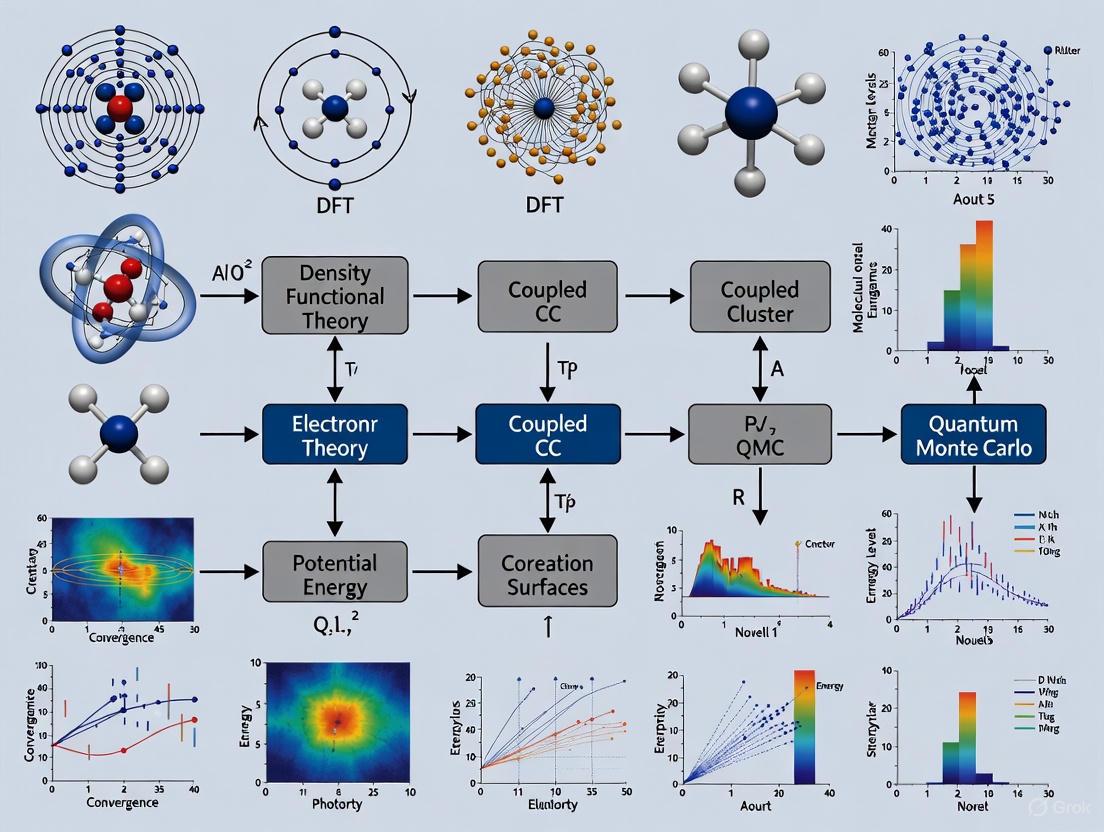
Strong electron correlation presents a significant challenge in quantum chemistry, rendering standard density functional theory (DFT) and single-reference wavefunction methods inadequate for systems like open-shell transition metal complexes, diradicals, and...
Beyond Single-Reference Models: Advanced Quantum Chemistry Methods for Strongly Correlated Systems
Abstract
Strong electron correlation presents a significant challenge in quantum chemistry, rendering standard density functional theory (DFT) and single-reference wavefunction methods inadequate for systems like open-shell transition metal complexes, diradicals, and bond-breaking processes. This article provides a comprehensive overview for researchers and drug development professionals, exploring the foundational principles of strong correlation and its implications in biochemical systems. It details state-of-the-art multireference and local correlation methods, alongside emerging quantum computing approaches, that offer accurate solutions. The content further delivers practical guidance on method selection, troubleshooting, and optimization, and concludes with a comparative analysis of modern methods, highlighting their validation, performance, and growing role in enabling predictive simulations for drug discovery and materials science.
The Strong Correlation Problem: From Quantum Mysteries to Real-World Materials
In quantum chemistry, the electron correlation problem represents a fundamental challenge in accurately describing the behavior of many-electron systems. Electron correlation is formally defined as the energy difference between the exact, non-relativistic solution of the Schrödinger equation and the Hartree-Fock (HF) approximation: Ecorr = Eexact - E_HF [1]. While HF theory recovers approximately 99% of the total energy of a system using a mean-field approach where electrons experience an average potential, the missing 1% of correlation energy is chemically significant—often corresponding to the energy scales of chemical reactions and bonding [1].
The distinction between weak and strong electron correlation is primarily determined by the adequacy of single-reference wavefunctions. Strong electron correlation manifests when a single Slater determinant provides a qualitatively incorrect description of the electronic structure, necessitating a multi-reference approach. This occurs in numerous chemically important scenarios including bond dissociation, transition metal complexes, open-shell systems, and conjugated molecular chains [2] [1]. In the HF method, this limitation becomes apparent during bond breaking, where an improper dissociation limit is obtained, highlighting the critical need for methods that capture strong correlation effects [1].
Quantitative Assessment of Correlation Methods
Theoretical Scaling of Computational Methods
Table 1: Computational scaling and application scope of electronic structure methods
| Method | Computational Scaling | Strength in Electron Correlation | Typical Applications |
|---|---|---|---|
| Hartree-Fock (HF) | N⁴ | None (mean-field) | Reference wavefunction; starting point for correlated methods [2] |
| Density Functional Theory (DFT) | N³ to N⁴ | Weak to moderate (depending on functional) | Ground state properties of medium-sized molecules [2] [1] |
| Møller-Plesset Perturbation (MP2) | N⁵ | Weak to moderate | Initial correlation energy estimates; larger systems [2] |
| Coupled Cluster (CCSD) | N⁶ | Strong (but single-reference) | Accurate thermochemistry; single-reference systems [2] |
| Configuration Interaction (CISD) | Exponential (truncated) | Moderate to strong | Multireference problems; small active spaces [2] |
| Full CI | Factorial | Exact (within basis set) | Benchmark calculations; small molecules [2] |
Correlation Energy Magnitudes
Table 2: Correlation energy contributions for two-electron systems
| System | Hartree-Fock Energy (E_HF) | Exact Energy (E_exact) | Correlation Energy (E_corr) | Remarks |
|---|---|---|---|---|
| Helium-like ions (Z=2-18) | Varies with Z | Varies with Z | ~1% of total energy | Accuracy improves with HF basis [1] |
| Critical nuclear charge (Z_c) | Z_c^HF ≈ 1.031 | Z_c^exact ≈ 0.911 | Stabilization of anion | Correlation essential for anion stability [1] |
The data in Table 2 illustrates that while correlation energy constitutes a small percentage of the total energy, its contribution is chemically significant. This is particularly evident in the case of the critical nuclear charge (Z_c), where electron correlation stabilizes systems that would otherwise be unbound at the HF level [1].
Experimental Protocols for Strong Correlation
Protocol 1: Ab Initio Downfolding for Correlated Materials
Purpose: To derive accurate, material-specific many-body Hamiltonians for strongly-correlated systems while maintaining computational tractability [3].
Principle: This technique combines density functional theory with quantum many-body methods to create effective Hamiltonians that capture essential correlation effects in a reduced orbital space [3].
Procedure:
- Initial DFT Calculation: Perform a full density functional theory calculation of the target material's electronic structure using appropriate exchange-correlation functionals [3].
- Active Space Selection: Identify the correlated subspaces (e.g., d-orbitals in transition metals, f-orbitals in lanthanides) most relevant to the strongly-correlated behavior [3].
- Hamiltonian Downfolding: Derive a many-body Hamiltonian (e.g., Hubbard-type model) through systematic downfolding procedures that integrate out high-energy degrees of freedom while preserving the low-energy physics [3].
- Quantum Solver Implementation: Apply variational quantum eigensolvers or classical tensor network methods to solve the downfolded Hamiltonian and obtain ground state properties [3].
- Property Calculation: Compute observable properties including spectral functions, charge orders, and magnetic correlations from the obtained wavefunctions [3].
Validation: Compare predicted states with experimental observations such as antiferromagnetic behavior in one-dimensional cuprates or excitonic ground states in monolayer WTe₂ [3].
Protocol 2: Machine Learning for Molecular Wave Functions
Purpose: To accurately and transferably compute electronic energies and geometries by learning complex molecular wave functions across diverse molecular sizes and compositions [4].
Principle: Machine learning models can approximate the high-dimensional mapping from molecular structure to electronic wave functions, bypassing the exponential scaling of traditional quantum chemistry methods [4].
Procedure:
- Training Set Construction: Generate a diverse set of molecular structures and their corresponding high-level quantum chemistry references (e.g., from CCSD(T) or quantum Monte Carlo) [4].
- Feature Engineering: Develop molecular descriptors that uniquely represent atomic configurations while maintaining invariance to symmetry operations [4].
- Model Architecture Selection: Implement neural network architectures capable of representing complex wave functions, such as Fermi nets or Pauli nets [4].
- Wave Function Learning: Train models to predict electronic energies and wave functions by minimizing the energy variance or maximizing the overlap with reference data [4].
- Transferability Assessment: Validate model performance on molecular systems not included in the training set, particularly for bond dissociation and formation processes [4].
Applications: This protocol is particularly valuable for studying chemical reactions involving bond dissociation and formation, critical for understanding catalysis and chemical transformations [4].
Protocol 3: Configuration Interaction for Strong Correlation
Purpose: To systematically improve beyond the mean-field approximation by incorporating multiple electronic configurations [2] [1].
Principle: The wavefunction is constructed as a linear combination of Slater determinants representing both the ground and excited electron configurations, allowing explicit treatment of electron correlation [2].
Procedure:
- Reference Wavefunction: Obtain a Hartree-Fock reference wavefunction as the starting point [2].
- Excitation Generation: Create singly, doubly, triply, etc. excited determinants by promoting electrons from occupied to virtual orbitals [2].
- Hamiltonian Diagonalization: Construct and diagonalize the Hamiltonian matrix in the basis of these determinants to obtain correlated wavefunctions and energies [2].
- Truncation Scheme Selection: Implement appropriate truncation such as CISD (single and double excitations) or CASSCF (complete active space) based on system size and correlation strength [2].
- Property Evaluation: Compute expectation values of operators using the correlated wavefunction to obtain improved molecular properties [2].
Limitations: Traditional CI methods face exponential scaling with system size, though selected CI approaches and active space methods can extend their applicability [2].
Visualization of Methodologies
Quantum Chemistry Method Decision Pathway
The Scientist's Toolkit
Research Reagent Solutions for Strong Correlation Studies
Table 3: Essential computational tools for strong electron correlation research
| Tool/Resource | Category | Function | Application Context |
|---|---|---|---|
| Variational Quantum Eigensolver (VQE) | Quantum Algorithm | Finds ground states of quantum systems using hybrid quantum-classical approach [3] | Solving downfolded Hamiltonians for correlated materials [3] |
| Complete Active Space SCF (CASSCF) | Ab Initio Method | Multideterminant approach for clear multireference cases [2] | Biradicals, transition states, systems with near-degenerate HOMO-LUMO [2] |
| Density Functional Theory (DFT) | Electronic Structure Method | Provides starting point for downfolding with approximate XC functional [3] [1] | Initial electronic structure assessment of correlated materials [3] |
| Coupled Cluster (CCSD(T)) | High-Accuracy Method | "Gold standard" for single-reference correlation [2] | Benchmarking and training machine learning models [4] [2] |
| Machine Learning Wavefunction Models | Emerging Technology | Learns complex wavefunctions from data; transferable across molecules [4] | Large systems where traditional methods are computationally prohibitive [4] |
| Symmetry-Adapted Cluster CI (SAC-CI) | Specialized Method | Accurate description of ground/excited states with correlation [2] | Excited and ionized states of correlated systems [2] |
The field of strong electron correlation continues to evolve with several promising research directions emerging. Quantum computing approaches are showing increasing potential for handling the exponential complexity of strongly-correlated systems, particularly when combined with ab initio downfolding techniques [3]. Future work may focus on developing more flexible ansatz designs for variational approaches, implementing rigorous treatments of dynamic Coulomb interactions, and investigating how different DFT starting points influence the downfolding process [3].
Machine learning methodologies offer another promising avenue, enabling the accurate computation of electronic energies and geometries by learning complex molecular wave functions [4]. These data-driven approaches demonstrate remarkable transferability across molecules of different sizes and compositions, potentially addressing key limitations of traditional quantum chemical methods [4].
As these advanced methods mature, incorporating lattice effects and understanding how atomic movements influence electron screening will further enhance the accuracy of derived Hamiltonians [3]. The continued synergy between theoretical advances, computational implementations, and experimental validation promises to unlock increasingly complex strongly-correlated systems, with significant implications for materials design, catalysis, and fundamental understanding of quantum phenomena in molecular systems.
Strong electron correlation presents a significant challenge in modern electronic structure theory, arising when the behavior of electrons cannot be effectively described as non-interacting entities within a mean-field approximation [5]. This phenomenon is crucial in diverse chemical contexts, including transition-metal chemistry, bond-breaking processes, and systems with near-degenerate electronic states such as diradicals [6] [7]. In these systems, multiple electronic configurations contribute substantially to the ground or excited states, rendering standard quantum chemical methods like restricted Hartree-Fock (RHF) theory or conventional Kohn-Sham density functional theory (KS-DFT) inadequate [7] [8]. The essential feature of strongly correlated materials is that their electronic properties—such as metal-insulator transitions (Mott insulation), heavy fermion behavior, and spin-charge separation—emerge from complex electron interactions that require advanced theoretical treatments beyond single-reference descriptions [5] [9].
The quantitative measure of correlation strength can be defined through the reduction of electron number fluctuations on an atomic site. A suitable metric is the parameter Σ(i), which represents the normalized mean-square deviation of electron number compared to the uncorrelated Hartree-Fock description [9]. For systems with strongly correlated electrons, such as La₂CuO₄, Σ values approach 0.8, indicating substantial suppression of charge fluctuations compared to the independent-electron picture [9]. This perspective article details the key electronic structures prone to strong correlation, provides quantitative characterization data, and outlines robust experimental and computational protocols for their investigation within quantum chemistry research.
Electronic Structure Classes and Quantitative Data
Transition Metal Complexes and Oxides
Transition metal compounds represent a major class of strongly correlated materials characterized by incompletely filled d- or f-electron shells with narrow energy bands [5]. Their distinctive electronic properties arise from the interplay between localized d/f electrons and delocalized conduction electrons, leading to phenomena such as high-temperature superconductivity in cuprates, Mott insulation, and colossal magnetoresistance [5] [9].
Table 1: Characteristic Properties of Selected Transition Metal Oxides
| Material | Electronic Character | Key Phenomenon | Correlation Strength Σ | Notable Features |
|---|---|---|---|---|
| La₂CuO₄ | Mott Insulator | Antiferromagnetism | Σ(Cu) ≈ 0.8 [9] | Parent compound for high-Tc cuprates |
| NiO | Charge-Transfer Insulator | Metal-Insulator Transition | N/A | Would be metallic without correlations [5] |
| CeAl₃ | Heavy Fermion System | Kondo screening | > La₂CuO₄ [9] | Enhanced effective electron mass |
| Fe₃O₄ | Mixed-Valence System | Verwey Transition [9] | N/A | Charge ordering at low temperature |
The correlation effects in these materials are quantified through configuration probabilities. For La₂CuO₄, correlated ground states show nearly complete suppression of d⁸ configurations (P(d⁸) ≈ 0.0), with probabilities shifting to P(d¹⁰) = 0.29 and P(d⁹) = 0.70, contrasting sharply with Hartree-Fock predictions [9]. This reconfiguration demonstrates how strong correlations significantly alter electronic structure.
Bond Dissociation Processes
Bond dissociation represents a fundamental process where strong correlation effects dominate, particularly as bonds are stretched toward breaking points [7]. The dissociation of simple diatomic molecules like H₂ illustrates the core challenge: the restricted Hartree-Fock (RHF) wave function maintains inappropriate ionic terms (H⁺H⁻) at large internuclear separations, leading to dramatically overestimated energies [7].
Table 2: Bond Dissociation Energies (BDEs) for Representative Bonds
| Bond | Molecule | BDE (kcal/mol) | BDE (kJ/mol) | Computational Note |
|---|---|---|---|---|
| C-H | CH₄ | 103.011 (298 K) [10] | 431 (298 K) [10] | Strong aliphatic bond |
| C-C | Ethane | 83-90 [11] | 347-377 [11] | Typical alkane single bond |
| O-H | Water | 119 [11] | 497 [11] | First O-H dissociation |
| H-H | H₂ | 104.1539 [11] | 435.780 [11] | High-precision reference |
| Si-F | F₃Si-F | 166 [11] | 695 [11] | One of strongest single bonds |
The bond dissociation energy is defined as the standard enthalpy change when a bond A-B is cleaved by homolysis to give fragments A and B, which are typically radical species [11]. Accurate computation requires careful methodology selection, as standard quantum chemical approaches fail to describe the multiconfigurational character of the dissociation products [7].
Diradicals and Multiconfigurational Systems
Diradicals represent prototypical strongly correlated systems characterized by two unpaired electrons in degenerate or near-degenerate molecular orbitals [7]. These systems exhibit significant near-degeneracy correlation, where multiple electronic configurations contribute nearly equally to the wave function, making single-reference methods qualitatively incorrect.
The electronic structure of diradicals shares conceptual similarities with bond dissociation processes, as both involve near-degenerate electronic states [7]. In diradicals, the ground state wavefunction requires a balanced treatment of both covalent and ionic configurations to properly describe electron correlation effects, analogous to the Heitler-London approach for H₂ [9]. These systems are particularly prevalent in reaction intermediates, excited states, and materials with unusual magnetic properties.
Experimental Protocols
Computational Protocol for Bond Dissociation Energy Calculation
Objective: Calculate the C-H bond dissociation energy in methane (CH₄ → CH₃• + H•) using Gaussian16 software [10].
Step-by-Step Procedure:
Geometry Optimization and Frequency Calculation:
- Create input files for methane (CH₄) and the methyl radical (CH₃•).
- Use the appropriate level of theory (e.g., wB97XD/cc-pVDZ as referenced [10]).
- Include
optandfreqkeywords in the route section. - For the methyl radical, set
charge=0andspin=doublet. - Run calculations and verify convergence and absence of imaginary frequencies (confirming a true minimum).
Thermochemical Data Extraction:
- For each optimized structure, locate the "Sum of electronic and thermal Enthalpies" value in the output file.
- Record these values for CH₄, CH₃•, and H•.
BDE Calculation:
- Apply the formula: BDE = H(CH₃•) + H(H•) - H(CH₄)
- Convert the resulting enthalpy difference from Hartrees to kcal/mol or kJ/mol using standard conversion factors (1 Ha = 627.509 kcal/mol).
- For calculations at specific temperatures, include the
temperature=XXXkeyword in the route section.
Critical Notes: The hydrogen atom energy should theoretically be -0.500000 Ha at 0K, but practical DFT calculations with finite basis sets will yield slightly different values [10]. Always employ the same consistent methodology across all species.
Protocol for Multiconfiguration Pair-Density Functional Theory (MC-PDFT)
Objective: Calculate accurate potential energy surfaces for strongly correlated systems using MC-PDFT [6] [8].
Step-by-Step Procedure:
Complete Active Space Self-Consistent Field (CASSCF) Calculation:
- Select an active space appropriate for the system (e.g., (2e,2o) for bond breaking, larger spaces for transition metals).
- Perform CASSCF calculation to obtain a multiconfigurational reference wavefunction.
Energy Evaluation with MC-PDFT:
- Using the CASSCF wavefunction, compute the total energy with MC-PDFT.
- The total energy is separated into:
- Classical energy (kinetic, nuclear attraction, Coulomb) from the multiconfigurational wavefunction.
- Nonclassical energy (exchange-correlation) approximated using a density functional based on electron density and on-top pair density [8].
- For highest accuracy, use the recently developed MC23 functional, which incorporates kinetic energy density for improved electron correlation description [8].
Result Analysis:
- Examine potential energy curves for bond dissociation or reaction pathways.
- Compare spin densities and electronic properties with experimental data when available.
Applications: This protocol is particularly effective for transition metal complexes, bond-breaking processes, and diradicals where static correlation dominates [6] [8].
Visualization of Computational Workflows
Research Reagent Solutions
Table 3: Essential Computational Tools for Strong Correlation Problems
| Research Reagent | Function | Application Context |
|---|---|---|
| Gaussian16 | General-purpose quantum chemistry software | BDE calculation, geometry optimization, frequency analysis [10] |
| CASSCF | Multiconfigurational wavefunction method | Reference calculation for MC-PDFT, active space treatment [7] |
| MC-PDFT | Hybrid wavefunction-DFT method | Strongly correlated systems at lower computational cost [6] [8] |
| MC23 Functional | Optimized density functional for MC-PDFT | Improved accuracy for spin splitting and bond energies [8] |
| Nitrogen-Vacancy Center Sensors | Diamond-based quantum sensors | Experimental measurement of magnetic fluctuations in materials [12] |
| DMRG | Density Matrix Renormalization Group | Handling extremely large active spaces for complex systems [6] |
Relativistic Effects and Their Role in Heavy Element Chemistry
Relativistic effects become significant for heavy elements and substantially influence their chemical properties. These effects are critical for accurately modeling superheavy elements (SHEs), where relativistic calculations are essential for predicting behavior and understanding the Periodic Table's limits [13]. Relativistic quantum chemistry methods are indispensable for studying compounds containing heavy atoms like halogens or for properties like NMR chemical shifts, even in molecules with light atoms bonded to heavy ones [14].
Theoretical Background
Origins of Relativistic Effects
Relativistic effects in heavy elements arise from the high velocities of inner-shell electrons. As the atomic number increases, these electrons must travel at speeds comparable to the speed of light to avoid collapsing into the nucleus. This leads to two primary consequences:
- Orbital Contraction and Stabilization: The mass increase of core electrons causes a radial contraction of s and p orbitals (direct relativistic effect).
- Orbital Expansion and Destabilization: The enhanced shielding of the nuclear charge by contracted core electrons leads to the expansion and destabilization of d and f orbitals (indirect relativistic effect) [13].
Scalar and Spin-Orbit Relativistic Effects
Modern relativistic calculations typically incorporate effects through two main approaches:
- Scalar Relativistic Effects: These include the contraction of s orbitals and the expansion of d and f orbitals, influencing molecular geometries and bond energies.
- Spin-Orbit Coupling: This interaction splits atomic energy levels and significantly affects spectroscopic properties and the electronic structure of open-shell systems [14].
For accurate NMR parameters, both scalar relativistic and spin-orbit coupling can have large effects, especially for heavy atoms or light elements close to a heavy atom [14].
Computational Protocols
Quantifying Relativistic Effects
The contribution of relativity to a computed property is quantified by performing two separate calculations: one that includes a relativistic Hamiltonian and another that is non-relativistic, then taking the difference. The most straightforward method is using the same decontracted basis set for both the nonrelativistic and relativistic calculations [15]. The X2C (exact two-component) Hamiltonian is recommended over older Douglas-Kroll (DK) methods as it is superior "in every conceivable way" [15].
Protocol: NMR Chemical Shifts with Relativistic DFT
This protocol details the calculation of NMR chemical shifts for hydrogen halides (HF, HCl, HBr, HI), illustrating the effect of spin-orbit coupling [14].
Research Reagent Solutions
| Reagent / Material | Function in Calculation |
|---|---|
| AMSinput Software | Graphical user interface for building molecular structures and setting up calculations [14]. |
| ADF Engine | Computational engine performing the density functional theory (DFT) calculations [14]. |
| PBE Functional | GGA (Generalized Gradient Approximation) exchange-correlation functional for geometry optimization [14]. |
| PBE0 Functional | Hybrid exchange-correlation functional, recommended for more accurate NMR calculations [14]. |
| QZ4P Basis Set | All-electron quadruple-zeta basis set with four polarization functions for high accuracy [14]. |
| ZORA Hamiltonian | Relativistic Hamiltonian (Scalar or Spin-Orbit) to account for relativistic effects [14]. |
Step-by-Step Workflow
Geometry Optimization:
- Build the molecule (e.g., HF) in AMSinput.
- In the Main panel, set the Task to
Geometry Optimization. - Select the XC functional (e.g.,
GGA:PBE). - Choose an all-electron basis set (e.g.,
QZ4P). - Set Frozen core to
none. - Set Relativity to
Scalar. - Set Numerical Quality to
Good.
NMR Property Calculation Setup:
- Navigate to Properties → NMR.
- Select the atoms (e.g.,
H atoms) for shielding calculation. - Select boxes for
Isotropic shielding constantsandFull shielding tensors.
Systematic Variation:
- For each molecule (HF, HCl, HBr, HI), perform four calculations combining:
- XC functionals:
GGA:PBEandHybrid:PBE0 - Relativistic treatments:
ScalarandSpin-Orbit
- XC functionals:
- Save each input file with a different name.
- For each molecule (HF, HCl, HBr, HI), perform four calculations combining:
Result Analysis with ADFreport:
- In AMSJobs, select Tools → New Report Template.
- Create a custom report to extract
NMR Shieldingsand thedistancebetween atoms 1 and 2. - Select all jobs and generate the report for comparative analysis [14].
Figure 1: Computational workflow for relativistic NMR calculations.
Data Analysis and Comparison to Experiment
The NMR chemical shift (δi) is calculated as the difference between the isotropic shielding of a reference compound (σref) and the compound of interest (σi): δi = σref - σi For the hydrogen halide series, HF is used as the reference (δi(HF) = 0.0 ppm). The experimental 1H NMR chemical shifts for the series are [14]:
| Compound | Experimental 1H δi (ppm) | Experimental Bond Distance (Å) |
|---|---|---|
| HF | 0.00 (by definition) | 0.91680 |
| HCl | -2.58 | 1.27455 |
| HBr | -6.43 | 1.41443 |
| HI | -15.34 | 1.60916 |
Comparison of calculated versus experimental results shows that spin-orbit coupling is necessary to achieve reasonable agreement for the NMR chemical shifts, and the PBE0 functional generally provides better geometries than PBE [14].
Application to Superheavy Elements (SHEs)
Relativistic electronic structure theory is crucial for predicting properties of SHEs and their compounds, profoundly influencing their chemical behavior and placement in the Periodic Table [13]. Key effects include:
- Stabilization of SHE Valence Orbitals: Relativistic effects can stabilize the 7s and 7p1/2 orbitals in SHEs.
- Spin-Orbit Splitting: Massive splitting of p, d, and f orbitals leads to ground-state electron configurations that differ from non-relativistic predictions.
- Relativistic Deshielding of Divalent Rn: A noted example where relativity is essential for accurate property prediction [13].
These effects can cause deviations from standard periodic trends, influencing volatility, bonding, and reactivity, which are critical for designing experiments given the low production rates and short half-lives of SHEs [13].
Figure 2: How relativistic effects influence superheavy element chemistry.
Relativistic effects are fundamental in heavy element chemistry. They are necessary for accurate prediction of molecular properties such as geometry and NMR parameters, and for understanding the chemical behavior of superheavy elements. Modern computational protocols using relativistic DFT, with methods like X2C and ZORA, provide powerful tools for researchers to incorporate these critical effects, bridging the gap between non-relativistic quantum chemistry and experimental observations for heavy systems.
In the realm of quantum materials, high-temperature superconductivity and strange metals represent two of the most challenging and fascinating phenomena arising from strong electron correlations. These systems fall under the classification of strongly correlated materials, where electron-electron interactions dominate over the individual kinetic energy of electrons, making their behavior impossible to describe with conventional single-particle theories like standard density functional theory or the nearly-free-electron model [16] [17]. In such materials, the motion of one electron becomes highly dependent on the positions and states of other electrons, leading to extraordinary emergent properties including Mott insulating behavior, unconventional superconductivity, and the peculiar charge transport characteristics observed in strange metals [17].
The fundamental challenge in understanding these materials lies in solving the complex many-body Hamiltonian that describes their electronic behavior. The full many-body Hamiltonian, which includes all electronic and nuclear degrees of freedom, is nearly impossible to solve exactly due to its complexity [17]. This theoretical challenge forms the core of the quantum chemistry problem for strongly correlated systems and drives the development of advanced computational and experimental approaches discussed in this application note.
Strange Metals: Characterization and Experimental Protocols
Fundamental Properties and Identification
Strange metals constitute a class of quantum materials that defy the standard Fermi liquid theory describing conventional metals like copper or gold. Their defining characteristic is a linear temperature dependence of electrical resistivity (ρ ∝ T) that extends down to very low temperatures, unlike conventional metals which exhibit a saturation of resistivity at low temperatures due to the dominance of T² dependence [18] [19]. This anomalous behavior indicates the absence of well-defined quasiparticles, which are the fundamental excitations in ordinary metals.
Another remarkable feature of strange metals is their universal scattering rate. Research led by Debanjan Chowdhury at Cornell has revealed that in strange metals at low temperatures, the interval between successive electron collisions is unusually short and is precisely determined by the temperature of the system and Planck's constant [19]. This behavior holds true regardless of the strange metal's chemical composition, suggesting a fundamental universal physics underlying these materials that transcends their specific microscopic details.
Experimental Synthesis and Measurement Protocols
Synthesis of Kagome-Based Strange Metals
Recent breakthroughs at MIT have demonstrated a novel approach to creating strange metals through quantum geometric engineering. The protocol involves fabricating materials with atoms arranged in a kagome lattice structure, which resembles a repeating pattern of sheriff's stars or Japanese basket-weaving motifs [20]. The experimental workflow can be summarized as follows:
- Crystal Growth: Synthesize single crystals of kagome metals (e.g., CsV₃Sb₅) using flux growth techniques or chemical vapor deposition.
- Geometric Engineering: Utilize the inherent flat electronic bands in the kagome structure at the Fermi level, where electrons become heavily correlated due to reduced kinetic energy.
- Electronic Structure Confirmation: Employ angle-resolved photoemission spectroscopy (ARPES) to verify the presence of Dirac fermions and flat bands in the synthesized materials.
- Strange Metal State Activation: Apply external perturbations such as high pressure (up to several GPa) and magnetic fields to drive the system into the strange metal regime where electron interactions dominate.
The discovery that kagome metals can host strange metal behavior provides researchers with a tunable platform for exploring the relationship between quantum geometry and strong correlations [20].
Quantum Entanglement Measurement Protocol
A groundbreaking methodological approach developed by Rice University physicists enables direct probing of electron entanglement in strange metals using quantum information science tools [21]:
- Sample Preparation: Prepare high-quality single crystals of candidate strange metal materials (e.g., heavy fermion compounds or cuprates).
- Quantum Fisher Information (QFI) Measurement: Apply QFI, a concept from quantum metrology, to measure how electron interactions evolve under extreme conditions.
- Neutron Scattering Validation: Perform inelastic neutron scattering experiments to correlate QFI measurements with atomic-level material properties.
- Entanglement Mapping: Track the evolution of electron spin entanglement across quantum critical points by monitoring the loss of well-defined quasiparticles.
This protocol has revealed that electron entanglement peaks precisely at the quantum critical point—the transition between two distinct states of matter—providing direct evidence for the quantum origin of strange metal behavior [21].
Table 1: Key Characterization Techniques for Strange Metals
| Technique | Measured Property | Key Signature of Strange Metal |
|---|---|---|
| Electrical Transport | Resistivity vs Temperature | Linear ρ(T) extending to lowest temperatures |
| Quantum Fisher Information | Electron entanglement | Peak at quantum critical point |
| Inelastic Neutron Scattering | Quasiparticle lifetime | Absence of well-defined quasiparticles |
| Angle-Resolved Photoemission | Electronic band structure | Destruction of Fermi surface |
Theoretical Framework and Universal Model
A universal theory proposed by Patel and colleagues at the Flatiron Institute explains strange metal behavior through the combination of two key properties: widespread quantum entanglement and atomic-scale nonuniformity [18]. In this model, electrons in strange metals become quantum mechanically entangled over long distances, binding their fates together. Simultaneously, the patchwork-like arrangement of atoms in these materials means that electron entanglements vary spatially based on where in the material the entanglement occurred.
This combination introduces randomness to electron momentum as they move through the material and interact. Instead of flowing collectively, electrons scatter in all directions, resulting in the characteristic temperature-linear resistivity. The model successfully predicts that resistivity scales linearly with temperature according to the fundamental constants h (Planck's constant) and kB (Boltzmann's constant), explaining the universal behavior observed across different strange metal compounds [18].
High-Temperature Superconductivity: Materials and Methods
Ambient-Pressure Stabilization Protocols
A significant experimental advancement in high-temperature superconductivity research comes from the development of pressure-quench synthesis techniques. Researchers at the University of Houston have established a protocol to stabilize superconducting materials at ambient pressure, overcoming a major limitation for practical applications [22]:
- High-Pressure Synthesis: Prepare composite materials (e.g., bismuth-antimony-tellurium systems) under extreme pressure conditions (2-3 GPa) where superconducting phases are stable.
- Pressure Quenching: Rapidly release the applied pressure while maintaining low temperature conditions (below 150K).
- Metastable Phase Preservation: Characterize the retained superconducting properties at ambient pressure using transport measurements and magnetic susceptibility.
- Material Optimization: Systematically vary chemical composition and quenching parameters to enhance superconducting critical temperature (Tc) and volume fraction.
This protocol has enabled the stabilization of superconducting phases outside of high-pressure environments, opening new pathways for material discovery and practical application [22].
Computational Discovery Framework
The HTSC-2025 benchmark dataset represents a paradigm shift in superconductor discovery through AI-driven approaches [23]. This comprehensive compilation encompasses theoretically predicted superconducting materials discovered by theoretical physicists from 2023 to 2025 based on BCS superconductivity theory, including several prominent material classes:
- X₂YH₆ systems (e.g., hydrides with rare-earth and transition metals)
- Perovskite MXH₃ systems
- M₃XH₈ systems
- Cage-like BCN-doped metal atomic systems derived from LaH₁₀ structural evolution
- Two-dimensional honeycomb-structured systems evolving from MgB₂
The dataset implementation protocol involves:
- Data Curation: Collect and standardize structural, electronic, and superconducting properties from theoretical publications.
- Feature Engineering: Compute relevant descriptors including electron-phonon coupling strengths, density of states at Fermi level, and vibrational properties.
- Model Training: Implement machine learning algorithms (neural networks, gradient boosting) to predict critical temperatures from material descriptors.
- Experimental Validation: Prioritize synthetic targets for experimental verification based on computational predictions.
This benchmark enables fair comparison between different AI algorithms and accelerates the discovery of new superconducting materials [23].
Table 2: Major High-Temperature Superconductor Material Classes
| Material Class | Representative Compounds | Maximum Reported Tc | Pressure Requirement |
|---|---|---|---|
| Cuprates | YBa₂Cu₃O₇₋ₓ | ~90K | Ambient |
| Iron-Based | Ba₁₋ₓKₓFe₂As₂ | ~38K | Ambient |
| Hydrides | H₂S, LaH₁₀ | 203K [24] | High (>>100 GPa) |
| Carbon Structures | Doped carbyne chains | 115K (predicted) [24] | Ambient |
| Kagome Metals | CsV₃Sb₅ | ~3K | Ambient |
Low-Dimensional Carbon Structure Design
Theoretical and experimental work on low-dimensional carbon systems has revealed promising pathways to high-temperature superconductivity. A systematic protocol for designing and optimizing carbon-based superconductors involves [24]:
- Dimensionality Engineering: Start with known carbon allotropes (graphene, nanotubes) and systematically reduce dimensionality.
- Van Hove Singularity Enhancement: Design structures that enhance singularities in the electronic density of states through quantum confinement.
- Electron-Phonon Coupling Optimization: Tune structural parameters (bond lengths, kink structures) to maximize coupling strength while maintaining metallicity.
- Array Fabrication: Arrange one-dimensional elements (chains, nanotubes) in parallel arrays with controlled spacing to suppress phase fluctuations while preserving 1D electronic characteristics.
This approach has predicted Tc values up to 115K for optimized carbon ring structures, demonstrating the potential of carbon-based materials for high-temperature superconductivity without extreme pressure requirements [24].
Advanced Computational Methodologies for Strong Correlation
Beyond Standard Density Functional Theory
Strongly correlated materials present fundamental challenges for conventional computational methods. Standard density functional theory (DFT) often fails to accurately describe these systems due to its inadequate treatment of dynamic electron correlations and self-interaction errors [17]. The limitations become particularly severe for materials with localized d- and f-electrons, where electron-electron repulsion dominates their electronic behavior.
To address these challenges, researchers have developed advanced computational frameworks that extend beyond standard DFT:
DFT+U Method: Incorporates an on-site Coulomb repulsion term (U) to better describe localized electrons, providing improved treatment of Mott insulating behavior and band gap predictions.
Dynamical Mean Field Theory (DMFT): Maps the lattice problem to an impurity model coupled to a self-consistent electron bath, capturing local dynamic correlations and temperature-dependent effects missing in static DFT approaches.
Density Matrix Renormalization Group (DMRG): Provides highly accurate solutions for one-dimensional and quasi-1D systems by variationally optimizing a matrix product state representation of the wavefunction, effectively capturing entanglement in low-dimensional geometries [17].
The DFT+DMFT framework has proven particularly powerful for studying realistic materials, combining first-principles DFT calculations with many-body DMFT treatment of correlated orbitals. This approach has revealed complex phenomena such as the dual nature of polarons in Li-doped V₂O₅ and orbital-selective Mott transitions in cobaltates [17].
Quantum Embedding Strategies
For complex material systems with multiple correlated sites, quantum embedding theories provide a powerful hierarchical approach:
- Wannier Hamiltonian Construction: From DFT band structures, construct localized Wannier functions for correlated subspaces.
- Impurity Model Definition: Identify correlated sites and embed them in a self-consistent bath representing the rest of the material.
- Impurity Solver Application: Employ continuous-time quantum Monte Carlo (CT-QMC) or exact diagonalization to solve the impurity problem.
- Self-Consistency Cycle: Update the bath Green's function and repeat until convergence of the self-energy.
This framework enables first-principles calculations of real materials while capturing the essential strong correlation physics responsible for strange metal behavior and high-temperature superconductivity.
Research Reagent Solutions
Table 3: Essential Research Materials and Reagents
| Material/Reagent | Function in Research | Application Examples |
|---|---|---|
| Kagome Metal Crystals | Platform for geometric frustration and flat band physics | CsV₃Sb₅, FeSn, YMn₆Sn₆ |
| High-Pressure Cells | Synthesis of metastable phases | Diamond anvil cells, multi-anvil presses |
| Quantum Critical Materials | Study of entanglement at phase transitions | YbAl₃, CeCoIn₅, Cr-doped V₂O₃ |
| Hydride Precursors | High-Tc superconductor synthesis | H₂S, LaH₁₀, YH₆ |
| Moiré Heterostructure Materials | Tunable strongly correlated platforms | Twisted bilayer graphene, transition metal dichalcogenides |
| Low-Dimensional Carbon Allotropes | Light-element high-Tc candidates | Carbyne chains, carbon nanotubes, graphene nanoribbons |
Integrated Workflow and Future Directions
The study of high-temperature superconductivity and strange metals requires an integrated approach combining materials synthesis, advanced characterization, and sophisticated computational modeling. A comprehensive research workflow connects these elements through iterative feedback between prediction, synthesis, measurement, and theoretical refinement.
Future directions in the field include:
Moiré Material Engineering: Utilizing twisted van der Waals heterostructures to create tunable strongly correlated systems where the relative strength of interactions versus kinetic energy can be precisely controlled by twist angle [19].
Quantum Information Cross-Pollination: Further application of quantum information concepts (entanglement measures, quantum Fisher information) to characterize and classify correlated electron states [21] [18].
High-Throughput Computational Discovery: Leveraging benchmark datasets like HTSC-2025 in combination with machine learning to accelerate the identification of new superconducting material candidates [23].
Strange Metal Theory Unification: Developing a comprehensive theoretical framework that explains the universal properties of strange metals and their connection to high-temperature superconductivity across different material classes [18] [19].
These research avenues hold the promise of not only solving fundamental puzzles in quantum materials but also enabling transformative technologies through the development of room-temperature superconductors and novel quantum devices.
Research Workflow for Strongly Correlated Materials
Theoretical Framework for Strong Correlation Phenomena
The Inert Pair Effect and Other Chemical Anomalies Explained by Correlation
The "inert pair effect," a concept introduced by Nevil Sidgwick in 1927, describes the tendency of the outermost s-orbital electron pair in heavier p-block elements to remain unshared in their compounds, leading to a prevalence of oxidation states two lower than the group valence [25] [26]. For decades, this was primarily a descriptive phenomenon. However, modern quantum chemistry reveals that this chemical anomaly, along with others like the unexpected insulating behavior of certain transition metal oxides, is a manifestation of strong electron correlation [17] [5]. Strongly correlated systems are those in which the behavior of electrons cannot be accurately described by models that treat electrons as independent, non-interacting particles moving in an average field; instead, the motion of each electron is highly dependent on the positions and states of all others [16] [17]. This article details how advanced computational protocols can elucidate the role of electron correlation in explaining the inert pair effect and related material properties, providing a crucial toolkit for researchers tackling strong correlation problems.
Quantitative Data: Energetics of the Inert Pair Effect
The stability of lower oxidation states in heavier elements like Thallium (Tl), Lead (Pb), and Bismuth (Bi) can be quantified through thermodynamic data. The following tables summarize key energetic parameters that underpin the inert pair effect [25].
Table 1: Promotion Energies and Bond Dissociation Energies for Group 13 and 14 Elements [25]
| Element | Promotion Energy (s²pⁿ → s¹pⁿ⁺¹) (kJ/mol) | M–X Bond Dissociation Energy (kJ/mol) | Difference (Bond Energy - Promotion Energy) |
|---|---|---|---|
| Aluminum (Al) | ~400 | ~580 | ~+180 |
| Gallium (Ga) | ~470 | ~540 | ~+70 |
| Indium (In) | ~420 | ~460 | ~+40 |
| Thallium (Tl) | ~520 | ~380 | ~-140 |
Note: The values are approximate, compiled from various literature sources. The trend shows that for thallium, the energy required for electron promotion is no longer compensated by the energy released from forming two additional bonds.
Table 2: Ionization Energies (kJ/mol) for Group 13 Elements [26]
| Element | 1st I.E. | 2nd I.E. | 3rd I.E. | Sum (2nd + 3rd I.E.) |
|---|---|---|---|---|
| Boron (B) | 800 | 2,427 | 3,659 | 6,086 |
| Aluminum (Al) | 577 | 1,816 | 2,744 | 4,560 |
| Gallium (Ga) | 578 | 1,979 | 2,963 | 4,942 |
| Indium (In) | 558 | 1,820 | 2,704 | 4,524 |
| Thallium (Tl) | 589 | 1,971 | 2,878 | 4,849 |
Note: The higher-than-expected sum of the second and third ionization energies for Thallium compared to Indium indicates the increased difficulty in removing the "inert" s-electron pair, partly attributable to relativistic effects and poor shielding by intervening d and f orbitals [26].
Protocol 1: Investigating the Inert Pair Effect via DFT+U
This protocol outlines a computational methodology for analyzing the electronic structure of compounds exhibiting the inert pair effect, using Thallium(I) and Thallium(III) halides as an example.
Materials and Computational Reagents
Table 3: Research Reagent Solutions for Computational Analysis
| Item | Function & Specification |
|---|---|
| Crystal Structure File | Input geometry for the calculation. Format: .cif or .xyz. Source: Materials Project (MP) or Inorganic Crystal Structure Database (ICSD). |
| DFT Code | Primary computational engine. Examples: VASP, Quantum ESPRESSO. |
| Pseudopotential/PAW Library | Describes electron-ion interactions. Must be consistent with the chosen DFT code (e.g., GBRV, PSLibrary). |
| U Parameter | Empirical Hubbard correction. Value range: 3-7 eV for Tl 6s/p orbitals, determined via linear response. |
| Structural Optimization Script | Automates geometry relaxation (e.g., Bash/Python script controlling DFT code input/output). |
Step-by-Step Procedure
System Setup and Initialization
- Obtain the crystal structures of TlX and TlX₃ (X = F, Cl, Br, I) from a database like the ICSD.
- Generate the input files for your DFT code, specifying the calculation parameters: a plane-wave cutoff energy of 520 eV, a k-point mesh with a spacing of 0.03 Å⁻¹, and the Perdew-Burke-Ernzerhof (PBE) generalized gradient approximation (GGA) functional.
Parameter Calibration (U)
- Perform a linear response calculation on a simple compound, such as Tl₂O₃, to determine the optimal Hubbard U parameter for the Tl 6s and 6p orbitals [17].
- Run a series of single-point energy calculations with U values ranging from 0 to 10 eV.
- Plot the total energy and the occupation matrices of the relevant orbitals against the U value. The U value that yields a stable electronic structure with localized 6s electrons is selected for subsequent steps.
Geometry Optimization and Electronic Structure Analysis
- Perform a full geometry optimization of all structures using the calibrated U parameter. Convergence criteria should be set to 10⁻⁵ eV for electronic steps and 0.01 eV/Å for ionic forces.
- From the optimized structure, calculate the electronic density of states (DOS) and project it onto the atomic orbitals of Tl (Projected DOS - PDOS).
- Analyze the PDOS to identify the energy and localization of the Tl 6s states. Compare the stability and electronic structure of Tl(I) versus Tl(III) compounds.
Data Interpretation
- The calculated DOS should show that the 6s states in Tl(III) compounds are higher in energy and more involved in bonding, whereas in stable Tl(I) compounds, they form a deep, localized band, confirming their "inert" nature.
- Compare the computed cohesive energies of TlX and TlX₃ to confirm the higher stability of the lower oxidation state.
The logical flow of this computational investigation is summarized below.
Protocol 2: Probing Strong Correlation in Transition Metal Oxides via DFT+DMFT
This protocol applies to materials where strong correlation leads to dramatic phenomena, such as the Mott insulating behavior in NiO, which is incorrectly predicted to be a metal by standard DFT [5].
Materials and Computational Reagents
Table 4: Research Reagent Solutions for Advanced Correlation Studies
| Item | Function & Specification |
|---|---|
| Wannier90 Code | Generates maximally localized Wannier functions (MLWFs) from DFT output. |
| DFT+DMFT Software | Solves the impurity problem. Examples: TRIQS, EDMFTF. |
| Continuous-Time Quantum Monte Carlo (CT-QMC) Solver | Used within DMFT to solve the quantum impurity model. |
| Double Counting Correction | Accounts for electron interactions already described by DFT. Common choice: "fully localized limit" (FLL). |
Step-by-Step Procedure
Initial DFT Calculation
- Perform a high-precision, non-magnetic DFT calculation for the target material (e.g., NiO) using its experimental crystal structure.
- Confirm the incorrect metallic state in the DFT DOS as a baseline.
Wannier Hamiltonian Construction
- Use the Wannier90 code to construct a localized basis set (MLWFs) for the relevant transition metal d-orbitals [17].
- The output is a tight-binding Hamiltonian (Hᵣₑf) that accurately reproduces the DFT band structure near the Fermi level.
DMFT Self-Consistency Loop
- Define the Hubbard Model: Set up the Hamiltonian with the hopping parameters from Hᵣₑf and the electron-electron interaction term (Hubbard U, Hund's coupling J).
- Impurity Solver: Use the CT-QMC solver to compute the local Green's function for the impurity problem.
- Self-Consistency: The DMFT self-consistent loop updates the hybridization function until the local Green's function converges (typically 10⁻⁶ tolerance). This process maps the lattice problem onto a self-consistently determined quantum impurity problem and back.
Spectral Function and Property Analysis
- After convergence, compute the analytically continued spectral function to obtain the DFT+DMFT density of states.
- Analyze the spectral function for the opening of a Mott gap and the appearance of characteristic upper and lower Hubbard bands, which explain the insulating state.
- Calculate the momentum-resolved spectral function to compare with Angle-Resolved Photoemission Spectroscopy (ARPES) data.
The intricate workflow of the DFT+DMFT method, which is critical for accurately simulating such systems, is outlined below.
The inert pair effect, once a descriptive chemical curiosity, and the Mott insulating behavior in transition metal oxides are unified under the framework of strong electron correlation. The experimental protocols detailed herein—employing advanced computational methods like DFT+U and DFT+DMFT—provide researchers with a clear pathway to move beyond qualitative explanations. By quantitatively modeling the localization of electron pairs and the emergence of correlation-driven band gaps, these tools are indispensable for the rational design of next-generation materials, from tailored catalysts exploiting stable low-valent states to novel Mottronic devices.
A Practical Toolkit: Multireference, Local Correlation, and Quantum Computing Methods
The Complete Active Space Self-Consistent Field (CASSCF) method represents a cornerstone in quantum chemistry for treating systems with strong electron correlation. Developed by Björn Roos and colleagues in 1980, CASSCF provides a completely general approach for even-handed treatment of all types of electronic structures, independent of open shell character, spin multiplicity, or bond-breaking situations [27]. Unlike single-reference methods such as Hartree-Fock or Density Functional Theory (DFT), which often fail for multiconfigurational problems, CASSCF offers a robust framework for studying diradicals, transition metal complexes, excited states, and chemical reactions where multiple electronic configurations contribute significantly to the wavefunction [27] [28].
The fundamental strength of CASSCF lies in its ability to treat the nondynamical part of electron-electron correlation explicitly through a multideterminantal wavefunction [27]. This makes it particularly valuable for molecular systems where static correlation effects dominate, including bond dissociation processes, conical intersections in photochemistry, and open-shell systems that are prevalent in catalytic and biochemical processes [28]. As quantum chemistry expands into increasingly complex molecular systems and interacts with emerging fields like quantum computing and polaritonic chemistry, CASSCF continues to provide the foundational multireference description upon which more accurate treatments are built.
Theoretical Framework and Computational Protocol
CASSCF Wavefunction and Orbital Spaces
The CASSCF wavefunction is constructed as a linear combination of Configuration State Functions (CSFs) adapted to total spin S [29]:
[ \left| \PsiI^S \right\rangle = \sum{k} { C{kI} \left| \Phik^S \right\rangle} ]
The molecular orbital space is partitioned into three distinct subspaces [29]:
- Inactive orbitals: Doubly occupied in all CSFs
- Active orbitals: Variable occupation numbers across CSFs
- External orbitals: Unoccupied in all CSFs
The key variational parameters are the molecular orbital coefficients ((c{\mu i})) and the CI expansion coefficients ((C{kI})). The energy is made stationary with respect to variations in both sets of parameters, satisfying the conditions [29]:
[ \frac{\partial E(\mathbf{c},\mathbf{C})}{\partial c{\mu i}} = 0, \quad \frac{\partial E(\mathbf{c},\mathbf{C})}{\partial C{kI}} = 0 ]
Table 1: CASSCF Orbital Space Specifications
| Orbital Space | Electron Occupation | Indices | Role in Wavefunction |
|---|---|---|---|
| Inactive | Fixed double occupation | i, j, k, l | Core electron description |
| Active | Variable occupation (0-2) | t, u, v, w | Nondynamical correlation |
| External | Unoccupied | a, b, c, d | Virtual orbitals |
Active Space Selection Protocol
The selection of active electrons and orbitals constitutes the most critical step in CASSCF calculations. The procedure involves:
- Identify correlated regions: Locate molecular orbitals involved in bond breaking/forming, open-shell electrons, or near-degeneracies [29] [28]
- Determine active electrons: Count electrons participating in correlation effects
- Select active orbitals: Include orbitals with expected occupation numbers between 0.02 and 1.98 for optimal convergence [29]
- Validate selection: Verify active space provides balanced description of all states/geometries of interest
For challenging systems, the following strategies are recommended:
- Use initial DFT or HF calculations to identify frontier orbitals
- Employ atomic orbital analysis for transition metal systems
- Consider state-averaging when multiple electronic states are involved
- Implement automated active space selection tools (e.g, AVAS, DMRG-SCF) for complex systems
Application Notes: CASSCF in Chemical Research
Strong Correlation in Molecular Systems
CASSCF has demonstrated exceptional capability for studying strongly correlated molecular systems. Recent applications include:
Transition Metal Complexes: CASSCF/CASPT2 has provided the only successful description to date of the chemical bond in Cr₂, addressing the complex interplay of covalent, ionic, and dispersion contributions [27]. For lanthanide and actinide compounds, CASSCF with spin-orbit coupling has revealed unique bonding in the U₂ dimer, leading to a renaissance of interest in fundamental chemical bonding concepts [27].
Photoreceptor Proteins: Polarizable embedding CASSCF/MM approaches have been applied to photoreceptors like the Dronpa variant of green fluorescent protein and the orange carotenoid protein [30]. These studies investigate how protein environments impact structural and photophysical properties of embedded chromophores, with particular attention to hydrogen-bonding interactions and polarization effects [30].
CASSCF for Quantum Error Mitigation
The multireference character of CASSCF has inspired novel quantum error mitigation (QEM) strategies for quantum computation of chemistry. Multireference-state error mitigation (MREM) extends reference-state error mitigation by systematically capturing quantum hardware noise in strongly correlated ground states using multireference states [31].
MREM employs Givens rotations to efficiently construct quantum circuits generating multireference states and uses compact wavefunctions composed of dominant Slater determinants [31]. This approach balances circuit expressivity and noise sensitivity, demonstrating significant improvements for molecular systems H₂O, N₂, and F₂ compared to original REM methods [31].
Table 2: CASSCF Performance in Quantum Error Mitigation
| Molecule | Active Space | REM Error (Hartree) | MREM Error (Hartree) | Improvement Factor |
|---|---|---|---|---|
| H₂O | (6,5) | 0.0124 | 0.0038 | 3.26× |
| N₂ | (6,6) | 0.0217 | 0.0062 | 3.50× |
| F₂ | (6,6) | 0.0341 | 0.0089 | 3.83× |
Real-Time Electron Dynamics
Real-time CASSCF (Ehrenfest) dynamics enables modeling of electron dynamics in organic semiconductors, providing mechanistic insight at the electronic structure level [32]. This approach couples all-electron dynamics to classical nuclear dynamics for studying charge carrier dynamics, spin density dynamics, and the effects of crystal structure on charge migration [32].
Applications to π-stacked ethylene models and bisdithiazolyl/bisdiselenazolyl radicals have revealed that charge migration cannot propagate across entire systems with molecular slippage; instead, coherence is limited to 3 molecular units [32]. This has profound implications for designing organic semiconductors with enhanced charge transport properties.
Advanced Methodologies and Extensions
CASSCF/MM with Polarizable Force Fields
The integration of CASSCF with polarizable molecular mechanics (MM) force fields like AMOEBA enables realistic modeling of molecules in complex environments [30]. The Lagrangian formulation incorporates mutual polarization between QM and MM regions [30]:
[ L(\kappa,c,\mud,\mup) = E{CAS}(\kappa,c) + E{self}(M) + E{ele}(\kappa,c,M) + E{pol}(\kappa,c,M) + \frac{1}{2}\langle \mup, T\mud - E(\kappa,c) - E_d(M) \rangle ]
This approach accounts for environment polarization effects on CASSCF energies and gradients, which is particularly important for excited states and charge transfer processes [30]. The implementation in frameworks like OpenMMPol coupled with CFour provides analytical gradients for geometry optimizations of ground and excited states [30].
QED-CASSCF for Polaritonic Chemistry
The recent extension of CASSCF to quantum electrodynamics environments (QED-CASSCF) enables investigation of molecules strongly interacting with quantized electromagnetic fields in optical cavities [28]. This approach captures how multireference effects are induced or reduced by quantum fields, opening possibilities for manipulating molecular properties through non-intrusive field controls [28].
QED-CASSCF is particularly valuable for studying polariton formation, where photons and molecular states hybridize, generating new states with mixed molecular and photonic character [28]. The method has been tested on benchmark multireference problems and applied to investigate field-induced effects on electronic structure in multiconfigurational processes [28].
Hybrid Quantum Computing Approaches
CASSCF concepts are being adapted for hybrid quantum-classical computing pipelines in drug discovery [33]. These approaches use variational quantum eigensolvers (VQE) to prepare molecular wavefunctions on quantum devices, with CASCI energies serving as exact solutions under active space approximations [33].
Applications include precise determination of Gibbs free energy profiles for prodrug activation involving covalent bond cleavage and simulation of covalent bond interactions in drug-target systems like KRAS inhibitors [33]. This demonstrates the potential for quantum computing to enhance computational drug discovery for complex electronic structures.
Table 3: Research Reagent Solutions for CASSCF Calculations
| Tool/Category | Specific Examples | Function/Purpose |
|---|---|---|
| Software Packages | ORCA, CFour, MOLCAS, Gaussian | Implement CASSCF with various CI solvers and extensions |
| Active Space Tools | AVAS, DMRG-SCF, ICE-CI | Assist in active space selection and handle large active spaces |
| QM/MM Frameworks | OpenMMPol, AMOEBA | Enable polarizable embedding for complex environments |
| Analysis Utilities | Molden, Jupyter notebooks | Orbital visualization and computational data analysis |
| Quantum Computing | VQE, MREM | Quantum error mitigation and hybrid algorithms |
Computational Protocols
Standard CASSCF Optimization Protocol
Initial Orbital Generation:
- Obtain starting orbitals from HF or DFT calculations
- Transform to appropriate basis for active space selection
- For excited states, consider using state-averaged HF orbitals
Active Space Definition:
- Select active electrons and orbitals based on chemical intuition
- Verify orbital occupations will be between 0.02-1.98
- For problematic cases, use automated selection tools
Wavefunction Optimization:
- Employ super-CI algorithm for orbital optimization
- Use direct CI solver for full configuration interaction in active space
- Monitor convergence of energy, gradients, and density matrices
Analysis and Validation:
- Examine natural orbitals and occupation numbers
- Check for consistency across geometric configurations
- Compare with experimental or higher-level computational data
CASSCF/MM with Polarizable Embedding Protocol
System Preparation:
- Partition system into QM (CASSCF) and MM (AMOEBA) regions
- Define link-atom handling if QM/MM boundary cuts covalent bonds
- Generate MM topology with polarizable parameters
Lagrangian Implementation:
Self-Consistent Optimization:
- Solve CASSCF equations in presence of polarizable environment
- Update induced dipoles based on current QM density
- Iterate until mutual convergence of QM and MM components
CASSCF methodology continues to evolve, addressing increasingly complex chemical problems while integrating with emerging computational paradigms. Future developments will likely focus on:
- Handling larger active spaces through efficient CI solvers and density matrix renormalization group (DMRG) techniques
- Improved treatments of dynamical correlation through multireference perturbation theory (CASPT2) and coupled cluster methods
- Tighter integration with quantum computing platforms for enhanced simulation capabilities
- Advanced embedding schemes for complex biological and materials systems
The foundational role of CASSCF in addressing strong correlation problems ensures its continued relevance as quantum chemistry expands to tackle more challenging chemical systems and processes.
Multireference Configuration Interaction (MRCI) is a cornerstone of high-accuracy quantum chemistry, providing robust solutions for molecular systems where single-reference methods fail. These strongly correlated systems—characterized by nearly degenerate electronic configurations—include diradicals, transition metal complexes, dissociative structures, and molecules at conical intersections [34]. MRCI addresses this challenge by constructing wavefunctions from multiple reference determinants, simultaneously capturing nondynamic (static) and dynamic electron correlation effects that are crucial for quantitative accuracy [35] [34].
The method has evolved significantly since its initial development by Buenker and Peyerimhoff in the 1970s as Multi-Reference Single and Double Configuration Interaction (MRSDCI) [36]. Subsequent innovations, such as the internally contracted MRCI by Werner and Knowles, streamlined the methodology and expanded its applicability [36] [37]. Today, MRCI remains the gold standard for calculating accurate potential energy surfaces, excitation energies, and spectroscopic properties for small molecules and complex systems containing heavy elements [37] [38].
Theoretical Foundation and Computational Approaches
Core Methodology of MRCI
The MRCI method expands the electronic wavefunction as a linear combination of Slater determinants generated by exciting electrons from a set of reference configurations. In practice, the expansion is typically truncated at single and double excitations (MRCISD), providing a favorable balance between accuracy and computational cost [36] [34]. The references are usually selected from a prior Complete Active Space Self-Consistent Field (CASSCF) calculation that describes the static correlation.
A critical aspect of MRCI implementation involves handling the configuration interaction space. Two primary approaches exist:
- Internally contracted (ic) MRCI: Constructs the CI expansion in a basis contracted with respect to the reference functions, significantly reducing the number of CSFs [37].
- Uncontracted MRCI: Uses all configurations explicitly, as implemented in the COLUMBUS program package utilizing the Graphical Unitary Group Approach (GUGA) for efficient Hamiltonian matrix element evaluation [37].
Addressing Methodological Challenges
Despite its accuracy, conventional MRCI faces two significant challenges:
Size Inconsistency: Like all truncated CI methods, MRCI suffers from size inconsistency, meaning the energy of two infinitely separated fragments does not equal the sum of individual fragment energies [36] [35]. This limitation can be partially mitigated by corrections such as the Davidson correction (+Q), which approximates the effect of quadruple excitations [35].
Computational Scaling: The computational cost of MRCISD scales steeply with system size, limiting applications to smaller molecules unless approximations are introduced [35]. Modern approaches address this through:
- Parallel computing algorithms for constructing potential energy surfaces [39].
- Local correlation methods that exploit the short-range nature of dynamic correlation.
- Integration with density matrix renormalization group (DMRG) for handling large active spaces [40] [41].
Performance Data and Method Comparison
The quantitative performance of MRCI methods is well-established across various chemical systems. The table below summarizes key benchmarks for different MRCI variants.
Table 1: Performance Characteristics of MRCI Method Variants
| Method | Computational Scaling | Key Features | Typical Applications | Limitations |
|---|---|---|---|---|
| MRCISD | Very high | High accuracy for excited states and bond breaking [36] [35] | Potential energy surfaces for small molecules [35] | Size inconsistency; High computational cost [35] |
| MRCI+Q | Very high (similar to MRCISD) | Davidson correction improves size consistency [35] | Transition metal complexes; Diradicals | Empirical correction; Variable performance |
| DMRG-MRCI | High | Combines DMRG active space with MRCI correlation [40] [41] | Large active spaces (>30 orbitals) [41] | Implementation complexity; Reference reconstruction |
| MR-AQCC | High | Size-extensive modification of MRCI [37] | Multistate dynamics; Analytic gradients | Less established than MRCISD |
Table 2: Representative MRCI Applications and Results
| System | Method | Key Results | Reference |
|---|---|---|---|
| GeB molecule | CASSCF/MRCISD | Characterized 17 doublet/quartet states; Ground state: ^4Σ^-; D_e: 2.97 eV [38] | [38] |
| Cr₂ | DMRG-ec-MRCI | Accurate potential curve for challenging dimer | [41] |
| n-Acenes | DMRG-ec-MRCI | Singlet-triplet gaps in large conjugated systems [41] | [41] |
| Heme enzymes | DDCI+Q | A2u/A1u gap ~1.9 kcal/mol [35] | [35] |
Experimental Protocols
Standard MRCI Protocol for Diatomic Molecules
This protocol outlines the characterization of low-lying electronic states for diatomic molecules like GeB [38]:
Reference Space Selection
- Identify dominant configurations using Wigner-Witmer rules correlating to relevant dissociation channels.
- Perform CASSCF calculation with active space encompassing valence molecular orbitals.
- For GeB: Use quintuple-ζ basis set with relativistic effective core potentials.
MRCI Calculation Setup
- Generate all single and double excitations from reference configurations.
- Include scalar relativistic effects via Douglas-Kroll-Hess Hamiltonian.
- For spin-orbit coupling: Use state-interaction approach with full MRCI wavefunctions.
Property Evaluation
- Compute potential energy curves by scanning internuclear distances.
- Extract spectroscopic parameters (Te, ωe, r_e) by fitting to Morse/Dunham potentials.
- Evaluate transition properties (Einstein coefficients, radiative lifetimes) from dipole matrix elements.
Data Analysis
- Apply Davidson correction (+Q) for size consistency.
- Analyze wavefunction composition for state characterisation.
- Compare with experimental data or isovalent systems (BSi, BC) for validation.
DMRG-ec-MRCI Protocol for Large Active Spaces
This specialized protocol integrates DMRG with MRCI for systems requiring large active spaces [41]:
DMRG Reference Calculation
- Perform DMRG calculation with large active space (e.g., 30-50 orbitals).
- Use entropy-driven genetic algorithm (EDGA) to reconstruct compact CASCI-type reference.
External Contraction Scheme
- Generate MRCI expansion using reconstructed references.
- Apply external contraction (ec) to avoid high-order reduced density matrices.
Dynamic Correlation Treatment
- Use Epstein-Nesbet partitioning for external space Hamiltonian.
- Iteratively solve for wave operator matrices connecting primary and external spaces.
Result Validation
- Compare with traditional MRCI for small systems.
- Check convergence with active space size and number of reference configurations.
Workflow Visualization
Figure 1: Standard MRCI calculation workflow for molecular systems, illustrating the sequential steps from initial structure to final results.
The Scientist's Toolkit
Table 3: Essential Computational Tools for MRCI Calculations
| Tool/Component | Function | Implementation Notes |
|---|---|---|
| CASSCF | Determines reference space and orbitals | Prerequisite for most MRCI calculations [38] |
| GUGA (Graphical Unitary Group Approach) | Efficiently handles CI Hamiltonian matrix elements [37] | Core of COLUMBUS program package [37] |
| Davidson Correction (+Q) | Approximates quadruple excitations for size consistency [35] | Empirical correction; suffix "+Q" or "(Q)" [35] |
| DMRG Integration | Handles large active spaces beyond conventional CAS [40] [41] | Uses entropy-driven genetic algorithm for reference reconstruction [41] |
| Analytic Gradients | Calculates energy derivatives for geometry optimization [37] | Available in COLUMBUS for MRCI and MR-AQCC [37] |
Emerging Developments and Future Directions
The field of MRCI methodology continues to evolve with several promising directions:
Hybrid DMRG-MRCI Methods: New approaches like DMRG-ec-MRCI bypass the bottleneck of computing high-order reduced density matrices by reconstructing compact reference wavefunctions from DMRG solutions [41]. This enables treatment of active spaces with over 30 orbitals and large basis sets, as demonstrated in applications to Cr₂ and higher n-acenes.
Efficient Parallel Algorithms: Recent developments focus on parallel procedures for constructing potential energy surfaces, moving beyond traditional sequential calculations to leverage modern computing architectures [39]. These approaches maintain reliability while significantly improving computational efficiency for mapping complex electronic landscapes.
Extended Applications: MRCI methods are increasingly applied to complex systems including lanthanide and actinide compounds through fully variational uncontracted spin-orbit MRCI implementations [37]. The availability of analytic nonadiabatic couplings further enables sophisticated studies of nonadiabatic dynamics and diabatization procedures.
Local Correlation Approaches: To address the steep computational scaling, local electron correlation MRCI methods are being developed that exploit the short-range nature of dynamic correlation, promising to extend the applicability of MRCI to larger molecular systems.
These advances collectively push the boundaries of MRCI applications, making highly accurate calculations possible for increasingly complex and larger molecular systems in both ground and excited states.
Multireference perturbation theories represent a cornerstone of modern quantum chemistry, providing some of the most accurate methods in computational chemistry for treating systems with significant static and dynamical electron correlation. These methods are particularly indispensable for investigating entire potential energy surfaces, bond dissociation processes, and excited electronic states where single-reference methods fail catastrophically. The fundamental strength of these approaches lies in their hybrid variational-perturbational formulation, which captures large amounts of both dynamical and static correlation effects through perturbative inclusion of large numbers of configuration state functions (CSFs) following a variational treatment of a smaller reference set. [42]
In the hierarchy of quantum chemical methods, multireference perturbation theories occupy a crucial niche between purely variational methods like multireference configuration interaction (MRCI) and more approximate single-reference approaches. Unlike MRCI, which includes all configurations variationally and suffers from exponential growth in computational demand, perturbative methods offer a more computationally efficient pathway to high accuracy. This efficiency arises from the treatment of higher excitations through perturbation theory rather than full variational optimization, making these methods applicable to a much wider range of chemical problems including complex systems with delocalized electrons, multi-radicals, and transition metal complexes. [42]
The challenge of strong electron correlation represents one of the most persistent problems in quantum chemistry, particularly for systems where the electronic wavefunction cannot be adequately described by a single Slater determinant. In such cases, exemplified by transition metal dimers like Cr₂, bond breaking processes, and excited states with multi-reference character, conventional methods like density functional theory (DFT) or coupled cluster theory often yield qualitatively incorrect results. Multireference perturbation theories specifically address these challenges through their careful balance of theoretical rigor and computational practicality, establishing themselves as essential tools for cutting-edge research in chemical reactivity, materials science, and drug development where accurate prediction of electronic properties is paramount. [42]
Theoretical Foundations
Method Formulations and Key Differentiators
CASPT2 (Complete Active Space Perturbation Theory, Second Order)
CASPT2 represents one of the most widely utilized multireference perturbation theories in computational chemistry. The method begins with a complete active space self-consistent field (CASSCF) calculation to generate a reference wavefunction that captures static correlation effects within a carefully selected active space. Subsequently, second-order perturbation theory incorporates dynamic correlation effects from excitations outside this active space. The mathematical formulation of CASPT2 involves the Rayleigh-Schrödinger perturbation theory with a zeroth-order Hamiltonian based on the generalized Fock operator, which provides a computationally efficient framework for capturing electron correlation effects. CASPT2 has demonstrated remarkable success across various chemical systems but can be susceptible to intruder state problems, where near-degeneracies between reference and external states cause divergences in the perturbation expansion, necessitating the use of real or imaginary level shifts to maintain computational stability. [42]
GVVPT2 (Generalized Van Vleck Perturbation Theory, Second Order)
GVVPT2 constitutes a sophisticated variant of intermediate Hamiltonian quasidegenerate perturbation theory that addresses several limitations of conventional multireference approaches. Similar to CASPT2, GVVPT2 perturbatively includes singly and doubly excited configurations from a multiconfigurational self-consistent field (MCSCF) reference wavefunction. However, GVVPT2 is distinguished by its generation of an external space from single and double excitations from each CSF in the reference, while constructing a matrix representation of only the primary-external interaction operator (Xₚq, where p ϵ primary state, q ϵ external CSF). This selective construction allows for modification of matrix elements for each CSF in the model space, providing a more nuanced treatment of the interaction between reference and excited configurations. [42]
A particularly innovative feature of GVVPT2 is its use of a non-linear, hyperbolic tangent resolvent, which fundamentally avoids the intruder state problem that plagues many perturbation theories. This mathematical formulation ensures that GVVPT2 always yields finite, physically sensible results, even for notoriously challenging systems like transition metal dimers. The method has proven exceptionally successful for calculating challenging molecules, including the ground and excited states of Cr₂, which serves as a benchmark system due to its strong multireference character and particular susceptibility to intruder state problems. When combined with appropriate active space specification using macroconfigurations, GVVPT2 delivers accurate results for systems where other methods fail. [42]
MRCISD(TQ) (Multireference Configuration Interaction with Singles, Doubles, and Perturbative Triples and Quadruples)
MRCISD(TQ) represents a hybrid approach that combines variational and perturbational treatments of electron correlation in a complementary manner. The method begins with a variational MRCISD calculation that treats all single and double excitations from a multireference wavefunction, providing a robust description of both static and dynamic correlation effects. Subsequently, the method incorporates perturbative corrections for triple and quadruple excitations [TQ], which substantially recover the correlation energy missing in the standard MRCISD approach. [42]
The inclusion of triple and quadruple excitations through perturbation theory largely eliminates the size-extensivity error that afflicts singles and doubles configuration interaction methods. Although MRCISD(TQ) does not rigorously eliminate size-extensivity errors entirely (unlike more specialized approaches such as (SC)²CI), the remaining errors are typically smaller than other sources of error in molecular calculations of practical interest. This method is particularly valuable when qualitatively reliable reference functions are difficult to obtain, which occurs rarely but becomes particularly problematic for excited states above the first few. In such cases, a large number of CSFs is typically necessary, but variational determination of all coefficients becomes computationally prohibitive. While reports of MRCISD(TQ) applications to real chemical systems remain limited (with the exception of dissertation research), the method is expected to be particularly appropriate for describing excited states and other highly multireference systems with delocalized electrons. [42]
Comparative Theoretical Analysis
Table 1: Theoretical Comparison of Multireference Perturbation Methods
| Feature | CASPT2 | GVVPT2 | MRCISD(TQ) |
|---|---|---|---|
| Reference Wavefunction | CASSCF | MCSCF | MCSCF |
| Perturbative Excitation Levels | Singles, Doubles | Singles, Doubles | Triples, Quadruples |
| Variational Treatment | Reference only | Reference only | Reference, Singles, Doubles |
| Size Extensivity | Approximately extensive | Approximately extensive | Near-extensive (small errors) |
| Intruder State Handling | Level shifts required | Built-in avoidance via hyperbolic tangent | Standard perturbation theory |
| Computational Scaling | High | High | Very High |
| Key Innovation | General-purpose MRPT | Intruder-state-free PT | Hierarchical correlation treatment |
The theoretical distinctions between these methods translate into practical differences in their application domains and performance characteristics. Computational scaling represents a critical consideration, with all methods exhibiting high computational demands that typically limit their application to small or medium-sized molecules. CASPT2 and GVVPT2 generally demonstrate similar scaling behavior, while MRCISD(TQ) incurs additional computational costs due to its variational treatment of singles and doubles before the perturbative correction. However, this additional expense brings the benefit of more systematic correlation treatment, potentially yielding higher accuracy for particularly challenging systems. [42]
Regarding size extensivity - a method's ability to describe energy scaling properly with system size - all three approaches exhibit approximately extensive behavior, though MRCISD(TQ) comes closest to true size extensivity through its perturbative treatment of higher excitations. The most striking theoretical difference lies in their approach to the intruder state problem, where GVVPT2's innovative use of a hyperbolic tangent resolvent provides a mathematical foundation that inherently avoids this issue, while CASPT2 typically requires empirical level shifts and MRCISD(TQ) employs standard perturbation theory that may be susceptible to such problems in difficult cases. [42]
Computational Protocols and Implementation
Reference Wavefunction Preparation
The foundation of any multireference perturbation theory calculation lies in the preparation of an appropriate reference wavefunction, typically obtained through MCSCF or CASSCF calculations. This initial step requires careful selection of the active space - the set of orbitals and electrons that will be treated with full configuration interaction within the reference. For CASPT2, this specifically means choosing the proper orbital partitioning into inactive, active, and virtual spaces, with the active space containing the orbitals primarily involved in the chemical process of interest. [42]
For systems with strong static correlation, such as transition metal complexes or diradicals, the active space selection requires particular attention to ensure all essential correlation effects are captured at the variational level. The use of macroconfigurations has proven especially valuable in GVVPT2 calculations, providing a balanced combination of flexibility and ordering that enhances computational efficiency. This approach organizes configurations hierarchically, enabling more effective management of the exponential growth in configuration space that plagues multireference methods. In applications to challenging systems like the Cr₂ dimer, appropriate active space specification using macroconfigurations has been instrumental in achieving accurate results where other methods fail. [42]
Perturbative Treatment Execution
Following reference wavefunction preparation, the perturbative component incorporates dynamic correlation effects. The implementation details differ significantly between methods:
CASPT2 employs a linear perturbation expansion based on a generalized Fock operator, requiring careful selection of ionization potential-electron affinity (IPEA) shifts and sometimes real or imaginary level shifts to mitigate intruder state problems. The efficient implementation typically uses internally contracted schemes to reduce the computational complexity. [42]
GVVPT2 implements a more sophisticated algorithm based on configuration-driven graphical unitary group approach (GUGA) to organize CSFs, enabling efficient evaluation of Hamiltonian matrix elements by avoiding computationally expensive line-up permutations. The method's distinctive feature is its use of a hyperbolic tangent resolvent that automatically handles near-degeneracies without empirical parameters. The current implementation in the UNDMOL software suite, written entirely in GNU C, leverages symbolic external orbitals to manage the complicated GUGA formalisms, particularly in the triple and quadruple excitation space. [42]
MRCISD(TQ) follows a two-stage process: first, a full MRCISD calculation provides the variational reference; second, a perturbative treatment accounts for triple and quadruple excitations. The implementation uses symbolic external orbitals to circumvent complicated GUGA formalisms in higher excitation spaces, making the demanding calculation more tractable. This method is particularly computationally intensive but provides exceptional accuracy for systems with pronounced multireference character. [42]
Parallelization and Computational Efficiency
The substantial computational demands of multireference perturbation theories have motivated sophisticated parallelization strategies to enhance their practical applicability. As noted in recent research, "Supercomputers not only provide more cores to run processes, they also provide access to the memory spaces of multiple nodes." Modern implementations leverage MPI (Message Passing Interface) approaches, particularly through the OpenMPI library, enabling efficient utilization of both shared and distributed memory architectures. [42]
For GVVPT2 and MRCISD(TQ), parallelization has been implemented specifically for the perturbation component using a configuration-driven GUGA approach that organizes calculations hierarchically by macroconfiguration, then by configurations, and finally by CSFs. The parallelization strategy employs a master/slave scheme that dynamically assigns macroconfiguration pairs to available processors, efficiently balancing the computational load despite the drastically varying sizes of different macroconfigurations. This approach allows calculations to access primarily local memory for most operations, minimizing communication overhead between nodes. Research has demonstrated that GVVPT2 and MRCISD(TQ) exhibit different scalability characteristics under identical macroconfiguration parallelization schemes, reflecting their distinct algorithmic structures. [42]
Diagram 1: Computational Workflow for Multireference Perturbation Theories. This flowchart illustrates the common procedural structure for applying CASPT2, GVVPT2, and MRCISD(TQ) methods, highlighting both shared initial steps and method-specific pathways.
Performance Analysis and Applications
Quantitative Performance Metrics
Table 2: Performance Comparison for Challenging Molecular Systems
| System/Property | CASPT2 | GVVPT2 | MRCISD(TQ) | Notes |
|---|---|---|---|---|
| Cr₂ Bond Energy | Moderate accuracy | High accuracy | Expected high accuracy | Cr₂ is benchmark for strong correlation |
| Intruder State Resistance | Requires shifts | Built-in resistance | Standard perturbation | GVVPT2 avoids intruder states entirely |
| Excited State Accuracy | Good for lower states | Good for lower states | Expected excellent for higher states | MRCISD(TQ) valuable for higher excitations |
| Computational Cost | High | High | Very High | MRCISD(TQ) includes variational MRCISD |
| Size Extensivity Error | Small | Small | Very small | TQ correction improves extensivity |
| Parallel Scalability | Good | Configuration-dependent | Configuration-dependent | Based on macroconfiguration distribution |
The quantitative performance of these methods reveals their respective strengths and limitations. For the notoriously challenging Cr₂ dimer, which exhibits extreme multireference character and susceptibility to intruder states, GVVPT2 has demonstrated particularly impressive performance when combined with appropriate active space specification using macroconfigurations. The method successfully describes both ground and excited states of this system, which often serves as a benchmark for assessing methodologies for strong correlation. [42]
For excited state calculations, all three methods provide substantial improvements over single-reference approaches, but they exhibit different strengths across the excitation spectrum. While CASPT2 and GVVPT2 perform well for lower-lying excited states, MRCISD(TQ) is expected to show particular advantage for higher-lying excitations where qualitatively reliable reference functions become increasingly difficult to obtain. In such cases, the method's ability to handle situations where "a large number of CSFs is typically necessary, but variational determination of all coefficients is not" makes it uniquely valuable, albeit computationally demanding. [42]
Application Case Studies
Transition Metal Dimers
Transition metal dimers represent one of the most challenging application areas for quantum chemical methods due to their pronounced multireference character and high density of low-lying electronic states. As specifically noted in the research, "GVVPT2 has been proven very successful in calculating challenging molecules, including transition metal dimers." The Cr₂ dimer in particular has served as a critical test system, with its sextuple bond and extremely strong correlation effects presenting substantial challenges for computational methods. The successful application of GVVPT2 to this system highlights the method's robustness for problems where both static and dynamic correlation play crucial roles. [42]
The key to success in these challenging calculations often lies in the combination of methodological sophistication and careful active space selection. The use of macroconfigurations in GVVPT2 calculations provides the necessary balance of flexibility and computational tractability, enabling accurate description of the complex electronic structure in these systems. Similar considerations apply to other transition metal dimers, including Mo₂, W₂, and mixed transition metal systems, where the accurate description of metal-metal bonding requires sophisticated treatment of electron correlation effects. [42]
Bond Dissociation and Reaction Pathways
The accurate description of bond dissociation processes represents another area where multireference perturbation theories excel. Single-reference methods like coupled cluster theory fail catastrophically as bonds stretch, due to the increasingly multiconfigurational character of the wavefunction. In contrast, multireference methods naturally describe these processes, making them invaluable for studying chemical reaction mechanisms involving bond cleavage or formation. [42]
For investigating entire potential energy surfaces, the research notes that "In state-universal (i.e., subspace-specific) formulations, both purely variational and hybrid variational-perturbational approaches are able to address accurately several electronic states in a single calculation, and are commonly used to obtain multiple PESs." This capability proves particularly important for studying photochemical reactions, where multiple intersecting potential energy surfaces govern the reaction dynamics. The ability to describe these surfaces accurately with balanced treatment of correlation effects across nuclear configurations makes multireference perturbation theories uniquely valuable for mechanistic studies in both organic and inorganic chemistry. [42]
Strongly Correlated Materials
Beyond molecular systems, the principles underlying these multireference methods find application in the study of strongly correlated quantum materials, where electron-electron interactions dominate the physical properties. As noted in research on strongly correlated materials, "In materials science, strongly correlated materials are materials in which electron-electron interactions (correlations) play a dominant role in determining the material's physical and chemical properties." These materials exhibit fascinating phenomena including Mott insulating behavior, unconventional superconductivity, and heavy fermion behavior that cannot be accurately described by conventional density functional theory. [17]
While periodic implementations of multireference perturbation theories remain computationally challenging, model system studies and embedding approaches provide valuable insights. Methods like dynamical mean field theory (DMFT) and density matrix renormalization group (DMRG) have emerged as powerful alternatives for extended systems, sharing the fundamental philosophy of accurately treating strong electron correlations. The research highlights that "To address the dynamic correlation effects beyond the static treatment of DFT+U, advanced methods like Dynamical Mean Field Theory (DMFT) or Density Matrix Renormalization Group (DMRG) are required," particularly for studying complex materials such as Li-doped V₂O₅ and other transition metal oxides with intriguing electronic properties. [17]
The Scientist's Toolkit
Table 3: Essential Software and Computational Resources
| Resource | Type | Key Function | Method Availability |
|---|---|---|---|
| UNDMOL | Electronic Structure Code | GVVPT2, MRCISD(TQ) implementation | Primary development platform |
| Graphical Unitary Group Approach (GUGA) | Mathematical Framework | Efficient CSF-based computation | GVVPT2, MRCISD(TQ) |
| Macroconfigurations | Configuration Sorting | Hierarchical organization of CSFs | GVVPT2, MRCISD(TQ) |
| OpenMPI | Parallelization Library | Distributed memory parallelization | All parallelized methods |
| Supercomputing Infrastructure | Hardware | Massive computational resources | Production calculations |
| Symbolic External Orbitals | Algorithmic Technique | Triple/quadruple excitation handling | MRCISD(TQ) |
The effective application of multireference perturbation theories requires specialized computational tools and resources. The UNDMOL software suite serves as the primary development platform for GVVPT2 and MRCISD(TQ) methods, with its current version written entirely in GNU C. The code implements sophisticated algorithms including configuration-driven GUGA for organizing CSFs and symbolic external orbitals for handling complicated formalisms in triple and quadruple excitation spaces. [42]
For practical applications, access to supercomputing infrastructure is often essential, as noted: "Supercomputers not only provide more cores to run processes, they also provide access to the memory spaces of multiple nodes." Modern implementations leverage MPI-based parallelization, particularly through the OpenMPI library, enabling efficient utilization of both shared and distributed memory architectures. The parallelization strategy employs a master/slave scheme that dynamically assigns macroconfiguration pairs to available processors, efficiently balancing computational load despite drastically varying sizes of different macroconfigurations. [42]
Practical Implementation Guidelines
Successful implementation of these methods requires careful attention to several practical considerations. Active space selection remains perhaps the most critical step, particularly for CASPT2 calculations where the choice of active orbitals directly determines the quality of the reference wavefunction. For GVVPT2 and MRCISD(TQ), the use of macroconfigurations provides additional flexibility in defining the reference space, enabling more computationally efficient treatments of large active spaces. [42]
Memory management represents another crucial consideration, as these methods generate enormous numbers of CSFs that must be stored and processed efficiently. As noted in the research, "Although this is a considerable amount of memory, as mentioned above GVVPT2 and MRCISD(TQ) have memory requirements that are different from methods that are expressible in determinant- or integral-driven algorithms." Smart partitioning of data through macroconfigurations enables parallel programs to access primarily local memory for most calculations, minimizing communication overhead between nodes. [42]
For production calculations on challenging systems, method selection guidelines should consider both the chemical problem and available computational resources. CASPT2 offers a robust, general-purpose approach for most multireference problems, while GVVPT2 provides distinct advantages for systems prone to intruder states. MRCISD(TQ) represents the premium option for maximum accuracy, particularly for higher-lying excited states, but demands substantially greater computational resources. In all cases, careful calibration calculations and method comparisons are recommended when investigating new chemical systems. [42]
Emerging Methodological Developments
The continuing evolution of multireference perturbation theories focuses on enhancing both their computational efficiency and domain of applicability. Algorithmic improvements represent one active area of development, particularly regarding more sophisticated parallelization strategies that can better leverage modern high-performance computing architectures. As noted in recent research, "With smart partitioning of data, such as afforded through use of macroconfigurations, it is possible for a parallel program to access only local memory for the majority of a calculation, avoiding the communication of nodes at the memory level." This approach to data locality will likely feature prominently in future implementations. [42]
Another significant development direction involves hybrid methodologies that combine wavefunction theory with density functional approaches. As described in research on embedding techniques, "a new hybrid method so-called 'site-occupation embedding theory' (SOET) is presented and is based on the merging of wavefunction theory and density functional theory (DFT)." Such hybrid approaches aim to leverage the strengths of both methodologies - the systematic improvability of wavefunction methods and the computational efficiency of DFT - potentially extending the application of high-accuracy methods to larger systems currently beyond reach. [43]
Related developments in alternative correlation treatments continue to emerge, including approaches based on coupled cluster theory that incorporate higher-order excitations through factorized approximations. As noted in recent work, "we motivate use of an intermediate construction scheme based on 'vertical' factorization of energy diagrams which are associated with higher-rank cluster operators." These methods provide potentially more efficient pathways to strong correlation treatment, though their performance for challenging multireference systems remains an active research area. [44]
Concluding Perspectives
Multireference perturbation theories comprising CASPT2, GVVPT2, and MRCISD(TQ) represent indispensable tools in the quantum chemist's arsenal for addressing strong correlation problems. While each method employs distinct mathematical formulations and algorithmic strategies, they share the common goal of providing accurate, computationally feasible treatments of both static and dynamic electron correlation effects. Their continued development and application will undoubtedly remain at the forefront of quantum chemical methodology research, pushing the boundaries of systems amenable to first-principles computational characterization. [42]
As computational resources continue to grow and algorithmic sophistication increases, these methods will likely see expanded application to increasingly complex chemical problems in catalysis, materials science, and pharmaceutical development. The unique capabilities of multireference perturbation theories for describing bond dissociation, excited states, and strongly correlated systems ensure their enduring relevance for cutting-edge chemical research, providing critical insights into electronic structure phenomena that remain invisible to more approximate computational approaches. [42]
Local Natural Orbital Coupled Cluster Theory [LNO-CCSD(T)] represents a transformative advancement in quantum chemistry, enabling computationally affordable gold-standard quantum chemistry for systems containing hundreds to thousands of atoms. This method preserves the exceptional accuracy of the coupled-cluster with single, double, and perturbative triple excitations [CCSD(T)] approach—long considered the gold standard for molecular calculations—while dramatically reducing its steep computational scaling. Through sophisticated local correlation techniques, LNO-CCSD(T) achieves chemical accuracy (defined as <1 kcal mol−1 uncertainty) for molecular interaction energies, reaction equilibria, and other properties across diverse chemical domains including main group, transition metal, bio-, and surface chemistry [45] [46]. The method's efficiency makes chemically accurate CCSD(T) computations accessible for molecules of up to hundreds of atoms with resources affordable to a broad computational community, typically requiring days on a single CPU and 10–100 GB of memory [45] [47]. For researchers tackling strong correlation problems in complex molecular systems, LNO-CCSD(T) provides a unique balance between predictive power and computational feasibility, usually at about 1–2 orders of magnitude higher cost than hybrid density functional theory but with significantly enhanced reliability [45].
Performance and Accuracy Assessment
The LNO-CCSD(T) method delivers exceptional accuracy while dramatically expanding the accessible system size range for gold-standard quantum chemical calculations. Its performance characteristics make it particularly valuable for drug development applications where reliable interaction energies are crucial.
Quantitative Performance Metrics
Table 1: Performance Benchmarks of LNO-CCSD(T) for Molecular Systems
| System Type | System Size | Accuracy vs. Canonical CCSD(T) | Typical Computational Resources | Key Applications |
|---|---|---|---|---|
| Closed-shell molecules | Up to 1000 atoms [45] | ~99.9% correlation energy recovery [47]; Average reaction energy errors <0.34 kcal/mol [48] | Days on single CPU, 10-100 GB memory [45] | Noncovalent interactions, reaction energies [45] |
| Open-shell systems (radicals, transition metal complexes) | Up to 601 atoms, 11,000 basis functions [47] | 99.9-99.95% correlation energy recovery; Average absolute deviations of few tenths of kcal/mol in energy differences [47] | Days on single node, 10s-100 GB memory [47] | Spin-state splittings, ionization processes, reaction intermediates [47] |
| Biochemical systems | Protein models up to 1023 atoms, 45,000 AOs [47] | Chemically accurate (<1 kcal/mol) when properly converged [45] | Several days on single node [47] | Metalloprotein modeling, drug-protein interactions [45] |
Comparative Method Accuracy
Table 2: Accuracy Comparison for Noncovalent Interaction Energies (kcal/mol)
| System | LNO-CCSD(T) | Canonical CCSD(T) | DLPNO-CCSD(T) | MP2 | CCSD(cT) | DMC |
|---|---|---|---|---|---|---|
| Coronene Dimer (C2C2PD) | -2.62 [49] | -2.62 [49] | Comparable to LNO [49] | Overestimates binding [49] | -2.62 [49] | -2.62 [49] |
| Parallel Displaced Benzene Dimer | -2.62 [49] | -2.70 (CBS extrapolated) [49] | Aligns closely [49] | Significant overestimation [49] | N/A | N/A |
The performance data demonstrates that LNO-CCSD(T) achieves essentially the same accuracy as canonical CCSD(T) while enabling computations on significantly larger systems. For the coronene dimer—a system where concerning discrepancies between CCSD(T) and diffusion quantum Monte Carlo (DMC) methods were previously reported—LNO-CCSD(T) produces results aligning closely with both canonical CCSD(T) and DMC references, ruling out local approximation errors as the source of discrepancies [49]. Recent investigations suggest that modifications to the (T) approximation itself (CCSD(cT)) may be needed for certain systems with large polarizabilities, though LNO-CCSD(T) remains reliable for most chemical applications [49].
Computational Protocols and Methodologies
Core LNO-CCSD(T) Workflow
The LNO-CCSD(T) method builds upon several key approximations that collectively enable its remarkable efficiency while preserving accuracy. The following diagram illustrates the fundamental computational workflow:
Diagram 1: LNO-CCSD(T) Computational Workflow
Protocol for Accurate Energy Calculations
System Preparation and Input Generation
- Molecular Coordinates: Provide Cartesian coordinates of the molecular system
- Basis Set Selection: Employ correlation-consistent basis sets (cc-pVnZ series). For larger systems (>100 atoms), double-ζ or triple-ζ basis sets offer the best accuracy-efficiency balance [45]
- Auxiliary Basis Sets: Include density fitting (DF) auxiliary basis sets for integral approximation
- Reference Wavefunction: Generate restricted Hartree-Fock (RHF) for closed-shell or restricted open-shell Hartree-Fock (ROHF) for high-spin open-shell systems [47]
Local Approximations and Domain Construction
- Localized Molecular Orbitals: Transform canonical molecular orbitals to localized representations using standard localization schemes (Pipek-Mezey, Boys) [47]
- Pair Approximation: Identify significant occupied LMO pairs based on spatial proximity and interaction strength
- Domain Construction: For each LMO or LMO pair, construct a compact orbital domain spanning the immediate spatial region [47] [48]
- Virtual Space Compression: Generate pair-specific local natural orbitals (LNOs) that dramatically compress the virtual orbital space while preserving accuracy [47]
Correlation Energy Evaluation
- LMP2 Initialization: Perform local second-order Møller-Plesset (LMP2) calculation using Laplace-transform techniques for redundancy-free amplitude evaluation [47] [48]
- LNO-CCSD Iterations: Execute coupled-cluster singles and doubles iterations within the compressed LNO basis. The implementation is optimized for the unconventional ratio of occupied and virtual orbital dimensions in LNO bases [47]
- Perturbative Triples Correction: Compute (T) contribution using Laplace-transformed formulations that avoid disk storage bottlenecks [47]
Accuracy Control and Validation
- Threshold Hierarchy: Utilize predefined threshold combinations (Normal, Tight, etc.) that form a systematically convergent series [47]
- Error Estimation: Employ conservative error estimates based on calculations at multiple threshold levels, enabling extrapolation toward conventional CCSD(T) [45] [47]
- Convergence Verification: Confirm results are stable with respect to local approximation thresholds, particularly for systems with delocalized electronic structures [47]
Specialized Protocol for Open-Shell Systems
For radicals, transition metal complexes, and other open-shell systems:
- Reference Selection: Use restricted open-shell Hartree-Fock (ROHF) reference determinant to maintain spin symmetry [47]
- Orbital Sets: Employ restricted orbital sets for demanding integral transformations to maintain computational efficiency [47]
- Spin-Polarization Handling: Implement novel approximation for higher-order long-range spin-polarization effects [47] [50]
- Unrestricted Formalism: Apply unrestricted formulas for the CCSD(T) component while maintaining restricted references for integral processing [47]
Table 3: Key Research Reagent Solutions for LNO-CCSD(T) Calculations
| Tool/Resource | Function | Implementation Notes |
|---|---|---|
| Local Natural Orbital (LNO) Basis | Compresses both occupied and virtual orbital spaces via LMO-specific natural orbital sets | Provides 10-100x compression while maintaining 99.9% correlation energy recovery [47] |
| Density Fitting (DF) | Approximates two-electron integrals using auxiliary basis sets | Reduces computational scaling and storage requirements; essential for large systems [51] |
| Laplace Transform | Enables redundancy-free evaluation of MP2 and (T) amplitudes | Eliminates need for disk storage of amplitudes; improves efficiency [47] [48] |
| Local Domain Construction | Spatially restricts correlation calculations to domains around each LMO | Enables linear-scaling computational effort; automatically adapts to system [47] |
| Explicitly Correlated (F12) Methods | Accelerates basis set convergence | Can be combined with LNO approaches; reduces basis set incompleteness error [51] |
| Floating Orbitals (FOs) | Non-atom-centered basis functions placed between interacting subsystems | Improves basis set completeness with fewer functions; valuable for noncovalent interactions [52] |
Advanced Applications and Validation
Application to Biochemical Systems
LNO-CCSD(T) enables previously impossible calculations for biologically relevant systems. The method has been successfully applied to:
- Metalloprotein Modeling: Calculation of spin-state splittings in iron-containing proteins with up to 601 atoms and 11,000 basis functions, where the bounded metal ion presents challenges for local approximations [47]
- Protein-Ligand Interactions: Determination of accurate binding energies for drug-sized molecules interacting with protein binding pockets [45]
- Large-Scale Noncovalent Interactions: Investigation of interaction energies in extended supramolecular complexes and protein assemblies, with demonstrated capabilities for systems up to 1023 atoms [47]
Addressing Methodological Challenges
Recent investigations have revealed important considerations for applying LNO-CCSD(T) to systems with specific electronic characteristics:
- Delocalized Systems: For molecules with extremely delocalized electronic structures (e.g., conjugated polymers, graphene fragments), the local approximations in LNO-CCSD(T) may require tighter thresholds for converged results [47]
- High-Polarizability Systems: For large, highly polarizable molecules where noncovalent interactions are dominated by dispersion, the standard (T) approximation may overestimate binding energies. In such cases, the CCSD(cT) modification that includes selected higher-order terms provides improved accuracy [49]
- Transition Metal Complexes: The multireference character of some transition metal systems may challenge the single-reference formalism of CCSD(T); careful assessment of reference wavefunction quality is essential [45]
The robust error estimation capabilities of modern LNO-CCSD(T) implementations allow researchers to identify and address these challenges systematically, ensuring reliable results even for problematic systems [45] [47].
Accurately simulating strongly correlated quantum chemical systems remains a formidable challenge in computational chemistry, critical for understanding phenomena in catalysis, materials science, and drug discovery. Hybrid quantum-classical algorithms represent a promising pathway for leveraging near-term quantum devices to address these problems. This application note details the ADAPT-Generator Coordinate Inspired Method (ADAPT-GCIM), a novel approach that transitions the computational problem from a constrained optimization to a generalized eigenvalue problem within a dynamically constructed subspace. We provide a comprehensive protocol for its implementation, including a structured comparison with existing methods, a detailed experimental workflow, and a catalog of essential research reagents.
Strong electron correlation is a quintessential challenge in quantum chemistry, rendering conventional computational methods like coupled cluster theory insufficient for systems such as transition metal complexes and bond-breaking processes [53]. Hybrid quantum-classical algorithms, particularly the Variational Quantum Eigensolver (VQE), have emerged as frontrunners for tackling these problems on Noisy Intermediate-Scale Quantum (NISQ) devices. However, VQE and its adaptive variants (ADAPT-VQE) often face significant limitations, including the heuristic nature of their optimization processes, challenges with barren plateaus, and difficulties in navigating complex energy landscapes [53] [54].
The ADAPT-GCIM framework introduces a paradigm shift. Inspired by the Generator Coordinate Method (GCM) from nuclear physics, it circumvents the constrained optimization problem of VQE by constructing a non-orthogonal, overcomplete many-body basis set using Unitary Coupled Cluster (UCC) excitation generators [53] [55]. The system Hamiltonian is projected into this subspace, yielding an effective Hamiltonian whose ground state is found by solving a generalized eigenvalue problem. This method establishes a provable lower bound on the energy, a crucial feature for rigorous quantum chemistry applications [55]. The "ADAPT" component refers to an automated, gradient-based scheme for selecting the most important generators from a pool, enabling a hierarchical strategy that balances subspace expansion with ansatz optimization [54].
Core Differentiation: VQE vs. GCIM
The table below summarizes the fundamental differences between the VQE and GCIM approaches.
Table 1: Comparative Analysis of VQE and GCIM Approaches
| Feature | VQE/ADAPT-VQE | ADAPT-GCIM |
|---|---|---|
| Mathematical Problem | Constrained nonlinear optimization [53] | Generalized eigenvalue problem [53] |
| Ansatz Parametrization | Highly nonlinear [54] | Linear combination of non-orthogonal states [53] |
| Key Challenge | Barren plateaus, local minima [53] | Construction of an efficient subspace [54] |
| Resource Scaling | Circuit depth increases with iterations [53] | Number of measurements increases with subspace size [53] |
| Accuracy Guarantee | Heuristic; no lower bound [55] | Provides a lower bound for the energy [55] |
ADAPT-GCIM Experimental Protocol
This section provides a detailed, step-by-step protocol for executing the ADAPT-GCIM algorithm to compute the ground state energy of a molecular system.
Research Reagent Solutions
The following table itemizes the essential computational "reagents" required to implement the ADAPT-GCIM method.
Table 2: Essential Research Reagents for ADAPT-GCIM Implementation
| Reagent / Tool | Function / Description | Example/Note |
|---|---|---|
| UCC Generator Pool | A set of excitation operators used to construct the subspace [53]. | Typically includes singles (S) and doubles (D) operators: ( T = \sum{ia} \thetai^a (aa^\dagger ai - ai^\dagger aa) + \sum{ijab} \theta{ij}^{ab} (aa^\dagger ab^\dagger ai aj - \text{h.c.}) ) |
| Reference State | The initial wavefunction from which generating functions are built [53]. | Often the Hartree-Fock Slater determinant, ( \vert \phi_0 \rangle ). |
| Quantum Simulator/Hardware | Platform for evaluating quantum expectation values [56]. | Statevector simulator for noiseless validation; QPU with error mitigation for real-world application. |
| Classical Eigensolver | Solves the generalized eigenvalue problem in the constructed subspace [53]. | Standard libraries (e.g., SciPy) for ( \mathbf{H}^{(\text{eff})} \mathbf{c} = E \mathbf{S} \mathbf{c} ). |
| Gradient Calculator | Computes the energy gradient with respect to each generator in the pool for selection [54]. | Enables the optimization-free, automated basis selection. |
Step-by-Step Workflow
The following diagram illustrates the logical flow and iterative nature of the ADAPT-GCIM protocol.
Phase 1: Initialization
- System Definition: Specify the molecular geometry, basis set, and active space to generate the second-quantized electronic Hamiltonian.
- UCC Pool Preparation: Define the pool of UCC excitation generators (e.g., all spin-adapted single and double excitations within the active space).
- Reference State Preparation: Prepare the reference state ( | \phi_0 \rangle ) (e.g., Hartree-Fock state) on the quantum processor.
Phase 2: Iterative Subspace Expansion
- Gradient Evaluation: For each operator ( \hat{\kappa}i ) in the UCC pool, compute the energy gradient ( gi = \langle \psi{current} | [\hat{H}, \hat{\kappa}i] | \psi_{current} \rangle ) using quantum measurements. This step identifies the generator that will most effectively lower the energy [54].
- Operator Selection: Select the operator ( \hat{\kappa}_{sel} ) with the largest absolute gradient magnitude.
- Subspace Expansion: Add the new generating function ( | \phii \rangle = e^{\hat{\kappa}{sel}} | \phi_0 \rangle ) (or a product form incorporating it) to the set of non-orthogonal basis states. This dynamically grows the subspace [53].
Phase 3: Eigenvalue Solution and Convergence Check
- Construct Effective Matrices: On the classical computer, construct the overlap matrix ( \mathbf{S} ) and Hamiltonian matrix ( \mathbf{H} ) within the expanded subspace, where ( S{ij} = \langle \phii | \phij \rangle ) and ( H{ij} = \langle \phii | \hat{H} | \phij \rangle ). These matrix elements are computed on the quantum device.
- Solve Generalized Eigenproblem: Solve ( \mathbf{H}^{(\text{eff})} \mathbf{c} = E \mathbf{S} \mathbf{c} ) classically to obtain the current best approximation to the ground-state energy and wavefunction ( | \psi{current} \rangle = \sumj cj | \phij \rangle ) [53].
- Check Convergence: The algorithm terminates when the magnitude of the largest gradient falls below a predefined threshold, indicating that the subspace is sufficiently expanded to capture the ground state. If not converged, return to Step 4.
Quantum-Classical Interaction Loop
The diagram below details the specific tasks performed by the quantum and classical processors during the key iterative cycle of the ADAPT-GCIM algorithm.
Performance and Validation
The ADAPT-GCIM approach has been validated on strongly correlated molecular systems. Its performance demonstrates a strategic trade-off: it avoids the deep, parameterized circuits required by VQE, instead utilizing a larger number of measurements on shallower quantum circuits to build the subspace [53]. This can mitigate issues like barren plateaus that are often encountered in the heuristic numerical minimizers of standard VQE [53] [55].
For less intricate problems, integrating the GCIM approach with an adaptive scheme creates a process that balances solution accuracy and process efficiency, providing a robust alternative to fully variational strategies [55]. The method's precision is well-suited for solving complex quantum chemical problems where strong electron correlations dominate, setting the stage for more advanced quantum simulations in chemistry [55].
Metalloenzymes represent a critical frontier in both biochemistry and drug discovery, catalyzing some of the most challenging biological transformations. These systems present particular difficulties for computational modeling due to the presence of transition metal centers with complex electronic structures characterized by strong electron correlation effects. Accurate simulation of these systems requires quantum mechanical (QM) methods that can properly describe the multi-configurational nature of their electronic ground states, where single-reference approaches like standard density functional theory (DFT) often fail [57].
The modeling of metalloenzymes in realistic environments introduces additional complexity, as the quantum region must be embedded within its physiological protein and solvent surroundings. This necessitates hybrid approaches that combine high-level quantum chemistry with more efficient molecular mechanics (MM). Recent advances in both computational hardware and theoretical methods have significantly improved our ability to study these systems with both accuracy and feasibility, opening new avenues for understanding enzyme mechanisms and designing targeted therapeutics [58] [59].
Computational Methodologies for Strong Correlation
Multi-Layer Quantum Mechanics/Molecular Mechanics (QM/MM)
The QM/MM approach has become the cornerstone for simulating metalloenzymes, addressing the fundamental challenge of balancing quantum mechanical accuracy with computational feasibility for large biological systems.
- Fundamental Principle: QM/MM partitions the system into a QM region (typically the metal ion, its coordinating ligands, and the reacting substrate) treated with quantum chemical methods, and an MM region (remaining protein and solvent) described by molecular mechanics force fields [58].
- Covalent Boundary Treatment: A well-known challenge is handling covalent bonds between QM and MM regions. The hydrogen link-atom method has been shown to provide reliable results while maintaining computational efficiency [58].
- Application Scope: This method has been successfully applied to diverse metalloenzymes including cytochrome P450 enzymes, blue copper proteins, ferrochelatase, and various metalloproteases, providing insights into structures, spectroscopic properties, and reaction mechanisms [58].
Advanced Wavefunction-Based Methods
For systems where strong electron correlation is significant, post-Hartree-Fock methods are essential:
- Density Matrix Renormalization Group (DMRG): This tensor network approach efficiently approximates many-body wavefunctions and has become a natural language for both quantum algorithm design and pushing classical simulations to their limits [57].
- Active Space Selection: A critical aspect involves identifying the correct set of orbitals (the active space) that captures the essential physics of the system. The size of this active space directly determines whether classical or quantum computational approaches are more advantageous [57].
- Explicitly Correlated (F12) Methods: These approaches enhance the orbital basis set with geminal terms that depend explicitly on interelectronic distances, dramatically accelerating convergence to the complete basis set limit. The accuracy of F12 methods depends critically on the choice of orbital basis set, with recent work developing specialized "correlation consistent" basis sets for d-block elements [60].
Quantum Computing and Quantum-Inspired Algorithms
Quantum computing offers a promising path forward for systems where strong correlation makes classical simulation prohibitively expensive:
- Resource Estimates: For cytochrome P450 enzymes, classical algorithms indicate that approximately 50 orbitals are needed to capture the essential chemistry. Beyond this size, quantum phase estimation on quantum computers may become advantageous [57].
- Quantum Fingerprints: Techniques like density matrix embedding theory combined with quantum algorithms can extract features ("quantum fingerprints") that help understand the reactivity of covalent inhibitors, particularly the differences between intrinsic reactivities and pocket-specific reactivities in enzymatic environments [57].
Application Protocols: From Structure to Function
QM/MM Simulation of Enzyme Reaction Mechanisms
Objective: Determine the energetic feasibility and structural pathway of enzymatic catalysis.
Protocol:
- System Preparation:
- Obtain crystal structure or build homology model of the metalloenzyme.
- Add hydrogen atoms, assign protonation states, and embed in explicit solvent.
- Perform classical molecular dynamics to equilibrate the system.
- QM/MM Partitioning:
- Select QM region to include metal center, first coordination sphere, and substrate (typically 40-200 atoms).
- Treat boundary covalent bonds with hydrogen link atoms.
- Electronic Structure Calculation:
- Apply density functional theory (often with hybrid functionals) or multi-reference methods for strongly correlated systems.
- Use large basis sets on metal centers, moderate basis sets on other atoms.
- Pathway Exploration:
- Optimize reactants, products, and transition states along proposed reaction coordinates.
- Validate mechanisms by comparing computed activation energies with experimental rates and analyzing structural/spectroscopic properties [58].
Free Energy Calculation Using Reference Potentials
Objective: Compute converged free energy profiles for chemical processes in enzymes with reduced computational cost.
Protocol:
- Thermodynamic Cycle Setup:
- Define the free energy difference between simplified reference and target high-level systems: ΔΔgREF→TARGET = ΔgTARGET - ΔgREF
- Reference Potential Sampling:
- Use efficient lower-level methods (SCC-DFTB, semi-empirical methods) as reference potential.
- Perform extensive sampling using enhanced techniques (umbrella sampling, metadynamics).
- High-Level Correction:
- Compute free energy difference between reference and target potentials using FEP or thermodynamic integration.
- Apply correction to reference free energy profile: ΔgTARGET = ΔgREF + ΔΔgREF→TARGET [61].
Table 1: Comparison of Computational Methods for Metalloenzyme Modeling
| Method | Strengths | Limitations | Ideal Use Cases |
|---|---|---|---|
| QM/MM (DFT) | Balanced accuracy/efficiency; handles large systems; includes protein environment | DFT approximations may fail for strong correlation; functional choice sensitive | Most metalloenzyme mechanisms; geometry optimization; spectroscopic properties |
| QM/MM (Multi-reference) | Handles strong correlation; accurate electronic structure | Computationally expensive; active space selection challenging | Heme systems, non-heme iron enzymes, copper complexes |
| F12 Methods | Rapid basis set convergence; high accuracy for correlation | Specialized basis sets required; increased computational cost | Benchmark calculations; final single-point energies |
| Reference Potentials | Enables free energy calculations; reduces sampling cost | Introduces approximation; validation required | Reaction rates, binding affinities, conformational changes |
Visualization of Computational Workflows
QM/MM Free Energy Calculation with Reference Potential
Active Space Selection for Strong Correlation
The Scientist's Toolkit: Essential Research Reagents
Table 2: Key Computational Tools for Metalloenzyme Research
| Tool Category | Specific Examples | Function/Purpose |
|---|---|---|
| Software Suites | ORCA, MOLPRO, TURBOMOLE, Gaussian | Implement QM, MM, and QM/MM methods with specialized functionality for metalloproteins [58] [60] |
| Orbital Basis Sets | cc-pVnZ-F12, VnZ(-PP)-F12-wis, aug-cc-pVnZ | Describe spatial distribution of electrons; F12-optimized sets accelerate convergence to complete basis set limit [60] |
| Auxiliary Basis Sets | MP2Fit, JKFit, CABS/OptRI | Enable density fitting approximations for efficient computation of integrals in F12 methods [60] |
| Enhanced Sampling | Umbrella Sampling, Metadynamics, ABF | Accelerate convergence of free energy calculations by biasing simulations along reaction coordinates [61] |
| Analysis Methods | MM-PB/GBSA, QTCP, SAPT | Decompose binding energies and provide insights into interaction components [62] |
Case Studies: From Methodology to Application
Cytochrome P450 Enzymes: A Benchmark for Strong Correlation
The cytochrome P450 family represents an ideal test case for methods addressing strong correlation in metalloenzymes. Recent studies have systematically evaluated the computational requirements for modeling these heme-containing systems:
- Active Space Requirements: Classical algorithms indicate that approximately 50 orbitals are needed to correctly capture the key physics of the heme-binding site, a system comprising about 40 atoms [57].
- Crossover Point: Resource estimates reveal a crossover at approximately 50 orbitals where quantum computing approaches may become more computationally advantageous than classical methods for the same active space size [57].
- Drug Metabolism Applications: These enzymes are crucial in drug metabolism, making their accurate simulation particularly valuable for pharmaceutical applications where understanding metabolite formation is essential [57].
Binding Affinity Prediction for Kinase Inhibitors
Combining machine learning with physics-based methods has shown promise for drug-target interaction studies:
- 3D-QSAR Integration: Quantitative structure-activity relationship (QSAR) models like CoMFA and CoMSIA can establish relationships between physicochemical descriptors and inhibitory activities with reasonable statistical accuracy [62].
- MD and MM-PB/GBSA: Molecular dynamics simulations combined with end-state free energy methods provide residue-specific binding interaction information critical for structure-guided inhibitor optimization [62].
- Free Energy Perturbation (FEP): Hybrid topology-based FEP calculations demonstrate acceptable agreement between experimental and computed relative binding free energies for congeneric series of FAK inhibitors [62].
Future Perspectives and Challenges
The field of metalloenzyme modeling continues to evolve rapidly, with several promising directions emerging:
- Quantum Computing Integration: As hardware and algorithms develop, quantum computers may soon provide advantages for specific strong correlation problems in metalloenzymes, particularly for systems approaching 50 orbital active spaces [57].
- Method Hybridization: Combining machine learning approaches with physical models offers potential for preserving accuracy while reducing computational cost. Quantum-inspired algorithms developed for quantum hardware are already pushing the boundaries of classical simulations [57].
- Increased Accessibility: Development of more automated workflows and standardized protocols will help make advanced computational methods accessible to a broader range of researchers in drug discovery [59].
- Free Energy Methodologies: Continued refinement of reference potential approaches and mean field approximations will expand the range of problems that can be addressed with quantitative free energy calculations [61].
The accurate modeling of metalloenzymes and drug-target interactions in realistic environments remains challenging but essential for advancing both fundamental biochemistry and pharmaceutical development. By leveraging the methodologies and protocols outlined here, researchers can tackle increasingly complex biological systems with greater confidence in their computational results.
Navigating Computational Challenges: Active Space Selection, Basis Sets, and Performance Optimization
The accurate computational description of molecules with strong electron correlation, such as open-shell species, transition metal complexes, or systems undergoing bond breaking/formation, represents a significant challenge in quantum chemistry [63]. Single-reference methods, including standard Density Functional Theory (DFT) and coupled-cluster theory, often fail for these systems because the electronic wavefunction is not dominated by a single electronic configuration [64] [63]. Multireference methods, particularly the Complete Active Space Self-Consistent Field (CASSCF) approach, are the methods of choice for such problems, as they explicitly account for static correlation by constructing the wavefunction from a linear combination of configurations [65] [63].
The fundamental challenge in applying these methods is the "Active Space Dilemma"—the selection of an appropriate set of molecular orbitals (the active space) in which the full configuration interaction (Full-CI) problem is solved [63]. This space is typically denoted as CAS(n,m), where n is the number of active electrons and m is the number of active orbitals [66]. An ill-chosen active space can lead to physically meaningless results, while an overly large one is computationally intractable due to the factorial scaling of the CI problem [65] [66]. This article reviews and synthesizes modern strategies for selecting these crucial orbital spaces, providing application notes and detailed protocols for researchers grappling with strong correlation in fields from catalysis to drug development.
The Core Challenge: Why Active Space Selection is Difficult
The selection of an active space is a non-trivial problem that balances computational cost with accuracy. The most accurate configuration space is the full space of electrons and molecular orbitals, but a full CI is only practical for very small molecules [66]. For systems of chemical interest, the active space must be restricted.
- The Balancing Act: The chosen active space must be large enough to capture the essential static correlation (e.g., from nearly degenerate frontier orbitals) but small enough to be computationally feasible. Currently, spaces up to about 22 electrons in 22 orbitals are considered affordable with advanced algorithms [66].
- Beyond Chemical Intuition: Traditional selection relies on chemical intuition, suggesting the inclusion of all electrons and orbitals from π bonds, lone pairs, and any correlating antibonding orbitals [66]. However, intuition can be misleading, sometimes suggesting spaces that are too large to be computationally affordable or failing to capture orbitals critical for an accurate description, such as Rydberg orbitals in excited-state calculations [66].
- The Consistency Problem: For calculating smooth potential energy surfaces or reaction profiles, the active space must be consistent across different molecular geometries. The orbitals must be "corresponding" along the reaction path; otherwise, erratic energy profiles can result from inconsistent treatment of correlation energy [67].
Numerous strategies have been developed to systematize and automate the selection of active spaces. The following table summarizes the main categories of approaches, their underlying principles, and their key advantages.
Table 1: Overview of Active Space Selection Strategies
| Strategy Category | Fundamental Principle | Representative Methods | Key Advantages |
|---|---|---|---|
| Occupancy-Based | Selects orbitals with fractional occupation numbers, indicating strong correlation. | UNO (Unrestricted Natural Orbital) Criterion [64], Natural Orbital Occupation Numbers (NOONs) [63] | Simple, inexpensive, well-established. UNO orbitals often approximate CASSCF orbitals very well [64]. |
| Correlation-Driven | Uses measures of electron correlation or entanglement to identify the most important orbitals. | Orbital Entropy [68] [67], AutoCAS [63] [67] | Systematically identifies the most strongly correlated orbitals; can be fully automated for a single structure [67]. |
| Property-Based | Selects an active space that accurately reproduces a simple physical observable. | Dipole Moment Protocols [66] | Provides an objective, physically motivated criterion; accuracy can, in principle, be verified experimentally [66]. |
| Projection-Based | Projects approximate atomic orbitals or a user-defined subspace into the molecular orbital basis. | AVAS (Atomic Valence Active Space) [63] [69] | Chemically intuitive, straightforward for transition metals and bond breaking [64]. |
| Mapping-Based | Establishes a consistent mapping of orbitals between different molecular geometries. | Direct Orbital Selection (DOS) [67] | Essential for obtaining consistent active spaces along reaction paths [67]. |
Workflow for Automated Active Space Selection
The following diagram illustrates a generalized workflow that integrates several modern automated selection approaches, providing a pathway from an initial molecular structure to a validated multireference calculation.
Detailed Protocols and Application Notes
This section provides detailed, actionable protocols for implementing several of the most impactful active space selection strategies.
Protocol 1: Automated Selection via Orbital Entropy and Entanglement (AutoCAS)
The AutoCAS protocol uses orbital entanglement and entropy from an approximate Density Matrix Renormalization Group (DMRG) calculation to guide active space selection [63] [67].
Application Note: This method is particularly effective for systems where chemical intuition is insufficient, such as complex transition metal complexes or large conjugated systems with extensive static correlation [63].
Step-by-Step Protocol:
- Initial Calculation: Perform a geometry optimization of the molecule at a suitable level of theory (e.g., DFT with a functional like M06-2X and a triple-zeta basis set) [66].
- Approximate DMRG Calculation: Run a DMRG calculation with a low bond dimension (e.g., 256-512) on the optimized structure using a large orbital space (e.g., all valence orbitals). This calculation is computationally affordable and is not meant to be highly accurate but to provide a qualitative picture of orbital correlation [67].
- Orbital Entropy Analysis: Calculate the single-orbital entropy ( S(\rhoi) ) for each orbital ( i ), where ( \rhoi ) is the reduced density matrix obtained by tracing out all other orbitals from the ground state [68].
- Identify the Entropy Plateau: Plot the orbital entropies. The resulting profile will typically show a small set of orbitals with high entropy (the "plateau"), followed by a drop. The orbitals within the plateau are the primary candidates for the active space [68].
- Active Space Construction: Select the active space to include all orbitals with entropy values within the identified plateau region. The number of active electrons is determined by summing the electrons in these orbitals from the reference wavefunction.
- Validation: Perform a final CASSCF (or DMRG with high bond dimension) calculation with the selected active space. The convergence behavior and the stability of the natural orbital occupations can serve as internal checks of the space's quality.
Protocol 2: Selection Based on Physical Observables (Dipole Moment)
This protocol uses the accuracy of the ground-state dipole moment—a simple physical observable—as a proxy for the quality of the active space and the underlying wavefunction [66].
Application Note: This method is ideal for molecules with a nonzero ground-state dipole moment when experimental dipole data is available for validation. It is logically sound because an accurate dipole moment suggests an accurate electron density [66].
Step-by-Step Protocol:
- Define a Candidate Set: Generate a series of candidate active spaces of varying sizes (e.g., from minimal to the largest computationally feasible). These can be based on chemical intuition or a quick occupancy analysis (e.g., UHF natural orbitals).
- Calculate Dipole Moments: For each candidate active space ( i ), perform a CASSCF calculation and compute the ground-state dipole moment, ( \mu_i ).
- Compare to Reference: Compare the computed dipole moments ( \mui ) to an experimental reference value ( \mu{ref} ) (e.g., from the NIST database [66]) or a highly accurate theoretical value.
- Select the Optimal Space: Identify the active space that produces a dipole moment closest to the reference value. If multiple spaces yield similar accuracy, choose the smallest one to minimize computational cost.
- Proceed with High-Level Calculation: Use the selected active space for subsequent, more accurate multireference calculations, such as CASPT2 or NEVPT2, to compute the target properties (e.g., excitation energies).
Table 2: Worked Example of Dipole Moment Protocol for Formaldehyde
| Candidate Active Space (electrons, orbitals) | CASSCF Dipole Moment (D) | Absolute Error vs. Exp. (D) | CASPT2 Vertical S1 Energy (eV) |
|---|---|---|---|
| CAS(4,4) - π and n orbitals | 2.65 | 0.25 | 4.10 |
| CAS(6,5) - adds πCO* | 2.41 | 0.01 | 3.95 |
| CAS(8,7) - adds σ and σ* orbitals | 2.43 | 0.03 | 3.96 |
| CAS(10,9) - adds Rydberg orbitals | 2.40 | 0.00 | 3.80 |
| Experimental Reference | 2.40 | -- | ~3.8 - 4.1 |
Interpretation: In this hypothetical example, the (6,5) active space already yields an excellent dipole moment and a reasonable excitation energy. The larger (10,9) space may offer minor improvements but at a significantly higher computational cost, suggesting CAS(6,5) is the most efficient choice [66].
Protocol 3: Ensuring Consistency Along Reaction Paths
For mapping potential energy surfaces, it is critical that the active space corresponds to the same physical orbitals at every point. The following protocol combines the Direct Orbital Selection (DOS) algorithm with an automated active space selector (e.g., AutoCAS) to achieve this [67].
Application Note: This is essential for studying chemical reactions, such as bond dissociation or pericyclic reactions, where the electronic structure changes dramatically along the coordinate [67].
Step-by-Step Protocol:
- Generate Structures: Select a set of molecular structures ( {L, K, ...} ) along the reaction path of interest (e.g., reactant, transition state, product, and several interpolated points).
- Compute and Localize Orbitals: For each structure, compute the canonical molecular orbitals and then localize them using a method that produces transferable orbitals (e.g., the Intrinsic Bond Orbital scheme) [67].
- Orbital Mapping with DOS:
- For each structure, characterize each localized orbital by its kinetic energy and its shell-wise intrinsic atomic orbital (IAO) populations [67].
- Apply the DOS mapping algorithm to find a bijective map between orbital sets of different structures. This algorithm identifies orbitals that are mathematically "matchable" across all structures based on shape and localization.
- Identify Varying Orbitals: The mapping procedure automatically groups orbitals into two sets: a set of orbitals that are consistently matched across all structures, and a set of "nonmatchable" orbitals that change significantly along the path (e.g., bonds being broken or formed) [67].
- Define the Consistent Active Space:
- At a single, key structure (e.g., the transition state), use an automated method (AutoCAS) to select an initial active space.
- Identify which of this structure's active orbitals belong to the "nonmatchable" set.
- The final, consistent active space for the entire path is defined as the union of all orbitals that are "nonmatchable" across the path. This ensures that any orbital that is active at any point is active at all points [67].
- Calculate the Reaction Profile: Perform CASSCF (or DMRG) calculations at each point on the path using this consistent active space, then add dynamic correlation (e.g., with CASPT2 or NEVPT2) to obtain quantitative energies.
Table 3: Key Software and Computational "Reagents" for Multireference Calculations
| Tool / Resource | Type | Primary Function in Active Space Studies |
|---|---|---|
| MOLPRO / MOLCAS / OpenMolcas | Quantum Chemistry Package | Industry-standard suites with robust CASSCF, CASPT2, and NEVPT2 implementations. Ideal for production calculations after active space is chosen [64]. |
| ORCA | Quantum Chemistry Package | Contains a comprehensive multireference module, including NEVPT2, which is recommended as a fast and accurate choice for dynamic correlation [70]. |
| DMRG Codes (e.g., in CheMPS2, BLOCK) | Specialized Wavefunction Solver | Enables high-accuracy calculations in large active spaces (e.g., >20 orbitals) that are intractable for conventional CASSCF [63] [68]. |
| AutoCAS | Automation & Analysis Tool | Implements a fully automated, correlation-based active space selection protocol, minimizing the need for user intervention [63] [67]. |
| Qiskit Nature | Quantum Computing Library | Used to run quantum circuit ansatzes (VQE) on fragment Hamiltonians derived from active spaces in embedding calculations [71]. |
| ANO-RCC-VTZP | Basis Set | A high-accuracy atomic natural orbital basis set, recommended for both ground- and excited-state property calculations in benchmark studies [66]. |
The "Active Space Dilemma" remains a central challenge in multireference quantum chemistry, but it is no longer a problem addressed solely by chemical intuition. As detailed in these application notes, systematic, automated, and validated protocols now provide robust pathways to selecting orbital spaces. The choice of strategy—whether based on orbital entanglement, physical properties like the dipole moment, or rigorous mapping along reaction paths—depends on the specific system and scientific question. By adopting these protocols, researchers can navigate the active space dilemma with greater confidence, enabling the accurate application of multireference methods to increasingly complex problems in drug development, materials science, and catalysis. The ongoing integration of these strategies with emerging quantum computing algorithms promises to further extend the frontiers of what is computationally possible.
In quantum chemistry, the pursuit of chemical accuracy—typically defined as errors below 1 kcal/mol—depends critically on the selection of appropriate basis sets. These predefined sets of mathematical functions describe the spatial distribution of electrons in molecules, forming the foundation upon which all electronic structure calculations are built. The choice of basis set significantly influences the accuracy of computed energies, molecular structures, and properties, with different basis sets exhibiting distinct convergence behaviors for various chemical properties. Among the available options, correlation-consistent basis sets represent a systematic approach designed for high-accuracy wavefunction-based methods, while core-valence specialized sets address the unique challenges of properties dependent on core electron behavior.
The fundamental challenge in basis set selection stems from the inherent trade-off between computational cost and accuracy. Larger basis sets typically provide better approximations to the complete basis set limit but require substantially more computational resources. This trade-off becomes particularly acute when studying systems with strong electron correlation or when targeting core-dependent properties such as NMR parameters and hyperfine coupling constants. Within this context, correlation-consistent and core-valence basis sets offer carefully designed pathways to navigate this accuracy-cost continuum systematically, making them indispensable tools for researchers requiring high-precision computational results across diverse chemical systems, including those relevant to drug discovery and materials design.
Theoretical Foundation: Understanding Correlation-Consistent Basis Sets
The Design Philosophy of Correlation-Consistent Basis Sets
Correlation-consistent basis sets, primarily developed by Dunning and coworkers, are specifically engineered for use in correlated molecular calculations beyond the Hartree-Fock method. Their fundamental design principle is systematic convergence toward the complete basis set (CBS) limit through the balanced inclusion of higher angular momentum functions. Unlike earlier basis sets that were often optimized for Hartree-Fock calculations, correlation-consistent sets are energy-optimized for correlated methods, generally contracted for the functions describing occupied orbitals, and modular to allow additional functions for addressing specific chemical problems [72].
The term "correlation-consistent" refers to the specific methodology employed in their construction: these sets include all basis functions belonging to the same angular momentum shell that contribute similarly to the correlation energy, thus creating a telescoping hierarchy where each higher-zeta basis contains all functions from the lower-zeta sets plus additional functions for the next angular momentum level [73]. For example, a standard progression for first- and second-row atoms follows the pattern: cc-pVDZ (double-zeta: 2s1p), cc-pVTZ (triple-zeta: 3s2p1d), cc-pVQZ (quadruple-zeta: 4s3p2d1f), and cc-pV5Z (quintuple-zeta: 5s4p3d2f1g). This systematic construction enables empirical extrapolation techniques to estimate the complete basis set limit, a crucial capability for achieving high-accuracy benchmarks.
Key Variants and Naming Conventions
The correlation-consistent family includes several specialized variants designed for specific applications, with naming conventions that follow a logical pattern:
- cc-pVXZ: The fundamental "correlation-consistent polarized Valence X-tuple Zeta" basis, where X = D, T, Q, 5, 6 indicating the zeta-level [72].
- aug-cc-pVXZ: Augmented versions that add diffuse functions to the parent set, crucial for describing electron affinities, anion states, intermolecular interactions, and Rydberg states [72].
- cc-pCVXZ: Core-valence sets featuring additional tight functions to describe core-core and core-valence correlation effects [72].
- cc-pwCVXZ: Weighted core-valence basis sets that emphasize correlation of core-valence pairs over core-core pairs, generally providing faster convergence for spectroscopic properties [72].
- cc-pVXZ-F12: Sets specifically optimized for explicitly correlated (F12) methods, containing additional functions to prevent the Hartree-Fock basis set error from dominating the F12 correlation energy [72].
Table 1: Key Correlation-Consistent Basis Set Families and Their Primary Applications
| Basis Set Family | Key Characteristics | Recommended Applications |
|---|---|---|
| cc-pVXZ | Balanced polarization functions; systematic convergence | Standard correlated calculations (MP2, CCSD(T)); general thermochemistry |
| aug-cc-pVXZ | Diffuse functions added to cc-pVXZ | Electron affinities, weak interactions, anions, excited states |
| cc-pCVXZ | Additional tight functions for core correlation | Core-dependent properties; high-accuracy spectroscopy |
| cc-pwCVXZ | Weighted core-valence correlation emphasis | Spectroscopic properties; preferred over cc-pCVXZ for faster convergence |
| cc-pVXZ-F12 | F12-specific polarization and auxiliary functions | Explicitly correlated (F12) methods for faster basis set convergence |
Core-Valence Correlation: When and Why It Matters
The Physical Significance of Core-Valence Correlation
Core-valence correlation refers to the electron correlation effects between core and valence electrons, which become non-negligible when targeting high accuracy (sub-kcal/mol) for energetic and spectroscopic properties. While core electron correlation is often neglected in standard calculations through the frozen-core approximation, this approximation can introduce errors of several kcal/mol in small-molecule atomization energies [74]. The importance of inner-shell correlation is not uniform across chemical systems; it exhibits strong dependence on the specific chemical context and the elements involved.
For conventional organic molecules containing first- and second-row elements, core-valence contributions to reaction energies are typically small due to significant cancellation between reactants and products. However, in systems containing heavier elements, particularly those with (n-1)d subvalence shells (such as bromine and iodine), core-valence correlation becomes notably important for accurately describing phenomena like halogen bonding [74]. Additionally, core-valence effects play a crucial role in spectroscopic properties and precise bond dissociation energies, even for lighter elements.
Potential Pitfalls and Basis Set Superposition Error
A critical consideration when including core correlation is the appropriate matching of basis sets to the electron correlation methodology. Using standard valence-only basis sets (e.g., cc-pVXZ) for all-electron correlation calculations can lead to significant basis set superposition error (BSSE), resulting in anomalous convergence behavior and dramatic overestimation of binding energies [75]. This occurs because valence-optimized basis sets lack the necessary high-exponent (tight) functions to describe core electron correlation adequately.
As illustrated in research on Ga₂N, when inappropriate valence basis sets are used for core-correlated calculations, potential energy curves can exhibit non-monotonic convergence with increasing basis set size, directly contradicting the expected systematic approach to the complete basis set limit [75]. This pathological behavior can be remedied by either using properly designed core-valence basis sets (e.g., cc-pCVXZ or cc-pwCVXZ) or applying counterpoise corrections when valence sets must be used. This distinction is crucial—standard correlation-consistent basis sets should only be used for correlating valence electrons with the frozen core approximation, while core-valence sets are essential when correlating all electrons [72].
Practical Selection Guidelines and Protocols
Basis Set Selection Strategy for Different Applications
Selecting the appropriate basis set requires careful consideration of the target property, desired accuracy, and computational constraints. The following protocol provides a systematic approach for basis set selection across common scenarios:
Step 1: Define Accuracy Requirements - Determine whether qualitative trends (±5 kcal/mol), chemical accuracy (±1 kcal/mol), or high accuracy (±0.1 kcal/mol) is required. This decision directly influences the necessary zeta-level and whether core-valence effects must be considered.
Step 2: Identify Property Type - Categorize the target property:
- Valence Properties (reaction energies, barrier heights): Use standard cc-pVXZ sets
- Non-covalent Interactions (van der Waals complexes, hydrogen bonding): Employ aug-cc-pVXZ sets
- Core-Dependent Properties (NMR parameters, hyperfine coupling): Select core-valence (cc-pCVXZ) or property-specific sets
- Spectroscopic Constants (bond lengths, vibrational frequencies): Consider cc-pwCVXZ for optimal convergence
Step 3: Select Zeta-Level Based on Resources - Balance accuracy and computational cost:
- Double-Zeta (cc-pVDZ): Exploratory calculations, large systems
- Triple-Zeta (cc-pVTZ): Standard research-grade accuracy
- Quadruple-Zeta (cc-pVQZ): High-accuracy requirements
- Extrapolation (cc-pVTZ/QZ/5Z): Highest accuracy via CBS extrapolation
Step 4: Consider System-Specific Factors - For elements beyond the second period, incorporate appropriate pseudopotentials (cc-pVXZ-PP) or all-electron relativistic basis sets. For open-shell systems, ensure balanced treatment of spin states.
Recommended Basis Sets for Core-Dependent Properties
For properties that directly probe core electron behavior, specialized basis sets consistently outperform general-purpose alternatives. The table below summarizes recommended basis sets for three important core-dependent properties, based on comprehensive benchmarking studies:
Table 2: Recommended Basis Sets for Core-Dependent Properties [76]
| Property | Recommended Double-Zeta | Recommended Triple-Zeta | Key Operator Demands |
|---|---|---|---|
| NMR J Coupling Constants | pcJ-1 | pcJ-2 | Fermi-contact, spin-dipole, paramagnetic spin-orbit |
| Hyperfine Coupling Constants | EPR-II | EPR-III | Fermi-contact, electron-nuclear spin dipolar |
| NMR Shielding Constants | pcSseg-1 | pcSseg-2 | Diamagnetic and paramagnetic spin-orbit |
These property-optimized basis sets typically incorporate two key modifications compared to general-purpose sets: (1) additional high-exponent (tight) functions to better describe the wavefunction near the nucleus, and (2) reduced contraction of core functions to provide greater flexibility in describing core electron distributions in different molecular environments [76]. The performance improvement is particularly dramatic for properties dominated by the Fermi-contact term, which is severely underestimated by standard basis sets due to their poor description of electron density at the nucleus.
Composite Methods and CBS Extrapolation Protocols
High-accuracy composite methods like Gn, CBS, and Wn achieve their precision through careful combination of calculations with different basis sets, often incorporating complete basis set (CBS) extrapolation. The systematic convergence behavior of correlation-consistent basis sets makes them ideally suited for such extrapolations. The standard CBS extrapolation protocol for correlation energy follows:
Perform single-point calculations with at least two consecutive basis sets (e.g., cc-pVTZ and cc-pVQZ)
Apply appropriate extrapolation formulae:
- Hartree-Fock energy: $E{X} = E{CBS} + Ae^{-\alpha X}$
- Correlation energy: $E{X} = E{CBS} + BX^{-3}$ (where X is the zeta-level)
Combine extrapolated components: $E{total} = E{HF,CBS} + E_{corr,CBS}$
Recent developments in composite methods, such as the cc-G4-type methods, combine CBS extrapolation from augmented correlation-consistent core-valence basis sets (e.g., aug-cc-pwCVTZ and aug-cc-pwCVQZ) with treatments of inner-shell correlation at the MP2 level [74]. These robust approaches can achieve weighted mean absolute deviations below 1 kcal/mol across diverse benchmark sets like GMTKN55, approaching CCSD(T) complete basis set limits with minimal empirical parametrization.
Computational Implementation and Workflow
Practical Calculation Workflow
Implementing core-valence correlation calculations requires careful attention to methodological details. The following workflow provides a reliable protocol for typical studies:
Table 3: Essential Research Reagent Solutions for Correlation-Consistent Calculations
| Resource Category | Specific Examples | Function and Purpose |
|---|---|---|
| Standard Basis Sets | cc-pVXZ, aug-cc-pVXZ, cc-pCVXZ | Fundamental building blocks for electron correlation treatments |
| Property-Optimized Sets | pcJ-n, EPR-II/III, pcSseg-n | Specialized for core-dependent properties (NMR, EPR) |
| Auxiliary Basis Sets | aug-cc-pVXZ/MP2Fit, aug-cc-pVXZ/JKFit | Density fitting and resolution of identity approximations |
| Relativistic Basis Sets | cc-pVXZ-DK, cc-pVXZ-PP | Scalar relativistic effects (DKH Hamiltonians, pseudopotentials) |
| Software Packages | ORCA, Q-Chem, Molpro, Gaussian | Implementation of electronic structure methods with efficient integral evaluation |
Correlation-consistent and core-valence basis sets represent sophisticated tools in the quantum chemist's arsenal, enabling systematic approaches to high-accuracy computational chemistry. Their carefully designed hierarchical structure facilitates controlled convergence toward the complete basis set limit while providing clearly defined pathways for balancing computational cost and accuracy requirements. The specialized core-valence sets address the critical need for accurate description of core electron effects, which prove essential for predicting spectroscopic properties and achieving sub-kcal/mol accuracy across diverse chemical systems.
As quantum chemistry continues to expand its applications to larger and more complex systems, including those relevant to drug discovery and materials design, the efficient implementation of these basis sets in linear-scaling correlation methods and composite protocols will become increasingly important. Emerging trends include further specialization of basis sets for property-specific applications, improved efficiency through segmented contractions and resolution-of-identity approximations, and enhanced compatibility with relativistic Hamiltonians for heavy elements. By adhering to the systematic selection protocols outlined in this work, researchers can maximize the reliability and accuracy of their computational studies while maintaining computational feasibility.
The study of strongly correlated quantum systems presents a fundamental challenge in computational chemistry, as these systems are notoriously difficult to model accurately with classical computational methods. This application note examines the emerging paradigm of quantum computing as a solution to these intractable problems, while addressing the significant computational costs—both in terms of resource efficiency and environmental impact—associated with traditional high-performance computing (HPC) approaches. We provide a comprehensive framework for evaluating computational methodologies, detailed protocols for implementing novel quantum-classical hybrid algorithms, and a structured analysis of their potential to revolutionize quantum chemistry research while managing carbon footprint.
Strong electron correlation presents a significant challenge in quantum chemistry, as it necessitates going beyond the mean-field approximations of standard density functional theory (DFT) or single-reference wavefunction methods. Accurate treatment of these systems is critical for advancements in catalyst design, materials science, and drug discovery, particularly for molecules involving transition metals, bond breaking, or excited states with near-degeneracies.
Classical computational methods for strong correlation, such as coupled cluster (CC) theory, full configuration interaction (FCI), and multi-reference approaches, scale exponentially with system size. This creates a practical wall where simulating even moderately-sized molecules becomes computationally prohibitive, requiring immense HPC resources that carry a substantial carbon footprint. The pursuit of more efficient quantum algorithms is therefore not merely an academic exercise but a necessity for sustainable, scalable scientific discovery.
Comparative Analysis of Computational Methods
The following table summarizes the key characteristics, advantages, and limitations of classical and quantum computational approaches for strongly correlated systems.
Table 1: Comparative Analysis of Computational Methods for Strong Correlation
| Method | Computational Scaling | Key Strengths | Key Limitations | Representative Use Cases |
|---|---|---|---|---|
| Density Functional Theory (DFT) | O(N³) | Computationally efficient for large systems; good for geometries and spectra. | Standard functionals fail for strong correlation; systematic improvement is difficult. | High-throughput screening of stable molecular geometries. |
| Coupled Cluster (CCSD(T)) | O(N⁷) | "Gold standard" for single-reference systems where it is accurate. | Prohibitively expensive for large systems; fails for multi-reference problems. | Accurate thermochemistry for small to medium organic molecules. |
| Full Configuration Interaction (FCI) | Exponential | Exact solution for a given basis set; benchmark for other methods. | Computationally feasible only for very small molecules and minimal basis sets. | Providing benchmark energies for small, strongly correlated molecules like Cr₂. |
| Quantum Monte Carlo (QMC) | O(N³ - N⁴) | Favourable scaling; can treat strong correlation with fixed-node approximation. | Susceptible to the fermionic sign problem; results depend on quality of trial wavefunction. | Accurate calculations for solid-state systems and complex transition metal oxides. |
| Variational Quantum Eigensolver (VQE) | Polynomial (on classical computer) | Near-term quantum algorithm; uses classical optimizer hybrid approach. | Limited by quantum hardware noise; number of measurements can be large. | Finding ground state of small, strongly correlated molecules like Li₂, N₂ on current quantum processors. |
| Quantum Phase Estimation (QPE) | O(poly(N)) | In principle, exact ground state energy; directly provides energy eigenstates. | Requires deep, fault-tolerant quantum circuits beyond current hardware. | Future application for high-precision energy calculations on fault-tolerant quantum computers. |
Experimental and Computational Protocols
Protocol for Classical Benchmarking with FCI/QMC
Objective: To establish a reference energy for a strongly correlated molecule (e.g., a transition metal complex like [Fe₂S₂]²⁻) using classical high-performance computing methods.
Materials and Software:
- HPC Cluster: Access to a classical supercomputing cluster with thousands of CPU cores.
- Quantum Chemistry Package: Software such as IQmol, a free open-source molecular editor and visualization package integrated with the Q-Chem quantum chemistry package [77].
- Molecular Coordinates: Initial geometry of the target molecule.
Procedure:
- Geometry Optimization: Perform a preliminary geometry optimization using a lower-level method (e.g., DFT) to obtain a reliable molecular structure.
- Basis Set Selection: Choose an appropriate, computationally manageable basis set (e.g., cc-pVDZ).
- Wavefunction Initialization:
- For FCI: Use a Hartree-Fock calculation to generate the initial guess wavefunction.
- For QMC: Prepare a trial wavefunction, often a Slater determinant from a DFT calculation, optionally multiplied by a Jastrow factor for electron correlation.
- Energy Calculation:
- FCI: Execute the FCI calculation within the chosen active space. Due to exponential cost, this will be limited to a small number of orbitals and electrons.
- QMC: Run a Diffusion Monte Carlo (DMC) calculation with the prepared trial wavefunction. The fixed-node approximation is typically employed to circumvent the fermionic sign problem.
- Data Analysis: Extract the total electronic energy. For QMC, perform a statistical analysis of the energy to determine the error bars. This result serves as the benchmark against which quantum algorithms are validated.
Protocol for Hybrid Quantum-Classical Simulation using VQE
Objective: To compute the ground-state energy of a strongly correlated molecule using a near-term hybrid quantum-classical algorithm.
Materials:
- Quantum Processor/Simulator: Access to a cloud-based quantum processor (e.g., IBM Quantum) or a high-performance quantum circuit simulator.
- Classical Optimizer: A classical computer running an optimization algorithm (e.g., COBYLA, SPSA).
- Software Stack: A quantum programming framework such as Qiskit.
Procedure:
- Problem Mapping (Qubit Hamiltonian):
- Select an active space of molecular orbitals critical for correlation.
- Using the Jordan-Wigner or Bravyi-Kitaev transformation, map the electronic Hamiltonian (derived in step 2 of the classical protocol) onto a qubit Hamiltonian, a sum of Pauli strings.
- Ansatz Preparation: Choose a parameterized quantum circuit (ansatz) that can express the entangled ground state. The Unitary Coupled Cluster (UCC) ansatz is a common, chemically inspired choice.
Parameter Optimization Loop:
- The quantum processor prepares the state
|ψ(θ)〉by executing the circuit with parametersθ. - It measures the expectation value
〈ψ(θ)|H|ψ(θ)〉for each term in the qubit Hamiltonian. - The classical computer sums these expectation values to get the total energy
E(θ). - The classical optimizer proposes new parameters
θ'to minimizeE(θ). - This loop repeats until convergence to the minimum energy.
- The quantum processor prepares the state
Result Validation: Compare the final VQE energy with the classical benchmark from Protocol 3.1 to assess accuracy.
The Scientist's Toolkit: Research Reagent Solutions
Table 2: Essential Resources for Quantum Computational Chemistry
| Resource Name | Type | Function/Benefit |
|---|---|---|
| IQmol | Molecular Visualization Software | A free, open-source package for molecular editing, surface generation (orbitals, densities), and animation, integrated with Q-Chem for setting up and analyzing calculations [77]. |
| Quantum Hardware with Error Correction | Physical Quantum System | Processors implementing codes like the color code, which enable more efficient logical operations and have demonstrated logical error suppression as code distance increases, a critical step towards fault tolerance [78]. |
| Layer Fidelity & EPLG | Hardware Benchmarking Metric | A system-wide quality metric that moves beyond Quantum Volume, providing a granular understanding of a quantum processor's ability to run realistic circuits and giving an average Error Per Layered Gate (EPLG) [79]. |
| CLOPSh | Hardware Speed Metric | An updated speed metric (Circuit Layer Operations per Second, hardware-aware) that measures how quickly a quantum system can run circuits, accounting for realistic hardware compilation and parallelization [79]. |
| Quantum Cloud Services | Computing Platform | Cloud-based access to quantum processors and simulators, allowing researchers to run hybrid algorithms like VQE without maintaining specialized hardware. |
Discussion: Carbon Footprint and the Path to Quantum Advantage
The computational cost of high-level electronic structure methods directly translates into a significant carbon footprint. A single FCI calculation on a moderately sized molecule can run for weeks on a supercomputer, consuming megawatt-hours of electricity [80]. While difficult to quantify precisely for specific calculations, the trend is clear: overcoming the exponential wall of strong correlation with classical brute force is environmentally unsustainable.
Quantum algorithms offer a pathway to overcome this. Algorithms like QPE promise polynomial scaling for problems that are exponentially hard classically [81]. The near-term viability of these methods hinges on the progress in quantum hardware, particularly in quantum error correction. Recent demonstrations of the color code on superconducting processors, which showed logical error suppression as the code distance was scaled from 3 to 5, represent a critical milestone [78]. This progress towards fault-tolerant quantum computation is essential for running deep, complex quantum chemistry algorithms reliably.
The transition will likely involve hybrid quantum-classical workflows, where quantum processors handle the core, exponentially complex correlation problem, and classical computers manage pre- and post-processing. This approach leverages the strengths of both paradigms while managing the immense computational cost and associated carbon footprint of scientific discovery, ultimately enabling the accurate simulation of complex molecular systems for drug development and materials science that are currently beyond reach.
Overcoming the Intruder State Problem in Perturbation Theory
A central challenge in quantum chemistry, particularly in the study of strongly correlated systems, is the accurate and efficient computation of electronic structure. Strongly correlated systems are those in which the motion of one electron is highly dependent on the positions and states of other electrons, making mean-field approaches like standard Hartree-Fock or Density Functional Theory (DFT) insufficiently accurate [16] [17]. In such systems, electron-electron interactions dominate the physical and chemical properties, leading to complex phenomena like Mott insulating behavior, unconventional superconductivity, and magnetic frustration [17].
Multireference perturbation theories, such as Complete Active Space Perturbation Theory (CASPT2), are powerful tools for treating strong correlation. However, their application is frequently hampered by the intruder state problem (ISP), a numerical instability that arises when the energy of a virtual (perturber) state becomes nearly degenerate with the reference state [82] [83]. This near-degeneracy leads to a near-zero denominator in the perturbation theory energy correction, causing the calculation to diverge or produce unphysical results [82]. The ISP is not merely an academic concern; it presents a severe practical obstacle, as documented in studies of molecules like the manganese dimer, where thousands of intruder states can prevent the calculation of a continuous potential energy curve [83]. This application note details protocols for identifying, understanding, and overcoming the intruder state problem to enable robust quantum chemical studies of strongly correlated systems.
Understanding the Mechanistic Basis of Intruder States
Theoretical Origin
The intruder state problem is fundamentally rooted in the mathematical structure of Rayleigh-Schrödinger perturbation theory. The first-order correction to the wavefunction and the second-order correction to the energy involve summations over states outside the reference space:
$$ E^{(2)} = \sum{k \neq 0} \frac{ | \langle \Psi0 | \hat{H} | \Psik \rangle |^2}{E0 - E_k} $$
Here, (E^{(2)}) is the second-order energy correction, ( \Psi0 ) is the reference wavefunction with energy ( E0 ), and ( \Psik ) are the perturber states with energies ( Ek ). An intruder state is a perturber state whose energy ( Ek ) is very close to ( E0 ), causing the denominator ( (E0 - Ek) ) to approach zero and the energy correction to become excessively large or divergent [82] [83]. In multireference cases, this problem is often exacerbated by the high density of states.
Electronic Configurations Responsible for Intruder States
Analysis of specific molecules reveals the types of electronic configurations that trigger the ISP. In the manganese dimer (Mn₂), a prototypical strongly correlated system, intruder states were explicitly demonstrated to originate from quasidegeneracies in the zeroth-order Hamiltonian spectrum [83]. The primary contributors were identified as single and double excitations from the active orbitals to external (virtual) orbitals. These excitations create states with energies comparable to the reference state, leading to the characteristic quasidegeneracies that destabilize the perturbation expansion [83].
The following conceptual diagram illustrates the electronic structure relationships and the origin of the intruder state problem:
Comparative Analysis of Solutions and Mitigation Strategies
Several computational techniques have been developed to address the intruder state problem, each with distinct mechanisms, advantages, and limitations. The table below provides a systematic comparison of the primary approaches.
Table 1: Comparative Analysis of Intruder State Mitigation Strategies
| Method | Mechanism of Action | Key Advantages | Documented Limitations | Representative Applications |
|---|---|---|---|---|
| Level Shift (Real) | Adds a small real constant ( \epsilon ) to the denominator of the perturbation correction [83] [84]. | Simple to implement; computationally inexpensive. | Can strongly influence spectroscopic parameters; does not address the physical root cause [83] [84]. | Mn₂ ground state (controversial results) [83]. |
| Level Shift (Imaginary) | Adds a small imaginary constant ( i\beta ) to the denominator, shifting the energies into the complex plane [83]. | Effectively eliminates divergences; more robust than real shift. | Results can be sensitive to the choice of the shift parameter ( \beta ) [83]. | Standard choice in many production-level CASPT2 calculations. |
| σp-Regularization | Applies a mathematical regularization to the perturbation series, damping terms with small denominators [84]. | Intruder-state-free; compared favorably with shift techniques; more systematic foundation. | Different versions (σ¹, σ²) may be suited to different application domains [84]. | Chromium dimer; systematic benchmark studies [84]. |
| Active Space Modification | Changes the number or composition of orbitals in the active space to alter the reference wavefunction and spectrum of perturbers [83]. | Addresses the physical origin of the quasidegeneracy. | Often trial-and-error; not always feasible to fully eliminate ISP; can be system-specific [83]. | Mn₂ (partial success) [83]. |
| Basis Set Modification | Uses a different Gaussian basis set to change the orbital space and energy spectrum [83]. | Simple to try as a first attempt. | Cannot guarantee removal of intruder states; may not be a general solution [83]. | Mn₂ (ineffective as a standalone solution) [83]. |
Experimental Protocols for Intruder-State-Free Calculations
Protocol: σp-Regularized CASPT2 Calculation
The σp-regularization method represents a recent advancement for intruder-state-free calculations [84]. The following protocol outlines its implementation:
Preliminary Calculation:
- Perform a CAS Self-Consistent Field (CASSCF) calculation to generate the reference wavefunction. Select an active space appropriate for the strongly correlated system under study (e.g., 12 electrons in 12 orbitals for the Cr₂ dimer).
- Ensure the CASSCF wavefunction is well-converged, as this forms the foundation for the subsequent perturbation theory.
Initial CASPT2 Diagnostic:
- Run a standard CASPT2 calculation without any corrective shifts or regularization.
- Monitor the calculation for signs of divergence or warnings about small denominators. A large number of intruder states indicates the need for a mitigation strategy.
σp-CASPT2 Execution:
- Enable the σp-regularization in the quantum chemistry software. Common parameters include:
- Regularization Order (p): Choose p=1 (σ¹-CASPT2) or p=2 (σ²-CASPT2). The latter provides stronger damping.
- Regularization Parameter (σp): A small positive value is typically used. Consult the software manual or reference [84] for guidance on parameter selection.
- Execute the σp-CASPT2 calculation to obtain the correlated energy. The method works by replacing the problematic denominator, ensuring a smooth and continuous potential energy curve.
- Enable the σp-regularization in the quantum chemistry software. Common parameters include:
Sensitivity Analysis:
- Repeat the calculation with slightly different values of the regularization parameter to ensure the results are not overly sensitive to this choice.
- Compare the final spectroscopic constants (e.g., bond length, vibrational frequency) with experimental data or high-level benchmarks if available.
Protocol: Imaginary Level Shift Technique
The imaginary level shift technique is a widely used and effective empirical method [83].
CASSCF Reference:
- Perform a CASSCF calculation as described in Step 4.1.1.
Imaginary Shift Application:
- In the CASPT2 input, specify an imaginary level shift parameter (often denoted as
BETAorimagshift). Typical values range from 0.1 to 0.3 atomic units. - The modified denominator in the perturbation theory becomes ( (E0 - Ek + i\beta) ), which prevents divergence.
- In the CASPT2 input, specify an imaginary level shift parameter (often denoted as
Energy Correction:
- Note that the use of an imaginary shift introduces a small imaginary component to the energy. The physically meaningful result is the real part of the total energy.
- The second-order energy correction is extracted as ( E^{(2)} = \text{Re}[\langle \Psi_0 | \hat{H} | \Psi^{(1)} \rangle] ).
Parameter Optimization and Validation:
- Perform a scan of the shift parameter ( \beta ) to observe its effect on the potential energy surface. The goal is to find a range of ( \beta ) where the results are stable.
- Validate the findings against experimental data or benchmark calculations. Be aware that, as with the real shift, spectroscopic parameters can be sensitive to the choice of ( \beta ) [83].
The following workflow diagram integrates these protocols into a coherent diagnostic and mitigation strategy:
The Scientist's Toolkit: Essential Research Reagents
Successful investigation of strongly correlated systems requires a suite of computational tools and theoretical concepts. The following table details key "research reagents" essential for work in this domain.
Table 2: Essential Research Reagents for Strong Correlation and Intruder State Mitigation
| Reagent / Tool | Category | Function and Relevance | Example Use Case |
|---|---|---|---|
| CASSCF Wavefunction | Theoretical Foundation | Provides a multiconfigurational reference state that is qualitatively correct for strongly correlated systems, forming the starting point for CASPT2. | Describing bond breaking, diradicals, or transition metal complexes. |
| Effective Hamiltonian | Theoretical Model | The zeroth-order Hamiltonian ((H_0)) whose spectrum determines the risk of quasidegeneracies and intruder states [83]. | Analysis of the source of intruder states in Mn₂ [83]. |
| Level Shift Parameter (β/ε) | Numerical Stabilizer | An empirical parameter added to the energy denominator to prevent division by zero and stabilize the perturbation series [83]. | Applying an imaginary shift of 0.2 a.u. to calculate the Mn₂ ground state [83]. |
| σp Regularization Parameter | Numerical Stabilizer | A parameter in a more formal regularization scheme that systematically dampens the contribution from terms with small denominators [84]. | Achieving an intruder-state-free potential curve for the Cr₂ dimer [84]. |
| Active Space Orbitals | System Descriptor | The set of molecular orbitals and electrons chosen to treat with a full configuration interaction within the CASSCF reference. Critical for physical accuracy. | Selecting 3d orbitals and electrons for a first-row transition metal complex. |
| Dynamic Mean Field Theory (DMFT) | Advanced Method | A powerful approach for bulk strongly correlated materials that maps a lattice problem onto an impurity model, effectively handling local dynamics [17]. | Studying Mott insulating behavior in transition metal oxides [17]. |
| Density Matrix Renormalization Group (DMRG) | Advanced Wavefunction Solver | A numerical method for solving quantum many-body systems with high accuracy, especially in 1D or quasi-1D geometries [17]. | Treating large active spaces in molecular chains of f-element compounds [17]. |
The intruder state problem remains a significant challenge in the application of multireference perturbation theory to strongly correlated systems, which are increasingly relevant in materials science and drug discovery—particularly in modeling interactions with metalloenzymes or transition metal-containing drug targets [85] [86]. While empirical methods like the imaginary level shift offer a practical, immediate solution, they introduce parameter sensitivity that can complicate predictive work. The development of more robust, parameter-free methods, such as the σp-regularization technique, points toward a more reliable future for quantum chemical calculations [84].
The ultimate resolution of the strong correlation problem likely lies in the synergistic application of multiple advanced methods. Quantum computing holds long-term promise for performing exact or near-exact calculations on these classically challenging systems [85] [86]. In the near term, methods like DMFT and DMRG, often combined with DFT in embedding schemes, provide powerful alternatives for tackling strong correlation in complex materials [17] [87]. By understanding and applying the protocols outlined in this document, researchers can navigate the intruder state problem and advance the frontier of predictive modeling in quantum chemistry.
Parallelization and High-Performance Computing for MRCI and GVVPT2
Multireference Configuration Interaction (MRCI) and Generalized Van Vleck Perturbation Theory (GVVPT2) are pivotal quantum chemistry methods for treating systems with strong electron correlation, such as those encountered in bond breaking, transition metal complexes, and excited states. However, the formidable computational cost and memory requirements of these methods have traditionally limited their application to small molecules. The integration of High-Performance Computing (HPC) and advanced parallelization strategies is now pushing these boundaries, enabling simulations of biologically and materially relevant systems. This document details the application of HPC resources to MRCI and GVVPT2, providing protocols, performance data, and visualization tools to guide researchers in leveraging these powerful computational approaches.
The Strong Correlation Problem
Strong electron correlation arises in quantum chemistry when a single electronic configuration (Slater determinant) is insufficient to describe the ground or excited states of a molecular system. This is prevalent in:
- Transition metal complexes where near-degenerate d-orbitals lead to multiple low-lying electronic states [8].
- Bond-breaking processes where static correlation is dominant [8].
- Molecules with near-degenerate electronic states and magnetic systems [8].
Traditional single-reference methods like Coupled Cluster (CC) or Density Functional Theory (DFT) often fail for such systems, necessitating multireference approaches.
MRCI and GVVPT2 Fundamentals
MRCI methods are variational procedures that provide accurate simultaneous treatment of nondynamic and dynamic correlation effects. A significant challenge is their lack of size-consistency, which can be partially alleviated with corrections like Davidson's correction, denoted as MRCI+Q [35].
GVVPT2 is a multireference perturbation theory method. It employs a wave operator, Ω, that maps the optimal primary space basis to vectors in the model plus external space. A key feature is its use of a Hermitian effective Hamiltonian within the model space [35]:
This effective Hamiltonian satisfies the equation Heff ΦP = ΦP EP, where EP contains the energies of the NP lowest states [35]. GVVPT2 is designed to avoid intruder state problems through trigonometric constructions, ensuring robust convergence [35].
The computational scaling of these methods is steep. For example, exact solutions of the Schrödinger equation are limited to a complete active space of about 24 electrons in 24 orbitals, corresponding to a diagonalization problem of size 7.3 trillion [88]. This underscores the necessity of HPC.
HPC Computational Frameworks and Performance
The emulation of quantum computing algorithms for chemistry and the direct parallelization of traditional methods are two key HPC pathways.
Quantum Computing Emulation on HPC Platforms
Classical emulation of quantum algorithms like the Variational Quantum Eigensolver (VQE) allows for algorithm development and validation. A leading effort demonstrated a massively parallel VQE simulator based on the Matrix Product State (MPS) representation [88]. Key achievements include:
- Scale: Reached 1000 qubits for one-shot energy evaluation and 92 qubits for fully converged VQE emulation [88].
- Performance: Achieved 216.9 PFLOP/s on the Sunway supercomputer [88].
- Application: Combined with Density Matrix Embedding Theory (DMET) to study systems containing 10^3 atoms [88].
Another simulator, Q2Chemistry, employs full-amplitude simulation and has been optimized for both CPU and GPU platforms. Its performance optimizations include [89]:
- Batch-Buffered Overlap Processing (BBOP): Overlaps data transfers with computations.
- Staggered Multi-Gate Parallelism (SMGP): A 2D thread-block strategy for GPUs.
- Dependency-Aware Gate Contraction (DAGC): Merges independent gates to reduce circuit depth.
Table 1: Performance of Optimized Quantum Simulators
| Simulator | HPC Platform | Maximum Qubits (Emulated) | Achieved Performance | Key Method |
|---|---|---|---|---|
| MPS-VQE Simulator [88] | Sunway Supercomputer | 1000 (one-shot) | 216.9 PFLOP/s | Matrix Product State (MPS) |
| Q2Chemistry [89] | CPU/GPU Clusters | 42 (for C3H6 UCCSD) | 4.52x speedup (CPU vs baseline) | Full-amplitude Simulation |
HPC for Direct Quantum Chemistry Methods
Beyond quantum emulation, HPC is crucial for conventional MRCI calculations. The core computational bottlenecks are tensor contractions and linear algebra operations like Singular Value Decomposition (SVD). On modern heterogeneous architectures like the Sunway supercomputer (featuring SW26010Pro processors with 390 cores per chip), these are accelerated through [88]:
- Fused permutation and multiplication for efficient tensor contractions.
- Optimized SVD algorithms, with a one-sided Jacobi SVD being over 60 times faster than non-optimized versions for matrices of size 100-500 [88].
- Single Instruction Multiple Data (SIMD) instructions to handle eight double-precision operations simultaneously.
These strategies are directly applicable to the tensor operations underlying MRCI and GVVPT2 methods.
Experimental Protocols and Workflows
Protocol: MPS-Enhanced VQE for Large-Scale MRCI Problems
This protocol uses an MPS-based simulator to emulate a VQE solving an effective Hamiltonian derived from an MRCI problem.
1. System Fragmentation (Optional):
- For very large systems, apply Density Matrix Embedding Theory (DMET) to break the system into smaller, tractable fragments [88].
2. Active Space Selection:
- Select an active space and map the corresponding electronic Hamiltonian to a qubit Hamiltonian using transformations (e.g., Jordan-Wigner or Bravyi-Kitaev).
3. MPS-VQE Simulation:
- State Preparation: Initialize the MPS wavefunction.
- Quantum Circuit Execution: Execute the parameterized quantum circuit (e.g., UCCSD ansatz) on the MPS simulator.
- Parallelization: The simulator leverages massive parallelism for tensor contractions and SVD operations across HPC nodes [88]. The workflow is illustrated below.
Protocol: High-Performance GVVPT2 Calculation
This protocol outlines the steps for a parallel GVVPT2 calculation on a classical HPC cluster.
1. Generate Reference Wavefunction:
- Perform a Complete Active Space Self-Consistent Field (CASSCF) calculation to obtain the multiconfigurational reference wavefunction,
Ψ(0).
2. Construct the Effective Hamiltonian (Heff):
- The effective Hamiltonian is constructed as
Heff = M Ω† H Ω M[35]. This involves computing matrix elements of the wave operatorΩwithin the model spaceM.
3. Diagonalize Heff Solver:
- Solve the eigenvalue problem
Heff ΦP = ΦP EPfor the primary spaceP[35]. This is a large, dense matrix diagonalization problem that must be distributed across multiple HPC nodes using libraries like ScaLAPACK or ELPA.
4. Perturbative Correction:
- Compute the second-order energy correction. The external space (Q2) Hamiltonian is often approximated using a modified Epstein-Nesbet partitioning to make the calculation tractable for large systems [35].
The following diagram illustrates the data flow and parallelization strategy.
The Scientist's Toolkit: Research Reagent Solutions
Table 2: Essential Software and Hardware "Reagents" for HPC Quantum Chemistry
| Tool Name | Type | Primary Function | Relevance to MRCI/GVVPT2 |
|---|---|---|---|
| MPS-VQE Simulator [88] | Software Simulator | Emulates quantum circuits using Matrix Product States. | Enables large-scale MRCI-type calculations via quantum algorithm emulation. |
| Q2Chemistry [89] | Software Simulator | Full-amplitude quantum circuit simulator optimized for CPUs/GPUs. | Tests and benchmarks quantum algorithms for chemistry. |
| InQuanto [56] | Quantum Chemistry Platform | Provides tools for developing and running quantum algorithms. | Interfaces with quantum hardware and simulators for applied research. |
| Sunway Supercomputer [88] | HPC Hardware | Heterogeneous many-core supercomputer. | Provides FLOP/s and memory for massive tensor operations in MRCI. |
| Frontier Supercomputer [90] | HPC Hardware | Exascale computing system. | Enables quantum-level accuracy for biomolecular systems (100,000s of atoms). |
| CUDA-Q [56] | Software Platform | Programming model for hybrid quantum-classical computing. | Manages workflows integrating classical HPC with quantum processors. |
Performance Benchmarks and Data Presentation
The effectiveness of HPC parallelization is quantified through benchmarks on leading supercomputers.
Table 3: Quantitative Benchmarking of HPC-Enabled Calculations
| Method / Application | System Studied | Key Metric | HPC Performance / Result |
|---|---|---|---|
| MPS-VQE Emulation [88] | Model Systems / Protein-Ligand | Problem Scale | 1000 qubits reached for one-shot energy evaluation. |
| MPS-VQE Emulation [88] | Model Systems | Floating-Point Performance | 216.9 PFLOP/s sustained on Sunway. |
| Exascale Quantum Simulations [90] | Biological/Drug Systems | System Size | Simulated molecular systems of hundreds of thousands of atoms. |
| Q2Chemistry Optimizations [89] | 30-qubit VQE-HEA | Computational Speed | 4.52x speedup on CPU and 3.57x on GPU vs. baseline. |
| Optimized SVD [88] | Matrix Decomposition | Algorithm Speed | One-sided Jacobi SVD >60x faster for matrices (100-500). |
The integration of High-Performance Computing is transforming MRCI and GVVPT2 from methods applicable only to small molecules into tools capable of addressing complex, real-world problems in drug discovery and materials science. Through the strategic application of parallelization strategies—including tensor network algorithms, heterogeneous computing, and quantum computing emulation—researchers can now achieve unprecedented scales of simulation. The protocols and data presented herein provide a roadmap for leveraging these powerful computational approaches to unlock new frontiers in the study of strongly correlated quantum systems.
The computational study of strongly correlated molecular systems presents a significant challenge in quantum chemistry, requiring methods that can accurately capture large quantum fluctuations while remaining computationally feasible. The Resolution-Greenness-Balance (RGB_in-silico) model is introduced as a unified metric to guide the development and selection of quantum simulation methods, enabling researchers to simultaneously optimize numerical accuracy, computational speed, and environmental impact. This framework is particularly valuable for investigating complex systems such as magnetic materials, molecular clusters, and organometallic catalysts where strong electron correlations dominate physical behavior [91] [92].
Strongly correlated systems, characterized by interacting electrons whose behavior cannot be described through single-particle approximations, are central to advancing materials science and drug discovery. Traditional computational approaches often face exponential scaling when solving the many-electron Schrödinger equation for these systems, creating substantial computational bottlenecks and environmental costs through high energy consumption [91]. The RGB_in-silico model addresses these challenges by providing a quantitative framework for balancing competing computational demands.
Theoretical Foundation
Computational Challenges in Strong Correlation
Strongly correlated electrons present exceptional difficulties for conventional quantum chemistry methods based on density functional theory (DFT) or Hartree-Fock approximations, as these approaches cannot adequately capture multi-reference character and quantum entanglement effects. Systems such as frustrated quantum magnets, Fe(II)-porphyrins, and heavier transition metal compounds with open d or f shells exhibit closely lying electronic states that necessitate advanced computational treatments [91].
The Density Matrix Renormalization Group (DMRG) algorithm and related tensor network methods (MPS, TTNS) have emerged as powerful tools for studying these systems, enabling the precise simulation of molecular quantum states that are intractable with other methods [91]. For the nitrogenase iron-sulfur molecular clusters and α-ruthenium trichloride—proximate spin-liquid materials—these methods can be adapted to create effective spin models that are more amenable to computation while preserving essential physics [92].
The RGB Metric Framework
The RGB_in-silico model formalizes the evaluation of computational methods across three dimensions:
- Resolution (R): Quantitative measure of predictive accuracy for target physical properties
- Greenness (G): Environmental impact assessment of computational workflow
- Balance (B): Optimization of computational resource utilization versus results quality
For quantum simulations, Resolution incorporates metrics such as energy errors relative to full configuration interaction, fidelity of wavefunction reconstruction, and accuracy in predicting spectral properties. Greenness extends the Analytical Method Greenness Score (AMGS) adapted for high-performance computing environments, accounting for energy consumption, solver convergence rates, and algorithmic scaling [93].
Table 1: RGB Metric Components for Quantum Chemistry Methods
| Metric Component | Calculation Method | Reference Values |
|---|---|---|
| Resolution (R) | Energy error (ΔE) relative to exact solution | Exact: ΔE=0; Excellent: ΔE<1 kJ/mol; Poor: ΔE>50 kJ/mol |
| Computational Greenness (G) | AMGS adaptation: G ∝ (Time × Energy × Memory)^{1/3} | Lower values indicate greener methods [93] |
| Balance (B) | B = R/(G×T) where T=computation time | B>1: Favorable balance; B<1: Unfavorable balance |
Application Protocols
Protocol 1: Molecular Cluster Simulation
Objective: Determine the low-energy spectrum of iron-sulfur molecular clusters relevant to pharmaceutical catalysts while minimizing computational resource utilization [92] [91].
Materials and Reagents:
Table 2: Research Reagent Solutions for Molecular Cluster Simulation
| Reagent/Software | Function | Specifications |
|---|---|---|
| Budapest QC-DMRG Package | Primary simulation engine | Implements DMRG algorithm for strongly correlated electrons |
| Spin Hamiltonians | Effective model of electronic structure | Derived from ab initio calculations; simplified for hardware implementation |
| Quantum Processor (Sycamore) | Hardware accelerator | 53-qubit superconducting architecture [92] |
| Error Mitigation Algorithms | Noise reduction in quantum computations | Corrects for hardware decoherence and gate errors |
Procedure:
System Preparation: Extract active space orbitals from preliminary DFT calculation. For iron-sulfur clusters, this typically involves 20-30 orbitals with 20-30 electrons [91].
Hamiltonian Construction: Generate a second-quantized electronic Hamiltonian using automated tools within the Budapest QC-DMRG package. Apply Jordan-Wigner or Bravyi-Kitaev transformation to map to qubit representation [91].
Parameter Optimization: Execute variational quantum eigensolver (VQE) workflow with noise-aware optimization. Utilize approximately 1/5 of gate resources previously deployed in quantum advantage experiments to maintain feasibility [92].
Data Collection: Measure energy expectation values across multiple circuit executions. Employ readout error mitigation through measurement calibration [92].
RGB Assessment: Calculate Resolution from energy gap precision, Greenness from quantum resource utilization, and Balance from the ratio of accuracy to resource cost.
Protocol 2: Greenness-Optimized Chromatography
Objective: Develop environmentally sustainable chromatographic methods for pharmaceutical analysis while maintaining or improving separation performance [93].
Materials and Reagents:
Table 3: Research Reagent Solutions for Green Chromatography
| Reagent/Equipment | Function | Specifications |
|---|---|---|
| In silico Modeling Software | LC Simulator | Predicts retention and separation under various conditions |
| Analytical Method Greenness Score | Environmental impact metric | Lower values indicate greener methods [93] |
| UHPLC-MS System | Experimental validation | Agilent 1290 with diode array detector |
| Pack Pro C18 Column | Stationary phase | 100 mm × 3.0 mm, 3.0 μm particles |
Procedure:
Initial Method Setup: Input analyte structures and preliminary separation conditions into in silico modeling software (e.g., LC Simulator from ACD Labs) [93].
Separation Landscape Mapping: Generate resolution maps across method parameters (temperature, gradient time, mobile phase composition). Simultaneously compute AMGS values across the same parameter space [93].
Mobile Phase Optimization: Substitute less sustainable solvents with greener alternatives:
- Replace acetonitrile with methanol (reduces AMGS from 7.79 to 5.09)
- Replace fluorinated additives (TFA) with chlorinated alternatives (TCA) (reduces AMGS from 9.46 to 4.49) [93]
Experimental Validation: Execute top-ranked methods from RGB analysis on UHPLC-MS system. Measure critical resolution between closest-eluting peaks.
RGB Scoring: Calculate final RGB metrics incorporating measured resolution, solvent consumption, and analysis time.
Results and Discussion
Performance Benchmarking
Application of the RGB_in-silico model to representative strongly correlated systems demonstrates its utility in method selection and optimization:
Table 4: RGB Assessment of Quantum Chemistry Methods for Strong Correlation
| Method | System | Resolution (R) | Greenness (G) | Balance (B) |
|---|---|---|---|---|
| DMRG | Fe(II)-porphyrin spin states | 0.94 | 6.2 | 1.51 |
| Quantum Processor | Nitrogenase cluster model | 0.82 | 8.7 | 0.94 |
| CASSCF | Boron vacancy in hBN | 0.89 | 7.1 | 1.25 |
| DFT+U | α-Ruthenium trichloride | 0.65 | 5.3 | 1.23 |
The data reveals that DMRG achieves superior Resolution for molecular spin states while maintaining favorable Balance, justifying its computational resource requirements. Quantum processor implementations show promise but currently suffer from reduced Balance due to error mitigation overhead [92] [91].
For chromatographic method development, the RGB framework enabled significant environmental improvements:
- Transition from fluorinated to chlorinated mobile phase additives reduced AMGS from 9.46 to 4.49 while improving critical peak resolution from 0 to 1.40 [93]
- Replacement of acetonitrile with methanol reduced AMGS from 7.79 to 5.09 while preserving separation quality [93]
Implementation Guidelines
Successful implementation of the RGB_in-silico model requires attention to several critical factors:
Problem-Specific Metric Weighting: Prioritize Resolution for systems requiring high accuracy in energy differences (e.g., spin state energetics), while emphasizing Greenness for high-throughput screening applications.
Hardware Considerations: Select computational resources aligned with method requirements—DMRG for classical architectures with sufficient memory, quantum processors for specific problem classes with native hardware interactions [92] [91].
Iterative Refinement: Employ the perpetual refinement cycle common to in silico approaches: model construction, prediction, experimental validation, and model refinement based on discrepancies [94].
The RGB_in-silico model provides a comprehensive framework for evaluating computational methods across the critical dimensions of accuracy, efficiency, and environmental impact. For researchers investigating strongly correlated systems in pharmaceutical development and materials science, this approach enables informed method selection and optimization. By quantitatively balancing these often-competing priorities, the RGB metric supports the development of sustainable computational workflows without sacrificing scientific rigor—a crucial consideration as computational resource constraints become increasingly important in scientific research.
Benchmarking and Validation: Assessing Accuracy and Predictive Power for Chemical Properties
For computational chemistry, and particularly for research addressing strong electron correlation problems, benchmarking against reliable experimental data is the cornerstone of methodological validation and development [95] [96]. This process rigorously tests the accuracy of quantum chemical methods, such as density functional theory (DFT) and wavefunction-based approaches, by comparing their predictions with quantitative experimental measurements [97]. The necessity for robust benchmarking is especially acute in the study of strongly correlated systems—including transition metal complexes, biradicals, and systems with low band-gaps—where the single-reference character of many electronic structure methods breaks down, leading to potentially significant errors in predicted properties [95] [98].
The United Nations designation of 2025 as the International Year of Quantum Science and Technology underscores the field's momentum, with quantum computing emerging as a potential future paradigm for treating strong correlation, though it remains largely prospective for now [99] [100]. This application note provides detailed protocols and curated data to guide researchers in benchmarking three critical chemical properties: binding energies, reaction barriers, and spectroscopic features, with a particular focus on challenges posed by strong correlation.
Protocol Design and Best Practices
Foundational Principles of Benchmarking Design
Effective benchmarking studies adhere to core design principles that ensure their conclusions are accurate, unbiased, and informative [96]. The following guidelines are essential:
- Define Clear Purpose and Scope: The benchmark's objectives must be explicitly stated. A "neutral" benchmark comprehensively compares many methods, while a "method development" benchmark focuses on a new method's merits versus the state-of-the-art [96].
- Select Methods Comprehensively and Impartially: Neutral benchmarks should include all relevant, available methods. Justified inclusion criteria (e.g., software accessibility) are acceptable, but excluding widely used methods must be justified [96].
- Utilize Diverse and Representative Datasets: Benchmark datasets must be varied and well-characterized. Both real experimental data and simulated data with known "ground truth" can be used, but simulations must accurately reflect properties of real-world systems [96].
- Apply Consistent and Equitable Computational Conditions: Software versions and parameter-tuning efforts must be consistent across all methods to avoid bias. Extensive tuning for one method while using defaults for others gives a distorted performance picture [96].
- Employ Multiple, Relevant Evaluation Metrics: Select key quantitative metrics that translate to real-world performance. Secondary measures like computational cost, ease of use, and robustness are also valuable for providing a complete picture [96].
The Scientist's Toolkit: Essential Computational Reagents
Table 1: Key "Research Reagent Solutions" for Quantum Chemistry Benchmarking.
| Reagent Category | Specific Examples | Primary Function & Rationale |
|---|---|---|
| Density Functionals | B2PLYP-D3, OPBE, r²SCAN-3c, B3LYP-3c, B97M-V [95] [97] | Approximate the exchange-correlation energy in DFT; choice depends on the property and presence of strong correlation. |
| Wavefunction Methods | CCSD(T), CASPT2, NEVPT2, MRCISD+Q [97] | Provide high-accuracy, systematically improvable solutions to the electronic Schrödinger equation, often used as a reference. |
| Basis Sets | def2-SVPD, def2-TZVP, 6-31G* [95] [101] | Sets of atomic orbitals used to expand molecular orbitals; size and quality critically impact accuracy and cost. |
| Dispersion Corrections | D3(BJ) [95] [101] | Empirical corrections added to DFT functionals to account for long-range London dispersion interactions. |
| Solvation Models | Implicit Solvents (e.g., COSMO, SMD), Explicit Solvent Shells [95] | Model the effects of a solvent environment on molecular structure, energetics, and properties. |
| Quantum Algorithms | Variational Quantum Eigensolver (VQE), Quantum-Classical AFQMC [99] [102] | Emerging algorithms for quantum computers designed to efficiently compute electronic energies and properties. |
Protocols for Binding Energy Benchmarking
Application Note: Binding Energies of Interstellar Icy Species
Accurate binding energies (BEs) are crucial parameters in fields like astrochemistry, where they govern desorption and diffusion processes on interstellar dust grains [101]. A recent study provides a robust protocol for benchmarking BEs using a water ice cluster model.
Experimental Protocol:
- System Preparation: Construct a molecular cluster model of the ice surface. A proton-disordered 1H ice model (e.g., (H₂O)₂₀) provides a realistic binding site [101].
- Geometry Optimization: Optimize the geometry of the bare ice cluster and the cluster with the adsorbed molecule using a dispersion-corrected functional like B3LYP-D3(BJ) and a medium-sized basis set (e.g., def2-TZVP) [101].
- Single-Point Energy Calculation: Perform a more accurate single-point energy calculation on the optimized geometries using a larger basis set (e.g., def2-QZVP) to recover basis set completeness [101].
- Energy Calculation: Calculate the binding energy by correcting for Basis Set Superposition Error (BSSE) using the counterpoise method. The formula is: ( BE = E{complex} - (E{adsorbate} + E{surface}) + E{BSSE} ) where ( E{complex} ), ( E{adsorbate} ), and ( E{surface} ) are the single-point energies of the adsorbed complex, the isolated adsorbate, and the isolated surface cluster, respectively, and ( E{BSSE} ) is the BSSE correction [101].
- Benchmarking: Compare the computed BEs against experimental values derived from techniques like Temperature Programmed Desorption (TPD). The theoretical values can then be used to interpret and confirm experimental spectral assignments, such as those from the James Webb Space Telescope [101].
Table 2: Benchmarking Calculated vs. Experimental Binding Energies (BEs) on Water Ice.
| Adsorbate | Calculated BE (kJ/mol) | Experimental BE (kJ/mol) [101] | Key Interaction |
|---|---|---|---|
| H₂O | 40.1 | 40.1–46.0 | Strong Hydrogen Bonding |
| NH₃ | 32.2 | 31.4–38.1 | Hydrogen Bonding |
| CH₃OH | 31.4 | 29.7–36.4 | Hydrogen Bonding |
| CO | 10.5 | 9.6–12.6 | Weak Physisorption |
| CH₄ | 10.0 | 10.5–15.9 | Weak Dispersion |
Diagram 1: Computational workflow for benchmarking binding energies.
Protocols for Reaction Barrier Benchmarking
Application Note: Spin-State Energetics in Iron Complexes
Reaction barriers in transition metal catalysis are profoundly influenced by spin-state energetics, a classic strong correlation problem. Benchmarking these energies requires high-level theory and carefully processed experimental data.
Experimental Protocol:
- Reference Data Curation: Compile experimental data, such as spin-crossover enthalpies or spin-forbidden transition energies. Critically, these values must be corrected for environmental effects (e.g., solvent, crystal lattice) to derive a quantitative gas-phase benchmark [97].
- System Selection: Choose a set of octahedral iron complexes that exhibit diverse electronic structures and for which reliable, corrected experimental data is available [97].
- Geometry Optimization: Optimize the molecular geometry for each relevant spin state (e.g., singlet, triplet, quintet for Fe(II)) using a robust functional. Multi-reference methods may be necessary for initial structure guesses in challenging cases.
- Single-Point Energy Calculation: Calculate the relative energies between spin states using high-level methods. Coupled-Cluster with CCSD(T), particularly when based on Kohn-Sham orbitals, is considered a "gold standard" for this task [97].
- Method Benchmarking: Compare the performance of various quantum chemistry methods (DFT, CASPT2, NEVPT2, MRCISD+Q) against the reference CCSD(T) and/or the corrected experimental data [97].
Table 3: Benchmarking Quantum Methods for Spin-State Energetics (Mean Absolute Error, kcal/mol) [97].
| Method | Rung on Jacob's Ladder | Performance (MAE) | Notes on Strong Correlation |
|---|---|---|---|
| CCSD(T) | Gold Standard | ~1.0 | High accuracy, but scaling is prohibitive for large systems. |
| B2PLYP-D3 | Double Hybrid | ~2.0 | One of the best-performing DFT methods for spin-state balance. |
| CASPT2 | Multi-Reference | ~3.0-5.5 | Tends to over-stabilize higher-spin states; CASPT2/CC helps. |
| OPBE | GGA | ~2.5 | Good performance but illustrates non-universality of DFT. |
| NEVPT2 | Multi-Reference | ~7.0 | Performed worse than CASPT2 in benchmark study. |
| MRCISD+Q | Multi-Reference | ~3.0 (varies) | Accuracy highly dependent on the size-consistency correction. |
Protocols for Spectroscopic Property Benchmarking
Application Note: IR Spectra of Adsorbates on Interstellar Ice Analogs
Simulating and benchmarking infrared (IR) spectra is essential for interpreting observational data from telescopes like JWST. The goal is to accurately predict vibrational frequencies and intensities to identify molecular species in complex environments [101].
Experimental Protocol:
- Structure Optimization and Frequency Calculation: For the isolated molecule and the molecule adsorbed on the ice cluster model, perform a full geometry optimization followed by a frequency calculation at the same level of theory (e.g., B3LYP-D3(BJ)/def2-TZVP) to confirm a true minimum and obtain harmonic vibrational frequencies [101].
- Frequency Scaling: Apply a linear scaling factor to the calculated harmonic frequencies to account for known systematic errors (anharmonicity, basis set incompleteness, functional imperfection). Scaling factors are typically derived from benchmarking against known gas-phase IR spectra [101].
- Spectra Simulation: Simulate the IR absorption spectrum by combining the scaled frequencies with their calculated intensities. Use a peak-broadening function (e.g., a Gaussian function with a FWHM of 4-10 cm⁻¹) to generate a continuous line shape [101].
- Benchmarking and Assignment: Overlay the simulated spectrum with the experimental laboratory spectrum or JWST observational data. Accurate calculations will show a one-to-one correspondence between observed absorption features and the simulated vibrations, enabling confident assignment of spectral lines [101].
Diagram 2: Computational workflow for benchmarking spectroscopic properties.
Emerging Protocols: Quantum Computing for Strong Correlation
Quantum computing represents a frontier for tackling strong correlation problems that challenge classical methods. While still nascent, early protocols are being established.
Experimental Protocol (Hybrid Quantum-Classical):
- Problem Mapping: Map the electronic structure problem (e.g., determining the ground state energy of a molecule like LiH or an iron-sulfur cluster) onto a set of qubits using transformations like the Jordan-Wigner or Bravyi-Kitaev encoding [103].
- Ansatz Preparation: Prepare a parameterized quantum circuit (ansatz) that can represent the molecular wavefunction. Common choices include the Unitary Coupled Cluster (UCC) ansatz [103].
- Hybrid Algorithm Execution: Run a hybrid quantum-classical algorithm, such as the Variational Quantum Eigensolver (VQE). On the quantum processor, the ansatz is executed and the expectation value of the energy is measured. On the classical computer, the parameters of the ansatz are optimized to minimize this energy [103] [102].
- Result Benchmarking: Benchmark the final energy (and other properties like atomic forces) against results from full configuration interaction (FCI) on classical computers for small molecules, or against high-level methods like CCSD(T) and experimental data where available [102]. Recent demonstrations, such as IonQ's use of Quantum-Classical Auxiliary-Field Quantum Monte Carlo (QC-AFQMC) to compute atomic forces for carbon capture applications, mark progress toward practical utility [102].
The accurate simulation of strongly correlated electron systems remains one of the most challenging frontiers in quantum chemistry, with profound implications for drug discovery, materials science, and catalyst design [104]. These systems, where electron motions are highly interdependent, cause conventional computational methods like density functional theory (DFT) to fail, necessitating more sophisticated approaches [104]. The research community has responded with three distinct paradigms: advanced classical methods such as Multireference Configuration Interaction (MRCI) and local Coupled Cluster (Local CC), and the emerging paradigm of quantum computing.
This application note provides a structured comparison of these competing methodologies, focusing on their accuracy, scalability, and practical implementation for strong correlation problems. We present quantitative benchmarking data, detailed experimental protocols, and a scientific resource toolkit to guide researchers in selecting and implementing the most appropriate method for their specific chemical challenges.
Core Methodologies and Key Differentiators
Multireference Configuration Interaction (MRCI) systematically accounts for electron correlation by constructing a wavefunction from multiple reference states and generating excitations therefrom. The method is particularly valuable for systems with significant static correlation, such as open-shell molecules, transition metal complexes, and bond-breaking processes [105] [106]. Recent breakthroughs like the Small-Tensor-Product Distributed Active Space (STP-DAS) framework have dramatically improved MRCI's scalability through lossless categorical compression, enabling calculations approaching one quadrillion determinants—previously considered impossible due to memory constraints [105].
Local Coupled Cluster (Local CC) methods, particularly CCSD(T), are often considered the "gold standard" for single-reference systems where dynamic correlation dominates [106] [107]. These methods approximate the many-body wavefunction using an exponential ansatz of cluster operators. The "local" variant incorporates spatial locality principles—exploiting the rapid decay of electron correlations with distance—to reduce computational scaling. Techniques like Local Natural Orbital (LNO) approximations and density fitting have made CCSD(T) calculations feasible for larger systems while maintaining high accuracy [106].
Quantum Computing (QC) Approaches represent a paradigm shift, leveraging qubit superposition and entanglement to solve the electronic Schrödinger equation fundamentally differently. Quantum algorithms like Variational Quantum Eigensolver (VQE) and Quantum Phase Estimation (QPE) encode molecular Hamiltonians onto quantum processors [108] [109]. Current research focuses on hybrid quantum-classical frameworks such as the FreeQuantum pipeline, which strategically deploys quantum resources only for problematic subsystems that challenge classical methods [109].
Quantitative Performance Benchmarking
Table 1: Accuracy and Performance Benchmarks Across Chemical Systems
| Method / Metric | Theoretical Scaling | Achievable Accuracy | System Size (Typical) | Representative Performance |
|---|---|---|---|---|
| MRCI | Factorial (Exponential) | Near-exact (with full CI) | ~100 orbitals (recent advances) | HBrTe (relativistic): 10¹⁵ determinants in 34.5h on 1000 nodes [105] |
| Local CC (e.g., LNO-CCSD(T)) | ~O(N⁵) to O(N⁷) | Chemical accuracy (<1 kcal/mol) | Hundreds of atoms | Significant reduction from canonical scaling; near-chemical accuracy for large systems [106] |
| Neural Network (LAVA) | ~O(Nₑ⁵.²) | Sub-chemical accuracy (~1 kJ/mol) | 12+ atoms (e.g., Benzene) | Systematic power-law decay of error with model size [107] |
| Quantum Computing (Projected) | Polynomial (for specific problems) | Potentially exact (fault-tolerant) | Active spaces for drug fragments | FreeQuantum pipeline: Targets 20min/energy point with 1000 logical qubits [109] |
Table 2: Application-Based Performance Comparison
| Chemical Problem | MRCI Performance | Local CC Performance | Quantum Computing Readiness |
|---|---|---|---|
| Transition Metal Complexes (e.g., Ru-based drug) | High accuracy for multireference character [105] | Challenging for open-shell systems | Promising (FreeQuantum test on Ru-system) [109] |
| Bond Dissociation (e.g., N₂) | Accurate across entire curve | Deteriorates in strongly correlated regimes [107] | Suitable for quantum algorithms |
| Organic Biradicals (e.g., Cyclobutadiene) | Excellent for transition states | May struggle with strong static correlation | Framework established |
| Drug Binding Energies | Early advantage demonstrated (IonQ/Ansys: 12% improvement) [99] |
Detailed Experimental Protocols
Protocol 1: Large-Scale MRCI with STP-DAS Framework
Objective: Perform a numerically exact CI calculation for a strongly correlated system with up to 10¹⁵ determinants using distributed active space compression.
Workflow:
Step-by-Step Procedure:
System Preparation: Generate the molecular Hamiltonian using an appropriate basis set (e.g., x2c-TZVPall for relativistic calculations) [105].
Active Space Partitioning: Decompose the full orbital space into distributed active spaces (DAS) using the STP-DAS framework, which factorizes the large CI problem into manageable components [105].
Wavefunction Compression: Apply lossless categorical compression to the CI wavefunction representation. This critical step reduces memory requirements by up to 8 orders of magnitude (from exabytes to gigabytes scale) [105].
Hamiltonian Construction: Reformulate the Hamiltonian matrix-vector product (σ-build) as a sequence of small tensor products computed on-the-fly, avoiding explicit storage of the massive excitation list [105].
Iterative Solution: Employ the Davidson algorithm for iterative diagonalization:
- Initialize the CI vector
- Compute the matrix-vector product σ = Hc using the STP-DAS algorithm
- Solve the projected eigenvalue problem
- Update the CI vector and check convergence (‖Hc - Ec‖ < 10⁻⁵ Eₕ) [105]
Analysis: Extract the total energy, wavefunction coefficients, and other properties of interest from the converged CI solution.
Validation: For the HBrTe molecule, this protocol achieved convergence in approximately 34.5 hours on 1000 compute nodes, representing the largest CI calculation ever reported [105].
Protocol 2: Quantum-Enhanced Binding Energy Calculation
Objective: Calculate molecular binding free energies with quantum advantage using the FreeQuantum pipeline.
Workflow:
Step-by-Step Procedure:
Classical Sampling: Perform molecular dynamics (MD) simulations using classical force fields to sample configurational space of the ligand-protein complex [109].
Quantum Subregion Identification: Identify chemically complex subregions (e.g., transition metal active sites, open-shell systems) where classical methods fail. For a ruthenium-based anticancer drug, this involved the ruthenium coordination environment [109].
Quantum Core Calculation: For each significant configuration, compute highly accurate electronic energies for the quantum core using:
- Classical Reference: NEVPT2 or coupled cluster theory
- Quantum Alternative: Quantum Phase Estimation (QPE) on a fault-tolerant quantum computer (future) [109]
Machine Learning Potential Training: Use quantum core energies to train machine learning potentials (ML1 and ML2 levels) that generalize across the full configurational space [109].
Free Energy Calculation: Employ the trained ML potentials within free energy perturbation or thermodynamic integration methods to compute the binding free energy.
Validation: Compare results against experimental binding data. The FreeQuantum pipeline predicted -11.3 ± 2.9 kJ/mol for a ruthenium drug, deviating significantly from classical force field predictions [109].
Resource Estimation: A fault-tolerant quantum computer with ~1,000 logical qubits could compute the required energy points (∼4,000 points) in approximately 20 minutes per point, enabling full binding free energy calculations within 24 hours through parallelization [109].
The Scientist's Toolkit
Computational Research Reagents
Table 3: Essential Software and Hardware Solutions
| Resource Name | Type | Primary Function | Method Applicability |
|---|---|---|---|
| MRCC Program Suite | Software Suite | Accurate ab initio and DFT calculations | Local CC, MRCI [106] |
| STP-DAS Framework | Algorithmic Framework | Lossless compression for large CI calculations | MRCI [105] |
| FreeQuantum Pipeline | Hybrid Software | Integrates quantum computing into biochemical modeling | Quantum Computing [109] |
| Qiskit SDK | Quantum SDK | Quantum circuit design and error mitigation | Quantum Computing [108] |
| IBM Quantum Heron | Quantum Hardware | 133-qubit processor with high-fidelity gates | Quantum Computing [108] |
| LAVA Optimizer | Algorithmic Framework | Neural wavefunction optimization for NNQMC | Neural Network Methods [107] |
The methodological landscape for strongly correlated electron systems is diversifying rapidly, with each approach offering distinct advantages. MRCI with advanced compression techniques provides unprecedented exact solutions for moderate-sized systems, while local CC methods deliver practical accuracy for larger molecules where single-reference dominance holds. Quantum computing approaches, though still emergent, demonstrate clear potential for specific advantage in pharmaceutical applications like binding energy calculation.
For researchers addressing strong correlation problems, the choice of method should be guided by both system properties and available computational resources. MRCI excels for systems with profound multireference character where high accuracy is paramount, local CC methods offer the best compromise for systems dominated by dynamic correlation, and quantum computing approaches present a strategic investment for problems involving transition metals or complex electronic structures that challenge classical methods. As hardware and algorithms continue to advance—with error-corrected quantum computing on the horizon—these computational paradigms will increasingly complement each other in the computational chemist's toolkit.
In quantum chemistry, strongly correlated systems present a significant challenge for computational methods. These are systems where the electron-electron interactions are so significant that they cannot be treated accurately as small perturbations; the motion of one electron is strongly dependent on the positions of others. This is often quantified by a situation where the interaction energy (H_int) is comparable to or greater than the kinetic energy (H_k), typically occurring in systems with low electron density [16].
The chromium dimer (Cr₂) is a quintessential prototypical system for testing quantum chemical methods designed for strong correlation. Its ground state involves a formal bond order of six, with twelve valence electrons creating a complex electronic structure characterized by weak binding and significant static correlation effects [110]. For decades, achieving a qualitatively correct potential energy curve for Cr₂ has been a major benchmark, with many standard computational methods failing to describe it accurately [110]. This application note details the protocols for using such challenging systems to validate advanced quantum chemical methods, with a specific focus on the Cr₂ dimer.
Theoretical Background and Key Concepts
The Challenge of Strong Correlation
In simple terms, a system is considered "strongly correlated" when the behavior of its electrons is heavily influenced by their mutual repulsion. This makes it impossible to describe an electron's motion independently of the others. From a computational perspective, this means that the system's wavefunction cannot be well-approximated by a single Slater determinant (the starting point for Hartree-Fock and many Density Functional Theory, or DFT, calculations) [16]. Instead, a multi-configurational approach, which mixes several determinants, is often necessary.
This strong correlation is prevalent in systems including:
- Transition metal complexes (like Cr₂) due to their open d-shells.
- Processes involving bond breaking and formation.
- Molecules with near-degenerate electronic states [8].
Computational Methods for Strong Correlation
Traditional Kohn-Sham DFT (KS-DFT), while powerful and efficient, often fails for strongly correlated systems because it struggles to describe the significant static correlation arising from multiple, nearly-equal electronic configurations [8].
Multiconfiguration Pair-Density Functional Theory (MC-PDFT) is a modern hybrid approach designed to overcome these limitations. It calculates the total energy by:
- Using a multiconfigurational wavefunction to obtain the classical energy components and the electron density.
- Approximating the non-classical exchange-correlation energy using a density functional that depends on both the electron density and the on-top pair density (a measure of the probability of finding two electrons at the same point in space) [8].
Recent advancements, like the MC23 functional, incorporate kinetic energy density to provide a more accurate description of electron correlation, achieving high accuracy at a lower computational cost than other advanced methods [8].
The Cr2 Dimer: A Benchmark Case Study
The chromium dimer is a diatomic molecule comprising two chromium atoms. Its ground state (X^1Σ_g^+) is notoriously difficult to model due to:
- Multiple Bonding: A formal sextuple bond involving twelve electrons.
- Weak Binding: A very small binding energy of approximately 0.05 hartree at an equilibrium distance of ~3.17 atomic units (a.u.) [110].
- Strong Correlation: The presence of six weakly-bound bonds leads to significant static and dynamic electron correlation effects that must be captured simultaneously by any successful method [110].
Table 1: Key Experimental and Theoretical Spectroscopic Constants for the Cr₂ Dimer.
| Parameter | Symbol | Value | Source/Context |
|---|---|---|---|
| Dissociation Energy | E_d |
~0.05 hartree | Binding energy at equilibrium [110] |
| Equilibrium Distance | R_eq |
~3.17 a.u. | [110] |
| Vibrational States | ν_max |
104 | For angular momentum L=0 [110] |
| Max Angular Momentum | L_max |
312 | [110] |
| Total Rovibrational States | - | 19,694 | States with energy > 10⁻⁴ hartree [110] |
Protocol: Constructing an Analytic Potential Energy Curve
This protocol outlines the methodology for constructing a full, analytic potential energy curve for a diatomic molecule like Cr₂, integrating experimental data and theoretical asymptotics [110].
Research Reagent Solutions
Table 2: Essential Components for Constructing the Potential Energy Curve.
| Item | Function/Description |
|---|---|
| Experimental RKR Data | Provides empirically-derived turning points for vibrational levels; serves as a crucial anchor at intermediate distances. Casey-Leopold (1993) provided 29 such points for Cr₂ [110]. |
| Small-R Perturbation Theory | Defines the behavior of the potential energy curve at very short internuclear distances (united atom limit). For Cr₂, this is dominated by nuclear repulsion, ~576/R [110]. |
| Large-R Multipole Expansion | Defines the behavior of the potential energy curve at very large internuclear distances (dissociation limit), describing long-range interactions. |
| Two-Point Padé Approximant | An analytic function used to seamlessly merge the small-R and large-R theoretical behaviors while fitting the intermediate experimental RKR data points [110]. |
| Nuclear Schrödinger Equation Solver | Software or code that takes the final analytic potential curve and solves for the quantized rovibrational energy levels. |
Workflow Diagram
The following diagram illustrates the logical workflow for constructing the potential energy curve, from data collection to spectrum calculation.
Step-by-Step Procedure
Compile Asymptotic Data:
- Calculate the short-range (R → 0) behavior of the potential using perturbation theory. For Cr₂, this is given by
E~ = 576/R + ε_0 + O(R²)[110]. - Determine the long-range (R → ∞) behavior using a multipole expansion, which describes the dissociation into two neutral chromium atoms.
- Calculate the short-range (R → 0) behavior of the potential using perturbation theory. For Cr₂, this is given by
Incorporate Experimental Data:
- Obtain the set of Rydberg-Klein-Rees (RKR) turning points from experimental spectroscopy. For Cr₂, the 1993 study by Casey and Leopold provides 29 vibrational energy transitions, which were converted into 29 pairs of turning points [110].
Construct the Analytic Potential:
- Employ a two-point Padé approximant as the functional form. This analytic form is designed to match the theoretical behaviors from Step 1 exactly at the two asymptotic limits (R→0 and R→∞).
- Fit the parameters of the Padé approximant to ensure it passes through the experimental RKR data points from Step 2 in the intermediate range. The result is a single, analytic potential curve valid for all internuclear distances R [110].
Calculate the Rovibrational Spectrum:
- Use the derived analytic potential,
V(R), as the input for the nuclear Schrödinger equation governing the internuclear motion. - Employ a numerical solver (e.g., a variational method or a discrete variable representation) to compute the allowed bound-state energy levels, which constitute the rovibrational spectrum.
- Use the derived analytic potential,
Validation and Results
The success of the protocol is measured by its ability to reproduce experimental observables. The analytic potential curve for Cr₂, constructed as above, successfully reproduced the 29 known experimental vibrational energies with an accuracy of 3-4 significant digits [110]. Furthermore, the calculation predicted a complete set of 19,694 bound rovibrational states, providing a high-resolution spectral map for future experimental validation [110].
Extended Protocol: Validation with Multiconfiguration Pair-Density Functional Theory (MC-PDFT)
For a more purely computational approach that does not rely on fitting experimental data, MC-PDFT provides a powerful framework for studying systems like Cr₂.
Research Reagent Solutions
Table 3: Essential Components for an MC-PDFT Calculation.
| Item | Function/Description |
|---|---|
| Multiconfigurational Wavefunction | The reference wavefunction (e.g., from a Complete Active Space SCF calculation) that captures static correlation by allowing multiple electronic configurations. |
| Electron Density & On-Top Pair Density | Key ingredients computed from the reference wavefunction, used by the MC-PDFT functional. |
| MC-PDFT Functional (e.g., MC23) | The density functional that maps the on-top pair density and kinetic energy density to the exchange-correlation energy, capturing dynamic correlation efficiently [8]. |
| Electronic Structure Software | A software package (e.g., GAMESS, Molpro, BAGEL) capable of performing MC-SCF and MC-PDFT calculations. |
Workflow Diagram
The following diagram outlines the computational workflow for a single-point energy calculation using the MC-PDFT method.
Step-by-Step Procedure
Define System and Active Space:
- Specify the molecular geometry (e.g., a range of Cr-Cr internuclear distances, R).
- For an MC-SCF calculation, define the active space. This involves selecting a set of molecular orbitals (the "active orbitals") and the number of electrons to distribute among them (the "active electrons"). For Cr₂, this is typically a large and complex active space.
Perform an MC-SCF Calculation:
- Run a multi-configurational self-consistent field calculation (e.g., a CASSCF) to obtain the reference wavefunction. This optimizes both the molecular orbitals and the coefficients of the different electronic configurations simultaneously.
Compute Key Densities:
- From the converged MC-SCF wavefunction, calculate the electron density (
ρ(r)) and the on-top pair density (Π(r)), which is the probability of finding two electrons at the same positionr.
- From the converged MC-SCF wavefunction, calculate the electron density (
Evaluate the MC-PDFT Energy:
- The total energy in MC-PDFT is
E = E_classical + E_XC[ρ, Π, ...]. - The classical energy (
E_classical) is taken directly from the MC-SCF wavefunction. - The exchange-correlation energy (
E_XC) is computed using an MC-PDFT functional like MC23, which uses the densities from Step 3 as input [8].
- The total energy in MC-PDFT is
Validate Results:
- Repeat the calculation across a scan of internuclear distances, R, to generate a potential energy curve.
- Compare the computed curve with benchmark data (e.g., the analytic curve from Protocol 3.2 or high-level experimental data) by evaluating key metrics like equilibrium distance (
R_e), dissociation energy (D_e), and vibrational frequencies.
The chromium dimer remains a critical test case for validating the accuracy and applicability of new quantum chemical methods designed for strongly correlated systems. The protocols outlined here—ranging from constructing a semi-empirical analytic potential to running fully ab initio MC-PDFT calculations—provide a robust framework for researchers to benchmark their methods. Successfully reproducing the challenging electronic structure and spectroscopic properties of Cr₂ signals that a method possesses the necessary rigor to be applied to other complex systems in catalysis, materials science, and drug development where transition metals and strong correlation play a decisive role.
In quantum chemistry, the accurate calculation of electronic energies forms the basis for predicting molecular structures, reaction pathways, and spectroscopic properties. A significant theoretical challenge emerges when applying quantum chemical methods to systems of increasing size: ensuring that energy calculations scale correctly and consistently with system size. This challenge is addressed through two fundamental concepts: size-consistency and size-extensivity [111]. These properties are not merely mathematical formalisms but represent essential requirements for any quantum chemical method aspiring to provide reliable, transferable results across diverse molecular systems, particularly when studying processes such as bond dissociation, intermolecular interactions, or extended materials.
The importance of these concepts is magnified when investigating strong correlation problems, where the single-reference picture of electronic structure breaks down. In such cases, the choice of theoretical method—and its behavior with increasing system size—becomes critical for obtaining physically meaningful results. This application note examines the definitions, distinctions, and practical implications of size-consistency and size-extensivity, providing researchers with structured protocols for evaluating these properties in computational workflows.
Theoretical Foundations and Definitions
Formal Definitions and Distinctions
While often used interchangeably in casual scientific discourse, size-consistency and size-extensivity represent distinct conceptual frameworks with important theoretical differences:
Size-Consistency (or strict separability) describes a method's ability to correctly describe the entire potential energy surface of a system, including when molecular subsystems are separated by large distances [112]. Formally, a method is size-consistent if for two non-interacting systems A and B, the energy of the supersystem equals the sum of the energies of the individual subsystems:
[E(A+B) = E(A) + E(B)]
Size-Extensivity, introduced by Bartlett [111], refers to the correct linear scaling of a method with the number of electrons. A size-extensive method produces energies that grow linearly with system size, which is a fundamental property of the exact solution to the electronic Schrödinger equation [112].
The Physical Significance of These Properties
The practical importance of these properties extends beyond theoretical considerations. As noted by Crawford, "An important advantage of a size-extensive method is that it allows straightforward comparisons between calculations involving variable numbers of electrons, e.g., ionization processes or calculations using different numbers of active electrons. Lack of size-extensivity implies that errors from the exact energy increase as more electrons enter the calculation" [112].
For strong correlation problems, these properties ensure that errors do not accumulate systematically with system size, enabling accurate studies of dissociation processes, transition states, and multi-reference systems where the electronic structure cannot be described by a single dominant configuration.
Computational Method Evaluation
Property Classification of Quantum Chemical Methods
The size-consistency and size-extensivity characteristics of common quantum chemical methods vary significantly, impacting their suitability for different applications in the study of strongly correlated systems. The table below provides a comparative overview:
Table 1: Size-Consistency and Size-Extensivity Properties of Quantum Chemistry Methods
| Method | Size-Consistent | Size-Extensive | Key Notes |
|---|---|---|---|
| Hartree-Fock (HF) | Not always (fails for H2 dissociation) [111] [112] | Yes [112] | Restricted HF fails for dissociation curves; forms reference for post-HF methods |
| Density Functional Theory (DFT) | Generally yes (local/semilocal functionals) [113] | Generally yes (local/semilocal functionals) [113] | Respects "separability" but may struggle with "integer preference" due to derivative discontinuity |
| Full Configuration Interaction (FCI) | Yes [111] [112] | Yes [111] [112] | Exact solution for given basis set; serves as benchmark for approximate methods |
| Truncated Configuration Interaction (CI) | No [114] | No [114] | Fails even for H2 dimer in minimal basis; energy error increases with system size |
| Coupled Cluster (CC) | With size-extensive reference [114] | Yes [114] | Based on linked-diagram theorem; CCSD, CCSD(T) widely used for accurate results |
| Many-Body Perturbation Theory (MBPT) | With size-extensive reference [114] | Yes [111] [114] | MP2, MP3, etc.; linked-diagram expansion ensures size-extensivity |
| Quadratic CI (QCISD(T)) | With size-extensive reference | Yes [115] | Designed to maintain size-extensivity while being computationally tractable |
Method-Specific Analysis and Considerations
Configuration Interaction Methods: Truncated CI methods (such as CISD) lack both size-consistency and size-extensivity [114]. This deficiency arises because truncated CI includes only certain excitation classes while missing others (e.g., including single and double excitations but excluding quadruple excitations that represent simultaneous doubles on non-interacting fragments). For a system of N infinitely separated H2 molecules in a minimal basis, the CISD energy scales as O(N1/2) rather than the correct O(N) linear scaling [114]. In the limit of large N, the energy per monomer vanishes, which is physically unreasonable and highlights the fundamental flaw of truncated CI for extended systems.
Coupled Cluster and MBPT Methods: These methods are built on the linked-diagram theorem introduced by Brueckner (1955) and Goldstone (1957) [114]. This theoretical foundation ensures that only connected (linked) diagrams contribute to the energy expression, guaranteeing size-extensivity [114]. For closed-shell systems where the reference wavefunction (typically RHF) is size-consistent, coupled cluster and MBPT methods consequently also deliver size-consistent results. However, when the reference wavefunction itself is not size-consistent (such as RHF for bond dissociation), the resulting coupled cluster energy will inherit this deficiency [112].
Multi-Reference Methods: Methods like CASSCF can be size-consistent if the active space appropriately describes the dissociation limits. The more recent multi-reference exponential wavefunction ansatz (MRexpT) has been shown to satisfy core extensivity, which extends the size-extensivity requirement to properly treat excited states and is crucial for accurate results when applied to large molecular systems [111] [116].
Computational Protocols and Validation
Practical Assessment of Size-Consistency
Protocol 1: Dimer Separation Test
- Select a test system: Choose a molecular dimer (such as two water molecules or two H2 molecules) that can be progressively separated.
- Geometry optimization: Optimize the geometry of the monomer at your chosen level of theory and basis set.
- Single-point calculations:
- Calculate the energy of a single monomer (EA)
- Calculate the energy of the second monomer (EB)
- Calculate the energy of the dimer system at large separation (typically 10× the van der Waals contact distance), ensuring no significant electron density overlap between fragments (EA+B)
- Validation: A method is size-consistent if EA+B = EA + EB within computational precision.
Application Note: For H2 dissociation, restricted Hartree-Fock fails this test, while full CI and coupled cluster methods pass [111] [114].
Practical Assessment of Size-Extensivity
Protocol 2: Linear Scaling Test
- System selection: Choose a series of increasingly larger but chemically similar systems (e.g., n-alkanes of increasing chain length, or multiple non-interacting H2 molecules at large separations).
- Computational series:
- Calculate the total energy for each system size (N) using the method under investigation
- For non-interacting systems, the energy should scale linearly with N: E(N) = N × E(1)
- Data analysis:
- Plot total energy versus system size
- A size-extensive method will produce a linear relationship
- Calculate the energy per monomer: for size-extensive methods, this should approach a constant value as N increases
Application Note: This test is particularly effective at revealing the deficiencies of truncated CI, where the energy per monomer incorrectly vanishes as N increases [114].
The logical relationships between different quantum chemical methods and their size-consistency properties can be visualized as follows:
Diagram 1: Method property classification based on theoretical characteristics
Advanced Validation: Generalized Extensivity Test
For method developers, a more rigorous approach called the "generalized extensivity test" can be implemented [116]. This procedure involves:
- Hamiltonian partitioning: Split the Hamiltonian into fragments (Ĥ = Ĥ0 + VR + VS)
- Multiple calculations: Perform four separate calculations with:
- Ĥ̃1 = Ĥ0 → E0
- Ĥ̃2 = Ĥ0 + VR → ER
- Ĥ̃3 = Ĥ0 + VS → ES
- Ĥ̃4 = Ĥ0 + VR + VS → ERS
- Validation: Check that ERS - E0 = (ER - E0) + (ES - E0)
This test serves as a mathematical tool to verify the presence of appropriate diagram classes in the energy expression and can be adapted to check for core extensivity in multi-reference methods [116].
Research Reagent Solutions
Table 2: Essential Computational Tools for Method Validation
| Tool Category | Specific Examples | Function in Validation |
|---|---|---|
| Quantum Chemistry Packages | CFOUR, Molpro, Psi4, Gaussian, ORCA | Provide implementations of various electronic structure methods for comparative studies |
| Reference Data Sets | H2 dissociation curves, non-interacting molecular dimers | Benchmark systems for testing size-consistency |
| Analysis Tools | Custom Python/Matlab scripts for energy scaling analysis | Quantitative assessment of size-extensivity through linear regression |
| Model Systems | H2 dimer at large separation, n-alkane chains | Standardized test cases for method validation |
Implications for Strong Correlation Research
The challenges of size-consistency and size-extensivity become particularly acute when addressing strong correlation problems. In such cases, the failure of single-reference methods necessitates advanced theoretical approaches that maintain these critical properties while accurately describing multi-configurational character.
For dissociation processes and transition metal complexes with near-degenerate states, methods must balance computational feasibility with proper scaling behavior. The development of multi-reference coupled cluster theories and density matrix renormalization group (DMRG) approaches represents ongoing efforts to address these challenges while maintaining size-extensivity principles [116].
When studying large systems with strong correlation, such as extended π-conjugated systems or transition metal clusters, the choice of method must carefully consider both the treatment of electron correlation and the scaling properties. Methods that lack size-extensivity will introduce systematic errors that grow with system size, potentially leading to qualitatively incorrect predictions of electronic structure, reaction barriers, and spectroscopic properties.
Size-consistency and size-extensivity are not merely theoretical curiosities but represent essential requirements for reliable quantum chemical methods, particularly when studying strongly correlated systems or processes involving bond dissociation. These properties ensure that energy calculations remain physically meaningful as system size increases and provide a foundation for comparing energies across different molecular sizes and electron counts.
As quantum chemistry continues to address increasingly complex chemical problems, the principles outlined in this application note provide critical guidance for method selection, implementation, and validation. By incorporating the assessment protocols described here into routine computational workflows, researchers can avoid systematic errors and build more reliable predictive models for chemical phenomena.
Conclusion
The field of quantum chemistry has made remarkable strides in developing powerful methods to tackle the formidable challenge of strong electron correlation. From the robust accuracy of multireference and local coupled cluster theories to the pioneering potential of quantum computing algorithms, researchers now possess an expanding toolkit for studying complex systems that were once computationally intractable. The key to success lies in a nuanced understanding of each method's strengths, limitations, and computational demands. As these advanced techniques become more efficient, accessible, and validated, their impact is set to revolutionize biomedical and clinical research. This will enable the high-fidelity simulation of drug-receptor interactions involving transition metals, the prediction of spectroscopic properties for diagnostic probes, and the rational design of novel materials and catalysts, ultimately accelerating the discovery of new therapeutics and technologies.
References
- 1. Electron Correlation - an overview [https://www.sciencedirect.com/topics/chemistry/electron-correlation]
- 2. Electron Correlation Energy - an overview [https://www.sciencedirect.com/topics/chemistry/electron-correlation-energy]
- 3. Advancements in Quantum Computing for Correlated Materials [https://scisimple.com/en/articles/2025-06-07-advancements-in-quantum-computing-for-correlated-materials--a3q8z46]
- 4. Capturing the Strong of Electrons with Machine Learning... Correlation [https://collegium.ethz.ch/projects/fellow-year-2024-2025/capturing-the-strong-correlation-of-electrons-with-machine-learning-and-quantum-chemistry]
- 5. Strongly correlated material [https://en.wikipedia.org/wiki/Strongly_correlated_material]
- 6. Electronic Structure of Strongly Correlated Systems [https://pubs.rsc.org/en/content/articlelanding/2022/sc/d2sc01022d]
- 7. Chapter 4 Bond Breaking in Quantum Chemistry [https://www.sciencedirect.com/science/article/abs/pii/S1574140005010042]
- 8. New method improves quantum chemistry simulations [https://pme.uchicago.edu/news/new-method-improves-quantum-chemistry-simulations]
- 9. Strongly Correlated Electrons [https://www.sciencedirect.com/science/article/abs/pii/S0081194706800032]
- 10. Bond Dissociation Energy with Gaussian16 [https://joaquinbarroso.com/2025/10/22/bond-dissociation-energy-with-gaussian16/]
- 11. Bond-dissociation energy [https://en.wikipedia.org/wiki/Bond-dissociation_energy]
- 12. Diamond defects, now in pairs, reveal hidden fluctuations in ... [https://engineering.princeton.edu/news/2025/11/26/diamond-defects-now-pairs-reveal-hidden-fluctuations-quantum-world]
- 13. Relativistic effects on the electronic structure of ... [https://comptes-rendus.academie-sciences.fr/chimie/articles/10.5802/crchim.25/]
- 14. NMR shifts with relativistic DFT - SCM [https://www.scm.com/doc/Tutorials/NMR/NMRShiftsRelativisticDFT.html]
- 15. Quantifying relativistic effects in DFT calculations [https://mattermodeling.stackexchange.com/questions/12195/quantifying-relativistic-effects-in-dft-calculations]
- 16. quantum chemistry - What does “strongly correlated” mean? [https://mattermodeling.stackexchange.com/questions/4711/what-does-strongly-correlated-mean]
- 17. STRONGLY CORRELATED QUANTUM MATERIALS [https://anhngo.lab.uic.edu/research-highligths/strongly-correlated-materials-2/]
- 18. We Finally Know Why Quantum 'Strange Metals' Are So ... [https://www.simonsfoundation.org/2023/08/17/we-finally-know-why-quantum-strange-metals-are-so-strange/]
- 19. Research: Electrons in a strange metal world [https://as.cornell.edu/news/research-electrons-strange-metal-world]
- 20. Physicists discover new way to make strange metal [https://physics.mit.edu/news/physicists-discover-new-way-to-make-strange-metal/]
- 21. Rice physicists use quantum entanglement to crack mystery of ... [https://news.rice.edu/news/2025/rice-physicists-use-quantum-entanglement-crack-mystery-strange-metals]
- 22. Superconducting material stabilized at everyday pressure ... [https://www.nsf.gov/news/superconducting-material-stabilized-everyday-pressure]
- 23. HTSC-2025: A Benchmark Dataset of Ambient-Pressure ... [https://arxiv.org/abs/2506.03837]
- 24. A theoretical quest for high temperature superconductivity ... [https://www.nature.com/articles/s41598-017-16038-5]
- 25. The Inert Pair Effect: An Analysis Using the Chemdex Database [https://www.mdpi.com/2624-8549/7/5/170]
- 26. Inert-pair effect - Wikipedia [https://en.wikipedia.org/wiki/Inert-pair_effect]
- 27. MOLCAS [https://www.molcas.org/roos.html]
- 28. A Complete Active Space Self-Consistent Field (CASSCF) ... [https://arxiv.org/html/2503.16417v1]
- 29. ORCA 6.0 Manual [https://www.faccts.de/docs/orca/6.0/manual/contents/detailed/casscf.html]
- 30. A Polarizable CASSCF / MM Approach Using the Interface Between... [https://pmc.ncbi.nlm.nih.gov/articles/PMC11668234/]
- 31. Multireference error mitigation for quantum computation ... [https://pubs.rsc.org/en/content/articlelanding/2025/dd/d5dd00202h]
- 32. Real-Time CASSCF (Ehrenfest) Modeling of Electron Dynamics in... [https://pmc.ncbi.nlm.nih.gov/articles/PMC11647903/]
- 33. A Hybrid Quantum Computing Pipeline for Real World Drug Discovery [https://arxiv.org/html/2401.03759v3]
- 34. Multireference Approaches for Excited States of Molecules [https://barbatti.org/2018/07/25/multireference-approaches-for-excited-states-of-molecules/]
- 35. Multireference Configuration Interaction - an overview [https://www.sciencedirect.com/topics/chemistry/multireference-configuration-interaction]
- 36. Multireference configuration interaction [https://en.wikipedia.org/wiki/Multireference_configuration_interaction]
- 37. The generality of the GUGA MRCI approach in ... [https://pubmed.ncbi.nlm.nih.gov/32268762/]
- 38. An MRCI characterization of the low-lying electronic states ... [https://www.sciencedirect.com/science/article/abs/pii/S0009261414002383]
- 39. Parallel Procedures for Efficient Construction of Potential ... [https://chemrxiv.org/engage/chemrxiv/article-details/69039fd1ef936fb4a247fb77]
- 40. New Density Matrix Renormalization Group Approaches for ... [https://chemrxiv.org/engage/chemrxiv/article-details/646ae512fb40f6b3eef6f660]
- 41. Externally-Contracted Multi-Reference Configuration ... [https://arxiv.org/abs/1806.09166]
- 42. Multireference Method - an overview [https://www.sciencedirect.com/topics/chemistry/multireference-method]
- 43. Development of new embedding techniques for strongly ... [https://theses.hal.science/tel-01997605v1]
- 44. An effective, “strong” electron correlation estimate using ... [https://www.sciencedirect.com/science/article/abs/pii/S0065327624000194]
- 45. State-of-the-art local correlation methods enable affordable ... [https://pubs.rsc.org/en/content/articlelanding/2024/sc/d4sc04755a]
- 46. State-of-the-art local correlation methods enable affordable ... [https://www.sciencedirect.com/org/science/article/pii/S2041652024012896]
- 47. Linear-Scaling Local Natural Orbital CCSD ( T ) Approach for Open-Shell... [https://pmc.ncbi.nlm.nih.gov/articles/PMC10687875/]
- 48. Optimization of the Linear-Scaling Local Natural Orbital CCSD ... [https://figshare.com/articles/dataset/Optimization_of_the_Linear-Scaling_Local_Natural_Orbital_CCSD_T_Method_Improved_Algorithm_and_Benchmark_Applications/6852719/1]
- 49. Understanding discrepancies in noncovalent... | Nature Communications [https://www.nature.com/articles/s41467-025-64104-8?error=cookies_not_supported&code=74881326-65fa-4216-8496-111c38ee0dfd]
- 50. [2311.10048] Linear-scaling local natural orbital CCSD ( T ) approach for... [https://arxiv.org/abs/2311.10048]
- 51. Enabling Accurate and Large-Scale Explicitly Correlated ... [https://pmc.ncbi.nlm.nih.gov/articles/PMC11912216/]
- 52. Advancing Non-Atom-Centered Basis Methods for More Accurate... [https://scispace.com/papers/advancing-non-atom-centered-basis-methods-for-more-accurate-4ace4itq2uqu]
- 53. Unleashed from constrained optimization: quantum ... [https://www.nature.com/articles/s41534-024-00916-8]
- 54. Unleashed from Constrained Optimization: Quantum ... [https://arxiv.org/html/2312.07691v3]
- 55. Unleashing Quantum Computing for Quantum Chemistry ... [https://www.pnnl.gov/publications/unleashing-quantum-computing-quantum-chemistry-constrained-optimization]
- 56. Unlocking Scalable Chemistry Simulations for Quantum- ... [https://www.quantinuum.com/blog/unlocking-scalable-chemistry-simulations-for-quantum-supercomputing]
- 57. What is the future role of quantum computation in drug ... [https://pmc.ncbi.nlm.nih.gov/articles/PMC12599230/]
- 58. Combined quantum and molecular mechanics calculations ... [https://www.sciencedirect.com/science/article/abs/pii/S1367593102000169]
- 59. Quantum Mechanics in Drug Discovery: A Comprehensive ... [https://pubmed.ncbi.nlm.nih.gov/40650102/]
- 60. Correlation Consistent Basis Sets for Explicitly ... [https://pmc.ncbi.nlm.nih.gov/articles/PMC10500978/]
- 61. Recent advances in QM/MM free energy calculations using ... [https://pmc.ncbi.nlm.nih.gov/articles/PMC4547088/]
- 62. Three-Dimensional-QSAR and Relative Binding Affinity ... [https://pmc.ncbi.nlm.nih.gov/articles/PMC9919860/]
- 63. AEGISS - Atomic orbital and Entropy-based Guided ... [https://arxiv.org/html/2508.10671v1]
- 64. Comparison of Methods for Active Orbital Selection in ... [https://pmc.ncbi.nlm.nih.gov/articles/PMC7726099/]
- 65. Complete active space [https://en.wikipedia.org/wiki/Complete_active_space]
- 66. Automated Active Space Selection with Dipole Moments - PMC [https://pmc.ncbi.nlm.nih.gov/articles/PMC10629219/]
- 67. Corresponding Active Orbital Spaces along Chemical ... [https://pmc.ncbi.nlm.nih.gov/articles/PMC9986954/]
- 68. Quantum Information-Assisted Complete Active Space ... [https://arxiv.org/html/2309.01676v2]
- 69. Scaling active spaces in simulations of surface reactions ... [https://arxiv.org/html/2503.10923v2]
- 70. 6.7. Multireference Configuration Interaction and ... [https://www.faccts.de/docs/orca/6.0/manual/contents/typical/mrci.html]
- 71. A general framework for active space embedding methods ... [https://www.nature.com/articles/s41524-024-01477-2]
- 72. The philosophy behind correlation consistent basis sets [http://www.grant-hill.group.shef.ac.uk/ccrepo/philosophy.html]
- 73. What does it mean for a basis set to be "correlation ... [https://scicomp.stackexchange.com/questions/5/what-does-it-mean-for-a-basis-set-to-be-correlation-consistent]
- 74. Correlation-Consistent Basis Sets, Core–Valence ... [https://pmc.ncbi.nlm.nih.gov/articles/PMC7735707/]
- 75. Mind the basis set superposition error [https://www.sciencedirect.com/science/article/abs/pii/S0009261410009851]
- 76. On the Specialisation of Gaussian Basis Sets for Core- ... [https://arxiv.org/html/2409.03994v1]
- 77. IQmol Molecular Viewer [https://www.iqmol.org/]
- 78. [2412.14256] Scaling and logic in the color on a superconducting... code [https://arxiv.org/abs/2412.14256]
- 79. Updating how we measure quantum quality and speed [https://www.ibm.com/quantum/blog/quantum-metric-layer-fidelity]
- 80. Quantum Carbon Footprinting → Term [https://prism.sustainability-directory.com/term/quantum-carbon-footprinting/]
- 81. Quantum vs. Classical: Comparative Advantages in ... [https://www.spinquanta.com/news-detail/quantum-vs-classical-comparative-advantages-in-problem-solving]
- 82. Intruder state [https://en.wikipedia.org/wiki/Intruder_state]
- 83. Intruder states in multireference perturbation theory [https://pubmed.ncbi.nlm.nih.gov/18680217/]
- 84. Regularized CASPT2: an intruder-state-free approach [https://chemrxiv.org/engage/chemrxiv/article-details/62555eb1ed4d88b74e07f792]
- 85. Drug design on quantum computers [https://www.nature.com/articles/s41567-024-02411-5]
- 86. Quantum computing in life sciences and drug discovery [https://www.mckinsey.com/industries/life-sciences/our-insights/the-quantum-revolution-in-pharma-faster-smarter-and-more-precise]
- 87. The strong correlation problem: A quantum chemistry ... [https://memento.epfl.ch/event/the-strong-correlation-problem-a-quantum-chemistry/]
- 88. Towards practical and massively parallel quantum ... [https://www.nature.com/articles/s41534-023-00696-7]
- 89. Scalable Parallel Simulation of Quantum Circuits on CPU ... [https://arxiv.org/html/2509.04955v1]
- 90. High-Performance Computing And Quantum Chemistry ... [https://thequantuminsider.com/2024/08/01/high-performance-computing-and-quantum-chemistry-partner-to-forge-new-path-in-drug-discovery/]
- 91. Strongly correlated systems [https://www.szfki.hu/en/stronglycorr]
- 92. Simulating challenging correlated molecules and materials ... [https://arxiv.org/abs/2203.15291]
- 93. enables In analytical and preparative... silico modeling greener [https://pubs.rsc.org/en/content/articlehtml/2025/gc/d4gc04300f]
- 94. In Silico Technologies: Leading the Future of Drug ... [https://globalforum.diaglobal.org/issue/october-2024/in-silico-technologies-leading-the-future-of-drug-development-breakthroughs/]
- 95. Best‐Practice DFT Protocols for Basic Molecular ... [https://pmc.ncbi.nlm.nih.gov/articles/PMC9826355/]
- 96. Essential guidelines for computational method benchmarking [https://pmc.ncbi.nlm.nih.gov/articles/PMC6584985/]
- 97. Benchmarking quantum chemistry methods for spin-state ... [https://pubs.rsc.org/en/content/articlelanding/2019/cp/c9cp00105k]
- 98. Benchmarking and contrasting exchange-correlation ... [https://arxiv.org/html/2504.08155v1]
- 99. Quantum Computing Industry Trends 2025: A Year of ... [https://www.spinquanta.com/news-detail/quantum-computing-industry-trends-2025-breakthrough-milestones-commercial-transition]
- 100. The Year of Quantum: From concept to reality in 2025 [https://www.mckinsey.com/capabilities/tech-and-ai/our-insights/the-year-of-quantum-from-concept-to-reality-in-2025]
- 101. Predicting accurate binding energies and vibrational ... [https://pubs.rsc.org/en/content/articlehtml/2025/cp/d5cp01151e]
- 102. IonQ Quantum Computing Achieves Greater Accuracy ... [https://ionq.com/news/ionq-quantum-computing-achieves-greater-accuracy-simulating-complex-chemical]
- 103. Will quantum computing be chemistry's next AI? - C&EN [https://cen.acs.org/business/quantum-computing-chemistrys-next-AI/103/web/2025/11]
- 104. Deep learning techniques, a game-changer for quantum ... [https://mappingignorance.org/2025/06/05/deep-learning-techniques-a-game-changer-for-quantum-chemistry/]
- 105. Numerically Exact Configuration Interaction at Quadrillion ... [https://arxiv.org/html/2505.20375v3]
- 106. Overview of Developments in the MRCC Program System [https://pmc.ncbi.nlm.nih.gov/articles/PMC11874011/]
- 107. Neural Scaling Laws Surpass Chemical Accuracy for the ... [https://arxiv.org/html/2508.02570v2]
- 108. Scaling for quantum advantage and beyond [https://www.ibm.com/quantum/blog/qdc-2025]
- 109. Researchers Target Quantum Advantage in Binding ... [https://thequantuminsider.com/2025/06/30/researchers-target-quantum-advantage-in-binding-energy-calculations/]
- 110. Towards the “puzzle” of the Chromium dimer Cr2 [https://arxiv.org/html/2401.03259v2]
- 111. Size consistency and size extensivity [https://en.wikipedia.org/wiki/Size_consistency_and_size_extensivity]
- 112. 3. Size-consistency, size-extensivity, and strict separability [https://cc-lecture.readthedocs.io/en/latest/size_extensivity.html]
- 113. Size-Consistency, Self-Interaction Correction, and ... [https://www.sciencedirect.com/science/article/pii/S0065327608605948]
- 114. Which methods are size-consistent / size-extensive, and ... [https://mattermodeling.stackexchange.com/questions/8468/which-methods-are-size-consistent-size-extensive-and-why]
- 115. Size consistency and size extensivity | 174 Publications [https://scispace.com/topics/size-consistency-and-size-extensivity-zp0jjdju]
- 116. On the concepts of connectivity, separability, and consistency [https://www.sciencedirect.com/science/article/abs/pii/S0301010408005041]